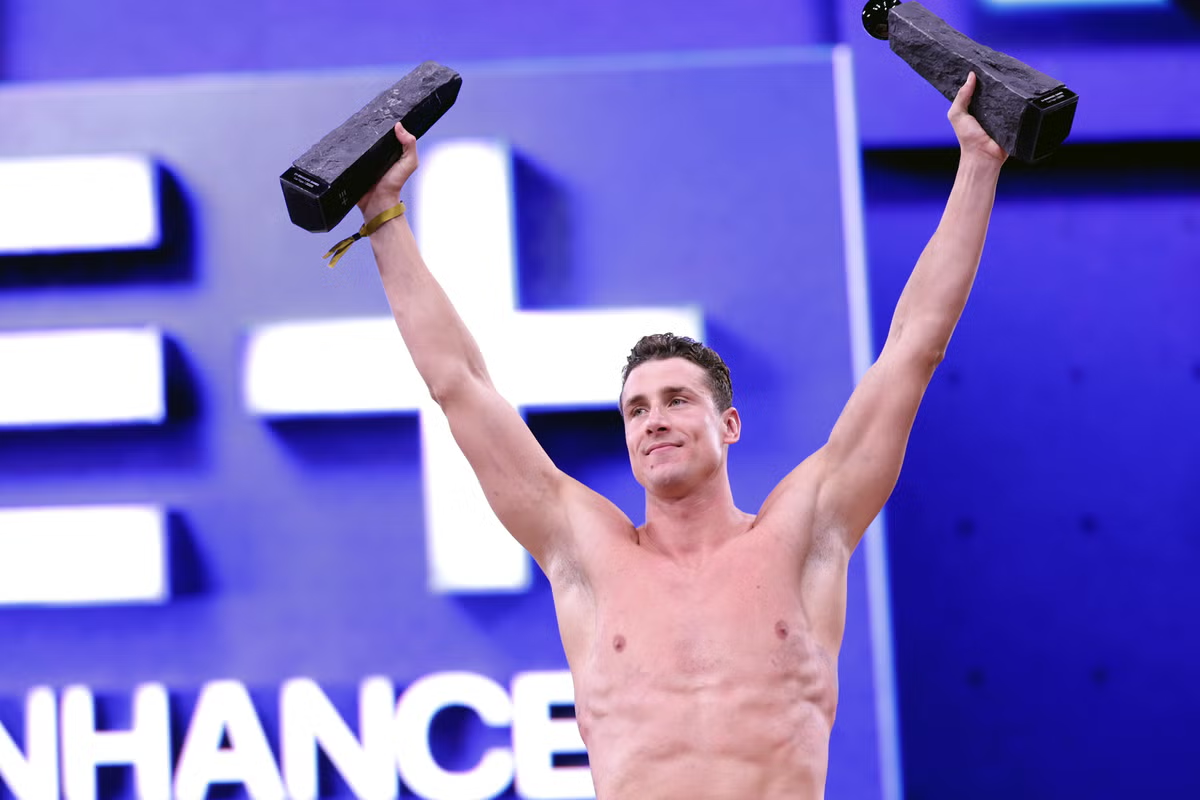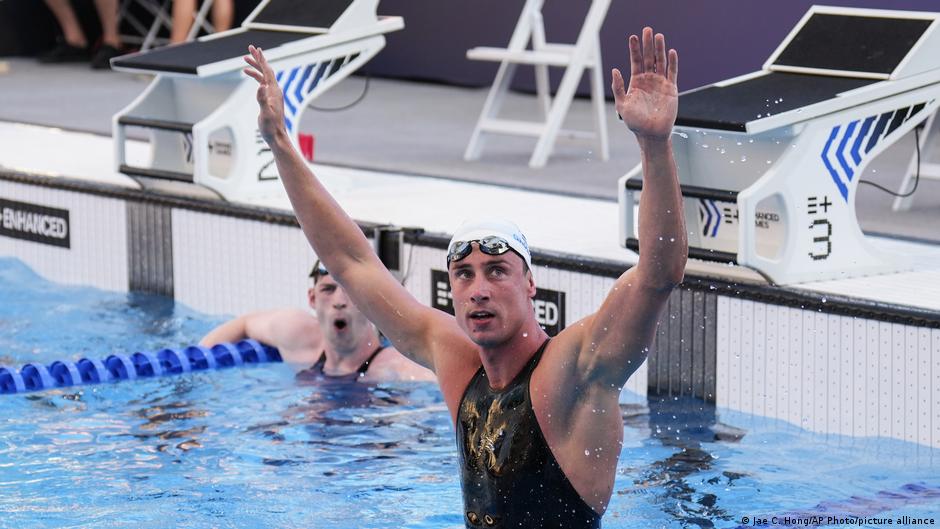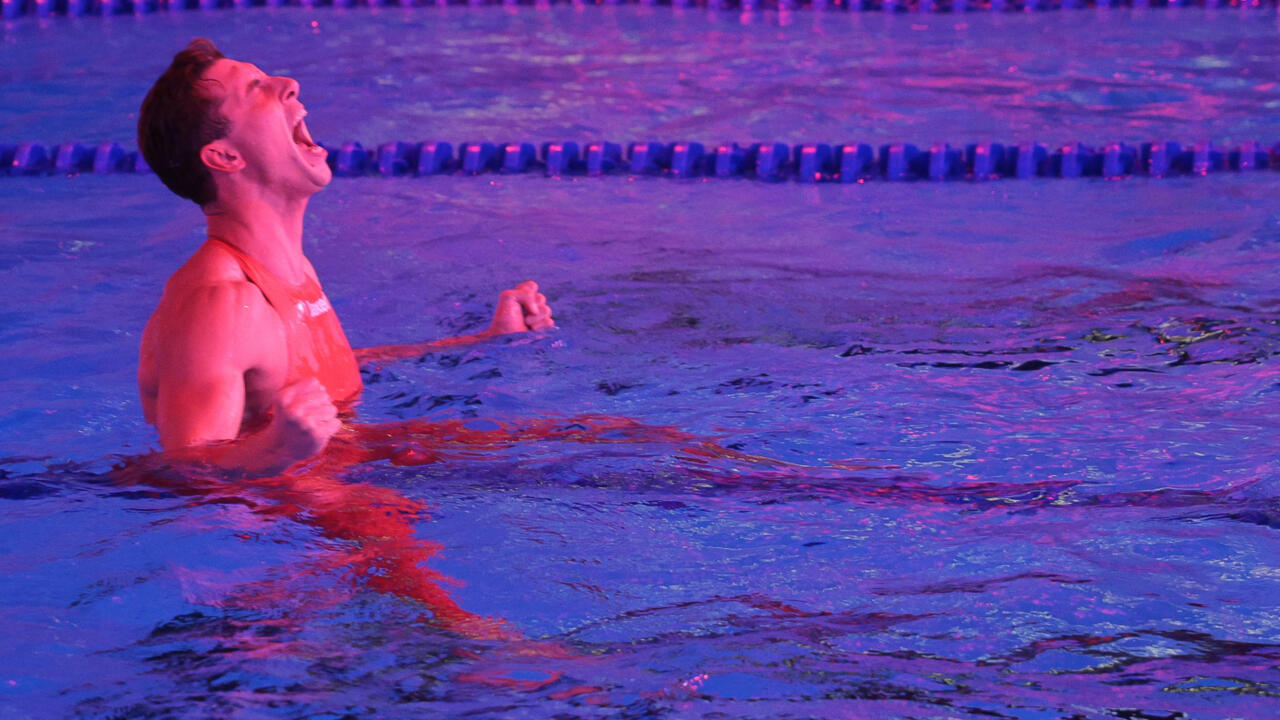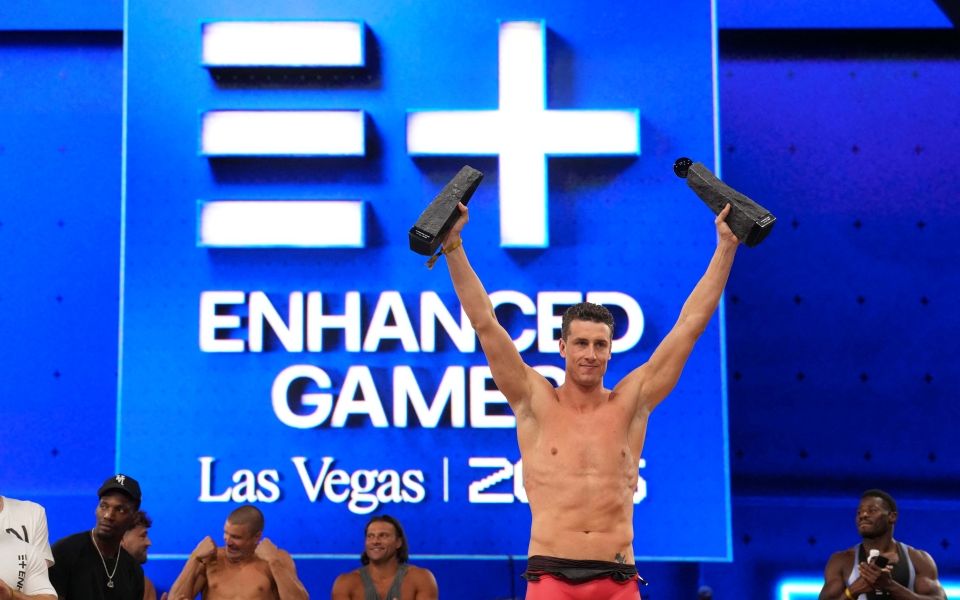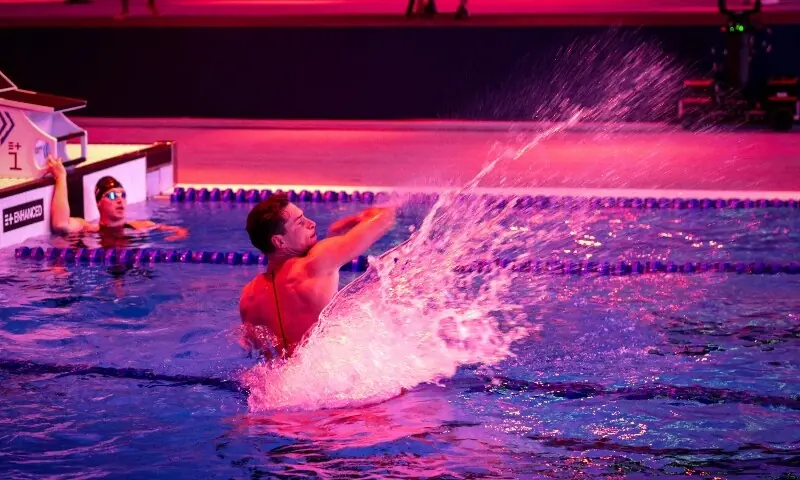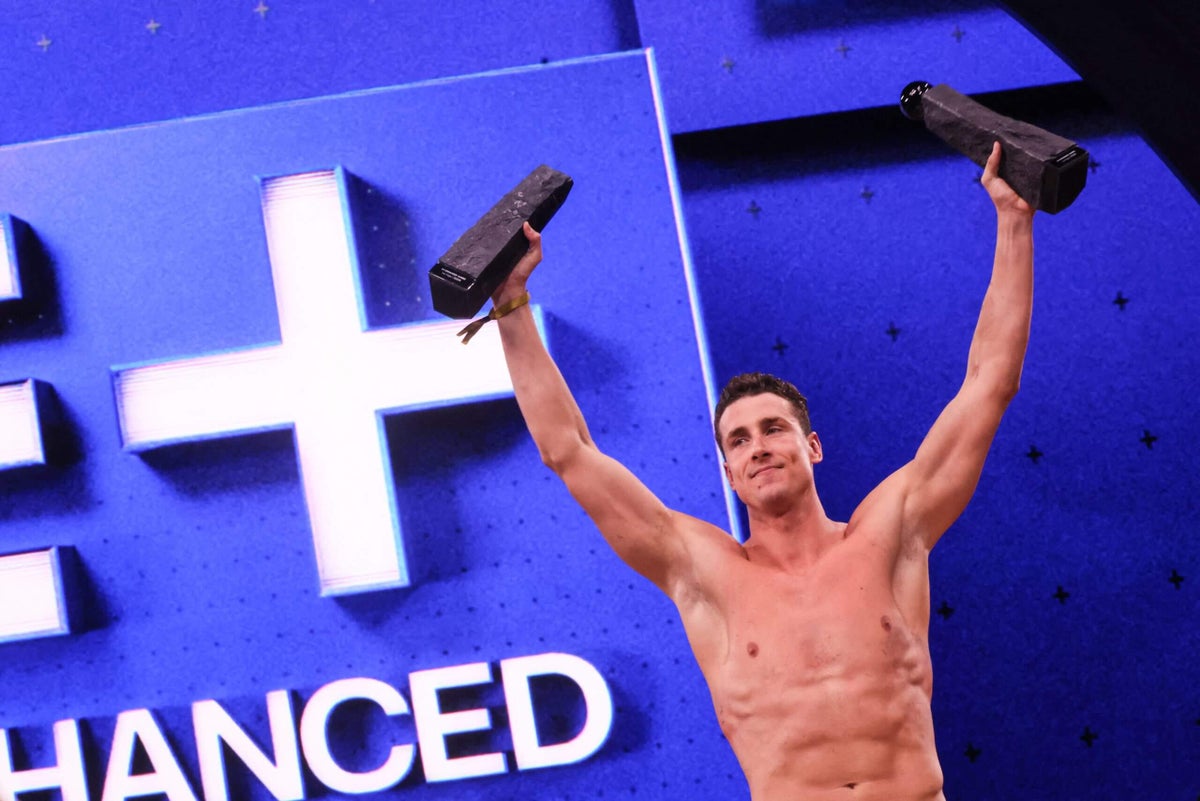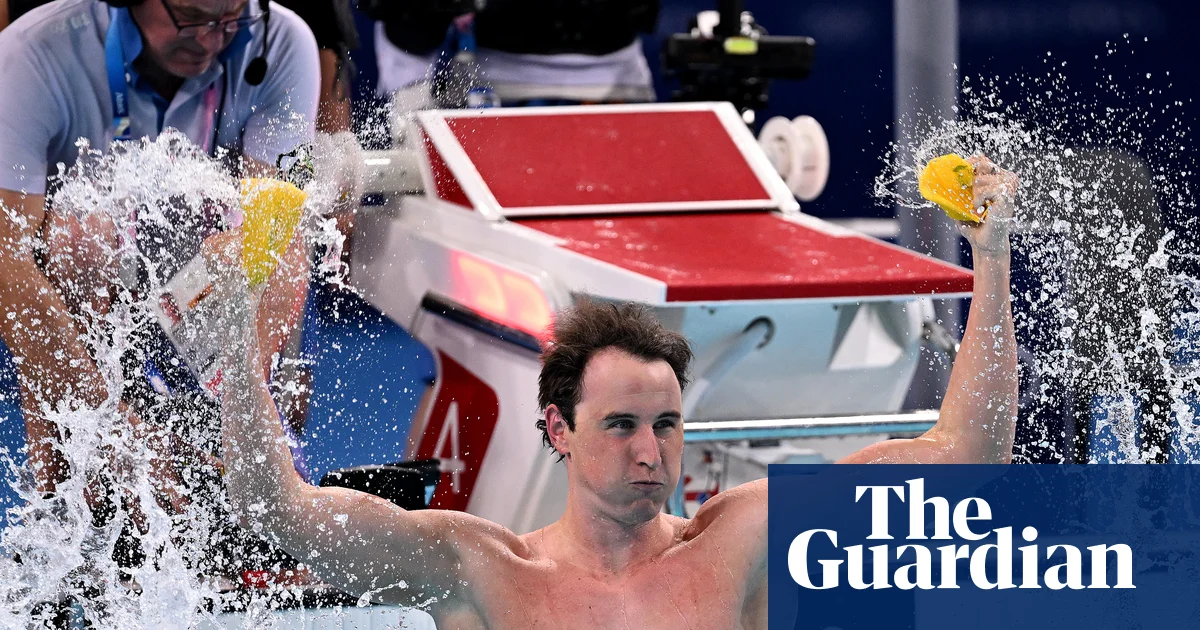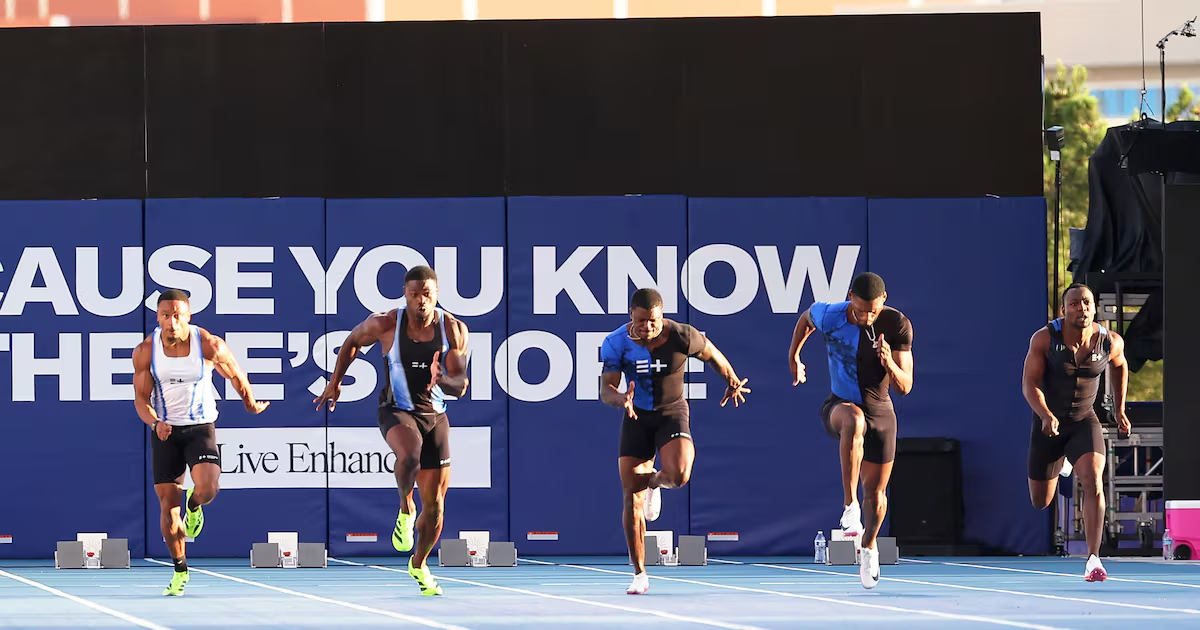
Greek swimmer Kristian Gkolomeev earned a $1 million bonus for going under the official 50 metres freestyle world record held by Cameron McEvoy with a time of 20.81 seconds at the inaugural Enhanced Games in Las Vegas on Sunday.Gkolomeev, who failed to make the podium in four Olympics, won the same bonus last February when he swam 20.89 to beat Brazilian Cesar Cielo’s previous world record of 20.91 set in 2009. Australian McEvoy improved on Cielo’s mark with a legal time of 20.88 at the Chinese Swimming Open in Shenzhen, China in March.Results by Enhanced Games competitors are considered illegal by global sporting authorities because athletes use substances banned by the World Anti-Doping Agency (WADA). Irish swimmers Shane Ryan and Max McCusker took part in swimming events.Gkolomeev was ecstatic, though, heaving his young son in the air and catching him as he celebrated with his family by the pool, having also banked $250,000 for winning the race.“Great race. I had a lot of fun. This is amazing,” said the Bulgaria-born 32-year-old.“I had a mistake on the break-out and I got a little bit nervous, but then the rest of the swimming was good, so I got it.“I’m going to say it’s not bad at all,” he added of the prize money. “This is going to change my life to the good, for sure.“It’s a big help for me and my family. And yeah, I’m going to continue next year. Maybe I’ll break it again.”Global swimming body World Aquatics has condemned the Enhanced Games as a “circus, built on shortcuts”.McEvoy did not receive a financial reward for his world record, with World Aquatics only paying bonuses for records set in competitions they organise. “It’s crazy to think that to get a world record without a suit, and without any performance-enhancing drugs, as a clean athlete, the bonus is zero dollars,” McEvoy said in March.On the track at the event, American former world champion Fred Kerley won the 100 metres in 9.97 seconds, well short of his personal best of 9.76. WADA and other sporting authorities staunchly oppose the Enhanced Games, warning athletes they risk not only sporting bans but also their health.Its organisers operate under the principle that banning performance-enhancing drugs does not protect athletes but rather stifles their performance.
Gkolomeev claims $1m bonus in 50-metres freestyle at Enhanced Games
Fred Kerley won 100m in 9.97 seconds, way off the world record despite doping being permitted
379 words~2 min read