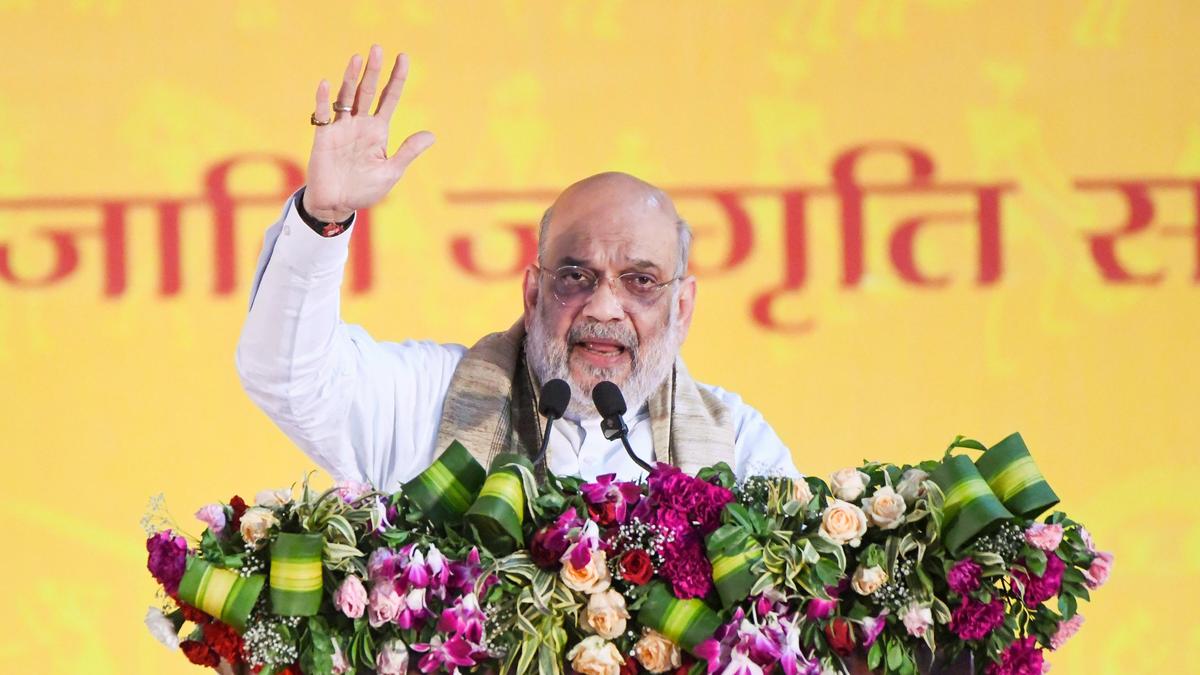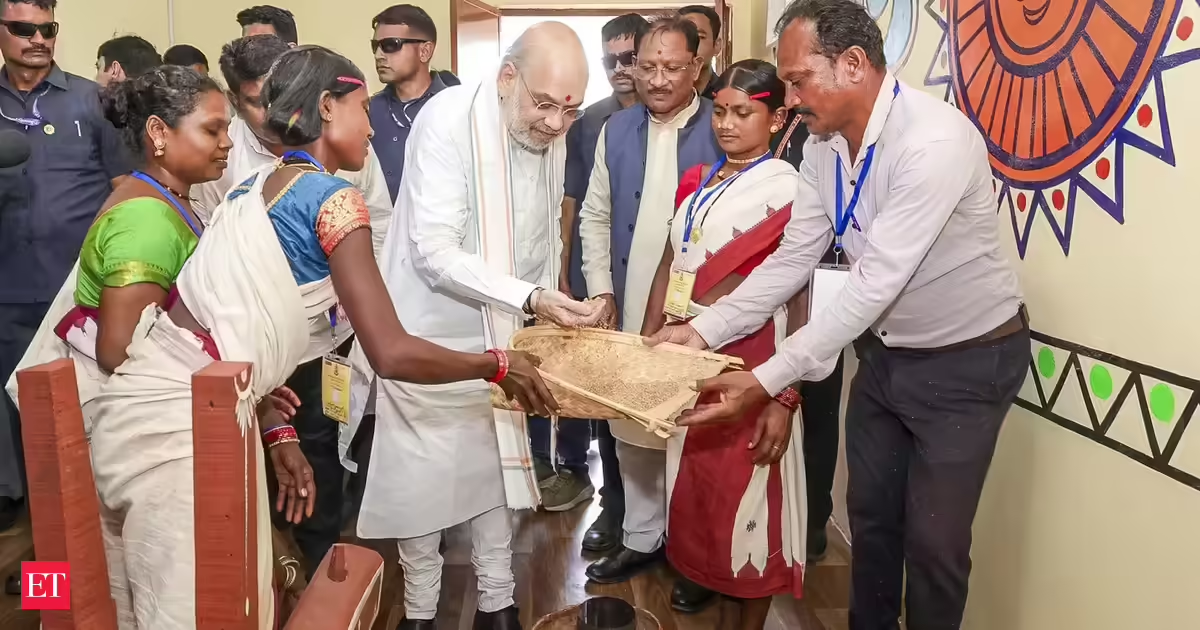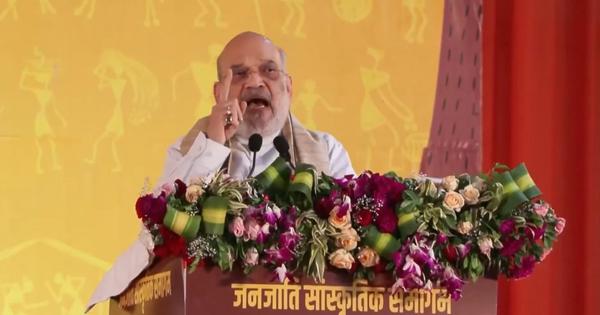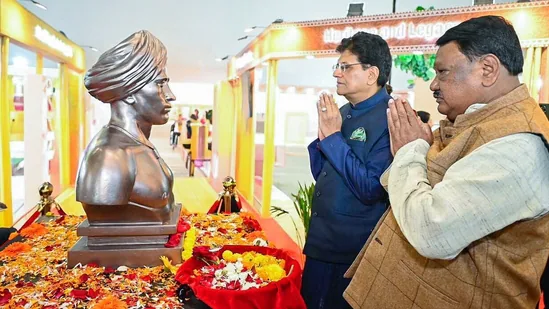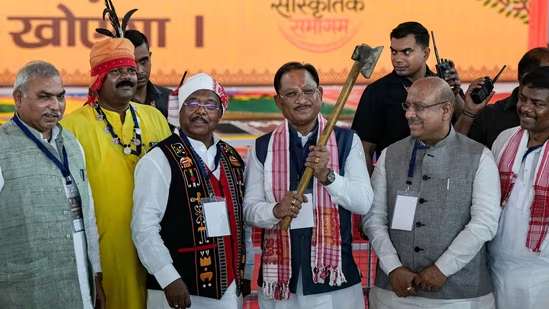
The historic Red Fort Ground in the national capital witnessed a massive display of tribal identity, cultural pride and social consciousness on Sunday as thousands of tribal representatives, youth groups, social workers and members of traditional communities from across the country gathered for the National Tribal Cultural Congregation organised to mark the 150th birth anniversary year of Bhagwan Birsa Munda.Chhattisgarh Chief Minister Vishnu Deo Sai during the Janjati Sanskritik Samagam, marking the 150th birth anniversary celebrations of tribal icon Birsa Munda, at Red Fort in New Delhi, Sunday. (PTI)Organised by Janjati Suraksha Manch and Janjati Jagriti Samiti, the event saw Union Home Minister Amit Shah attending as the chief guest, while the presence of Chhattisgarh Chief Minister Vishnu Deo Sai added political and symbolic significance to the gathering.Against the backdrop of the iconic Red Fort, the venue was filled with traditional tribal attire, folk instruments and cultural performances, turning the programme into more than just a cultural event. It emerged as a larger message on preserving India’s indigenous cultural consciousness and tribal identity.Addressing the gathering, Chief Minister Vishnu Deo Sai said tribal society is not only the protector of nature but also “the oldest and most vibrant form of India’s cultural soul”.“For centuries, tribal communities have protected water, forests and land, maintaining balance between nature and human life. At a time when the entire world is facing an environmental crisis, the tribal way of life can show humanity the path of sustainable development,” he said.The Chief Minister said Chhattisgarh’s identity is deeply linked to its rich tribal culture, noting that 42 tribal communities reside in the state and nearly 44 per cent of its geographical area is covered by forests.He said the contribution of tribal communities in the freedom struggle and nation-building has been unparalleled. Referring to Bhagwan Birsa Munda and Chhattisgarh freedom fighter Veer Narayan Singh, Sai said tribal icons created a history of sacrifice and struggle to protect their culture, self-respect and rights.Sai also outlined the state government’s efforts to preserve tribal traditions and values. He said initiatives such as ‘Aadi Parab’, Bastar Pandum and the Bastar Olympics are not merely cultural events but attempts to provide a national platform to tribal talent, traditions and identity.“Any society’s culture survives through its language,” he said, adding that the Chhattisgarh government is working to provide primary education in tribal languages such as Gondi, Halbi and Sadri so that younger generations remain connected to their mother tongue and cultural roots.He further said traditional centres of faith such as Devgudi and Matagudi from Bastar to Surguja are also being preserved and developed.During his address, the Chief Minister also raised a sensitive issue linked to tribal identity and constitutional rights. He said there is a growing sentiment within sections of society that those who have abandoned their original tribal traditions, culture and religion should be seriously considered for exclusion from the Scheduled Tribe list so that reservation benefits and government schemes reach communities that continue to preserve their original identity and traditions.Sai clarified that the demand was not directed against any community but was linked to protecting the identity, rights and cultural existence of tribal society within a democratic and constitutional framework.The event also featured performances by tribal artists from various states, who showcased India’s diverse tribal heritage through traditional dance, folk music and cultural presentations.With the sounds of mandar drums, folk rhythms and tribal music echoing throughout the day, the gathering emerged as a powerful national assertion of tribal unity, pride and cultural resurgence.
Chhattisgarh CM Vishnu Deo Sai bats for tribal-led sustainable development at national tribal congregation
The National Tribal Cultural Congregation at Red Fort celebrated tribal identity and culture, attended by thousands and featuring performances.
582 words~3 min read