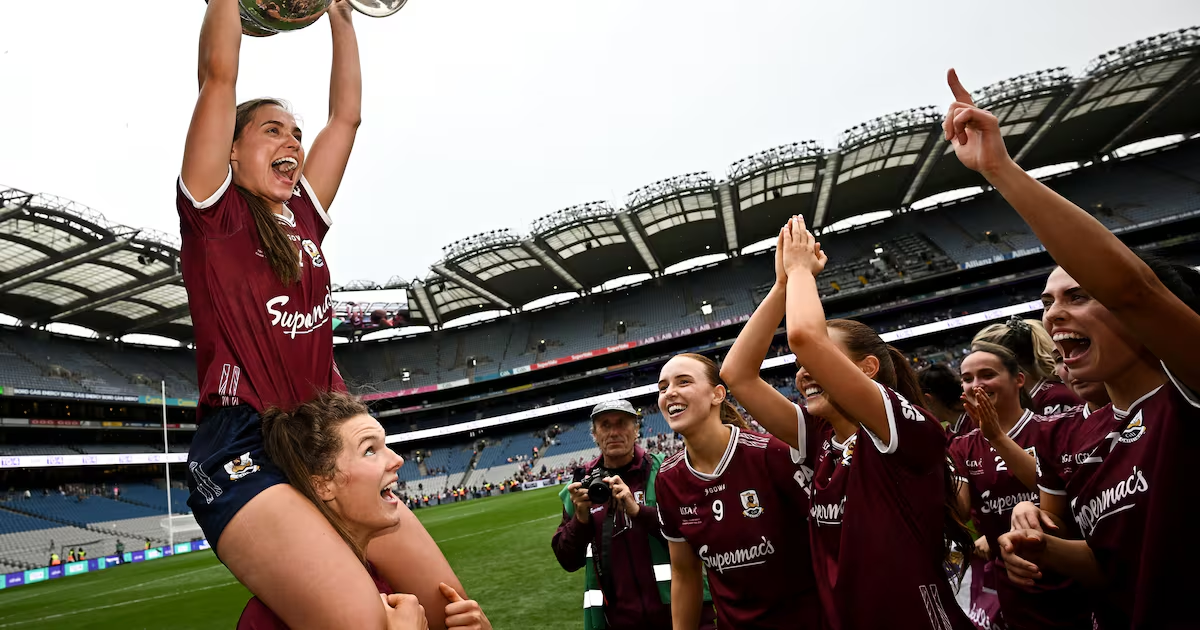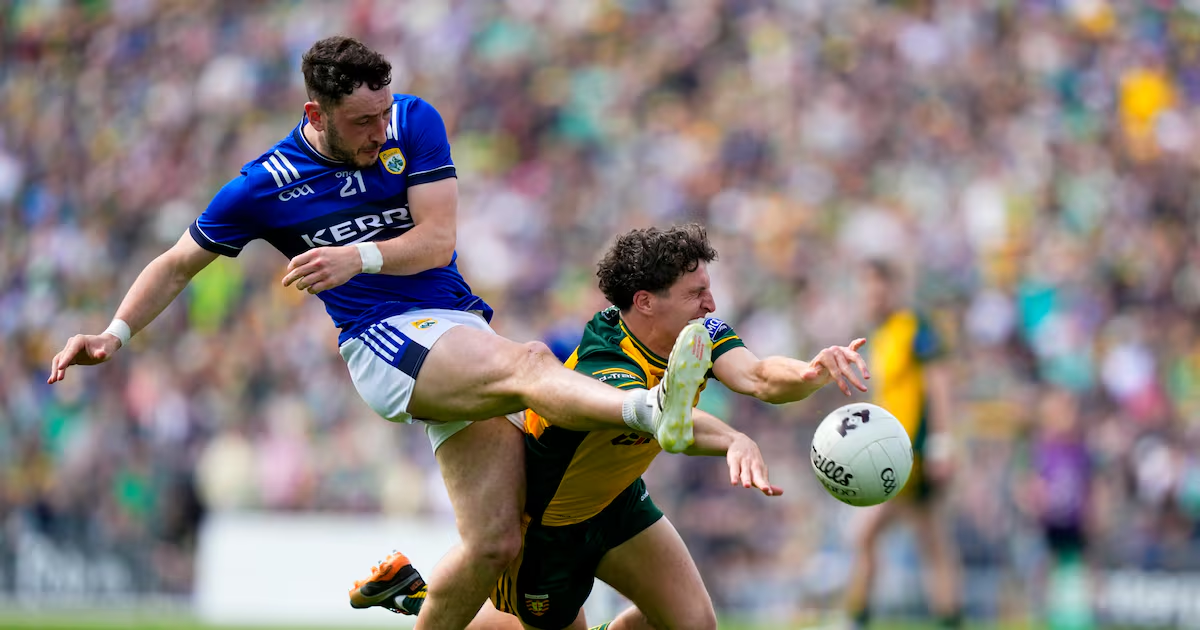
The conversation about sport and paywalls is complicated by our neediness and our sense of entitlement. In an era of saturation coverage of the big beast sports, nobody expects to miss something they want to see. In that space, we’re often cursing the market and sometimes robbing the service provider blind. As consumers, we have come to regard access as a right.Outrage flares up on a case-by-case basis, but not on equal terms. On Saturday afternoon two of the big beast sports each staged a hugely attractive event behind a paywall. Rugby’s Champions Cup final between Leinster and Bordeaux Bègles was available on ITV4 – if you were already paying for a subscription TV platform, and had the sorcery to tune it in – but it has not appeared on Irish terrestrial television this season. There was no uproar.Ever since it was reported three weeks ago that the Kerry-Donegal game would be on the GAA’s streaming service, GAA+, however, there has been the usual round of hand-wringing and condemnation. Inevitably, the political classes had their say. Fine Gael senator Mike Kenneally, from Kerry, called for the GAA to be hauled before the Oireachtas sports committee to explain this latest scheduling atrocity and buttressed his remarks with a familiar paean to the GAA’s foot soldiers. “There is something fundamentally unfair about asking lifelong supporters, many of whom gave decades of voluntary service to the GAA, to now take out another subscription just to watch their own county team in championship season,” said Kenneally.In response, Minister for Sport Charlie McConalogue – from Donegal – described the situation as “unfortunate” and “really challenging,” while also saying that it wasn’t his business to tell the GAA which games should be exempted from their streaming service. But if it was a so-called scandal that the Kerry-Donegal game was behind a paywall, why was there no condemnation of the Leinster game being on a subscription channel too? Leinster's Champions Cup final against Bordeaux Bègles was not televised on free-to-air television in Ireland. Photograph: Nick Elliott/Inpho The GAA has the most feted and name-checked volunteers in Irish sport, but everyone’s time has the same value. Every sport, including the ones with a professional elite such as rugby or soccer, depends on grassroots volunteers. The GAA people that Kenneally hailed for “giving up their weekends and their evenings” make those sacrifices in rugby too, and soccer, and every other sport under the sun. If there is an argument against paywalls, it is not that it somehow punishes volunteers. The people who make time to serve in clubs or help with teams have other motives. The feeling of belonging or being part of a cause is the common source of gratification. Nobody expects any other pay-off. The attitudes of GAA people towards paywalls, though, is conflicted and selective. On the previous weekend, there was predictable uproar when the Tipperary-Clare game in the Munster hurling championship, a knockout match in all but name, was only available on GAA+. But the curtain raiser that evening in Thurles was also behind a paywall. The Munster senior camogie final between Tipperary and Waterford was broadcast exclusively on Clubber, a hugely successful streaming service that sprang up during the Covid pandemic. For a variety of reasons, there were no complaints about that. Nobody said a word in the Dáil. Outside of All-Ireland finals, intercounty camogie struggles to attract a national audience and only a handful of its games every year are broadcast live on RTÉ. The Munster senior camogie final between Tipperary and Waterford was shown on Clubber, while the second game of the Semple Stadium double-header, Tipperary v Clare in the Munster hurling championship, was shown on GAA+. Photograph: Laszlo Geczo/Inpho Clubber specialises in games of niche interest; most of them club matches, but schools’ games too. It is a terrific service that has many admirers, but it is not free: it is a commercial enterprise. By broadcasting a game such as the Munster camogie final they were serving a small audience, some of whom might not have wanted to pay the jacked-up ticket price for being part of a double-header with a men’s game. Nobody gives out about Clubber, though, or the other streaming services that are covering local GAA games around the country. Everybody understands that for the convenience of staying at home and watching the match on a laptop, a phone, or a digital telly, there must be a price. There is no blowback; instead, people regard it as a valuable service to the GAA public. What people want for free are high-profile games of general interest. It feels like there used to be more of them once upon a time, and that’s true. Scroll back to 2007 and RTÉ showed over 50 games – some of which were loss leaders in terms of ratings. But back then they were the only show in town. TV3 entered the pitch a year later and won the rights to show 10 games, but that channel was free-to-air too. When Sky Sports entered the market, TV3 – or Virgin Media as it is now known – were elbowed out and have shown no desire to return. To general fury, Sky won the rights to show 14 games exclusively in 2014, plus shared access to All-Ireland finals and semi-finals. That year RTÉ showed 31 games; this year they will broadcast 35. Nobody, though, is inclined to say that the GAA viewer is better served now. Game was shown on GAA+ GAA All-Ireland Senior Football Championship Round 1, Pairc Ui Rinn, Cork 23/5/2026
Denis Walsh: Paywalls in GAA coverage make sense, our sense of entitlement does not
Subscriptions have become part of everyday consumption, but the GAA is still being forced to explain itself
1,148 words~5 min read