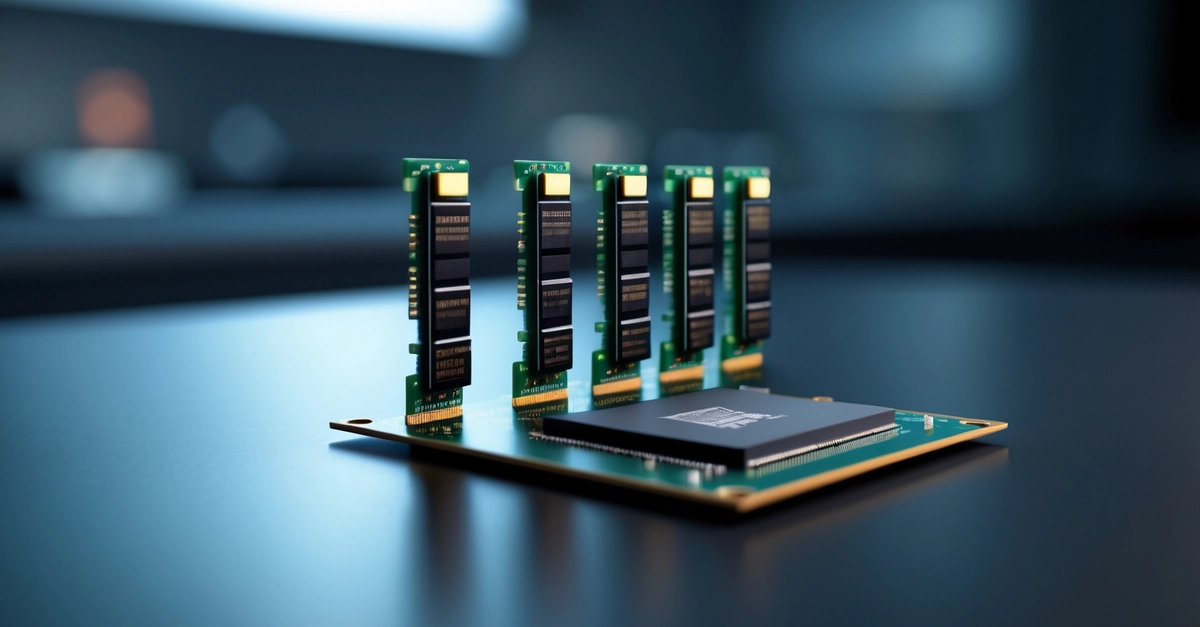
Epoch AI published a component-cost breakdown of a frontier AI accelerator this week, and the headline number is one that reframes a lot of the 2026 GPU conversation: memory now accounts for roughly two-thirds of the bill of materials. The logic die — the thing most people picture when they hear "AI chip" — is no longer the dominant cost. The stacks of high-bandwidth memory glued to it are.
That is a quiet inversion. A decade ago, on a server GPU built for general HPC, the logic die was the headline cost and memory was an accessory. Today, on an accelerator built for training and serving large models, the proportions have flipped. The same chip family that used to be priced mostly by its silicon foundry is increasingly priced by what its memory vendor charges per HBM stack.
The Epoch AI insight names that share concretely, and the source data is exactly the kind of slow-moving structural number that gets ignored until a quarterly earnings call forces the room to look at it. (Epoch AI's component-cost breakdown is the primary source.)
What this changes for anyone reading the AI-infrastructure trade press is the unit of analysis. The bottleneck story for the last two years has been told in GPU units — how many H100s a hyperscaler bought, how many B100s shipped, how many Blackwell racks Nvidia could deliver. That framing buried the real constraint. The number of accelerators a fab could finish each quarter has not been the binding line item; the number of HBM stacks the memory vendors could deliver to bond onto those accelerators has. SK Hynix, Samsung, and Micron are the three names that matter for that supply, and their allocation calendars — not Nvidia's yields — are what set training-cluster ship dates.