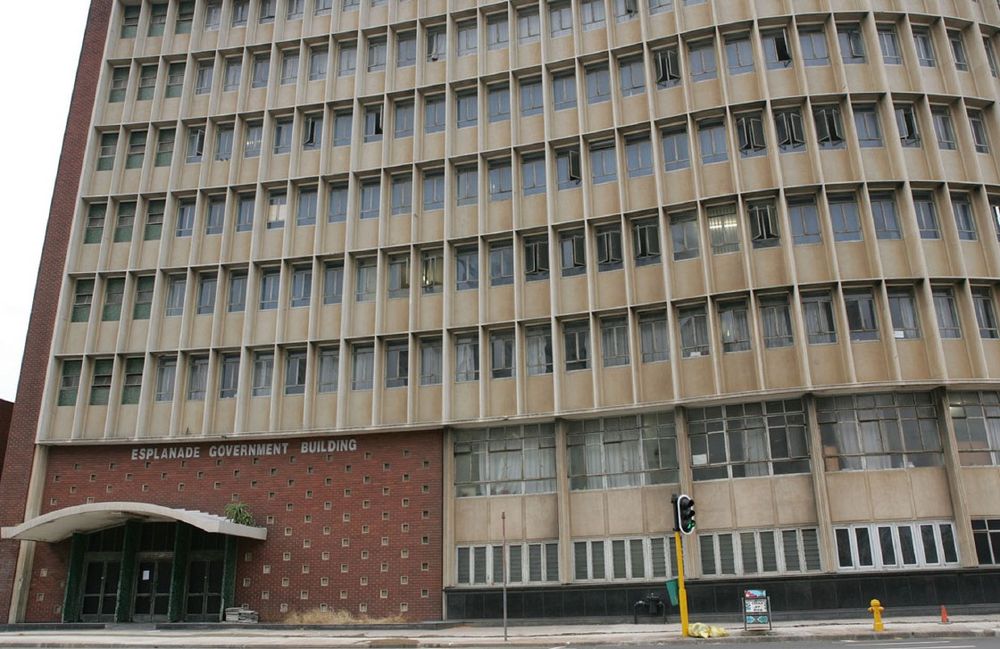
President Cyril Ramaphosa’s announcement that the government will establish a “professional state property company” to manage the state’s 88,000 buildings and 5-million hectares of land has been presented as bold reform. Public works & infrastructure minister Dean Macpherson has gone further, arguing a new vehicle could unlock value from a state property portfolio estimated to be worth about R155bn. National government owns vast assets, but many are badly managed and the public sector spends billions leasing private property while its own buildings decay. The department of public works manages its own properties so poorly that other government entities and departments do not want it as their landlord. One merely has to visit the department’s own offices in Pretoria or Cape Town to see first hand that is the case. The proposed cure risks repeating the same failure at a larger scale. The state has repeatedly shown itself to be a poor custodian of immovable property. In truth it embodies all of the worst traits of a bad landlord. It struggles to maintain buildings, secure sites, manage leases, collect internal rentals, prevent unlawful occupation, execute refurbishments on time and dispose sensibly of assets that no longer serve a public purpose. If the government cannot reliably manage property through its existing machinery there is little reason to believe repackaging the same problems into a new company will suddenly produce a different result. This is not a criticism of the desire for reform. Reform is clearly needed. But it should start from the real lesson of public sector failure. The instinct to gather vast tracts of land and thousands of buildings into a single new state structure reflects a familiar South African habit of institutional optimism. We imagine governance problems can be solved by creating a new entity with a better name, a smarter board and more attractive paperwork behind it. But weak incentives, procurement distortions, political interference, slow decision-making and poor maintenance cultures do not disappear merely because the letterhead changes. In fact, there is a strong argument that the bigger and more centralised the property vehicle becomes the greater the risk of misallocation and neglect. An enormous state landlord sitting over strategically located land, under-used buildings and redevelopment rights will be a magnet for lobbying, patronage and rent-seeking. Decisions about which assets are retained, which are leased, which are redeveloped and which are sold will become even more intensely political. In a country with a long history of maladministration, unlawful occupation, tender abuse and asset neglect, the creation of a giant state property platform should be met with the necessary scepticism. Rather, the state should own what it genuinely needs to perform public functions, and release what it does not. Public assets must be used for public benefit, and that includes disposal where disposal is the most rational and beneficial course. It is not a dereliction of government duty to sell land or buildings no longer required for municipal or governmental purposes. On the contrary, responsible disposal can be, and is arguably almost always, fiscally prudent and socially constructive. That is one reason the City of Cape Town’s recent property auctions deserve support. In February 2026 the city proceeded with a major auction of municipal land parcels after stating the properties were surplus to municipal requirements and their sale or lease would help unlock investment and channel resources back into service delivery and infrastructure. Whatever one thinks of every individual parcel, the principle is sound. A city should not warehouse dead capital indefinitely simply because it is publicly owned. Land and buildings that no longer advance a municipal purpose can and should be placed into productive use through transparent disposal processes. Critics of the Cape Town auction argued public land should be retained because state ownership is supposedly a necessary condition for social justice, affordable housing or spatial redress. That premise should be firmly rejected. Our constitution does not prescribe a single ideological model of land ownership. Section 26 requires the state to take reasonable measures, within available resources, to progressively realise the right of access to adequate housing. It does not say only continued state ownership of land can advance that right.Nor does spatial justice demand permanent public retention of every well-located and not well-located parcel. A constitutional commitment to housing is not the same thing as a command economy in land. In fact, market-led development, supported by appropriate municipal planning, infrastructure investment and regulatory frameworks is an essential and lawful mechanism for increasing the supply of housing and reducing pressure on the housing market. More housing supply matters more than clinging to ideological purity. More rateable, investable, properly serviced urban land matters. These are not betrayals of spatial justice; they are often the very conditions that make spatial improvement possible. A city that enables lawful densification, mixed-income development, infrastructure expansion and transit-linked growth is doing far more for long-term housing access than a state that merely hoards land while it deteriorates. Perpetual public ownership often misses the point, which is government should make considered decisions about how best to use its assets for the benefit of residents, and that sometimes means holding, sometimes leasing and sometimes selling. By contrast, a national property company risks entrenching the opposite. That is attractive in theory, but in practice it can become a sophisticated justification for inertia. Meanwhile, the ordinary pathologies of the state ownership continue. Often the most pro-poor and pro-growth decision is not for the state to remain landlord, but to stop being one. The state is a bad landlord because it too often confuses possession with performance. A wiser state would understand public benefit is not measured by how much land government can hold, but by how effectively it enables citizens to live, work, build and thrive on that land. Joubert is spokesperson for the Foundation for Rights of Expression & Equality (Free SA).
GIDEON JOUBERT | Why the state is the worst landlord
New government property company risks repeating past failures
974 words~4 min read