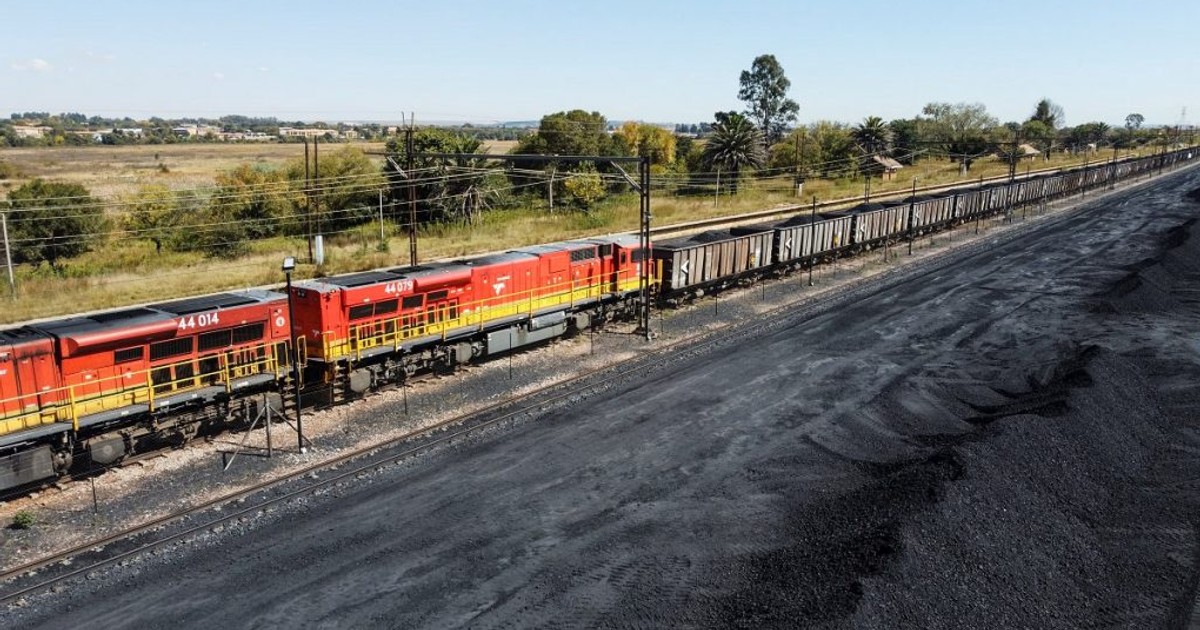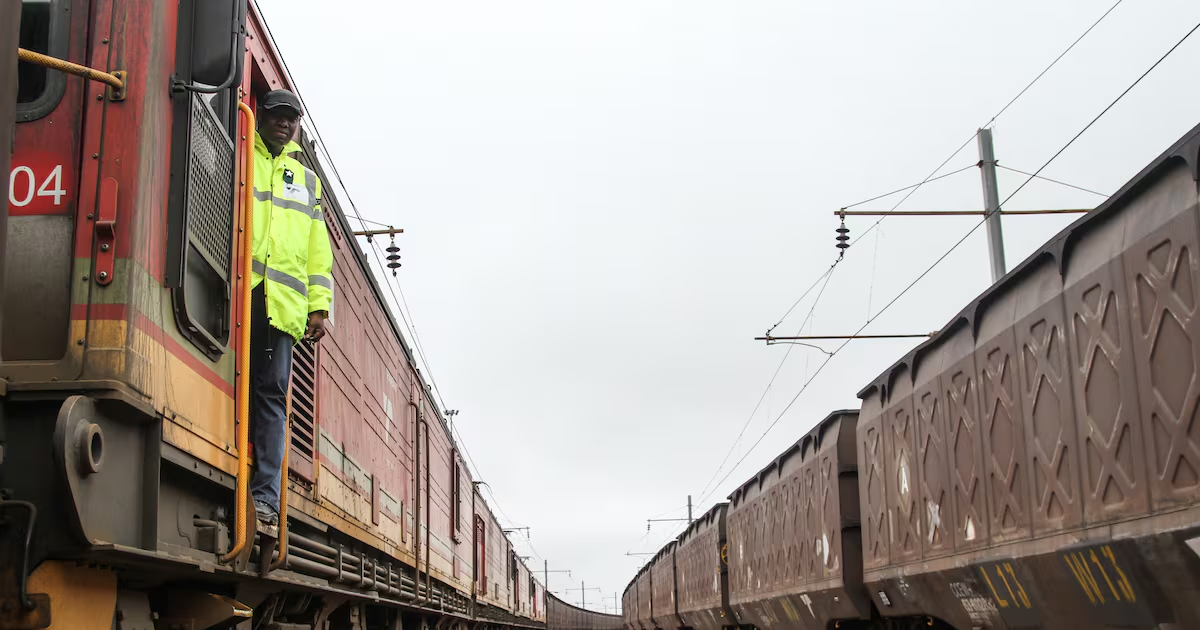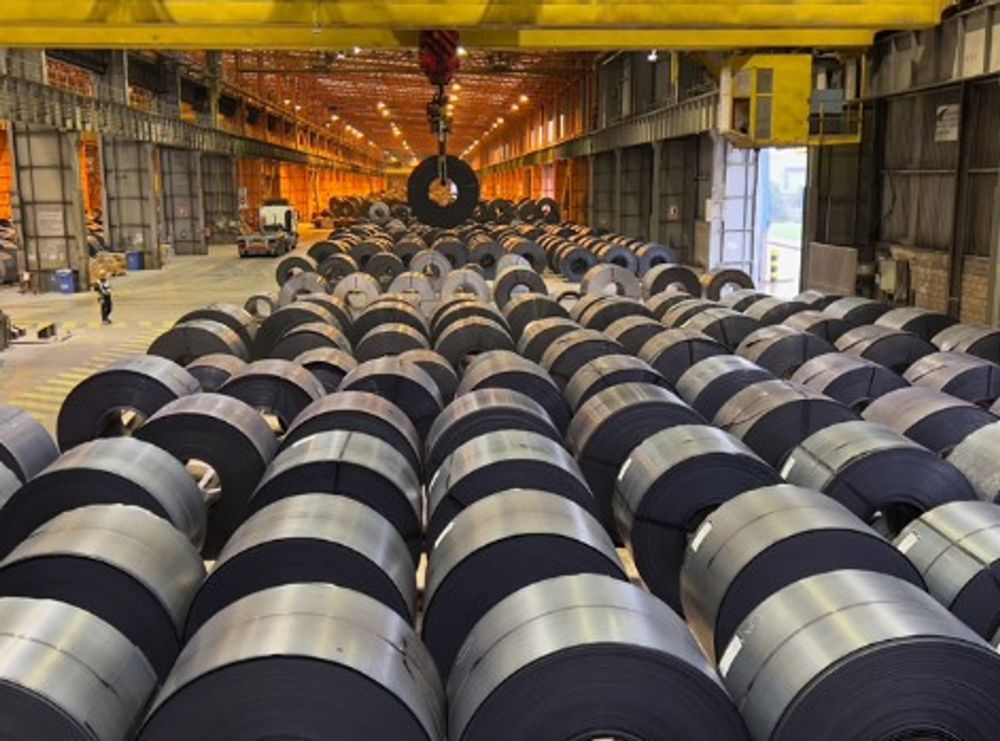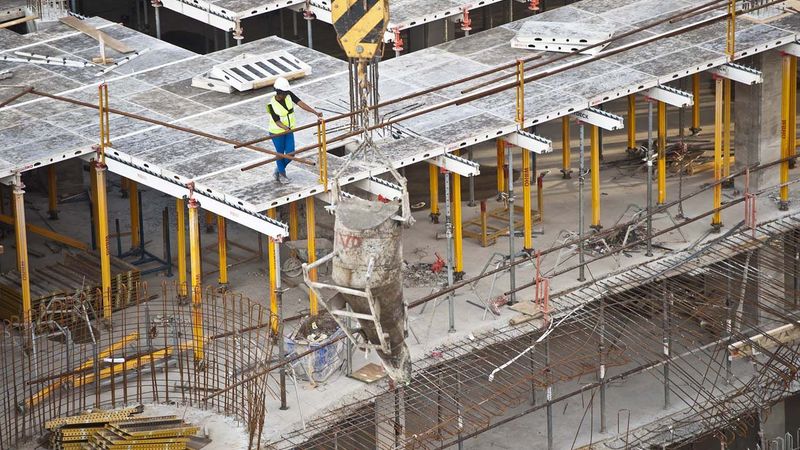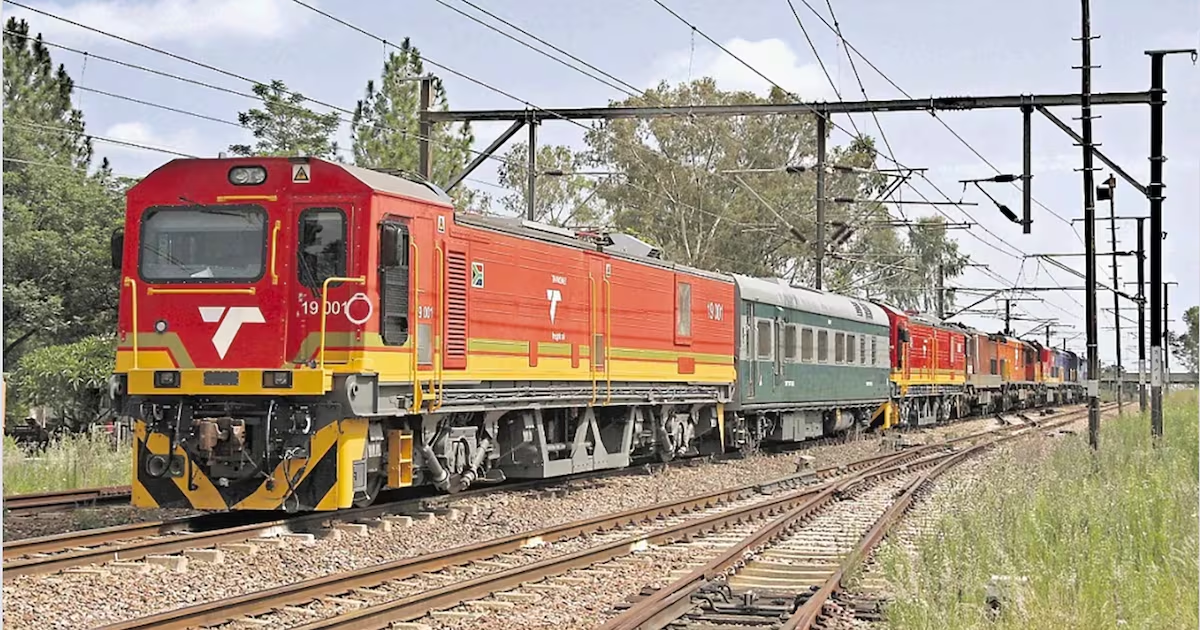
South Africa did not fall behind ― it shut down the system that made it grow. That distinction matters. Countries that fall behind can recover through investment, policy reform and time. Countries that dismantle enabling systems face a harder problem. They must rebuild foundations before they can build anything else. For decades South Africa was Africa’s most industrialised and diversified economy. Factories ran at scale. Rail moved inputs to production and outputs to ports. An electricity system held the whole structure together. That system was not perfect. But it worked. It created jobs, built technical capability and sustained industrial learning across the economy. Then the system began to fail. Investment in electricity stopped keeping pace with demand. Once power became unreliable the effects spread through the entire economy. Industry slowed. Engineering capability weakened. Productive capacity contracted. Factories closed. Infrastructure deteriorated. South Africa then compounded the damage by attempting to leap into a service economy before building the foundations that advanced services require. The result is not bad luck. The Quarterly Labour Force Survey (QLFS) for the first quarter, released on May 12, records South Africa’s official unemployment rate at 32.7%, up from 31.4% at end-2025. The expanded rate climbed to 43.7%. About 8-million people are formally unemployed. These are not the numbers of an economy that can afford to waste any opportunity to rebuild productive capacity. This failure has a lineage. Hendrik van der Bijl, the engineer who built Eskom and Iscor, understood that electricity, steel and rail were not separate projects, but one enabling system. His father, Pieter Gerhard, had no patience with anyone who claimed that South African-made goods were inferior to imports. He wore a suit of homespun wool to prove the point. That conviction passed from father to son and became the foundation of South Africa’s industrial age. Van der Bijl guided that age by one principle: “Whatever else you do, you will find that you derive the greatest pleasure from those of your actions and undertakings that create opportunity for others to reduce poverty.” When death came in 1948 his message to those who followed was two words: “Carry on”. South Africa did not carry on. Today, 11 operators receive access to the infrastructure Van der Bijl’s generation built. The question is what they will do with it. On May 13 the Transnet Rail Infrastructure Manager concluded rail access agreements with all 11 train operating companies, increasing the number of active operators on the national network from one to 12 across five strategic corridors. The allocations are projected to introduce 24-million tonnes of additional freight capacity, with the potential to scale to 52-million tonnes over five years, in support of the national target to grow rail volumes from 180-million to 250-million tonnes by 2030. That is a genuine milestone, reflecting years of policy work and institutional effort to make South Africa’s freight rail open and competitive. Access to a publicly financed network carries obligations: to the economy that built it and to the workers, communities and suppliers whose livelihoods depend on whether rail reform deepens production or merely extracts value from it. Operators must not treat this as just another concession. The network statement decides this. It is the legal and operational instrument that governs conditions of access to the mainline freight network. Network statement version 4 is at an advanced stage of finalisation. The window to embed binding localisation conditions is open. It will not stay open long. If that document does not make localisation a binding condition of access ― not a guideline, not an aspiration, not a target without consequences ― this reform will not restart South Africa’s enabling system. It will simply add new names to a broken one. Localisation done correctly is not protectionism. It is systems economics. Rail has long supply chains, high skill requirements and strong multiplier effects. When waggon and locomotive production move onshore the benefits do not stop at the plant gate. They run through steel mills, component suppliers, engineering firms, logistics providers and the communities where workers spend their wages. Human capital investment must move alongside localisation, not trail behind it. One without the other produces leakage. Together, they produce industrial deepening. Rail reform will not fix South Africa’s unemployment crisis on its own. I am not suggesting it can. No single policy announcement rebuilds power stations, rail corridors, depots and training pipelines that decades of neglect have hollowed out. But this moment is an entry point. The real test is whether the country uses it to begin rebuilding the enabling system for industrialisation or lets it become another case of access without obligation, opportunity without accountability and reform that changes the names but not the outcome. Van der Bijl left two words for those who followed: “Carry on.” The network statement must answer them. • Nhlapo is CEO of the African Rail Industry Association.
MESELA NHLAPO | Rail reform will make or break SA’s industrial future
Recovery hinges on embedding localisation and skills investment rules in framework
810 words~4 min read