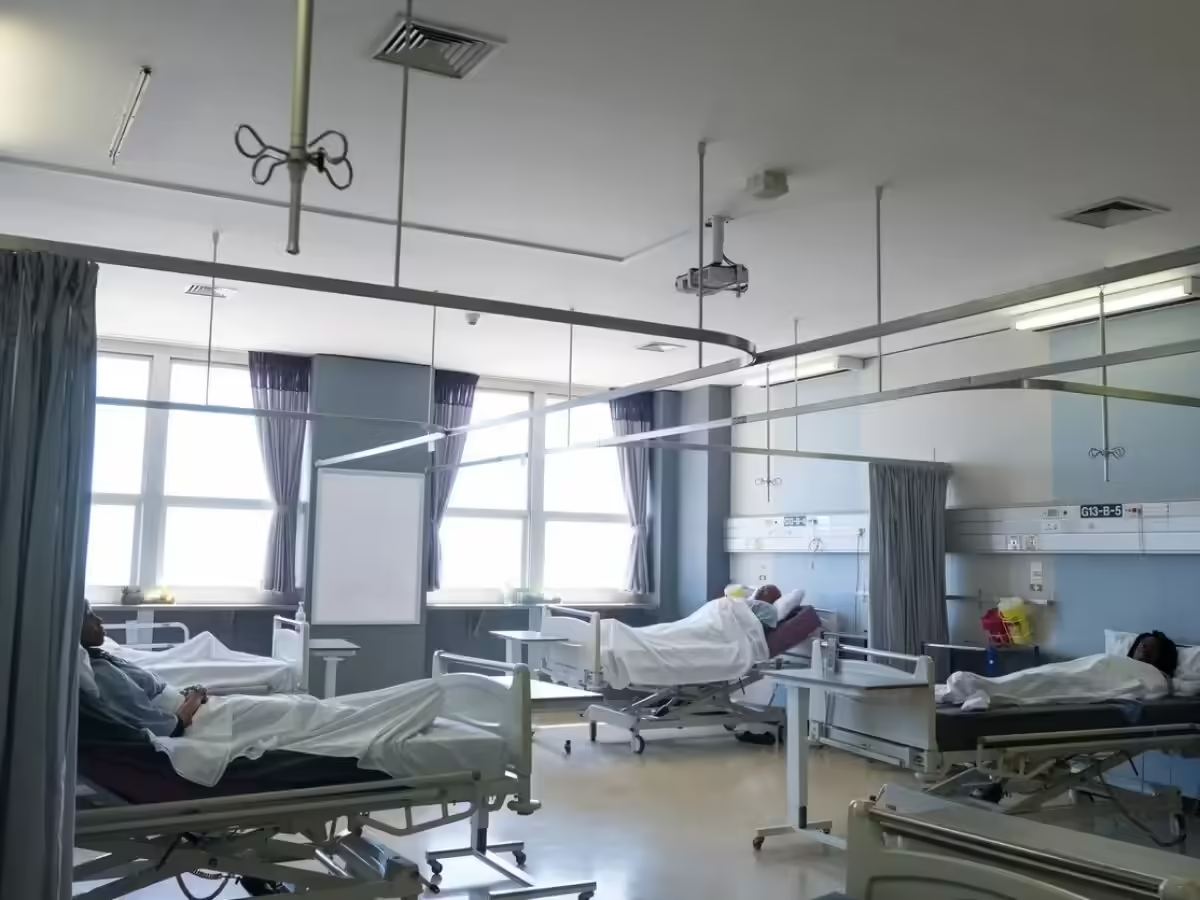
A clutch of health insurers now offers two-hour hospitalisation covers, which are being pitched as markers of comprehensive health insurance policies.The feature, increasingly common in premium health insurance products launched in recent months, reflects the evolution of medical care. The procedures that once required overnight hospitalisation are now completed within a few hours, thanks to minimally invasive surgeries and improved anaesthesia protocols that enable a faster discharge. Insurers such as Niva Bupa, Care Health Insurance and Aditya Birla Health Insurance have introduced products with such benefits. However, before buying these covers or opting for such procedures, policyholders should understand the extent of coverage and, more importantly, what is excluded.Coverage linked to medical need, not stay durationThe genesis of such offerings lies in the rapid advances in the surgical arena. “Healthcare delivery has evolved significantly over the past few years. However, as treatment patterns changed, insurers started expanding coverage to align with modern clinical practices and evolving consumer expectations,” says Bhabatosh Mishra, Director and Chief Operating Officer, Niva Bupa Health Insurance. Earlier, health insurance policies focused on hospitalisation expenses, which is why the 24-hour admission was central to coverage. Subsequently, insurers began covering day-care procedures that did not require 24-hour hospitalisation. “The idea behind the two-hour hospitalisation coverage is that all medically necessary procedures admissible under the policy will be covered, irrespective of the duration of the hospital stay,” says Mayank Bathwal, CEO, Aditya Birla Health Insurance.According to Policybazaar data, day-care and short-duration stay claims now account for nearly 30% of the total claims processed. “Today, many medical interventions that required 24-hour hospitalisation earlier, can be completed safely within a few hours under clinical supervision. Minimally invasive procedures, improved anaesthesia practices, and better clinical protocols have significantly reduced the duration of hospital stay for several procedures,” says Manish Dodeja, Executive Director & Chief Business Officer, Care Health InsuranceThis is where the short-duration covers— entailing a minimum hospital stay of two hours—come in. “This feature gives coverage to a new category of hospitalisation treatments. These may require 2+ hours’ admission in the hospital, but do not strictly fall under the definition of day-care treatments, which require anaesthesia and technological advancement as a precondition. The requirement that the procedure requires an active line of treatment in a hospital continues,” says Mahavir Chopra, Founder, Beshak.org.The short-duration hospitalisation feature helps address treatment scenarios where hospital admission and monitoring are medically required, even if the stay is shorter than the traditional 24-hour benchmark. “This ensures that policyholders are not denied claims simply because medical science has shortened hospital stays. This feature has become particularly important in urban India, where patients increasingly prefer a faster treatment, lower infection risk, and same-day discharge whenever medically feasible,” says Siddharth Singhal, Head, Health Insurance, Policybazaar.comDay-care vs short-duration coverageAt first glance, both are based on the same concept—covering procedures that traditionally required 24-hour hospitalisation, but can now be completed with same-day discharge due to advances in medical technology and treatment protocols.However, from the policyholders’ perspective, the nuance lies in how they are defined in the policy documents. “Day-care procedures typically refer to a predefined list of medical treatments or surgeries that historically required prolonged hospitalisation but can now be completed within a few hours due to technological advancements. These are usually explicitly listed in the policy wording,” explains Mishra. In other words, the covered procedures are specifically named in the policy. “These are well-established treatments such as cataract surgery, dialysis, chemotherapy and endoscopy-related interventions, and are generally specified under the policy coverage,” adds Dodeja.The definition of short-duration hospitalisation coverage, on the other hand, is broader and more open-ended. “Instead of limiting coverage to a fixed list of procedures, it covers medically necessary treatments that require admission and clinical monitoring for a specified minimum duration, such as two hours, subject to policy terms and conditions,” says Mishra. For such treatments to qualify, there must be hospital admission, a confirmed diagnosis, active treatment, and medical advice and supervision. Coverage cannot be determined solely by the name of the procedure. “Whether a procedure is medically necessary is assessed during the claims process. Treatments such as spine injections for pain management or a colonoscopy with polypectomy may be covered, provided they meet the policy conditions and are not specifically excluded,” says Mishra.Short-duration hospitalisation checklistMedically necessary: Procedures must be recommended by a registered medical practitioner.Hospital admission: Treatment must be taken at a registered hospital.Clinical need: Must entail an active line of treatment.Admissible claim: Should meet the policy’s eligibility criteria.Policy-compliant: Should not be specifically excluded by the policy.Day-care vs short duration treatment
2-hour hospitalisation: What health insurance policies really cover and what they exclude - The Economic Times
New health plans cover treatments requiring two hours of hospitalisation, but exclusions remain critical.
1,051 words~5 min read