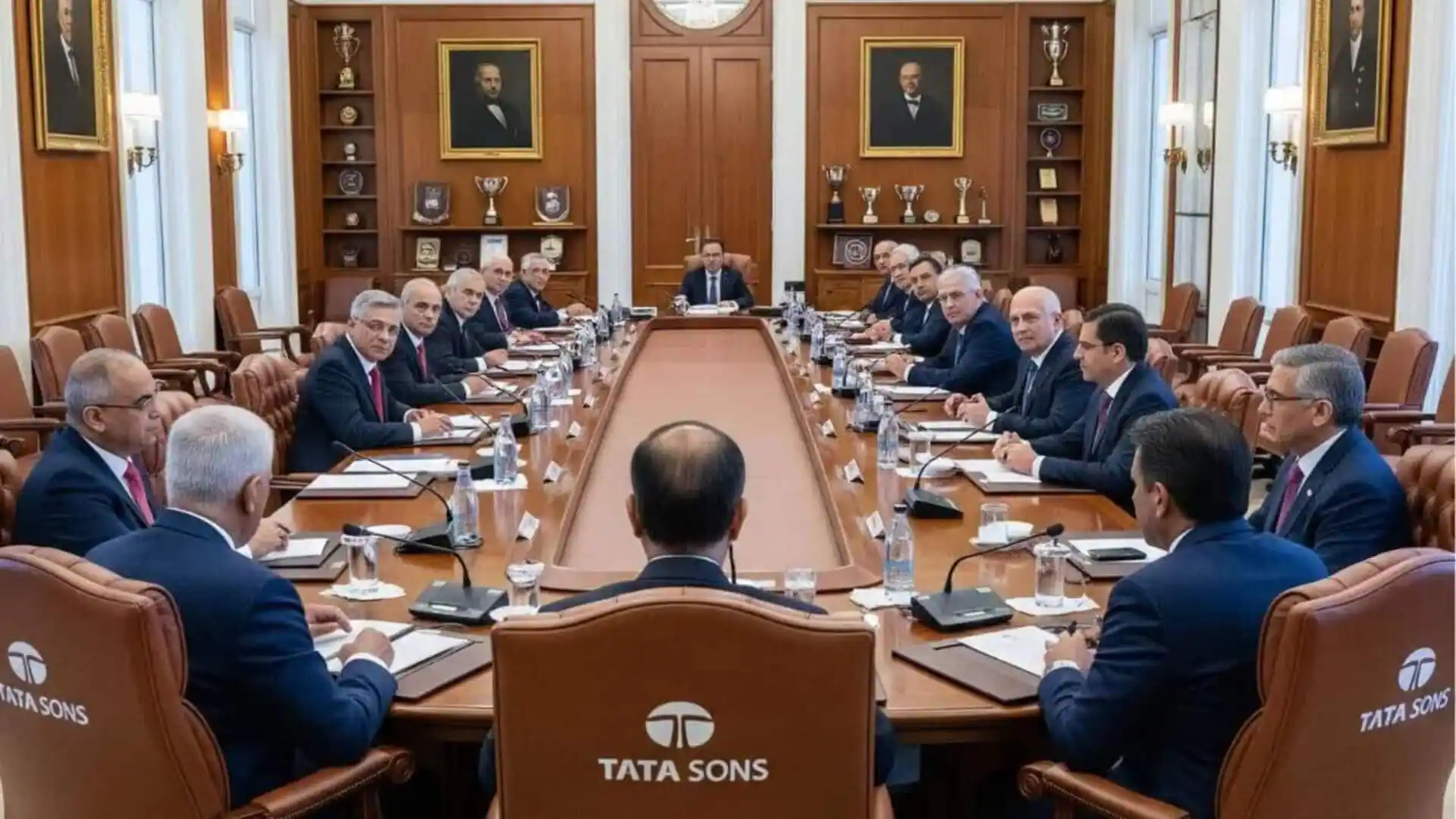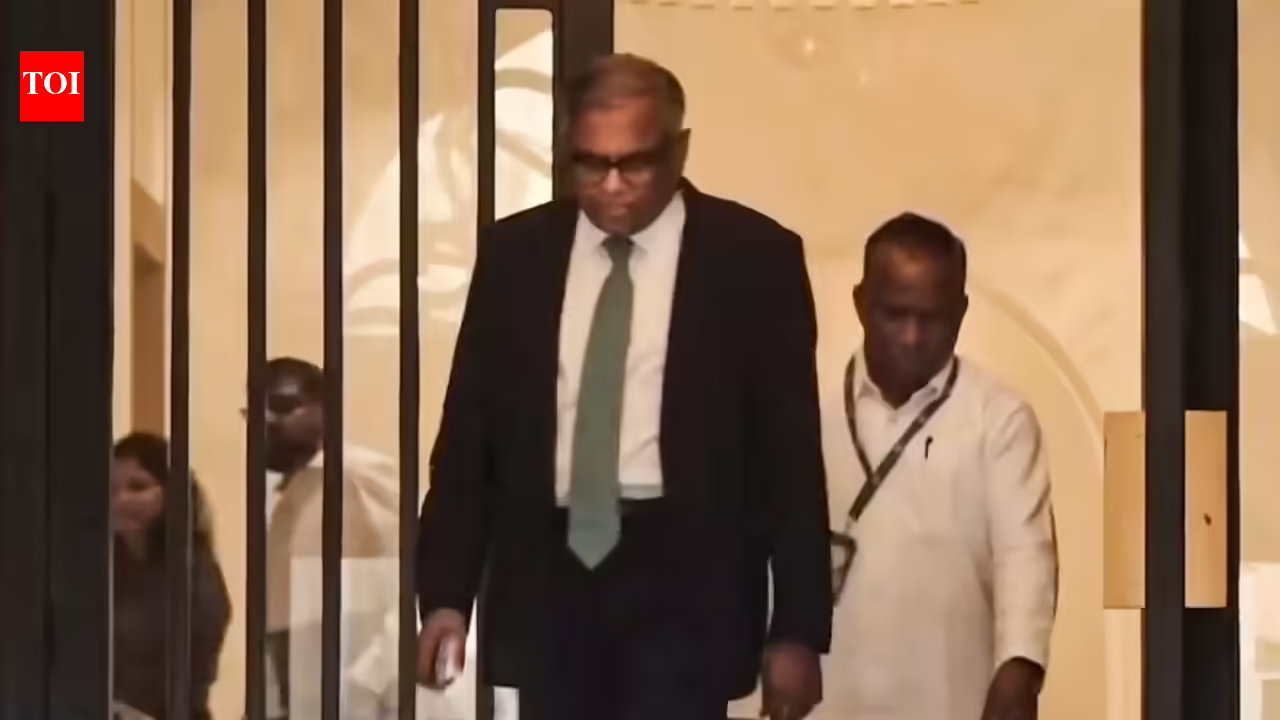
“Tatas need a leader with guts, intelligence and grit!” This cry from a person close to the storied corporate group comes at a time when internal differences at the highest level are shaking its foundations.The ongoing tensions among the Tata trustees, which is threatening to spill over into the holding company Tata Sons, stems from the lack of a formal succession planning process at the group, its stability being threatened by people who have a fiduciary responsibility towards it.“Tata’s succession history has been non-linear, often within the Tata fold but not strictly hereditary. That flexibility was once a strength. Today, it must be converted into a formal succession architecture,” says a well-known corporate governance exponent who sits on the board of several companies, declining to be named.“The Tata group’s present challenge is not merely a personality issue. It is the transition from charismatic stewardship to institutional stewardship,” he adds.However, according to another person, who has had direct dealings with the group for a long time, the group risks diluting its legacy if it becomes overly process driven or focused on shareholder pressures through moves such as a potential listing of Tata Sons.“Tata cannot be run by process. It is run by moral authority. The moment you try to take away the moral authority, it’s over.”Corporate India is strewn with several succession battles and many large business houses have splintered in the process. Through it all, however, the Tata group stood firm, mostly because there were no family members laying claim to the inheritance or wanting control. Now that decades-old stability is being threatened by people who have a fiduciary responsibility towards it.Personality dominatedLike most family-run enterprises in India, the Tata group had for long functioned and flourished under a system in which moral authority combined with formal authority held undisputable sway. While board structures, trusteeship arrangements and institutional processes existed, they were ultimately held together by the stature and credibility of individuals — JRD Tata for a significant part of the 20th century and, later, Ratan Naval Tata, who took over in 1991.Both headed Tata Sons for long periods, and expanded the group through strategic acquisition, while venturing into new areas. “JRD Tata and Ratan Tata carried unusual moral authority,” says an insider. “Their presence converted disagreement into alignment.”The person quoted above said resistance to leadership transitions was not new within the group and RNT eventually earned legitimacy through moral authority and personal stature rather than operational intervention.When Tata Sons saw a leadership change in 2012, RNT stepped down at the age of 75 but continued to lead Tata Trusts and, thus, exercised authority over the group. Witness the way he summarily ejected the late Cyrus Mistry from chairmanship in 2016 as he felt the group was not being governed according to Tata principles.After RNT’s death the centripetal force is visibly weaker and the group has to rely more on written protocols, trustee discipline, conflict resolution processes and transparent communication.Noel Tata, who married into the Shapoorji Pallonji family and has been associated with the Tata group for over four decades, was overlooked by RNT both times when the chairmanship for Tata Sons opened up — in 2012 and 2016. After a year of searching post the Cyrus Mistry episode, the decision went in favour of N Chandrasekaran, a Tata veteran with a solid 30 years in Tata Consultancy Services, including eight as its MD and CEO.RNT told his biographer Thomas Mathew at the time that Noel Tata lacked the experience to handle difficult assignments. “For Noel to compete successfully for the top post he should have greater exposure than he has had,” RNT was quoted in the book. “Partly, his not having it has been his own choice.”Post Ratan TataNoel Tata may have “formal authority, but he is still being tested for convening authority”, says an insider. “He may yet build that legitimacy, but it cannot be presumed merely from title or lineage,” he adds. He also points out that Noel Tata hasn’t been given the time to prove his chops. But time is running out. Noel will be 70 this November and would have to step down as chairman from various boards.While he possesses deep operational experience and unquestioned family legitimacy, the challenge before him is not managerial but institutional. Can he command the same broad-based authority that previously helped contain disagreements within the group’s internal structures.A person who knows Noel Tata well described him as a ‘fine human being and purpose driven’ but personally reserved and lacking the visibility that Ratan Tata cultivated over time.But Noel’s elevation as Chairman of Tata Trusts in October 2024, soon after RNT’s death, was not without drama. Some trustees were not in favour and former trustee Mehli Mistry had to compel them to vote for Noel on the grounds that the Trusts should be headed by a Tata. However, relations soured subsequently.The first to show open rebellion was Mehli Mistry himself, who was then voted out of the Trusts. With the decision to retain N Chandrasekaran as Tata Sons chairman for a third term, it looked like peace may reign in the group.That hope, however, was short-lived.The year 2026 started on a tumultuous note for the Tata group. At a Tata Trusts meeting in February to consider Chandra’s reappointment, Noel Tata questioned the group’s performance, especially with regard to new investments, the revival of Air India and acquisitions such as BigBasket.It seemed like a repeat of what RNT did with Cyrus, except no one was sacked and Chandra has been given time to prepare a growth strategy for the group. Noel was also blindsided by his two allies Venu Srinivasan and Vijay Singh, who have openly come out in favour of listing Tata Sons. This is interesting because unanimous resolutions have been passed by trustees as well as the Tata Sons board to keep the holding company unlisted.Is this self-interest at work or genuine concern over corporate governance?Noel retaliated. He voted against the reappointment of Srinivasan and Singh to the board of Tata Education and Development Trust, an allied body of the Sir Ratan Tata Trust. He is also expected to get Srinivasan off the Tata Sons board, where the latter is a nominee of Tata Trusts.The Tata group has also been fighting a rear-guard action against complaints filed with the Maharashtra Charity Commissioner that the board of Sir Ratan Tata Trust was not in compliance with the Maharashtra Public Trusts Act, which prescribes that not more than one-fourth the number of trustees in a public trust shall be perpetual or life trustees.Another legal notice alleges that a transfer of Tata Sons shares from the Navajbai Ratan Tata Trust to Naval H Tata in 1989 was unlawful, void, and a breach of fiduciary duty by trustees. Those shares are now in the possession of Noel and Jimmy Tata (the son of Naval Tata).Corporate governance experts are also pointing to the dual role of Tata Trusts — it is a philanthropic institution, yet holds about 66 per cent of Tata Sons, whose dividends support the Trusts’ social work in education, health, livelihoods, arts and culture. “When trustees appear divided over control, succession, listing or influence, the public inevitably asks whether charitable purpose is being overshadowed by promoter power,” said another expert.The board meeting of Tata Sons on May 26 is expected to discuss the contentious issue of its listing as well as Chandra’s plan for the group. He and Noel are expected to meet before that. The conflict over the leadership of the Trusts remains unresolved, however.“The remedy is not another towering individual but a governance compact: clear trustee role definitions, a formal conflict-resolution mechanism, codified succession planning, transparent criteria for trustee appointments, a public position paper on Tata Sons listing, and a disciplined communication protocol,” sums up a corporate governance expert.A Tata loyalist sums it up, saying, “The Tata name is what differentiates them (the group). The DNA has been brought into that name — the philosophy of giving, of being charitable.“If you remove the Tata name from this, it become like any other company.”Published on May 25, 2026
Fiduciary feuds threaten Tata’s legacy
Fiduciary disputes threaten Tata's legacy, highlighting the urgent need for effective succession planning and governance reform.
1,347 words~6 min read