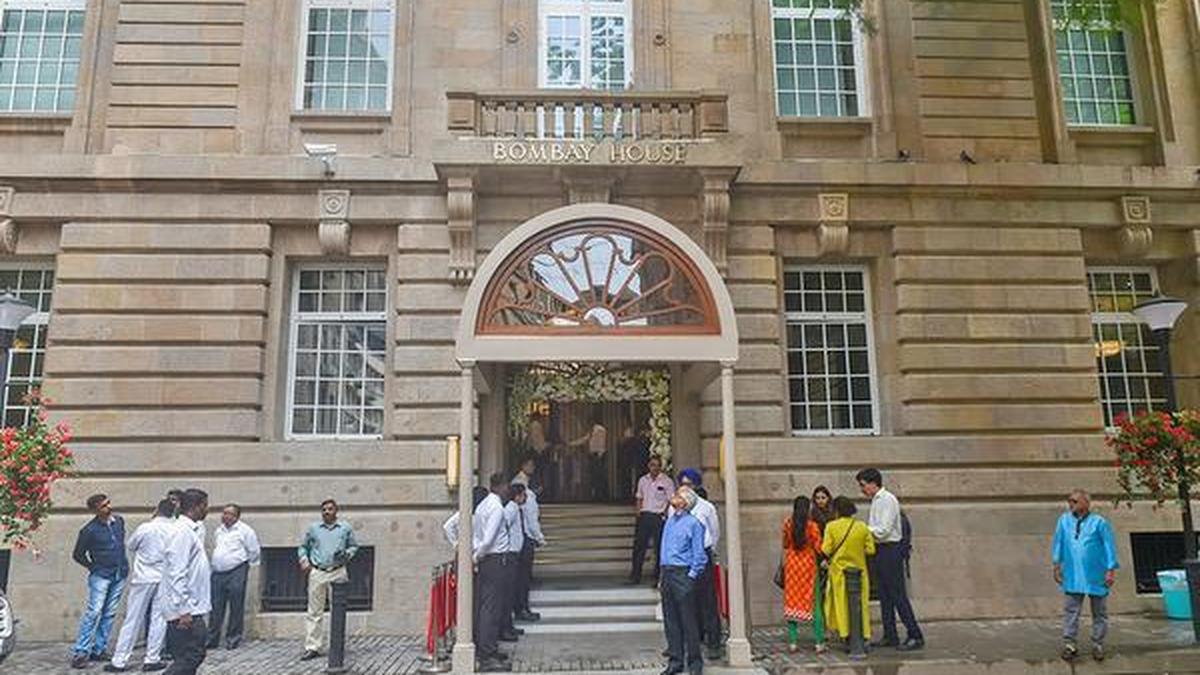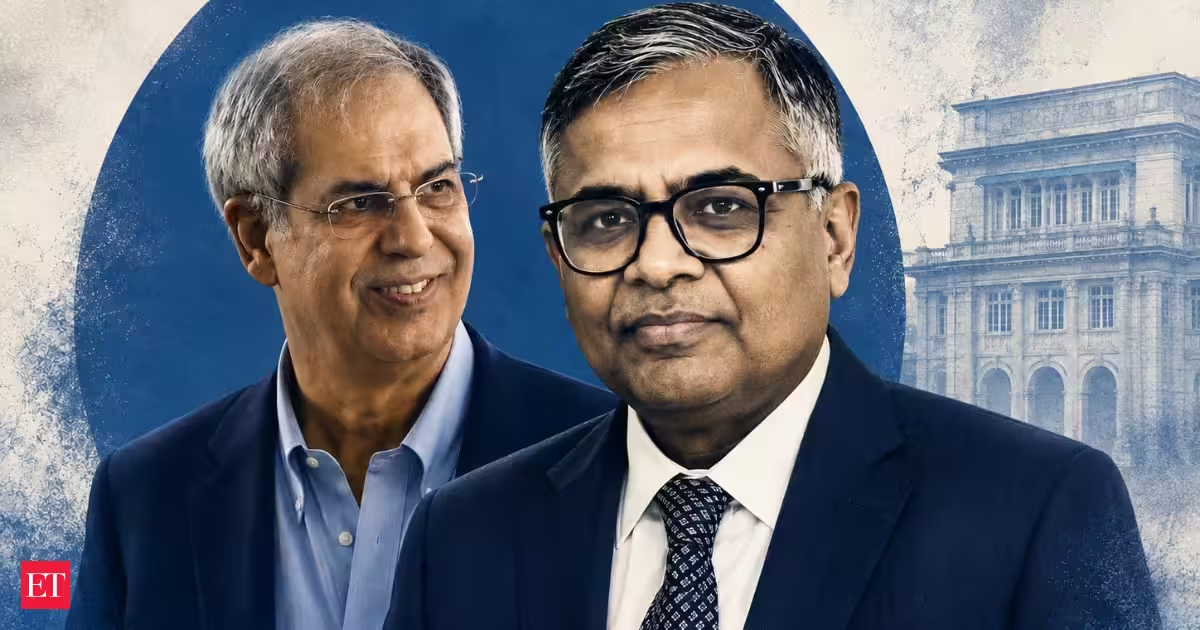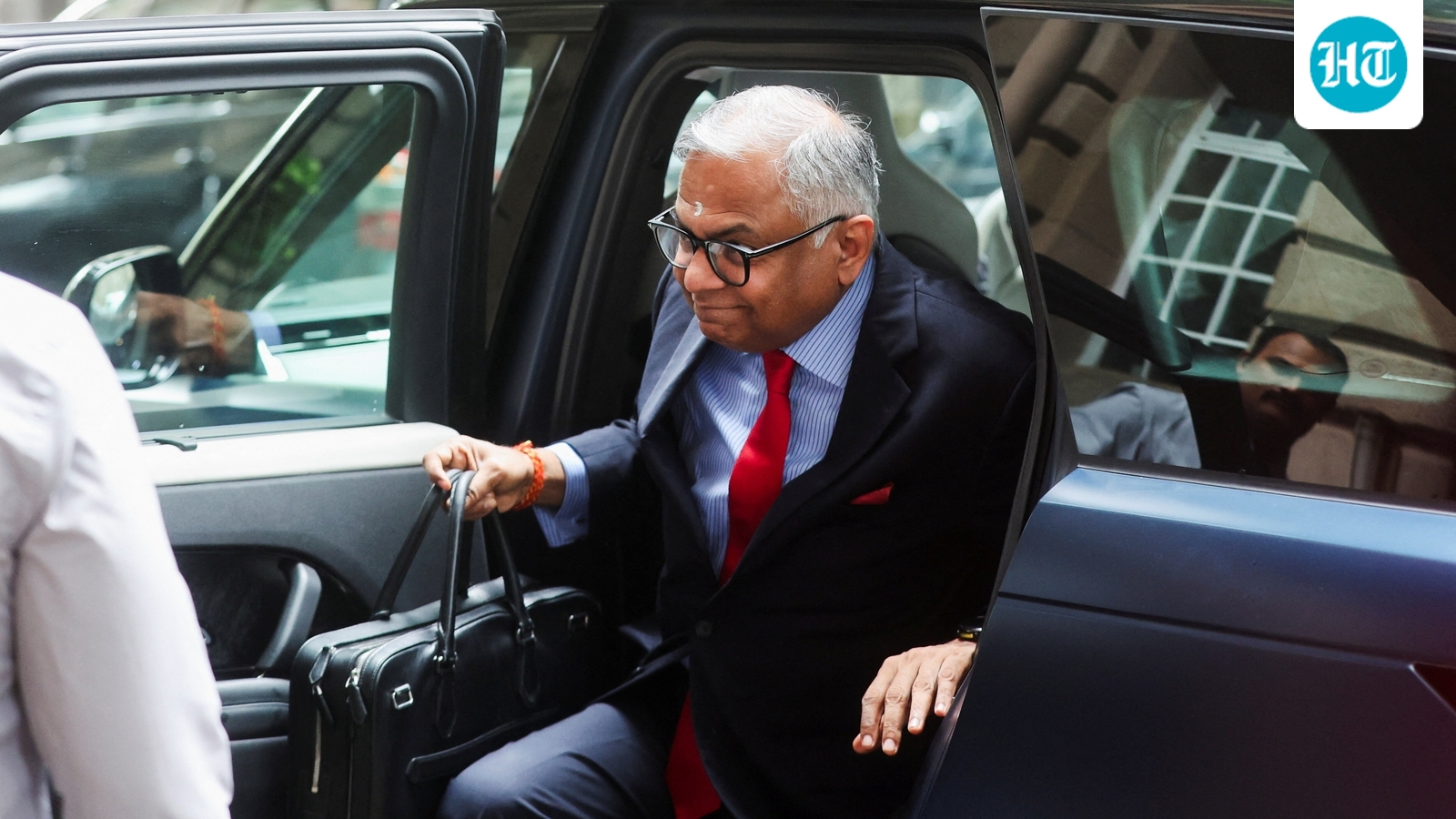
The issue stems from regulatory restrictions imposed on the trust and has raised questions not only about the AGM’s conduct but also the eventual succession to chairman N Chandrasekaran.
| Photo Credit:
Venkatesan R 5375
As Tata Sons prepares for its 108th annual general meeting (AGM) on August 18 (Tuesday), an unusual dispute involving one of its principal shareholders, the Sir Ratan Tata Trust (SRTT), has cast uncertainty over the company’s governance processes. The issue stems from regulatory restrictions imposed on the trust and has raised questions not only about the AGM’s conduct but also the eventual succession to chairman N Chandrasekaran.Q) What is the Tata Sons-Tata Trusts issue all about?Tata Sons, the holding company of the Tata group, is facing a governance challenge after Maharashtra’s Charity Commissioner imposed restrictions on the Sir Ratan Tata Trust (SRTT), one of its two principal shareholders.Q) Why is the issue significant?Tata Trusts are the largest shareholders of Tata Sons, collectively owning about two-thirds of the holding company. Under Tata Sons’ Articles of Association, the presence of a representative nominated jointly by the Sir Dorabji Tata Trust (SDTT) and the SRTT is necessary for the AGM quorum as long as the trusts collectively hold at least 40 per cent of Tata Sons’ share capital. Their influence extends across the Tata group, making their participation central to key governance decisions. Even the selection committee that needs to be appointed to choose the next chairman requires five persons, three of whom are nominated jointly by the two trusts. Thus any restrictions affecting one of the trusts could have implications for governance and decision-making at Tata Sons, including boardroom and succession-related matters.Q) Why has the issue come into focus now?The matter has attracted attention because Tata Sons is scheduled to hold its 108th AGM on August 18. The AGM is expected to consider the adoption of FY26 accounts, declaration of dividend and the reappointment of Tata Sons chairman N Chandrasekaran as a director retiring by rotation.However, questions have arisen over whether the meeting can proceed as planned given the quorum requirements as laid down in Tata Sons’ Articles of Association and the restrictions on SRTT.Q) Why did Maharashtra’s Charity Commissioner act against SRTT?In May, the Charity Commissioner passed an order restricting SRTT from holding meetings. The action followed complaints alleging violations of the Maharashtra Public Trusts Act. One complaint was filed by advocate Katyayani Agrawal, while another was filed by Venu Srinivasan, who serves as a trustee on both Tata Trusts.Q) What is the dispute over the trust’s composition?The dispute relates to an amendment to the Maharashtra Public Trusts Act that limits the number of trustees holding office for life to one-fourth of a trust’s total board strength. The complainants argue that SRTT violates this provision because three of its six trustees, Noel Tata, Jimmy Tata and Jehangir HC Jehangir, are lifetime trustees. SRTT has disputed the allegation and argued that the amendment applies prospectively and does not affect appointments made before the law was amended.Q) What is the Trust’s action plan?The SRTT has approached the Charity Commissioner for a relief that will enable it to hold meetings. Appeal against the May order in the Bombay High Court is ruled out at this stage.Q) What happens if the AGM does not have the required quorum?The Companies Act and Tata Sons’ Articles of Association contain provisions dealing with situations where quorum is not present. If the required quorum is not met, the AGM could be adjourned and reconvened at a later date in accordance with the applicable rules.Q) Is Chandra’s directorship at risk if AGM doesn’t take place?Sonam Chandwani, Managing Partner of KS Legal & Associates says on reappointment the law ties a rotational director’s retirement to the conclusion of the AGM that takes up the matter. “So if no AGM concludes the director doesn’t automatically fall out of office purely because the meeting got adjourned provided there is no separate disqualification at play,” she added.Inability to conduct an AGM on quorum grounds will not result in Chandra automatically losing his directorship. “Section 167 of the Companies Act which governs vacation of director’s office does not include failure of AGM to achieve quorum as ground for cessation of director’s term of office. Therefore Chandra should continue as a director unless he specifically expresses in writing his unwillingness to hold office, “ said Harsh Kumar, Founding Partner of Kaizen Law.Published on August 15, 2026