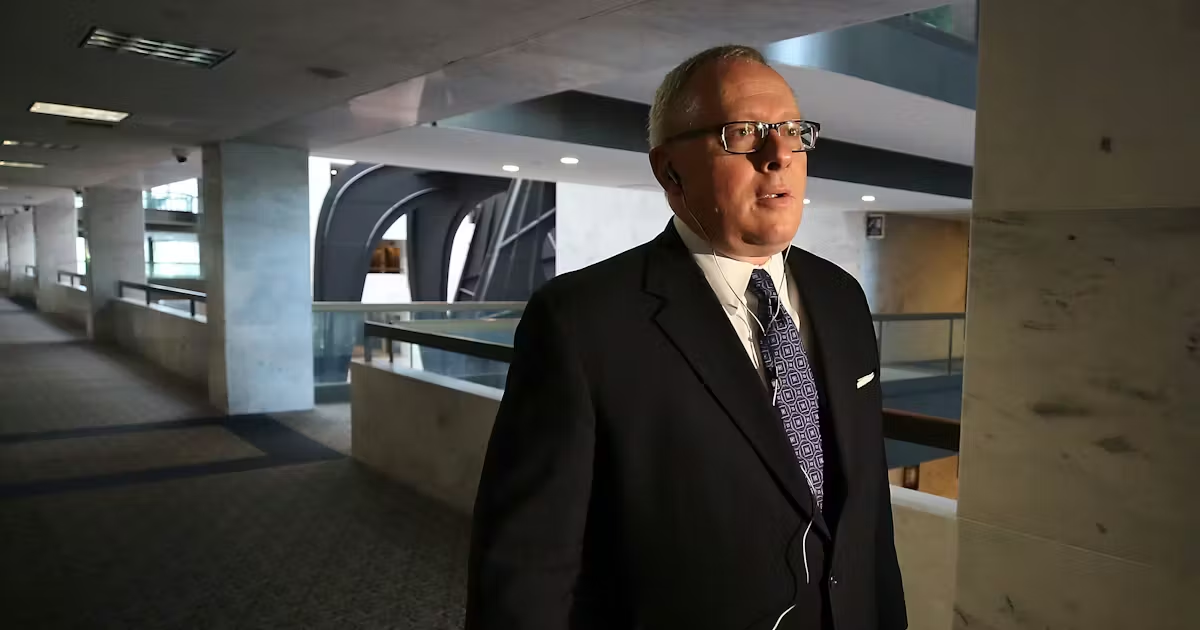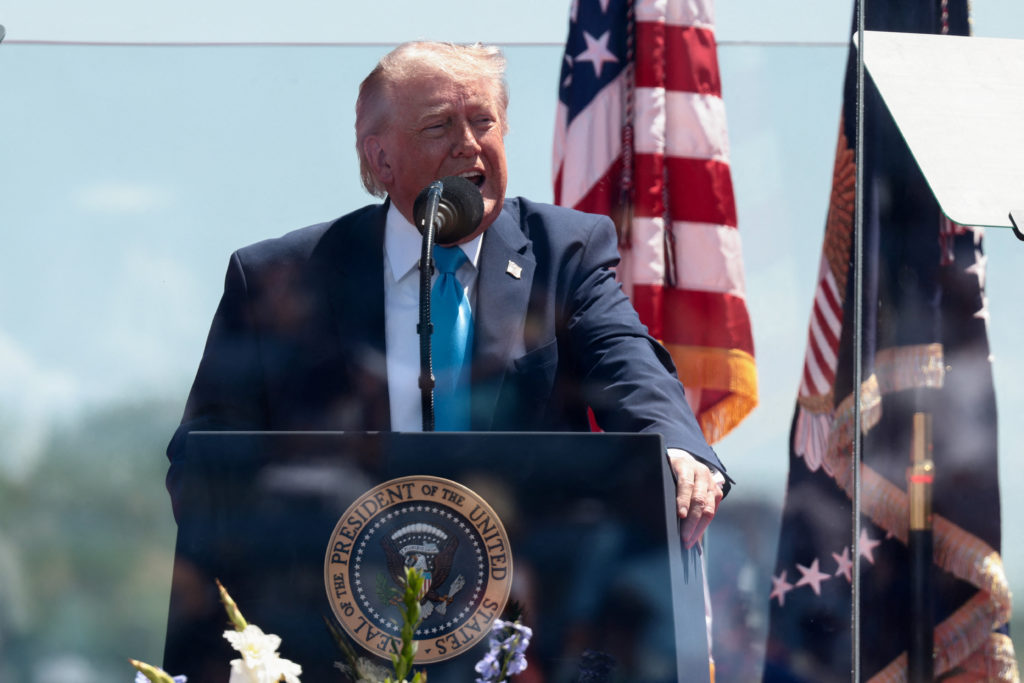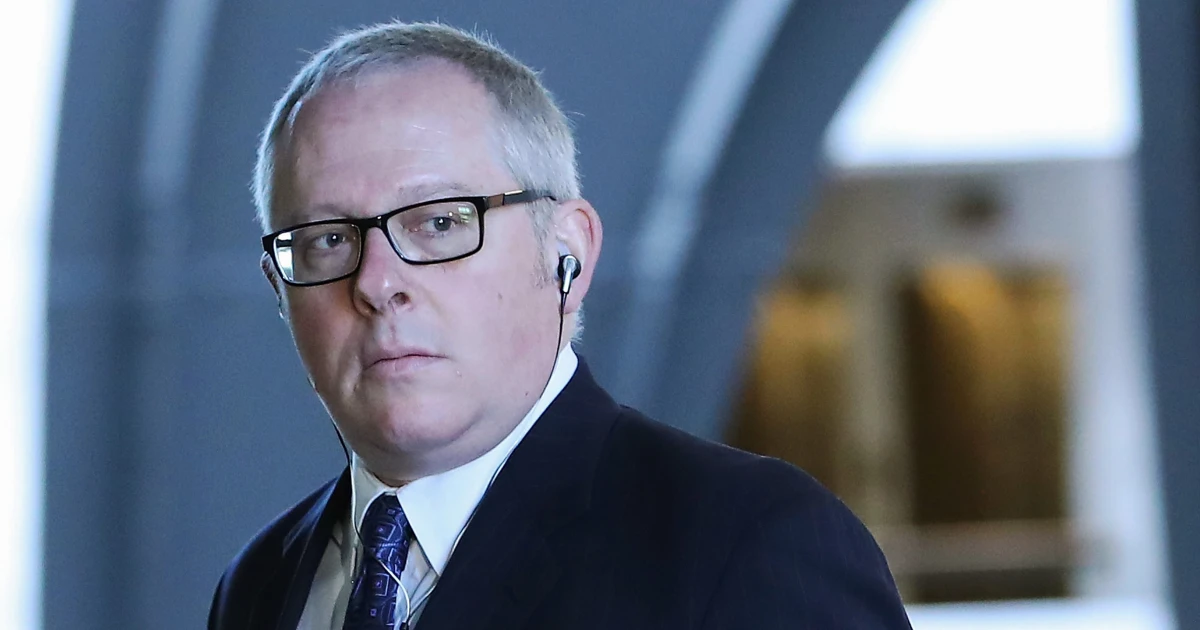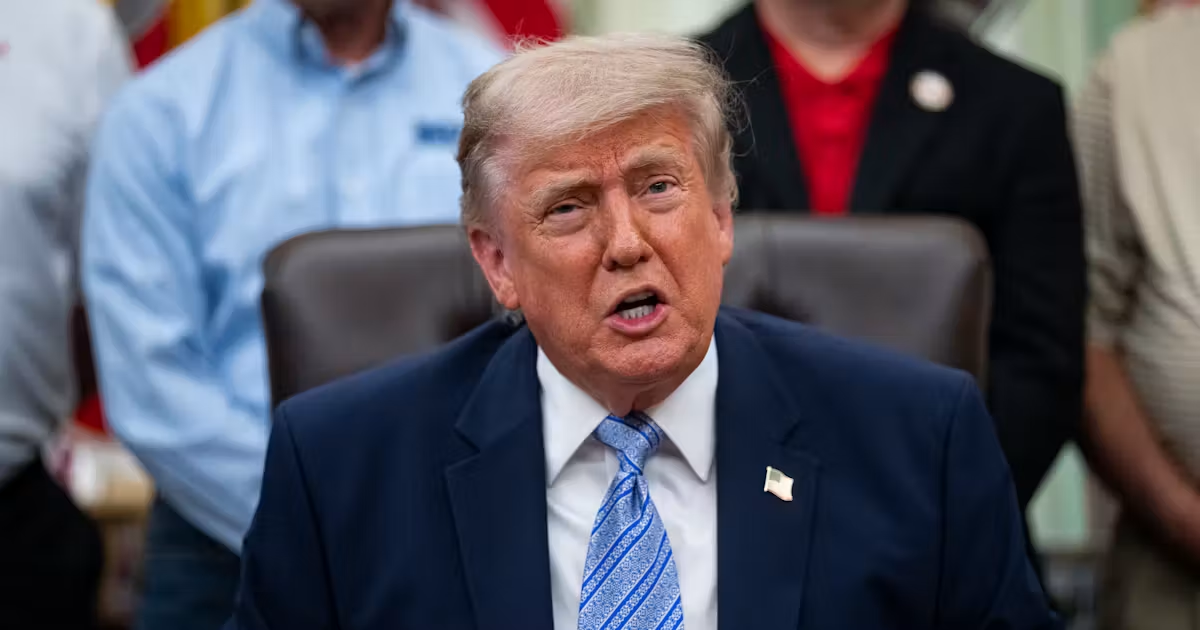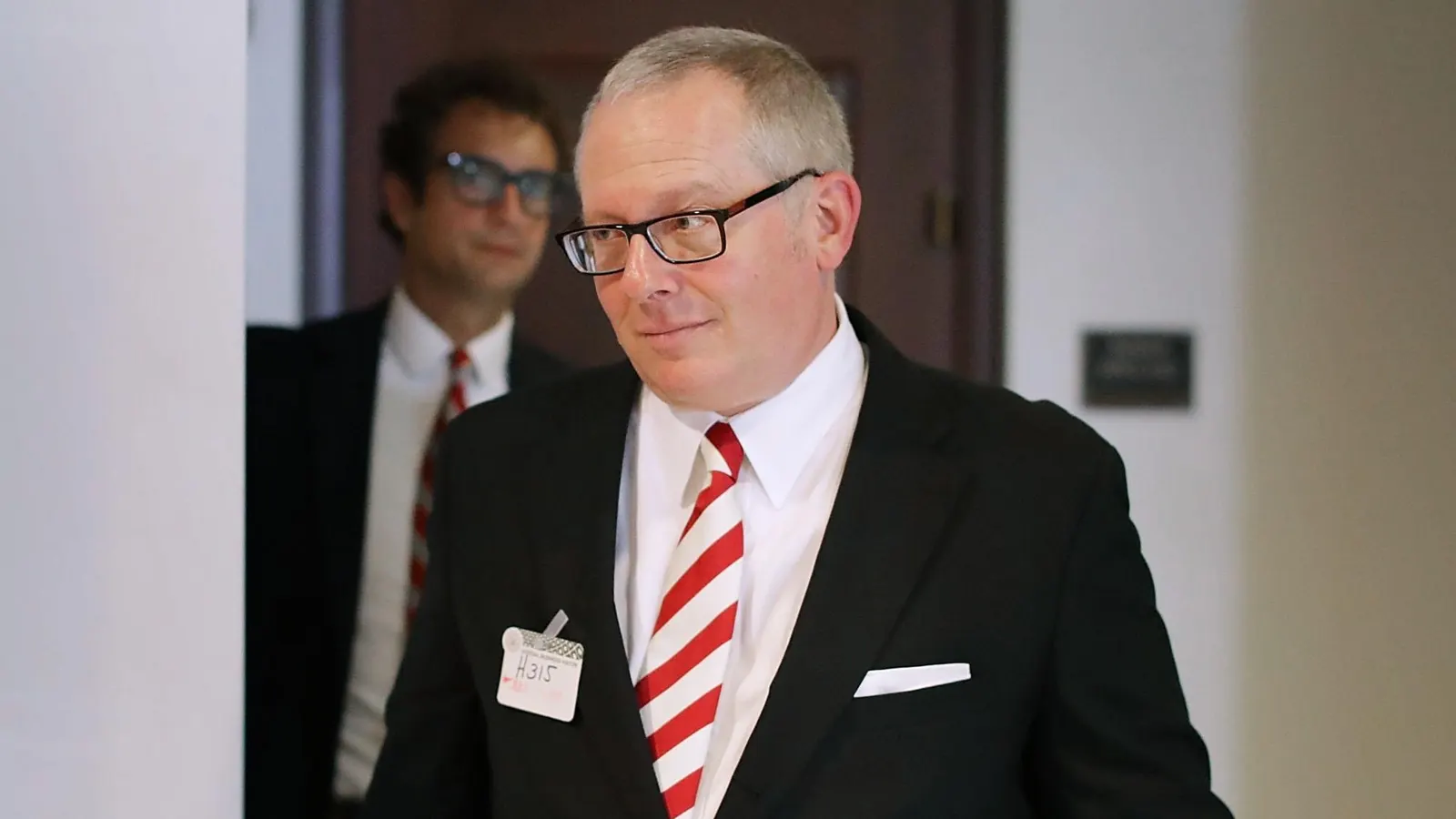
The day after the Justice Department announced the creation of an enormous “Anti-Weaponization Fund” to recompense self-proclaimed victims of government overreach, a Florida-based Republican operative named Michael Caputo filed what is believed to be the very first claim, for $2.7 million in damages, that Caputo says he and his family suffered at the hands of the Biden Administration. “The machinery of government was clearly politically weaponized against my family from July 2016 to December 2025,” Caputo wrote to Todd Blanche, the acting Attorney General, last Tuesday, May 19th. Over the years, Caputo has been, variously, an ally of the Trump adviser Roger Stone (he was once Stone’s driver); a media consultant to the Russian state-owned energy conglomerate Gazprom; and the Trump Administration’s chief spokesman for the Department of Health and Human Services. (He went on medical leave in September, 2020, after using his personal Facebook page to accuse government scientists of “sedition” against Donald Trump.) In his letter to Blanche, which was also posted on X, Caputo claimed he had been a target of the F.B.I.’s investigation into Russian meddling in the 2016 election, and a separate probe into his 2020 documentary, “The Ukraine Hoax: Impeachment, Biden Cash, and Mass Murder,” for the One America News Network. “This nine-year assault,” he wrote, “drained our savings, destroyed our peace of mind, ruined my career, wrecked my health, and wreaked far more havoc on our family. They found nothing; we lost everything.” When I spoke with Caputo later that day, he mentioned the significance of the fund, whose size was set at the politically resonant amount of $1.776 billion. “Without this fund,” Caputo said, “the political, weaponized assault on thousands of families would go uncorrected, and it will just happen again.”Not everyone greeted the creation of the fund with similar expressions of joy, and for good reason: the entire arrangement reeks of self-dealing on a scale impressive even for Trump, an in-plain-sight raiding of the Treasury to reward the President’s allies. The mechanism for the payouts is a little-known entity known as the Judgment Fund, which allows the government to sidestep the ordinary congressional appropriations process and dip into an unlimited pool of money to settle lawsuits against it. In this case, the lawsuit was President Trump’s ten-billion-dollar claim against the government for the leak of his tax returns to the Times and ProPublica; the leaker, Charles Littlejohn, had worked for an I.R.S. contractor. As Trump acknowledged, the fact that he serves as the chief executive of the government he was suing was more than uncomfortable; the federal judge overseeing the case demanded that the parties explain how the case met the requirement of two sides with interests adverse to each other. (This is not a legal nicety but a constitutional mandate; the Constitution authorizes federal courts to hear cases or controversies, not to bless back-scratching.) The Justice Department might have had meritorious arguments to defeat the lawsuit: it was arguably filed too late, for one thing; for another, it was not clear that the I.R.S. could be held liable for the conduct of its contractor, which, as it happens, occurred during the first Trump Administration. Instead, Justice settled with the President to whom it answers, and arranged for an astronomical sum, one with no factual basis in the sparse court record, to flow to unknown—indeed, unknowable—parties with no connection to the underlying litigation. (Trump also agreed to drop two other claims seeking two hundred and thirty million dollars from the federal government to compensate him for the 2016 election and classified-documents investigations.)“This is an outrageous, unprecedented slush fund,” Senator Chris Van Hollen, a Democrat from Maryland, lectured to Blanche at a contentious Senate Appropriations Committee hearing last Tuesday. Senator Patty Murray, of Washington, the ranking Democrat on the committee, termed the deal “nothing short of the sitting President of the United States looting from the Treasury.” Two police officers who were at the Capitol on January 6, 2021, filed a lawsuit that described the fund as “the most brazen act of presidential corruption this century;” Trump could use it, they warned, “to finance the insurrectionists and paramilitary groups that commit violence in his name.” The legal challenge faces hurdles—most significantly whether the officers have standing to sue—but the assessment of Trump’s audacity is spot on.Notably, more than the usual number of Republican lawmakers expressed unhappiness about the fund, particularly as details emerged: federal privacy laws might mean that the recipients of the payouts would go undisclosed and, as part of the settlement, the I.R.S. would be “forever BARRED and PRECLUDED” from auditing the Trump family and its businesses over any returns they had filed before the date of the settlement. In fact, the Trumps’ immunity from government action is phrased even more broadly; it covers “any matters currently pending or that could be pending (including tax returns filed before the Effective Date) before Defendants or other agencies or departments.” Majority Leader John Thune cited “blowback” from the plan and described himself as “not a big fan.” Susan Collins, of Maine, who chairs the Appropriations Committee and is facing a difficult campaign for reëlection, said that she did not support the fund “as it has been described,” adding, “I do not believe that individuals who were convicted of violence against police officers on January 6 should be entitled to reimbursement for their legal fees.” Thom Tillis, of North Carolina, a frequent Trump opponent who has chosen not to seek reëlection, was even more tart: “This is just stupid on stilts.” More surprising was the criticism from some of Trump’s reliable enablers. Ron Johnson, of Wisconsin, called the move a “galactic blunder.” Following an acrimonious session between Blanche and Republican senators on Thursday—Ted Cruz, of Texas, reported “fireworks at an epic level”—Thune was forced to abandon plans to vote on funding for immigration enforcement; he began the Memorial Day recess early. Trump, for his part, spun the Fund as yet more evidence of his magnanimity. “I gave up a lot of money in allowing the just announced Anti-Weaponization Fund to go forward,” he posted on Truth Social. “I could have settled my case, including the illegal release of my Tax Returns and the equally illegal BREAK IN of Mar-a-Lago, for an absolute fortune. Instead, I am helping others, who were so badly abused by an evil, corrupt, and weaponized Biden Administration, receive, at long last, JUSTICE!”As with many of Trump’s excesses, the anti-weaponization fund has antecedents in Democratic Administrations. In defending it, Blanche pointed to what is known as the Keepseagle settlement, which set up a six-hundred-and-eighty-million-dollar compensation fund during Barack Obama’s first term to make payments to Native American farmers and ranchers who had alleged discrimination from the Department of Agriculture when they applied for federal loans. After claims were paid, some three hundred and eighty million dollars remained in the fund, and the money was distributed to Native American agriculture-worker support groups who hadn’t been victims of wrongdoing. Conservatives protested that the Obama Administration had funnelled money to allies. When the federal appeals court in the District of Columbia upheld the Keepseagle arrangement, in 2017—two class members had protested the settlement—Judge Janice Rogers Brown, a conservative, dissented from what she described as “the executive branch raiding hundreds of millions of taxpayer dollars out of the Treasury, putting them into a slush fund disguised as a settlement, and then doling the money out to whatever constituency the executive wants bankrolled.”Blanche told senators that the weaponization fund, while “unusual,” was “almost identical in structure” to the Keepseagle agreement. Joseph Sellers, who had represented the Native American farmers, disagreed, noting that, in the Keepseagle case, a federal judge supervised the distribution of funds and approved the criteria for allocating the money. In addition, Sellers told me, the Keepseagle fund featured “total transparency” about how the funds would be allocated and who exactly would receive them. Sellers said that the anti-weaponization fund “departs dramatically from the Keepseagle case,” and he added that “the Keepseagle case, I think, is not an appropriate precedent to justify what they did.” (Brian Morrissey, general counsel of the Treasury Department, resigned hours after the settlement was announced.)The lead lawyer for the government in the Keepseagle case, Josh Gardner, who is now in private practice, echoed that point in a post on Substack. The Keepseagle settlement, Gardner wrote, was “not a policy initiative or a free‑standing compensation program, like the Anti-Weaponization Fund appears to be. Rather, it was the negotiated resolution of a specific, long‑pending and hotly contested legal dispute where the claims process was specifically designed to compensate the plaintiffs for the legal violations alleged in that case.” In fact, as Gardner noted, Trump’s Justice Department has specifically renounced sending settlement funds to those not directly injured by the conduct at issue in the lawsuit. A memorandum issued by former Attorney General Pam Bondi on her first day in office stated that, “except in limited circumstances,” settlement funds “should not be used to require payments to non-governmental, third-party organizations that were neither victims nor parties to the lawsuits.”This abuse of the Judgment Fund raises the prospect that its operations could be curtailed. Congress created the fund in 1956 to avoid needing to approve individual settlements—it was intended to be a convenience, the federal government’s version of auto-pay. In 1977, Congress lifted a cap of a hundred thousand dollars, allowing payments of any amount to be issued from the fund without congressional approval. In recent years, it has come under criticism as a piggy bank for the incumbent Administration to finance favored causes. The Obama Administration tapped the fund to pay $1.3 billion in interest to the Iranian government; the Biden Administration used it to underwrite a hundred-and-thirty-eight-million-dollar payment to the victims of the national-gymnastics-team doctor Larry Nassar, and to pay a hundred and twenty-seven million dollars to victims of the Parkland school shooting. The Trump Administration used the fund for a nearly five-million-dollar settlement to a wrongful-death lawsuit brought by the family of Ashli Babbitt, and for million-dollar settlements to the former national-security adviser Mike Flynn and to Trump’s 2016 campaign adviser Carter Page.Paul Figley, an emeritus professor at American University’s Washington College of Law, and a leading scholar on the Judgment Fund, said he found its latest use legal but “bad policy,” violating the spirit of the constitutional assignment of the spending power to the legislature. “It’s Congress that should be creating programs and authorizing payments,” he told me. Figley makes an important institutional point, but the sweeping terms of the Trump settlement are especially concerning. John Koskinen, who served as commissioner of the I.R.S. under Obama, said he was troubled by the Trumps’ promised immunity from I.R.S. audits or other adverse governmental actions. “There are audits that get closed. There are settlements reached,” Koskinen told “PBS NewsHour” last Wednesday. “But I have never heard of the I.R.S. in the future saying, Whatever you filed in the past, we’re not going to take a look at. You do have to wonder what’s in those returns that makes it so important for them not to be audited.” He added, “There’s never been anything in history that I know of that comes close to this.” That is a statement whose broader truth we witness daily during this Administration.Since his appointment as acting Attorney General, on April 2nd, Blanche—who served as Trump’s criminal-defense lawyer before running the Justice Department—has seemed to be frantically auditioning to get the job permanently. With Blanche at the helm, the department has obtained another flimsy indictment of the former F.B.I. director James Comey, this one for a social-media post of seashells spelling out “86 47”; the indictment alleged that a “reasonable recipient” would interpret Comey’s post as a “serious expression of an intent to do harm to the President of the United States.” Blanche announced criminal charges against the Southern Poverty Law Center for allegedly defrauding its donors by using money to pay informants who worked for extremist groups. “The S.P.L.C. was not dismantling these groups,” Blanche said in announcing the charges. “It was instead manufacturing the extremism it purports to oppose by paying sources to stoke racial hatred.” He brought in Joseph diGenova, who represented the Trump campaign in challenging the 2020 election results, to lead a wide-ranging inquiry into whether the former C.I.A. director John Brennan and other federal officials committed crimes in investigating Trump; CNN reported that a senior career prosecutor leading the case was removed after she resisted pressure to quickly charge Brennan. But with the creation of the anti-weaponization fund, Blanche and the Justice Department may have taken their efforts to placate Trump a step too far. It is always a risk to overestimate Congress’s courage in the face of Trump’s overreach, but this may be the rare moment when it says, Enough. ♦
How Trump Created a Slush Fund for His Allies
The President, in creating the “Anti-Weaponization Fund,” may have committed the rare offense that turns Republican lawmakers against him.
TL;DRAI
The DOJ settled Trump's tax-return case via a $1.776B Judgment Fund, bypassing Congress and granting Trump's businesses permanent IRS audit immunity. It enables opaque Treasury payouts to political allies with no recipient disclosure and no legislative check.
2,132 words~10 min read