Indonesia has maintained relatively low bond yields, reducing the spread with US Treasuries, but economist views differ on whether that is a vote of confidence in Indonesia’s economy or an unhealthy market condition.
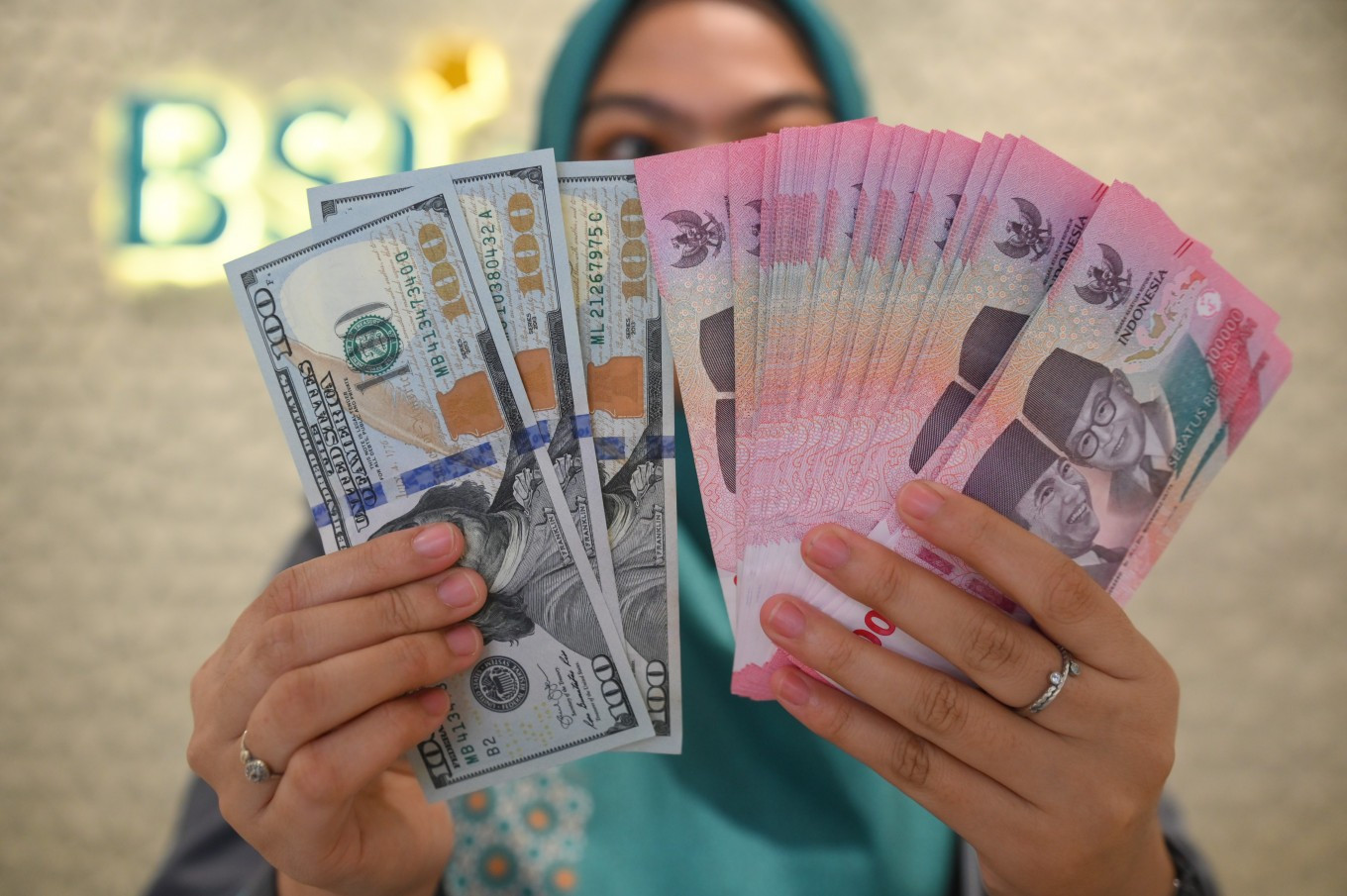
An employee shows rupiah and United States dollar banknotes at a Bank Mandiri Syariah branch in Jakarta in this undated photo. (Antara/Nova Wahyudi)
Record-high yields of global government bonds have reduced the spread with Indonesian government bonds, but that is not necessarily a vote of confidence in Indonesia’s economy, which relies increasingly on domestic borrowers.Concern over growing fiscal pressure amid stretched state budgets and rising inflation has pushed up borrowing costs in the United States, Europe and Japan.
Long-dated US Treasury bond yields have crept up since the Israeli-US war on Iran in late February prompted Tehran to severely restrict traffic though the Strait of Hormuz, a pivotal waterway for oil and gas supply, pushing up energy prices, and thereby inflation pressure, around the world.
The 10-year Treasury yield last week reached its highest point in over a year, while 30-year bond yields in Japan and the United Kingdom have touched levels not seen since the late 1990s.