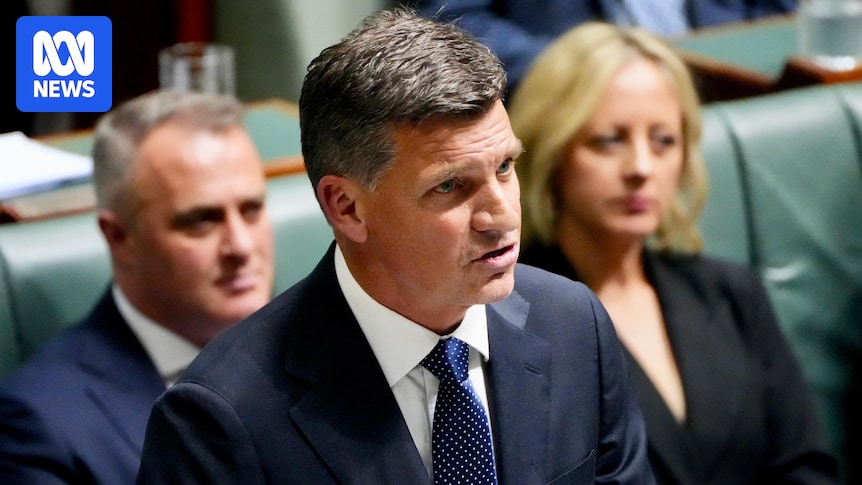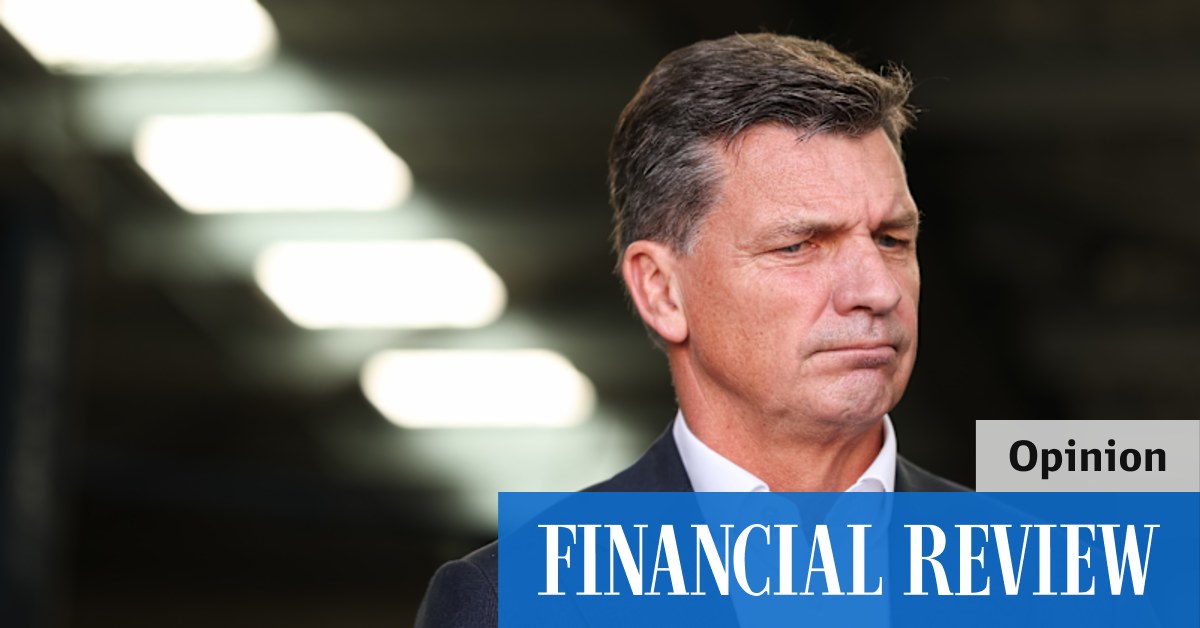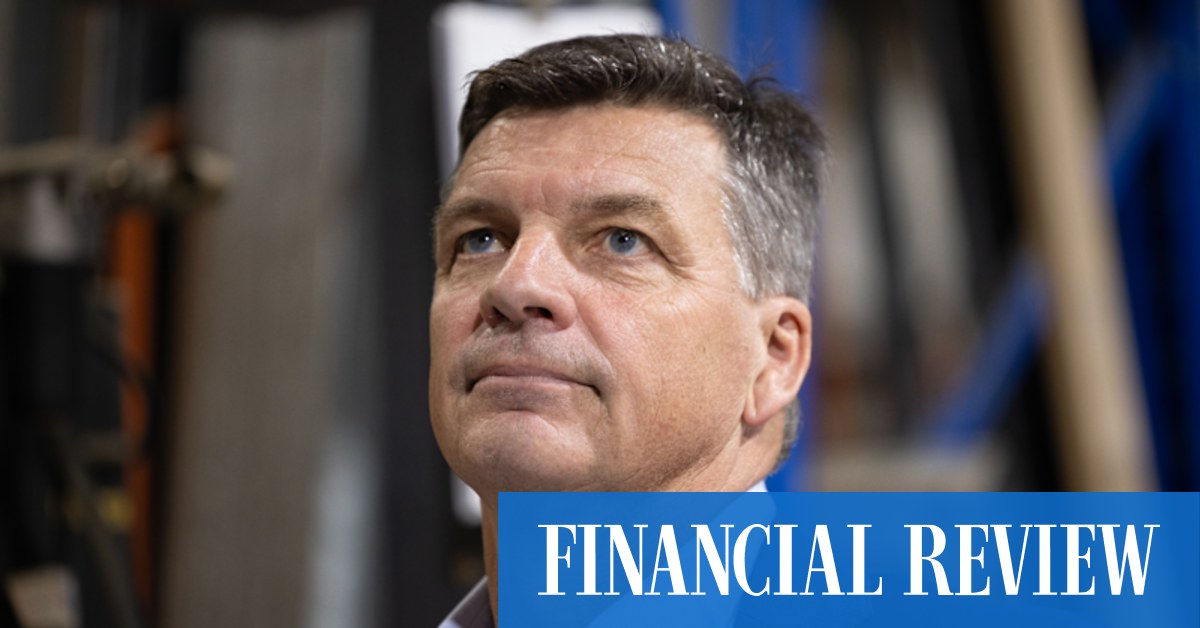
It has been almost two weeks since the federal government released its budget.It had big ideas and big themes. A concerted media campaign is now being driven against some of the changes.Liberal leader Angus Taylor's budget-reply speech had some big ideas of its own. He wants to index the personal income tax scales to inflation and link immigration to housing supply.Now that we have had time to absorb both documents, what do economists make of the policy offerings of the Government and Coalition?We spoke to some economists about the bigger picture.Chris Richardson: 'It's time to change'The independent economist Chris Richardson said the tax debate in Australia has been stuck on small ideas for too many years.He was really happy to see Labor and the Coalition talking about bold tax ideas again.Chris Richardson says Australia's tax system desperately needs updating. (ABC News: Daniel Irvine)"We've failed to tackle a series of chronic problems on a whole series of fronts," he told the ABC."Maybe the rise of China allowed us to gain income as a nation that we then parcelled out, one way or another, and it made our political class a bit lazy."But for whatever reason, we haven't changed enough in 20 years, and that's not the sign of a healthy society."Richardson said he "100 per cent admits" that Australians haven't 'voted in' some of the budget's policy proposals.But, he said, he was worried about Australia's future if we didn't fix the chronic problems in our tax system, as well as housing for younger people."Look at the rise of the One Nation vote. We're getting brittle. Something has to change," he warned.He said he was a fan of changing the 50 per cent capital gains tax discount, but he would prefer to replace it with income averaging, rather than a 30 per cent minimum tax.Income averaging would allow a taxpayer to smooth their realised capital gains income over a number of years."I wouldn't have done negative gearing. I think if the capital gains discount is fixed, then negative gearing goes away as an issue, because the two interact," he said.But is Australia capable of change? Richardson said that is the critical question this budget is asking.Ken Henry: 'We'll need a much bigger tax reform package'Ken Henry, a former Treasury secretary, has also welcomed the budget's efforts to fix problems that have been ignored for years."I like the fact that the tax reform agenda is focused on restoring some measure of intergenerational equity," he told the ABC.Ken Henry says Australia will still need a much bigger tax reform package. (ABC News: Ian Cutmore)"In particular, dealing with opportunities for aspiring first home owners, and also dealing with income going through discretionary trusts, which has been an issue for the integrity of the tax system."Henry said it was obvious from the post-budget debate that lots of people were ignoring what Treasurer Jim Chalmers was trying to address in the budget.He said people who were upset about grandfathered changes to capital gains tax and negative gearing were being given a lot of airtime in the debate, but the reality of Australia's aging population, and the fact that the income tax burden will be getting far worse for younger workers if the tax system isn't reformed, was a serious problem that had to be confronted.He said Australia's tax system should be capable of generating more tax revenue when the economy is performing like it is today, but it's become too fragile."For too many years now, personal income tax has been the only source of revenue that's been increasing as a proportion of gross domestic product. All the others are falling, even GST. We don't have the robustness in tax bases that we really need," he warned."That's just another way of saying that at some stage we're going to have to have a much bigger tax reform package."Amy Auster: 'This is the starting gun of policy intention'Amy Auster is the chief executive officer of Policy Institute Australia, a think tank.She has been an adviser to the Commonwealth Treasury, a deputy secretary at the Victorian Department of Treasury and Finance, and a partner at PwC.Amy Auster says this is economic reform "as it should be".She said in last year's federal election campaign, Labor and the Coalition were both criticised for their small target strategies and lack of policy ambition, so it was great to see the government "put its ambition out there" with this budget."I commend the government on taking a step forward with tax reform," she said."Tax reform is the third rail of Australian politics. It's always a tough sale. Non-productive or passive investment does get very advantageous tax treatment and that is certainly worth taking a look at."After the budget was released, she wrote in the Australian Financial Review that budgets were merely the "starting gun of policy intention", because the long run of work on legislation and implementation had to follow.But she said the early read on the budget's changes to the CGT discount, if universally applied, was that they would affect Australians who own or directly invest in small and medium-sized businesses."In this way, the change risks penalising both passive and productive capital," she wrote.She said the business community should engage in constructive conversation with the government to help to make the legislation better."This is economic reform as it should be — bold ideas, put into the public domain and opened to the community for debate," she wrote.As far as other ideas go, she said it would be been nice to see the government putting more money into the revitalised National Competition Council (NCC).Saul Eslake: Changing tax on discretionary trusts 'the right thing to do'Independent economist Saul Eslake said he was "delighted" to see changes to negative gearing and the capital gains tax in the budget."I think they will have a positive impact on the ability of people to buy their own homes by removing the competition that they face from investors in established properties, which accounts for over 80 per cent of the money lent for property investment," he said.Saul Eslake says changing the tax treatment of discretionary trusts is the "right thing to do". (ABC News: Daniel Irvine)He supported the government's decision to reform the tax treatment of discretionary trusts, but says it will have to think seriously about the impact it could have on start-ups, and then figure out a way to treat start-ups differently."Although the change to the tax treatment of trusts will hurt me, because I run my business through a discretionary trust, I still think it is the right thing to do," he said.He also liked the Working Australians Tax Offset (WATO) in the budget.The WATO will provide an annual tax offset (up to $250) for income earned by Australian workers, paid automatically on tax returns. It will give direct tax relief only to taxpayers for income earned from work, and not their income from assets.Treasurer Jim Chalmers said the WATO was a key part of the "architecture" of the budget that will allow the government to provide more tax cuts in the coming years to workers who rely on income from wages and salaries.Eslake said the WATO represented a small step towards a "schedular" or "Dual Income Tax" system that independent MP Allegra Spender has been advocating for."It's what they do in Scandinavia and the Netherlands and Austria, where non-labour income is taxed according to a completely separate schedule," he said.However, he said he wished the government had fixed the scandalous way the GST was being distributed to the states."Now that the government has acquired a taste for breaking promises, there's another one they ought to break, which is the promise to keep shovelling $7 billion a year to Western Australia," he said."How a Labor government that is now talking about equity as well as responsible financial management, how they can defend that, God only knows."And he said he didn't think the budget was doing enough to get back into structural balance."The budget hasn't really done anything to reduce the risk that the Reserve Bank will raise rates again," he said."Of course, they've not been helped by the Victorian and Western Australian state budgets, both of which amount to a big 'up yours' to the Reserve Bank."The Victorian budget puts 10 times as much into the Victorian economy, over the three years to 2027-28, as the federal budget puts into the national economy."Nicki Hutley: Tax changes should have been floated for longerNicki Hutley, an economics consultant, said she reacted positively to the budget on budget night, but she was thinking a little less positively about it now.Nicki Hutley says she hopes the budget does not undermine the public's support for tax reform. (ABC News: John Gunn)"I think the housing tax changes are long overdue; they're really sensible, it's not going to shift the dial massively or overnight, but it's a really important change," she told the ABC."Cracking down on tax avoidance is really important too. That's also an issue of intergenerational equity."But some of the things were a bit of a surprise, and it was surprise how far they went, and I'm not sure if the electorate is ready to accept them."She said she would have liked to have seen the government talking about its broader tax agenda for longer before it delivered the budget.She was worried that the surprise element of the proposed changes to the taxation of housing and trusts could damage some of the public's support for major tax reforms."I know we've had all the discussions and we've seen all the papers, but if they were going to do this, I would have liked to have seen them go for housing, leave it at housing, and then do more tax changes in a separate effort," she said.She said Treasury's economic forecasts in the budget were also "very rose-tinted.""But I do give them marks for trying to do tax reform, even though some of the policies hadn't been taken to an election. I'd rather good policy and a broken promise than the other way around," she said.Angus Taylor's budget reply speechIn his reply to the budget, Liberal leader Angus Taylor floated a large number of policies that a Coalition government, under his leadership, would pursue as alternatives to Labor's policy agenda.Angus Taylor, delivering his first budget reply speech on May 14. (ABC News: Callum Flinn)Among the most publicised ideas, Taylor said he would "dump net zero" and cut down on "mass immigration" (two ideas being pushed by the right-wing lobby group Advance).He would cap immigration numbers based on the number of homes being constructed in Australia each year.He would work with the owners of coal-fired power plants to keep the plants running for as long as possible.And he would index the personal income tax thresholds to inflation, to stop bracket creep.The economists who spoke to the ABC were most comfortable talking about Taylor's idea to index personal income tax thresholds to inflation. Many supported the idea.Under indexation, taxpayers' income tax bills only increase (in real terms) when their wages increase by more than inflation. According to the OECD, 45 per cent of countries in the OECD applied automatic wage indexation in 2022.Saul Eslake said wage indexation "was in principle a good idea."He said under wage indexation, if the public wanted additional government spending, then governments would be forced to explain why they would have to raise taxes. It would also deprive governments of the ability to hand out "tax cuts" every few years.Ken Henry agreed. He said he was not critical of tax indexation. But he also said if a government wanted to embark on a large program of future tax reform, it wouldn't be the first thing you'd do — it would be one of the last things.Regarding Taylor's plan to link immigration levels to housing supply, he said he didn't know how it would work in practice.Ms Hutley said she didn't like what she was hearing."The migration stuff is just nuts," she said."We need migrant workers. Migration needs to be carefully targeted, but you can't throw the baby out with the bathwater."We're trying to target productivity, so we need people with skills to come to this country. But if we fall behind on our housing policy, are we going to let that affect our potential future productivity, and the burden of population aging?" she asked.
Five economists share opinions on Labor's budget and Coalition's reply
Five leading economists weigh in on the budget and reply debate, embracing many of the ideas raised while also arguing that "bigger tax reform is needed."
2,051 words~9 min read