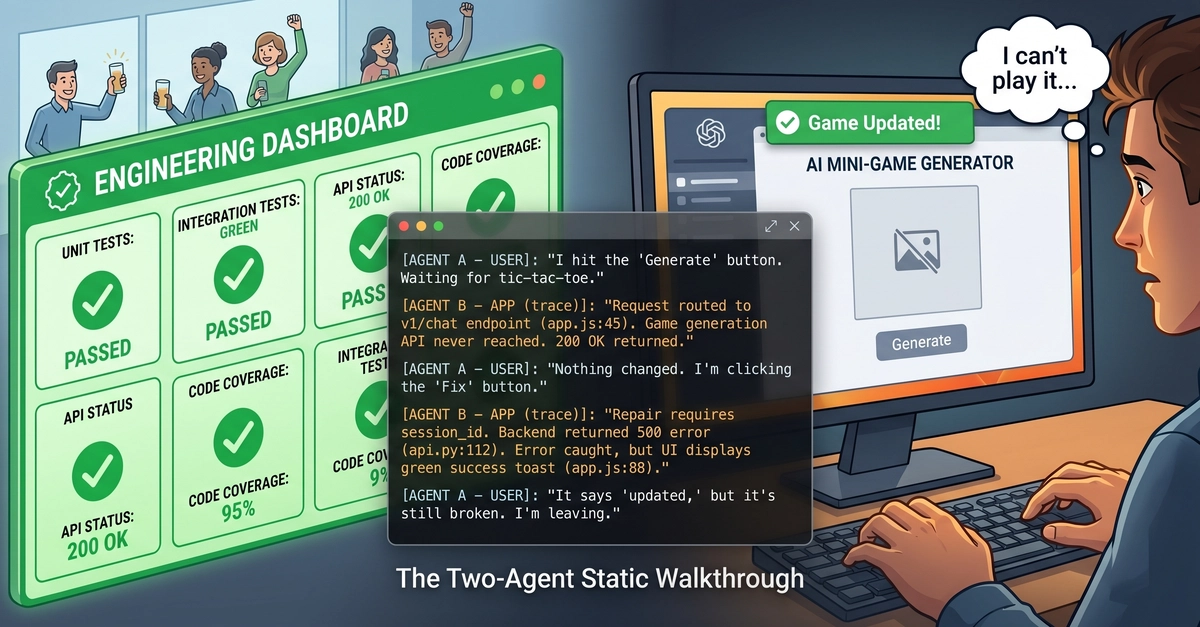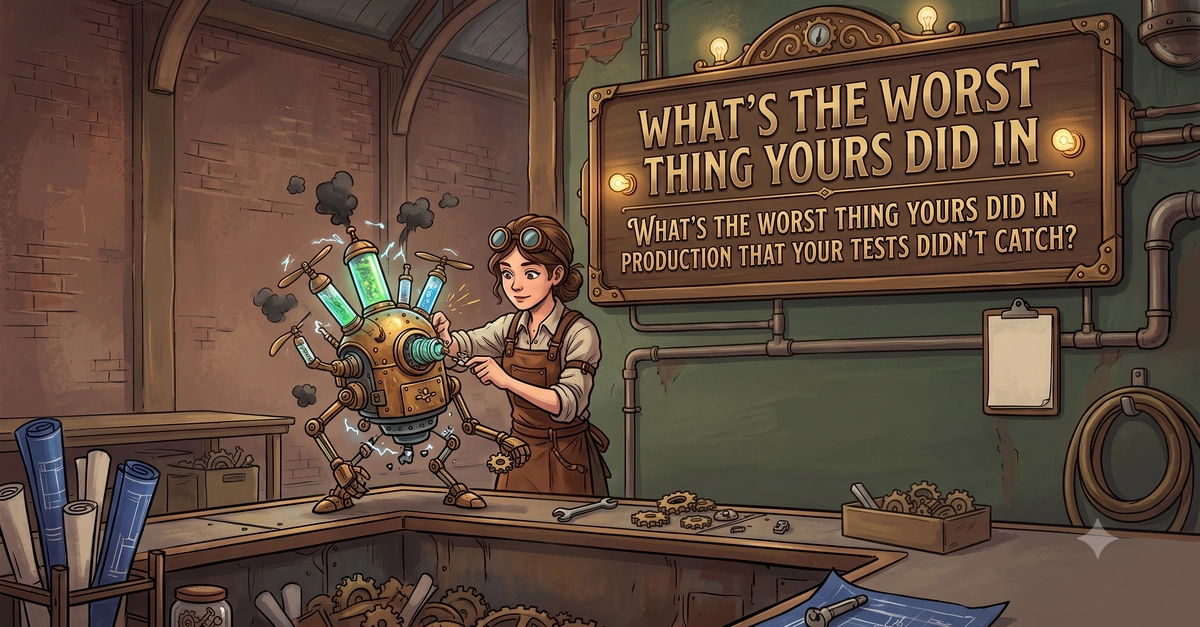
There is a specific moment in a system's life when the dashboards still look green, the test suite is still passing, the bug report rate is still falling — and the codebase has already become something no human in the room actually understands.
Mitchell Hashimoto called this out yesterday in a thread that has now passed 487,000 likes. He named it "AI psychosis" — entire companies operating under the implicit belief that "MTTR is all you need," that it's fine to ship bugs because the agents will fix them so quickly. His warning is sharper than the usual AI-skeptic line: "you can automate yourself into a very resilient catastrophe machine."
I have been shipping production agents for the last six months — Setu, Sandesh, Swayam, Sankalp, a Sutra desktop middleman, all stitched together with MCP tools and a Claude Code instance per channel. The agents write a fair amount of the code. They also reach into the database, fire scheduled routines, post to LinkedIn on a cron. Mitchell's tweet hit me harder than I expected, because the trap he is describing is the exact one I have had to defend against, more than once, in a stack that is mostly me and the model.
Here is what the trap actually looks like from inside the code, and the three disciplines I have ended up trusting.