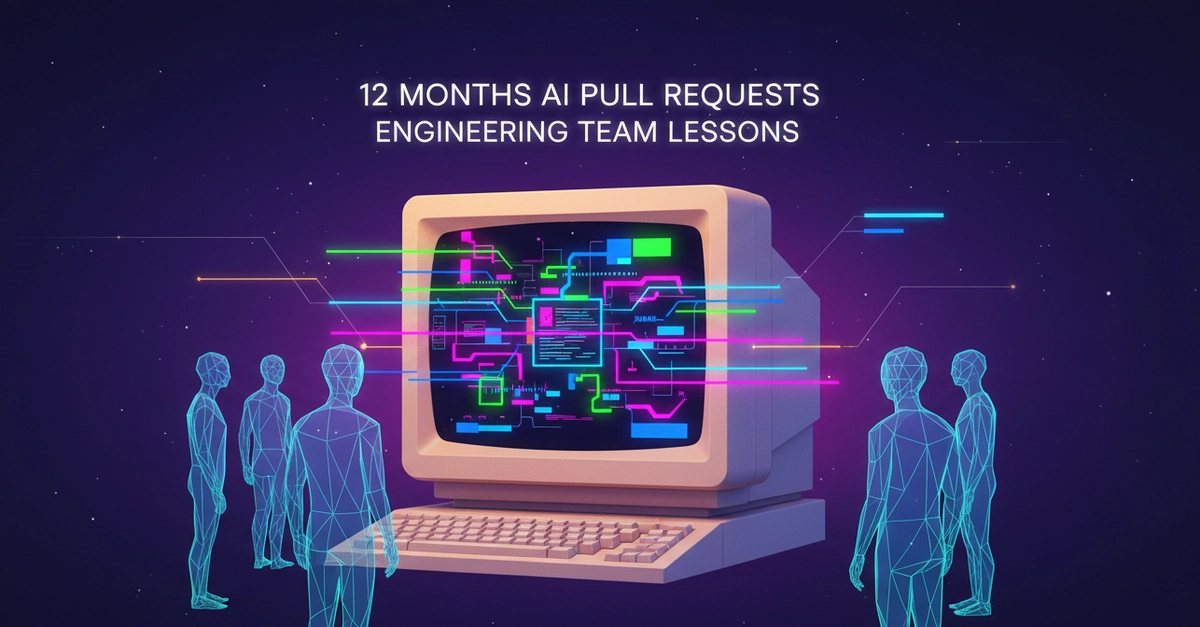
When our platform team adopted AI coding assistants across every repository in early 2025, I expected productivity gains. What I did not expect was that the most valuable lesson would come from the failures, not the successes. After reviewing roughly 4,200 merged pull requests where AI played a meaningful role in authoring code, the picture that emerged contradicts most of the marketing material I had read. The economic momentum behind this technology is undeniable, with the $644 billion USD bet on AI infrastructure reshaping how capital flows through Silicon Valley and beyond, but the day-to-day reality of shipping production software with these tools is messier, more nuanced, and ultimately more interesting than any keynote presentation suggests. This is what we learned, what we changed, and what we wish someone had told us before we started.
The Productivity Numbers Are Real, But Misleading
Our internal telemetry showed individual developers shipping between 26 and 55 percent more code by line count once AI assistance became standard practice. That sounds like a clear win, and in narrow contexts it is. Boilerplate generation, test scaffolding, API client wrappers, and routine refactoring all collapsed from hours to minutes. A junior engineer on our team rewrote a legacy ETL pipeline in three days that would have taken six weeks under our previous workflow.