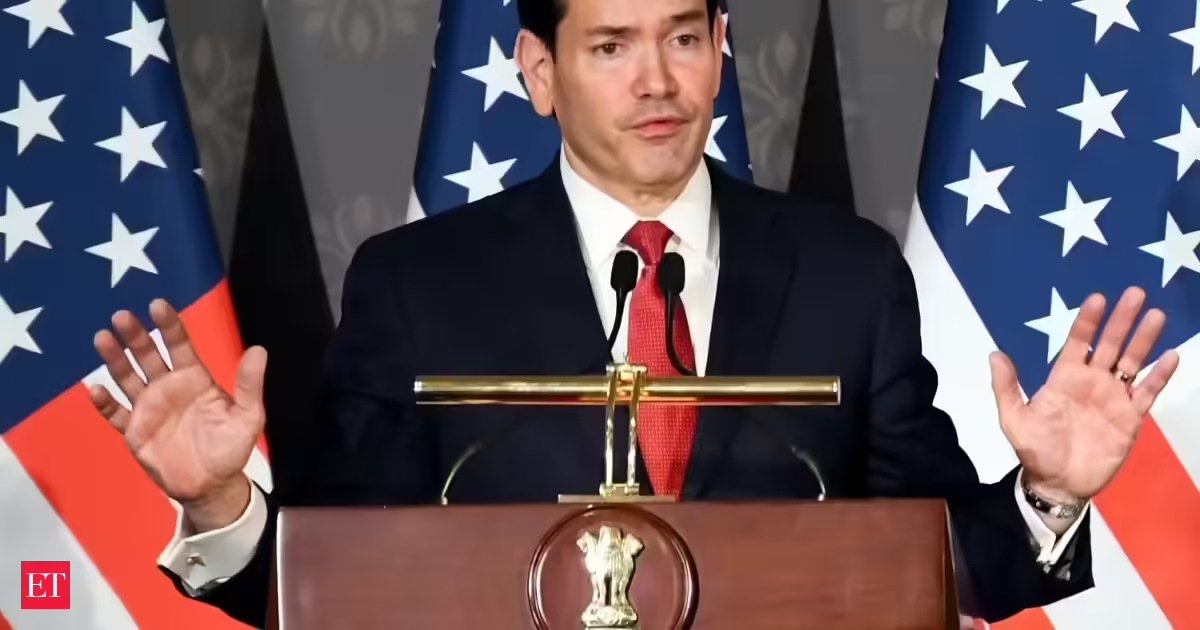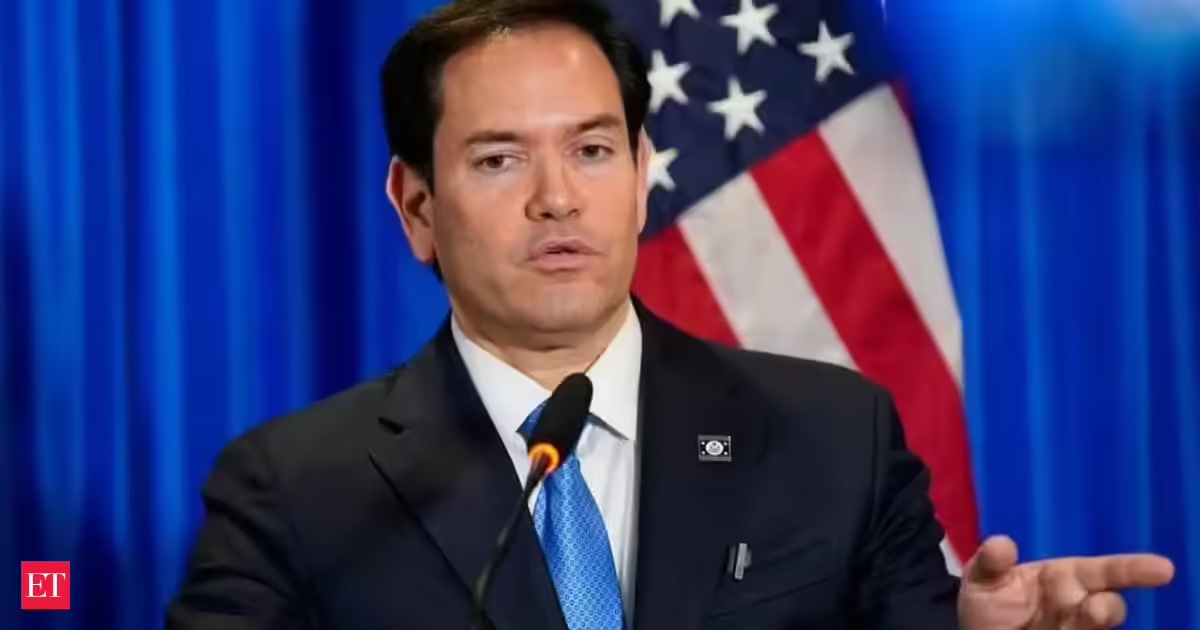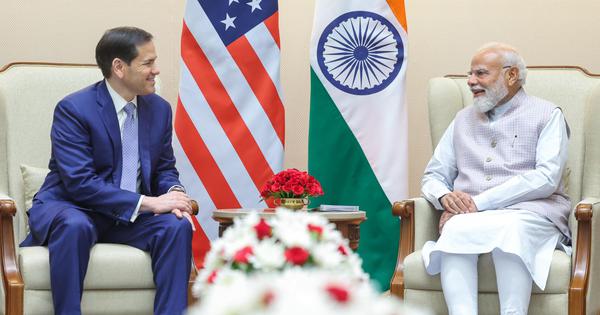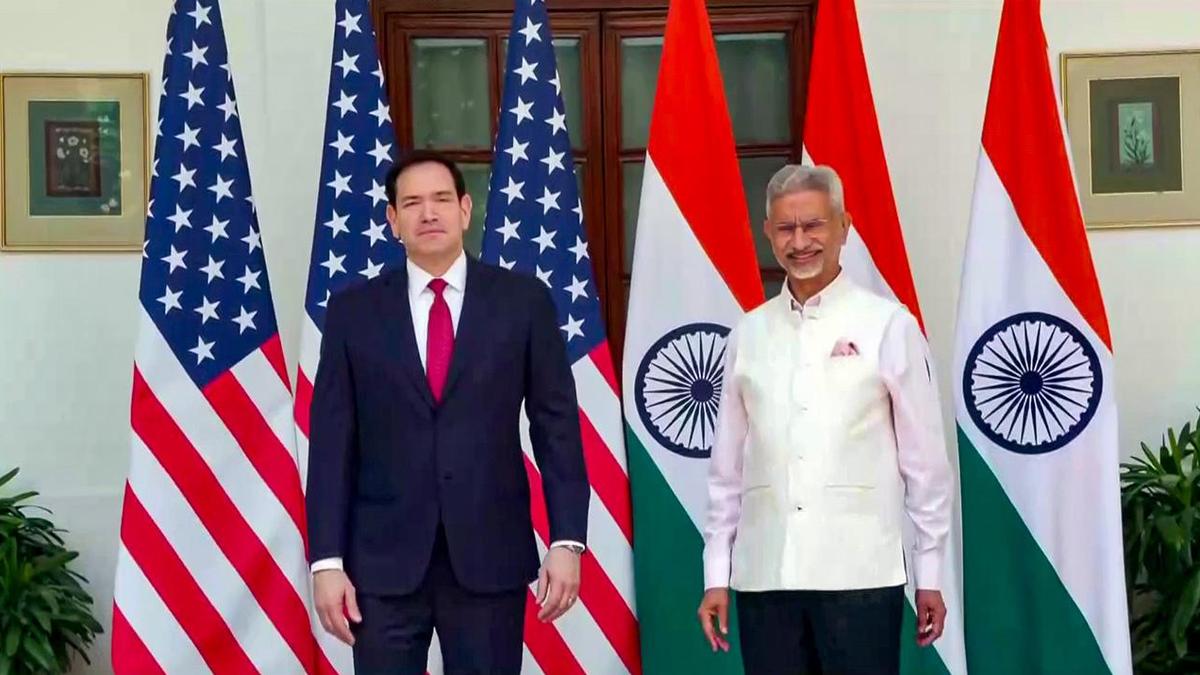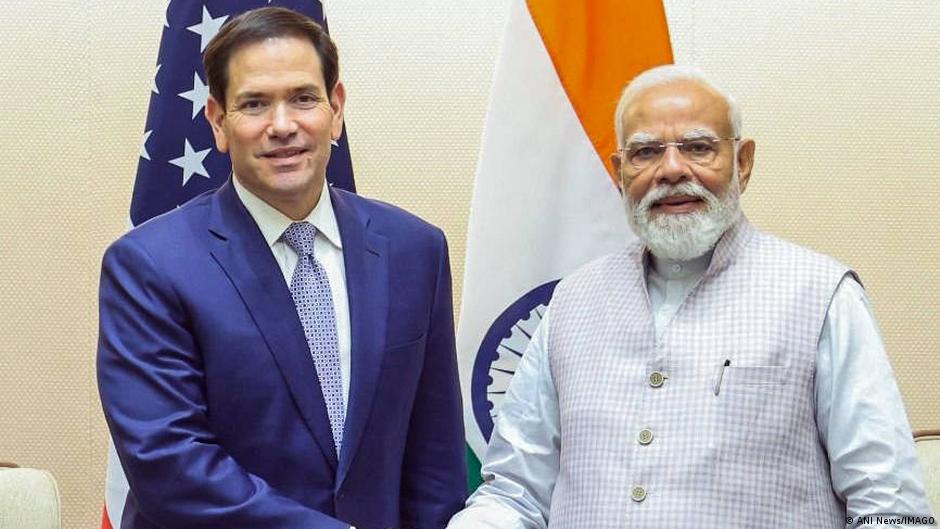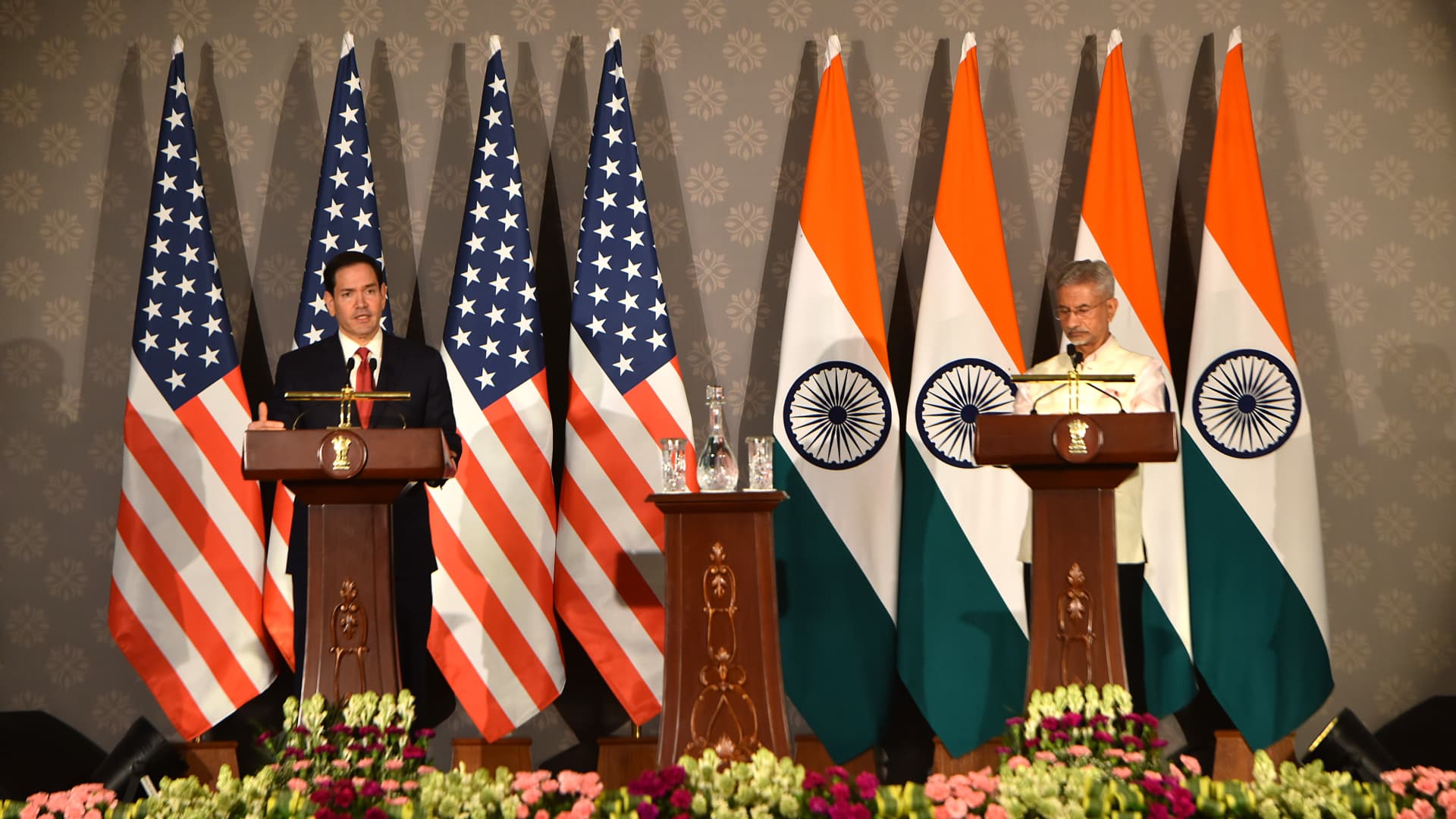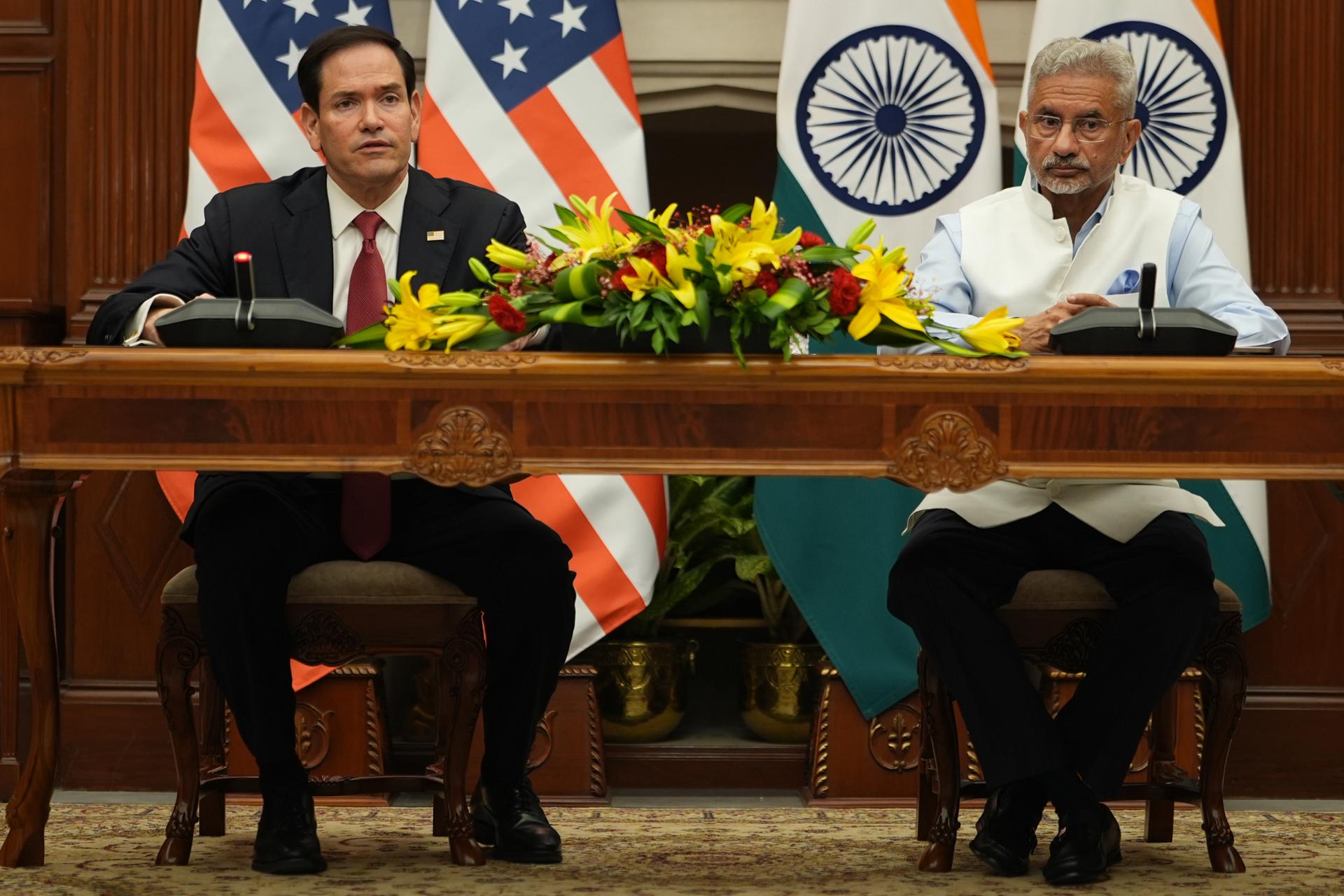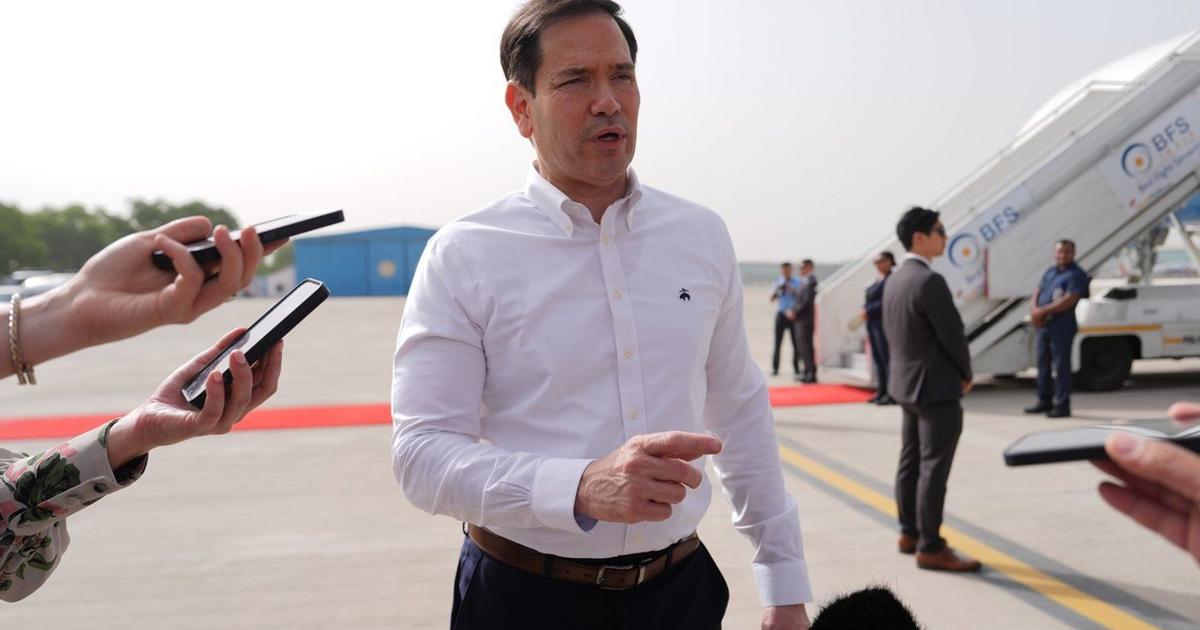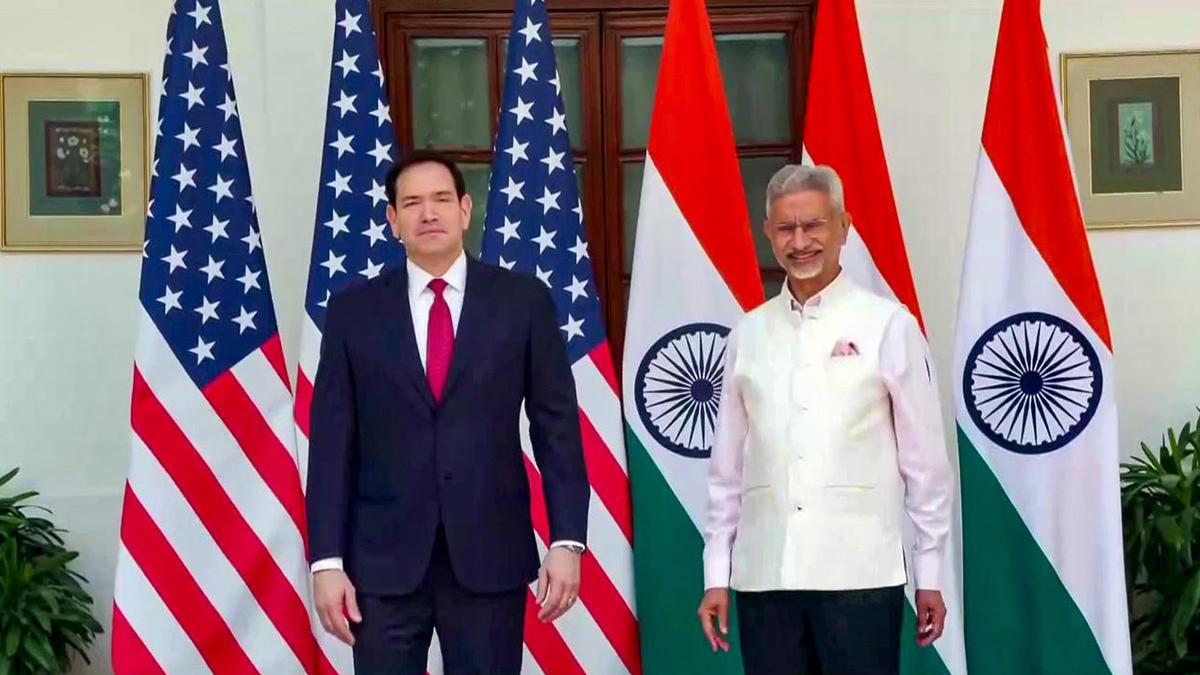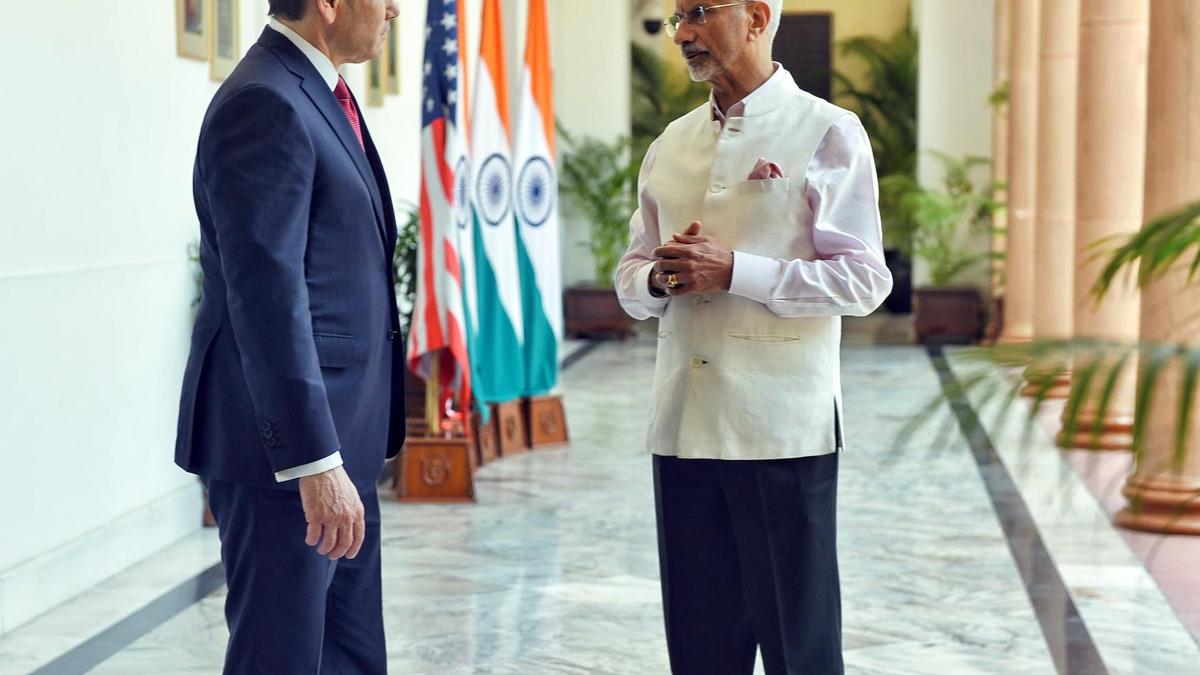
US Secretary of State Marco Rubio and External Affairs Minister S Jaishankar at Hyderabad House, in New Delhi on Sunday
| Photo Credit:
US Secretary of State Marco Rubio on Sunday gave a fresh reminder of India’s past commitment to purchasing $500 billion of US goods over next five years by posting a thank you message to American diplomats who facilitated this pledge. But some experts argue that since the reciprocal tariff framework had collapsed after an unfavorable US SC verdict, the economic logic of the India–US bilateral trade agreement (BTA) itself disappeared, and hence the question of the $500 billion purchase commitment was rendered irrelevant. “The Indian government must clarify its position on Rubio’s tweet. Large-scale imports of US energy, defence equipment, aircraft and agricultural products could further widen India’s trade deficit and intensify pressure on the rupee,” said Ajay Srivastava from research body GTRI.Rubio, who is on a four-day official visit to India, discussed prioritising the BTA negotiations in his meetings with Prime Minister Narendra Modi on Saturday and Foreign Minister S Jaishankar on Sunday. “Huge thanks to @USAmbIndia Sergio Gor and our American diplomats for their efforts. Because of their great work, India has committed to purchasing $500 billion in U.S. goods over the next five years focusing on energy, technology, and agriculture,” Rubio posted on ‘X’ on Sunday.Not formalisedIndia’s pledge to buy $500 billion worth of goods from the US over five years was part of the framework interim trade agreement which was not formalised.After the US Supreme Court invalidated the reciprocal tariffs imposed on US trade partners, including India (25 per cent), New Delhi decided to step back and wait for the final tariffs to emerge before sealing the BTA.“The entire foundation of that bargain (framework deal) collapsed on February 20, 2026, when the Supreme Court of the United States ruled that the legal basis for the Trump administration’s reciprocal tariffs was invalid. The ruling effectively dismantled the tariff-based framework around which the new generation of US trade deals had been negotiated,” Srivastava said.Every country, whether it negotiated a deal with Washington or not, now faces the same additional 10 per cent tariff for entry into the US market, on top of normal MFN tariffs, Srivastava explained. That erased the advantage countries expected to receive in exchange for offering major concessions to the US. The matter has become even more sensitive for India because of the mounting pressure on the external sector and the rupee, he added.Published on May 24, 2026