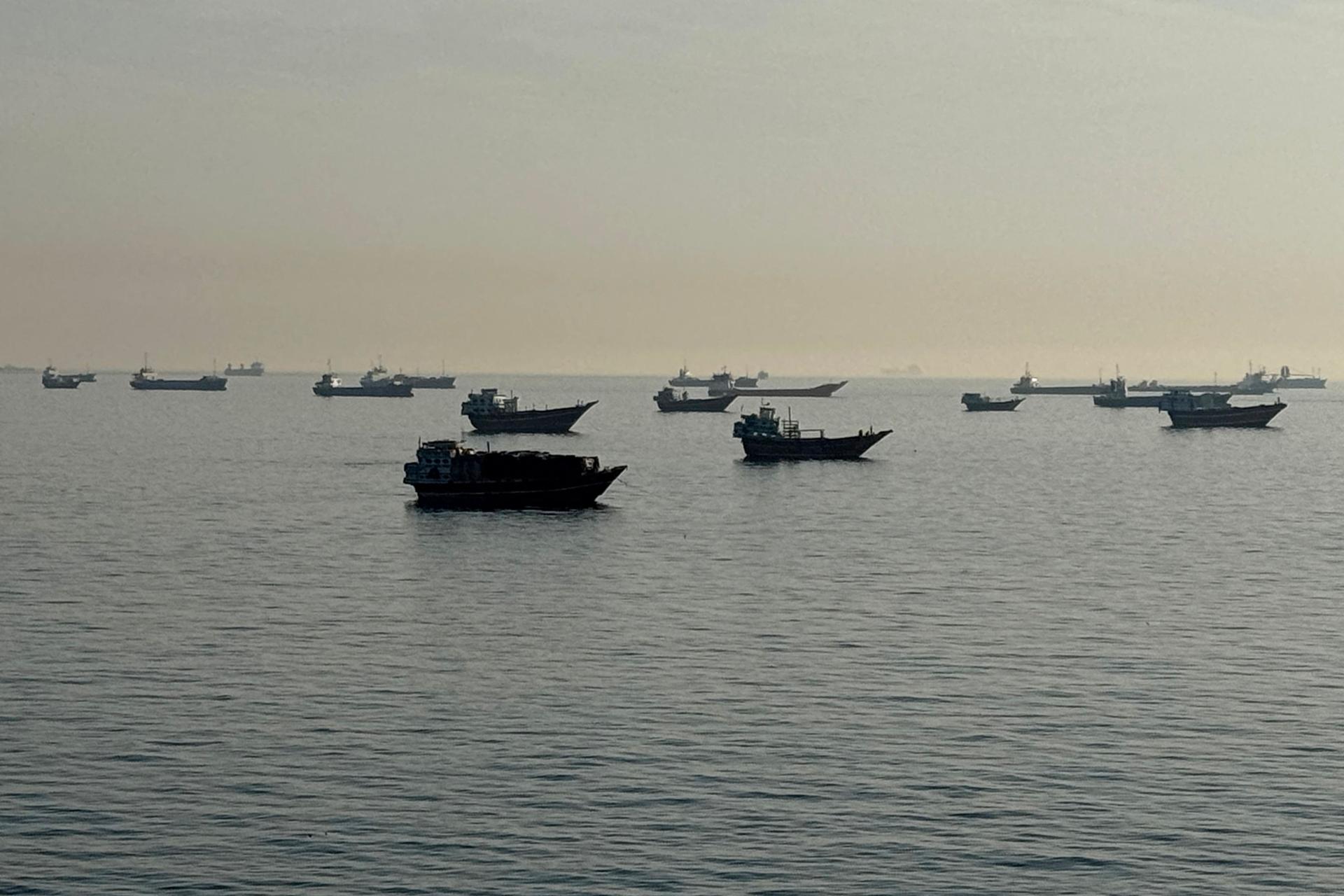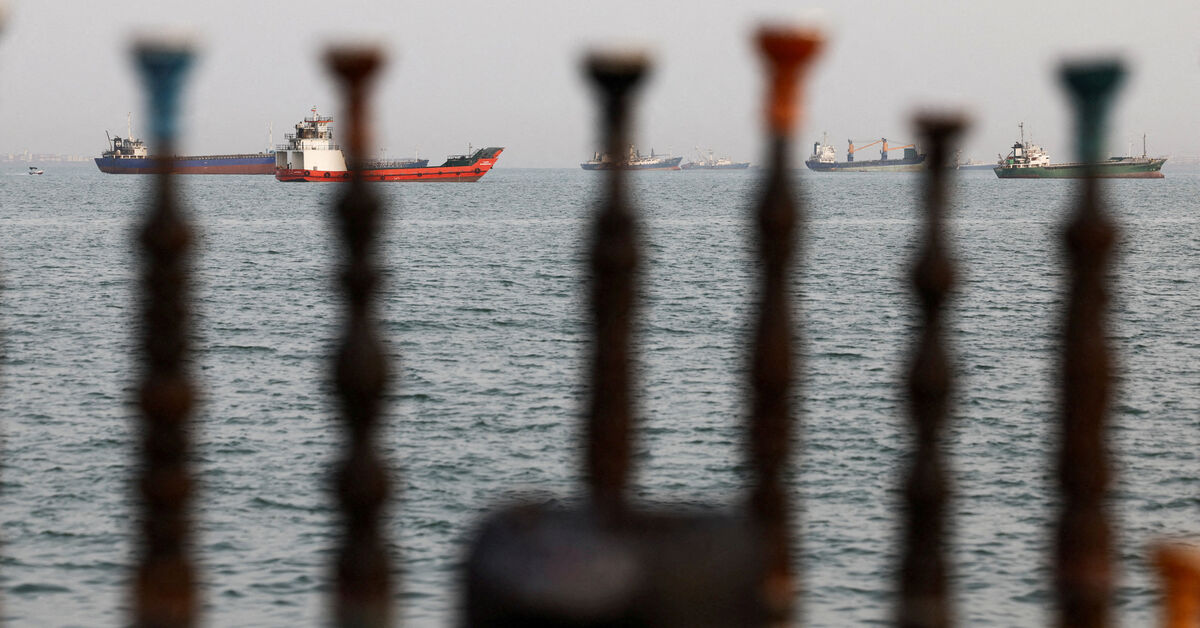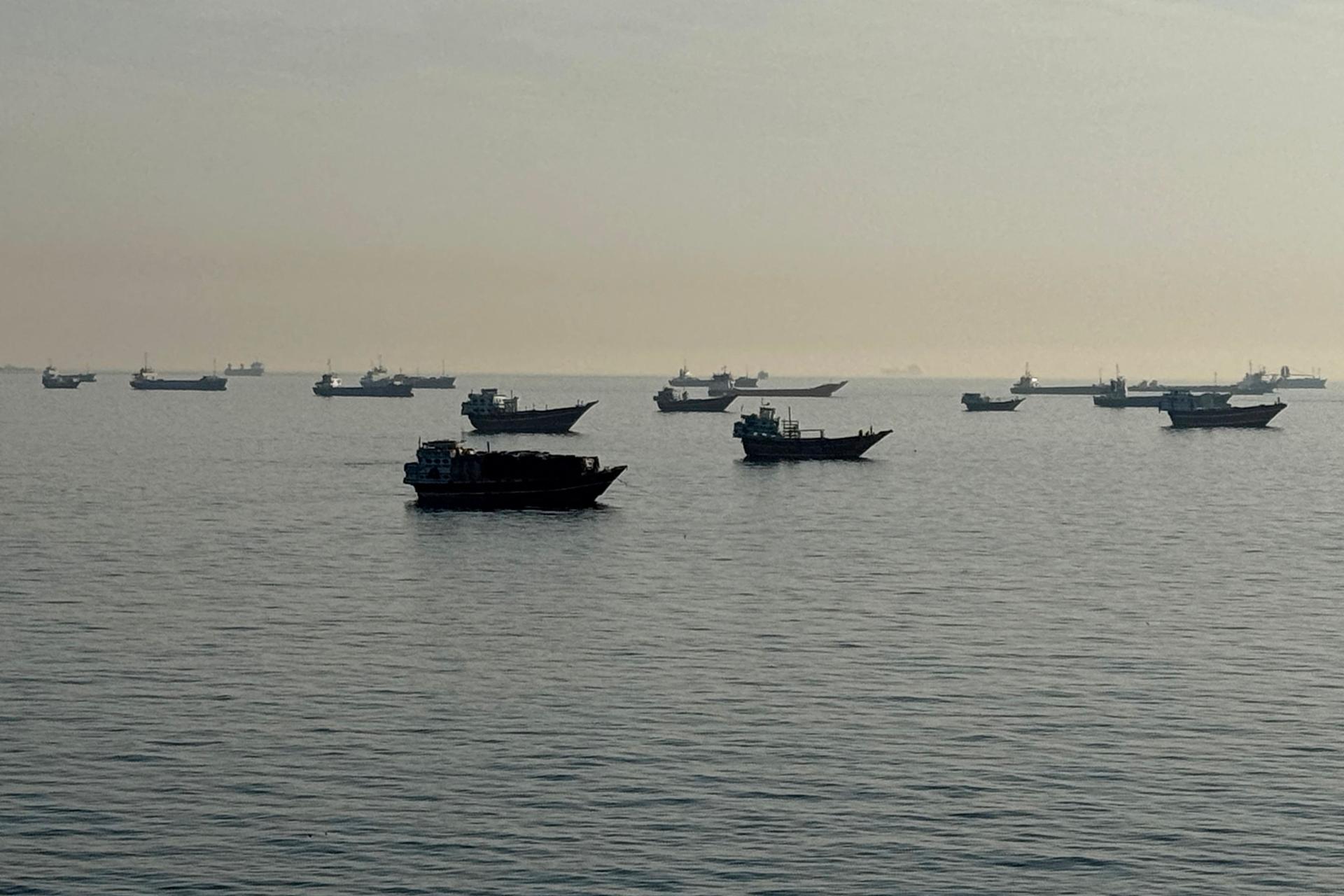
Vessels are seen anchored in the Strait of Hormuz, off the port city of Khasab on Oman's northern Musandam Peninsula, May 17. U.S. President Donald Trump said Saturday that Iran and the U.S. had "largely negotiated" a deal that included opening the Strait of Hormuz, but the draft was "subject to finalization." AFP-YonhapWASHINGTON/ISLAMABAD/NEW DELHI — Washington and Iran have "largely negotiated" a memorandum of understanding on a peace deal that would reopen the Strait of Hormuz, U.S. President Donald Trump said, as expectations rose that a breakthrough might be imminent in the three-month-old war.Trump said the emerging agreement being brokered by Pakistan would reopen the strait, the vital shipping passage whose closure has sparked a global energy crisis since the U.S. and Israel launched their war on Iran in February. He did not say what else would be included in an agreement."Final aspects and details of the Deal are currently being discussed, and will be announced shortly," Trump wrote on social media on Saturday.Various media in the U.S. and Iran said the memorandum sets out a framework for ending months of fighting, lifting a U.S. blockade on Iranian shipping and reopening the waterway, which Iran has shut with threats to attack shipping.Plans for Iran's stockpile of highly enriched uranium, which Washington has insisted it give up, would be negotiated within 30 to 60 days, the reports said.U.S. Secretary of State Marco Rubio, on a visit to India, said more news could come on Sunday. A senior Iranian source told Reuters that if Iran's Supreme National Security Council approved the memorandum, it would be sent to Supreme Leader Ayatollah Mojtaba Khamenei for final approval.But Iran's Tasnim news agency said differences remained over one or two clauses. Tasnim cited a source as saying there would be no final understanding if the U.S. continued to create obstacles.A deal cementing the current fragile ceasefire would bring relief to markets but not immediately quell a global energy crisis, which has driven up costs of fuel, fertilizer and food.At around $103.50, the price of Brent crude is 43 percent higher than when the U.S. and Israel attacked Iran in February. Even if the war ends now, full flows through the strait will not return before the first or second quarter of 2027, the head of the Abu Dhabi National Oil Company said last week.The U.S. news outlet Axios late on Saturday cited an unnamed U.S. official as saying that under the prospective deal, the U.S. would lift its blockade on Iranian ports and waive some sanctions on Iranian oil.The draft also includes commitments from Iran never to pursue nuclear weapons, Axios said.Trump, while offering various war aims during the conflict, has repeatedly said the U.S. struck Iran to prevent it from obtaining nuclear weapons.Iran has long denied it is pursuing such weapons and says it has a right to enrich uranium for civilian purposes, although the purity it has achieved far exceeds that needed for power generation.Smoke rises following an Israeli strike on the southern village of Zawtar El Charkiyeh, Sunday (local time). Israeli strikes in Lebanon have continued despite a truce that came into effect on April 17, with Israel saying it is targeting Iran-backed Hezbollah. AFP-Yonhap'Issues still need to be discussed,' Iran saysTrump, whose approval ratings have been hit by the war's impact on U.S. energy prices, said on Friday he would not attend his son's wedding this weekend, citing Iran among the reasons for staying in Washington.He spoke on Saturday with leaders from Saudi Arabia, Qatar, the United Arab Emirates, Jordan, Egypt, Turkey and Pakistan, who encouraged Trump to agree to the emerging framework, Axios reported.Iranian foreign ministry spokesperson Esmail Baghaei said on Saturday that "the trend this week has been towards a reduction in disputes, but there are still issues that need to be discussed through mediators."Baghaei said the issue of the U.S. blockade on Iran's shipping was important, but that its priority was ending the threat of new U.S. attacks and the conflict in Lebanon.Iran's top negotiator Mohammad Baqer Qalibaf said Iran's armed forces had rebuilt their capabilities during the ceasefire and that, if the U.S. restarted the war, the consequences would be "more forceful and bitter" than at the start of the conflict.
Trump says Iran deal 'largely negotiated', would reopen Strait of Hormuz - The Korea Times
WASHINGTON/ISLAMABAD/NEW DELHI — Washington and Iran have "largely negotiated" a memorandum of understanding on a peace deal that would reopen the...
703 words~3 min read