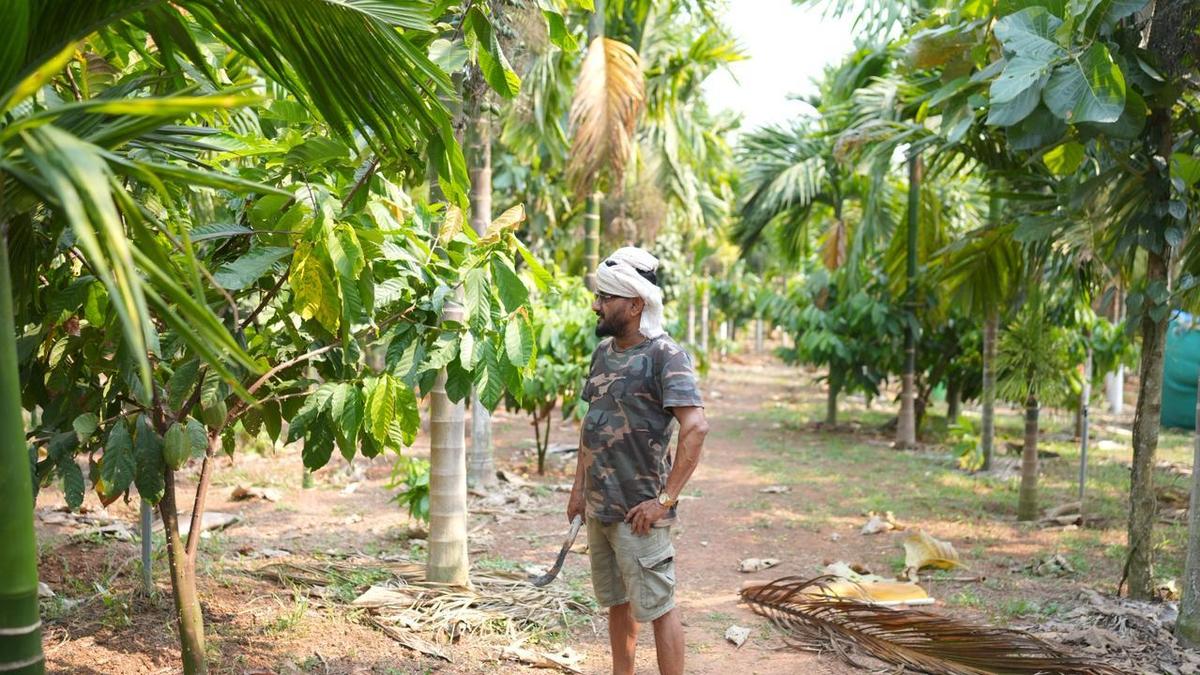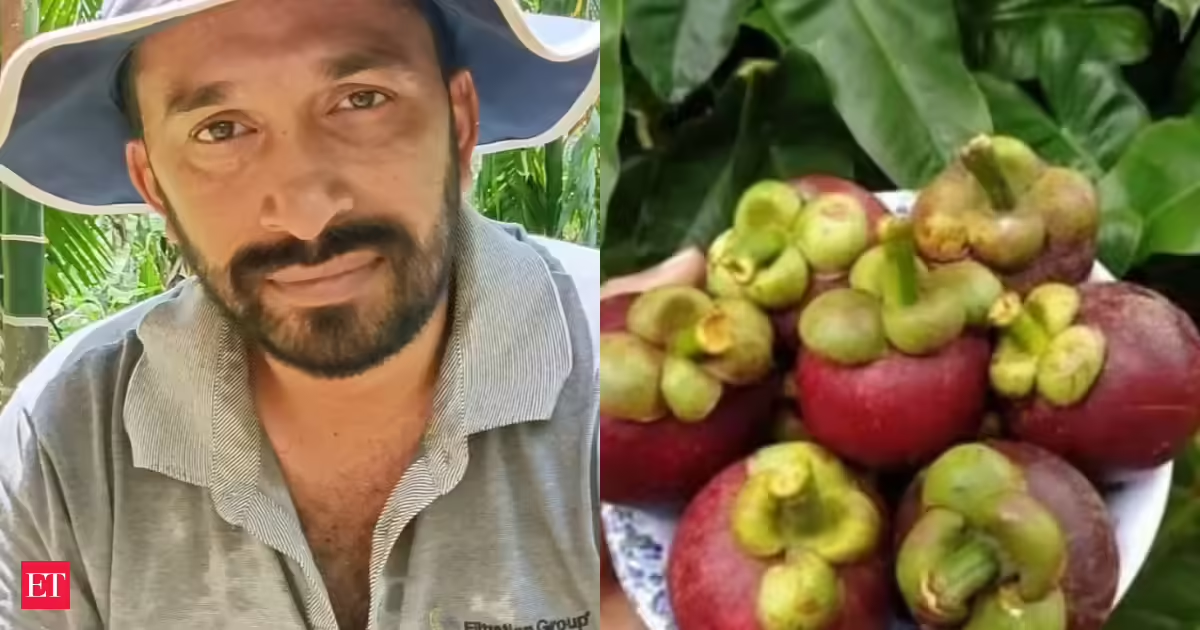
While many professionals dream of escaping the corporate grind, very few actually walk away from a stable, high-paying job to start farming full-time.But that is exactly what Chethan Shetty did.After spending nearly eight years working in industrial sales in Bengaluru, Chethan decided in 2017 to leave city life behind and return to his hometown in Karnataka to take over his family’s 11-acre ancestral farm.The decision surprised many people around him. Friends and relatives reportedly questioned why he would leave a secure corporate career for agriculture, a field often seen as risky and unpredictable.Farmer Invested Nearly Rs 18 Lakh To Transform Family FarmInstead of sticking to traditional farming methods, Chethan invested around Rs 17-18 lakh to modernise and diversify the farm.His strategy focused on creating both stable income and premium high-value produce.While arecanut farming continues to provide a reliable annual income of roughly Rs 12 lakh, he also introduced several exotic fruits and spice crops to boost earnings.Today, the farm reportedly generates annual revenue between Rs 25 lakh and Rs 60 lakh, with profits touching nearly Rs 15 lakh.Exotic Fruits Became A Major Money-MakerChethan began cultivating premium crops such as rambutan, mangosteen, avocado, turmeric and nutmeg alongside traditional plantations.Some of these exotic fruits turned out to be highly profitable.According to reports, rambutan sells between Rs 200 and Rs 400 per kilogram, while mangosteen can fetch prices as high as Rs 750 per kilogram during peak demand periods.Over time, the farm expanded into a large agricultural operation featuring more than 2,500 arecanut trees, 800 pepper vines, 300 coconut trees, 650 rambutan trees and over 100 mangosteen plants.Weather Challenges Nearly Crushed ProductionDespite the success, farming did not come without setbacks.Changing weather conditions badly affected rambutan production over the last few years. Reports suggest output dropped sharply from around 5,500 kilograms in 2022 to just 400 kilograms in 2024.Rather than abandoning the crop, Chethan reportedly adjusted his cultivation methods and replanned sections of the farm to cope with unpredictable climate conditions.Smart Farming And Better Delivery Networks Helped Business GrowChethan also focused heavily on improving efficiency and logistics.Instead of expanding the size of the farmland, he optimised planting methods to make better use of available space.On the business side, he built a delivery network from Mangaluru using road transport, trains and buses to reach customers across different parts of India.Partnering With Startups Helped Local Farmers TooBeyond his own farm, Chethan has also worked with agricultural platforms like Zepto and Farmizen to improve market access for local farmers.His journey is now being seen by many as an example of how modern farming, when combined with smart business planning and technology, can become a profitable and sustainable career option.Inputs from agencies
Bengaluru techie quit his high-paying corporate job to become a farmer. Today, his farm makes more than most salaried professionals
Chethan Shetty left his corporate job in Bengaluru to take over and modernise his familys farm in Karnataka. He invested heavily in upgrading the farm and introduced exotic fruits such as rambutan and mangosteen, which later became major sources of income. Despite facing weather-related challenges, Shetty adapted his farming methods and continued to grow the business. He also built strong delivery networks and partnered with platforms like Zepto and Farmizen to improve market reach.
444 words~2 min read