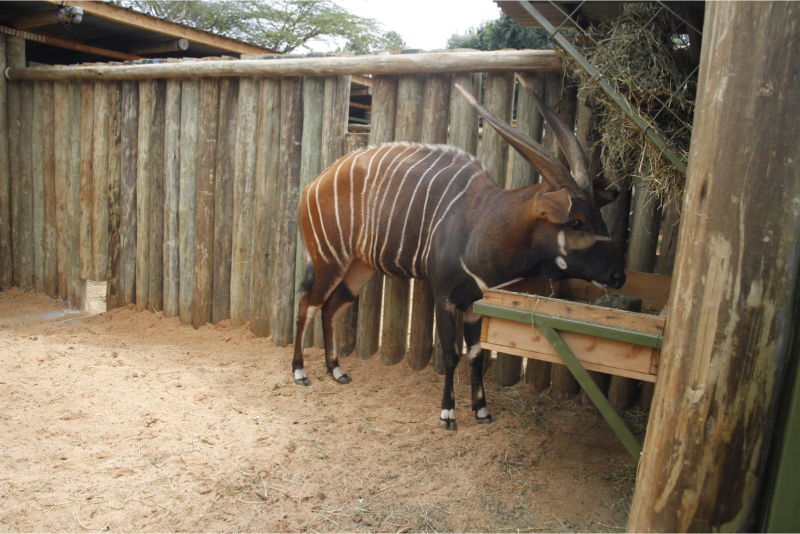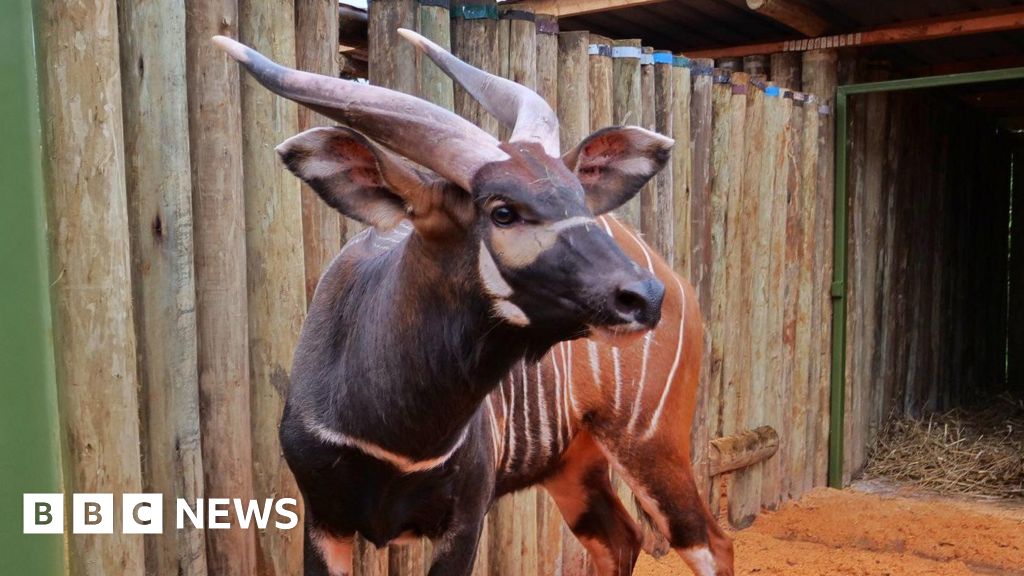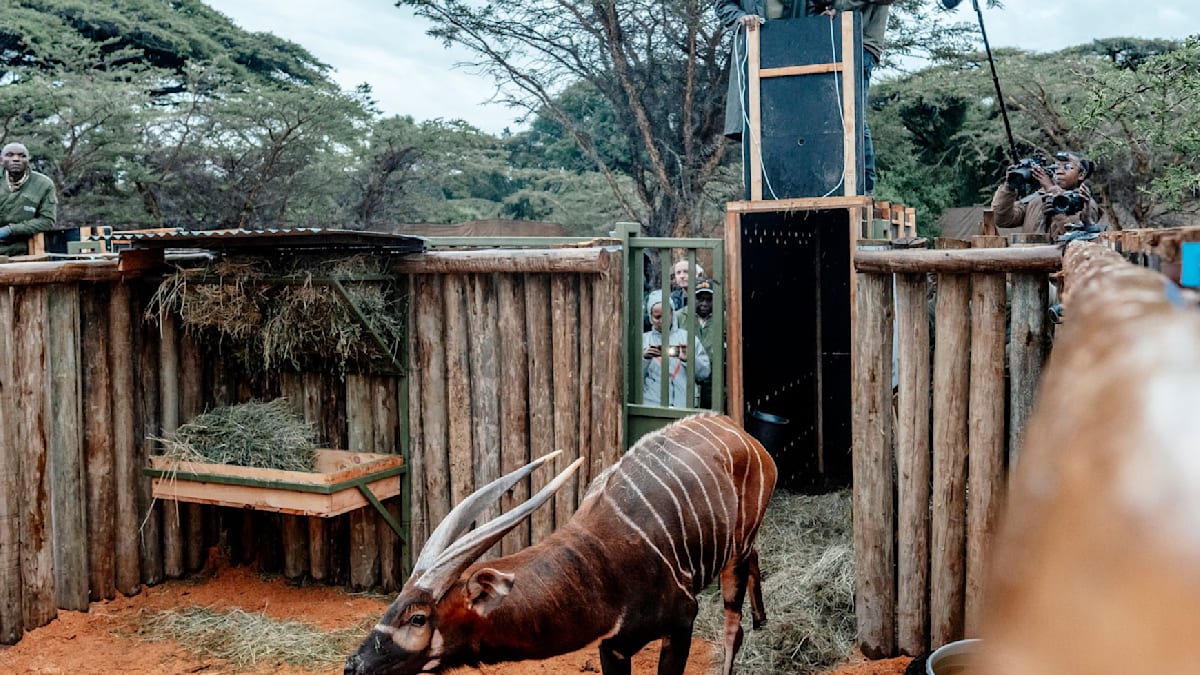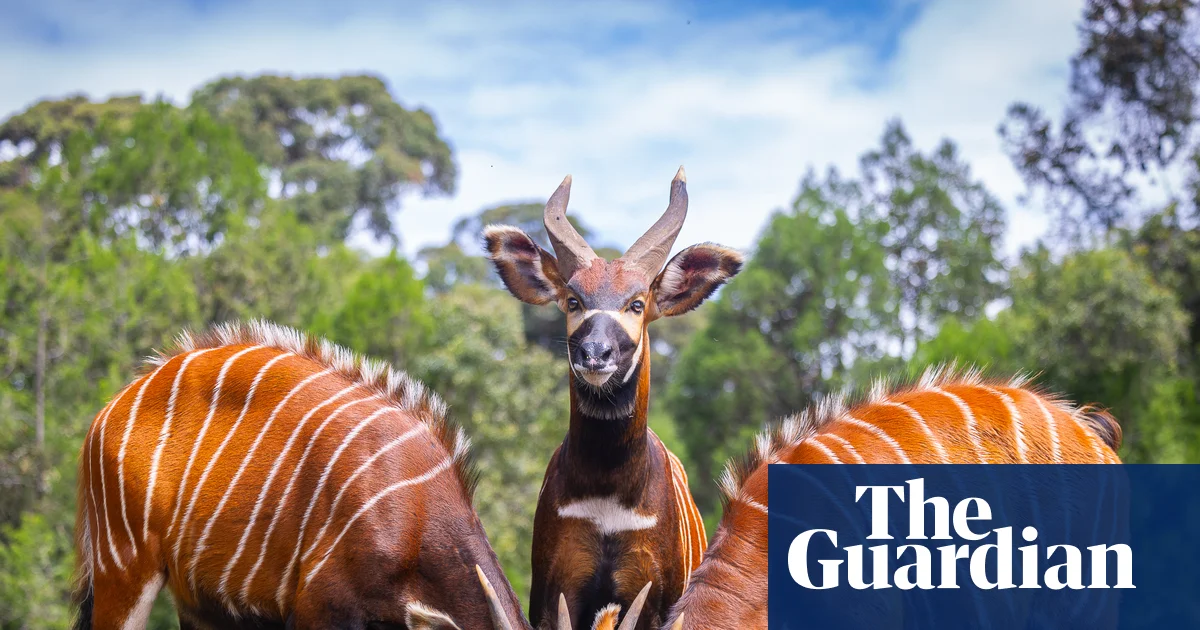
“We are bringing the boys home,” says Ngenoh Erick Kibet, a wildlife officer at the Mount Kenya Wildlife Conservancy, as a cargo plane carrying four mountain bongo touches down on a wet runway at Jomo Kenyatta international airport.The operation is the culmination of two weeks spent in Czechia, a first flight for Kibet, and a decades-long collective effort to rescue a species on the edge of extinction.The mountain bongo may seem like any other antelope but no more than 100 have been counted in the wild. They are endemic to Kenya’s highland forests: the Aberdares, Mount Kenya, the Mau and the Eburu. For Kibet and Christine Gichohi, an animal keeper at the conservancy, spending time with these critically endangered antelopes on a daily basis is more than a job, it is key to ensuring that the species thrives.
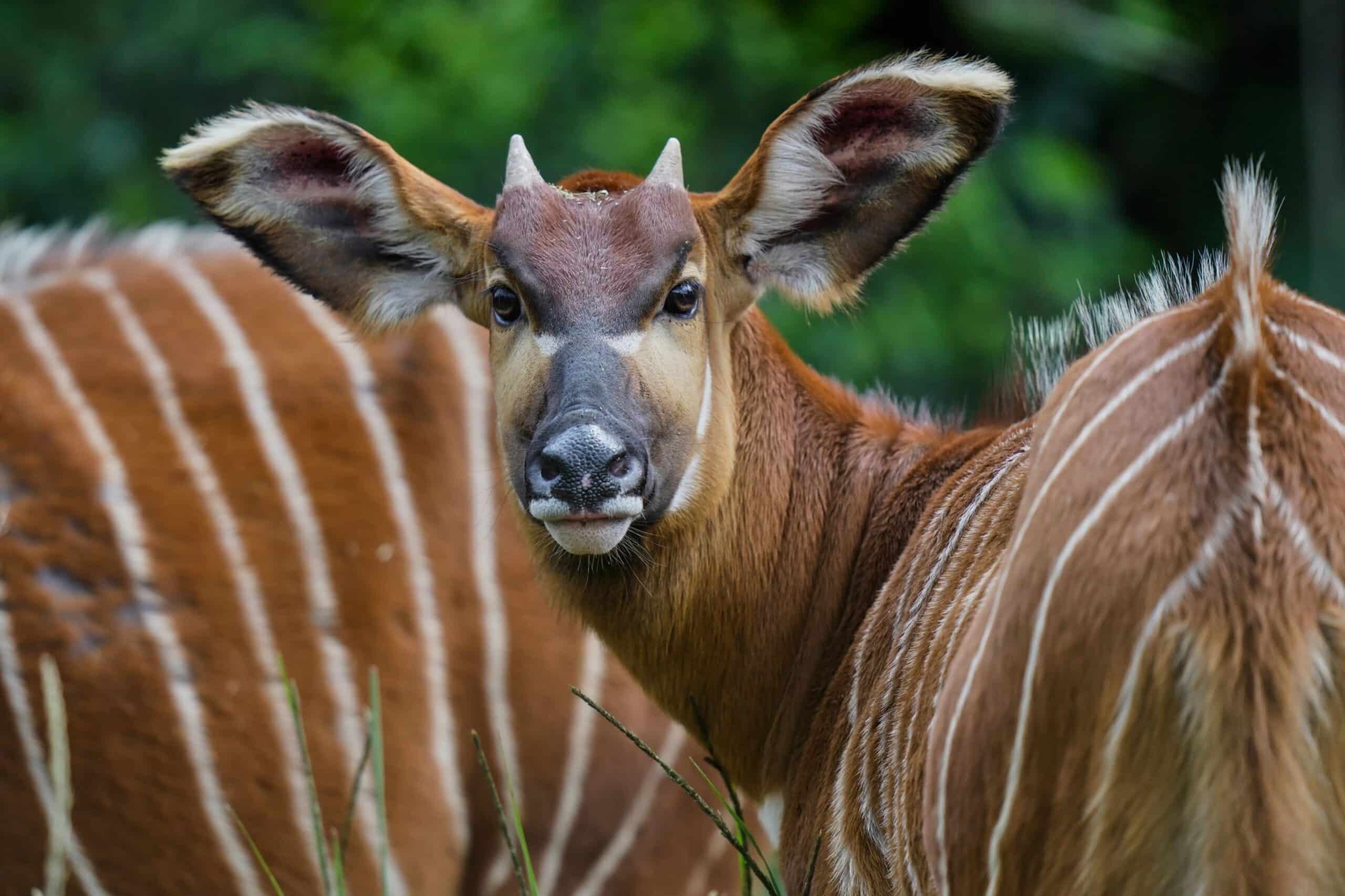
The 100th bongo calf was recently born at the conservancy
The trip to Czechia was the first time Gichohi and Kibet had left Kenya. The four bongos they were bringing back – Fitz, Maue, Kudu and Bon64 – had been held in a quarantine facility, isolated from other animals and cared for indoors, their world condensed to an enclosed space. Gichohi and Kibet spent two weeks there, learning the animals’ routines, earning their trust and studying each bongo.“Mountain bongos are the shiest antelopes,” Gichohi says. “Even if they are tamed, that shyness and curiosity will still be there.” Each of the four males has a distinct personality, and the keepers had to get to know them before the journey home could begin.