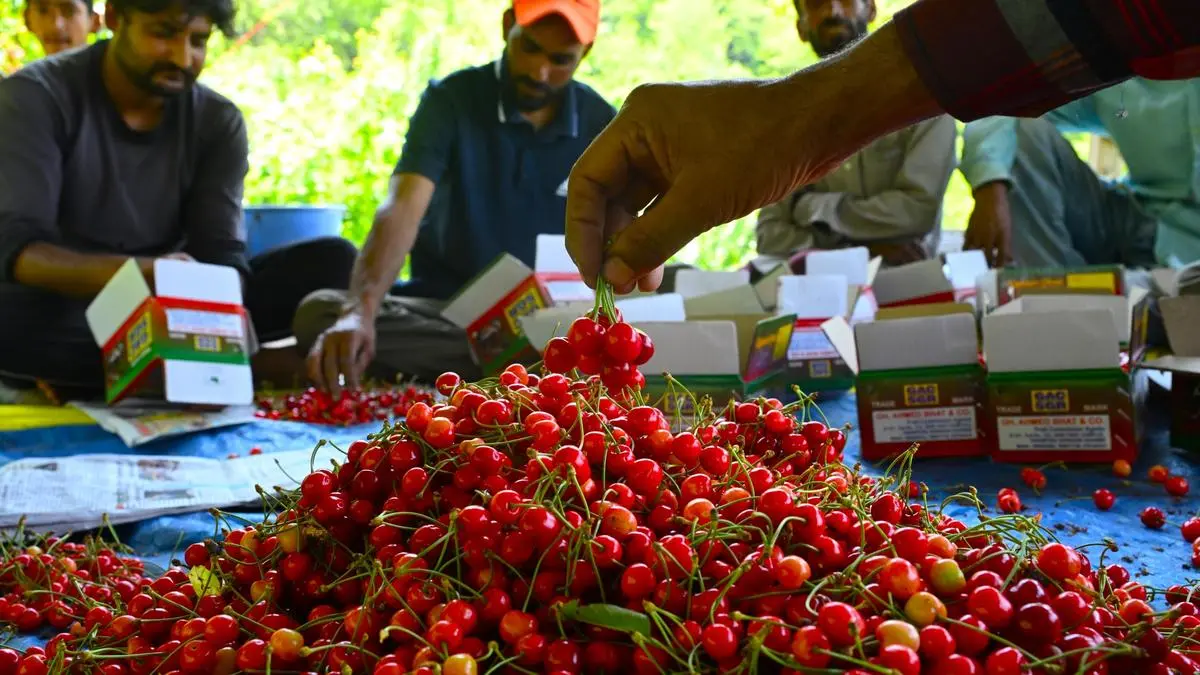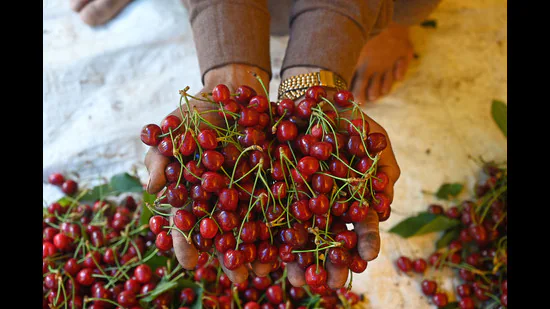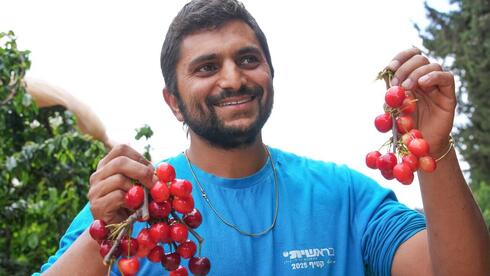
After months under Hezbollah fire, Kibbutz Manara’s farmers hoped the ceasefire would allow a quiet cherry harvest; instead, they returned to orchards damaged by drones, rockets and surprise weekend rain that cracked the delicate fruitFarmers at Kibbutz Manara returned to their cherry orchards Sunday morning after Shavuot holiday and a weekend of unusual rain in the Galilee and Golan Heights, worried about what they would find among the trees.The harvest of the sweet fruit has only just begun, but no one knows how the season will end. The concern is not only the FPV drones, UAVs and rockets Hezbollah continues to launch from time to time into an area officially under a ceasefire. Growers are also deeply worried about the damage caused by gray, rainy weather that is highly unusual for this time of year and has left battered orchards even more vulnerable.3 View gallery Cherry harvest at Kibbutz Manara(Photo: Efi Sharir)“In most places, there is little fruit this year,” said Misha Leykin, who manages the Beresheet orchards at Kibbutz Manara. He said some growers attribute the low yield to the cold weather in March, which damaged the blossoms. “The rain two weeks ago cracked the cherries and damaged them,” he said. “Because the fruit has such delicate skin, much of it was no longer marketable,” he said. “We began harvesting at Kibbutz Manara just before Shavuot,” he said. “The rain that fell during the holiday is likely to crack the fruit again, and on Sunday we will return to assess the damage.”The harvest that began in recent days along the northern border is taking place under complex conditions. Farmers in communities along the confrontation line continue to reach their fields every day, as they did even at the height of the war, working under alerts, fire and UAV threats.Despite those conditions, and especially the effects of erratic weather, the Israel Fruit Growers Association estimates that the national crop this season will reach about 4,000 tons, similar to last year’s yield.3 View gallery Cherry tree in Manara(Photo: Vladimir Leykin)Fruit industry figures show just how dependent Israel’s cherry crop is on the north: About 90% of the country’s cherry orchards are in the Galilee and Golan Heights. They include 3,900 dunams in the Golan Heights, 350 dunams in Merom HaGalil and the Naftali Mountains, and 300 dunams in the Western Galilee. By comparison, only 450 dunams are located in the Jerusalem Hills, Gush Etzion and the Hebron Hills.Cherry growers are now finishing the harvest of the early Burlat variety, which accounts for about 15% of the market. They are expected to move later in the season to the Royal Dawn variety, which accounts for about 10%, and Bing, the leading variety, which makes up about 30% of the local market.Yaron Belhassan, CEO of the Fruit Growers Organization in Israel and a farmer from Moshav Ramot Naftali, told Yedioth Ahronoth and ynet that the northern border remains dangerous. “There is no real cease-fire there,” he said. “As we have done since the beginning of the fighting, we will continue working and harvesting to supply fresh, high-quality fruit.”Belhassan also addressed the steep supermarket markups that drive up prices for consumers at the start of the season, before most of the crop has even been picked. “I call on the public to buy only Israeli agricultural produce, and in doing so support Israeli agriculture and the farmers who live along the country’s borders, protect national land and safeguard Israel’s food security,” he said.3 View gallery Cherry tree in the Galilee(Photo: Tony Alam, Savannah Farm)He added that farmers are not responsible for the final price paid by consumers. “The farmers do not set the consumer price. The supermarket chains do,” he said.Beyond the security threats and the price gaps created by retailers, farmers in the north are also facing what they describe as bureaucratic indifference. Many growers whose fields were directly damaged by the war say they are helpless in the face of government ministries and partial compensation payments.“Some orchards along the northern border, particularly those close to the fence, are still recovering from the damage caused by the recent fighting,” Belhassan said. “Some farmers have yet to receive the full compensation they are entitled to for the restoration work.”
‘There is little fruit this year’: war, weather batter cherry season in northern Israel
After months under Hezbollah fire, Kibbutz Manara’s farmers hoped the ceasefire would allow a quiet cherry harvest; instead, they returned to orchards damaged by drones, rockets and surprise weekend rain that cracked the delicate fruit
705 words~3 min read