Behind the CBN’s calm rate pause lies rising fear over inflation, political spending, and economic stability, writes Festus Akanbi
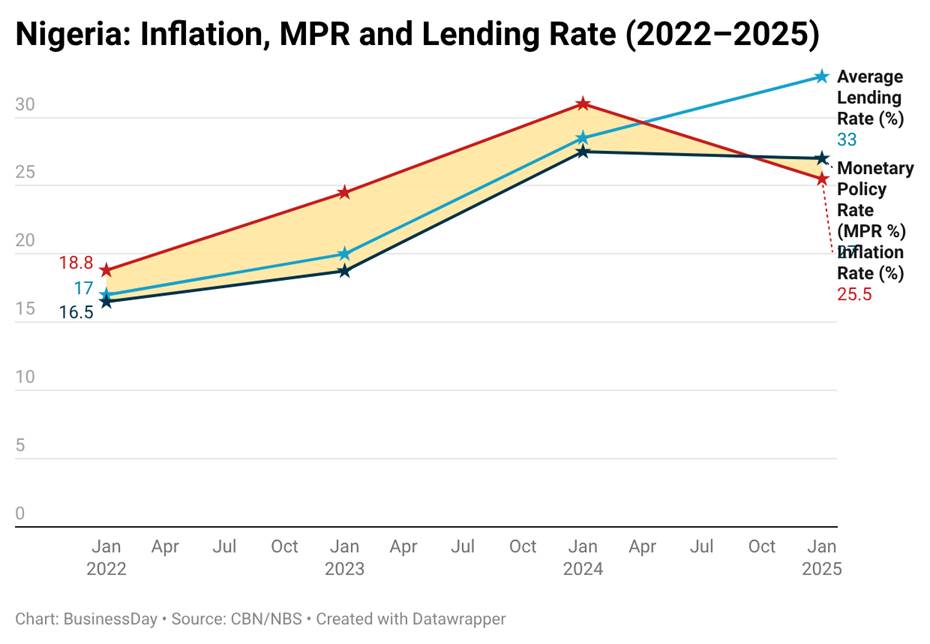
The Central Bank of Nigeria’s (CBN) decision to retain the Monetary Policy Rate (MPR) at 26.5 per cent may have appeared predictable to financial markets, but beneath the calm language of the Monetary Policy Committee (MPC) lies a more delicate economic reality.
Nigeria is approaching a politically sensitive season when campaign-related spending is expected to intensify ahead of next year’s general election preparations. At the same time, inflationary pressures, exchange-rate vulnerabilities, and global geopolitical tensions continue to test the economy’s resilience.
By choosing to hold rates steady after February’s modest 50-basis-point cut, the MPC signalled that its primary concern remains inflation containment and exchange-rate stability, even as businesses struggle under punishing borrowing costs.
CBN Governor Olayemi Cardoso defended the decision as a cautious response to global shocks and domestic vulnerabilities. According to him, recent inflationary pressures were largely externally driven, with rising energy costs linked to tensions in the Middle East.