Most security tooling works by asking you to define what "bad" looks like upfront. Falco gives you YAML rules. OSSEC has signatures. Wazuh has a 5,000-line ruleset that ships with the product and still misses half of what matters in your specific environment.
The problem isn't that rules are bad — it's that they can only catch what someone already thought to write a rule for. A novel attack, an unusual deployment pattern, or a rogue process your team introduced six months ago and forgot about will all sail straight through.
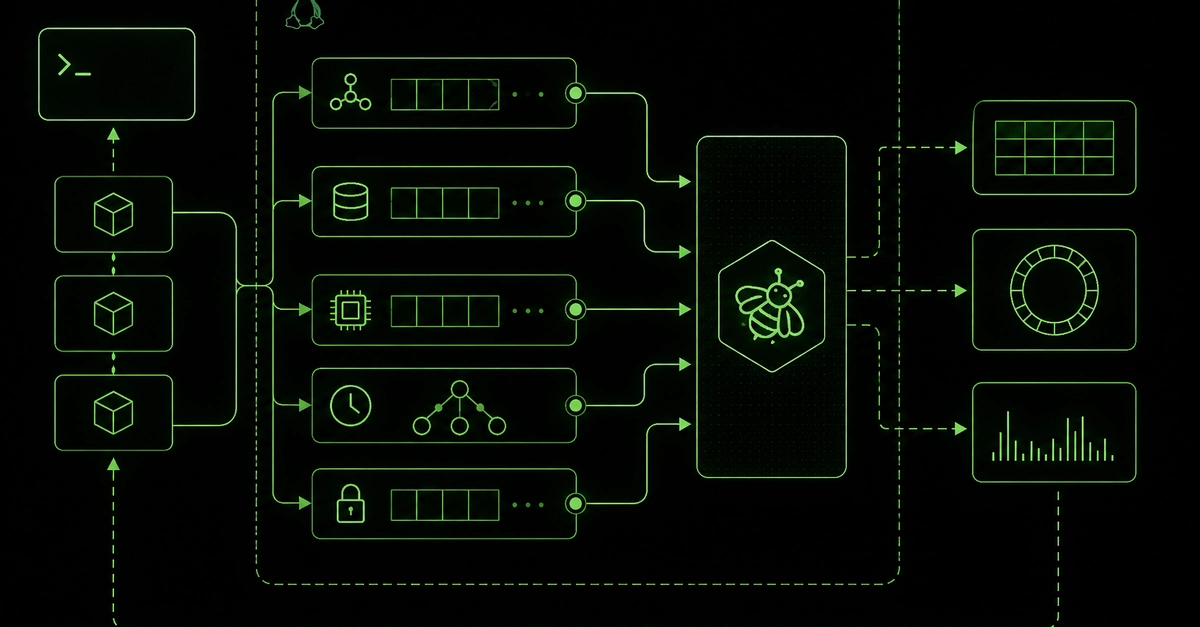
We wanted something different: a system that learns what "normal" looks like on each server and workload automatically, and flags anything that deviates — without any configuration.
Here's how we built it using eBPF and LanceDB.
Step 1: Capture everything at the kernel level with eBPF