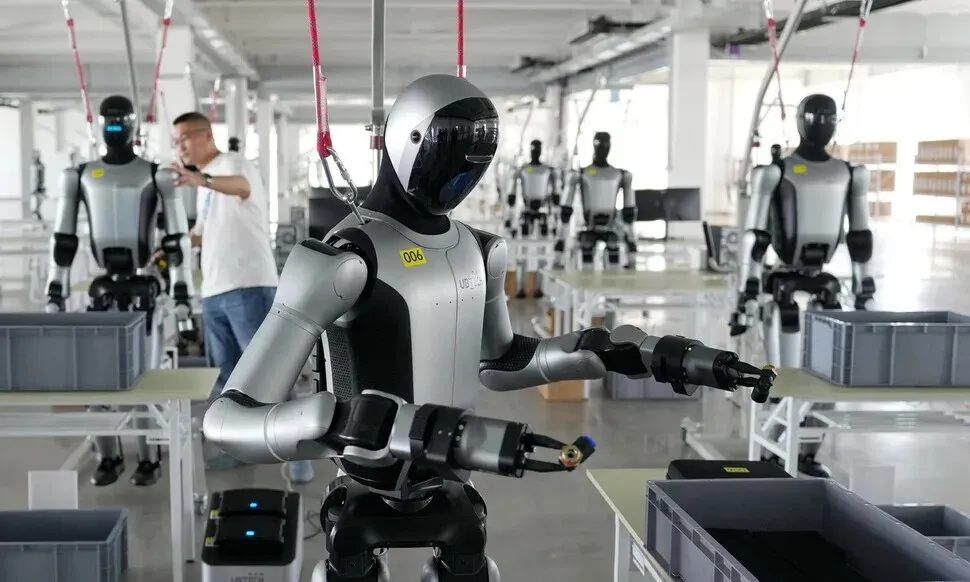
A staff member of an intelligent robot industrial base trains a robot in Qinhuangdao, Hebei Province, China, on April 28, 2026. (Xinhua/Yonhap)
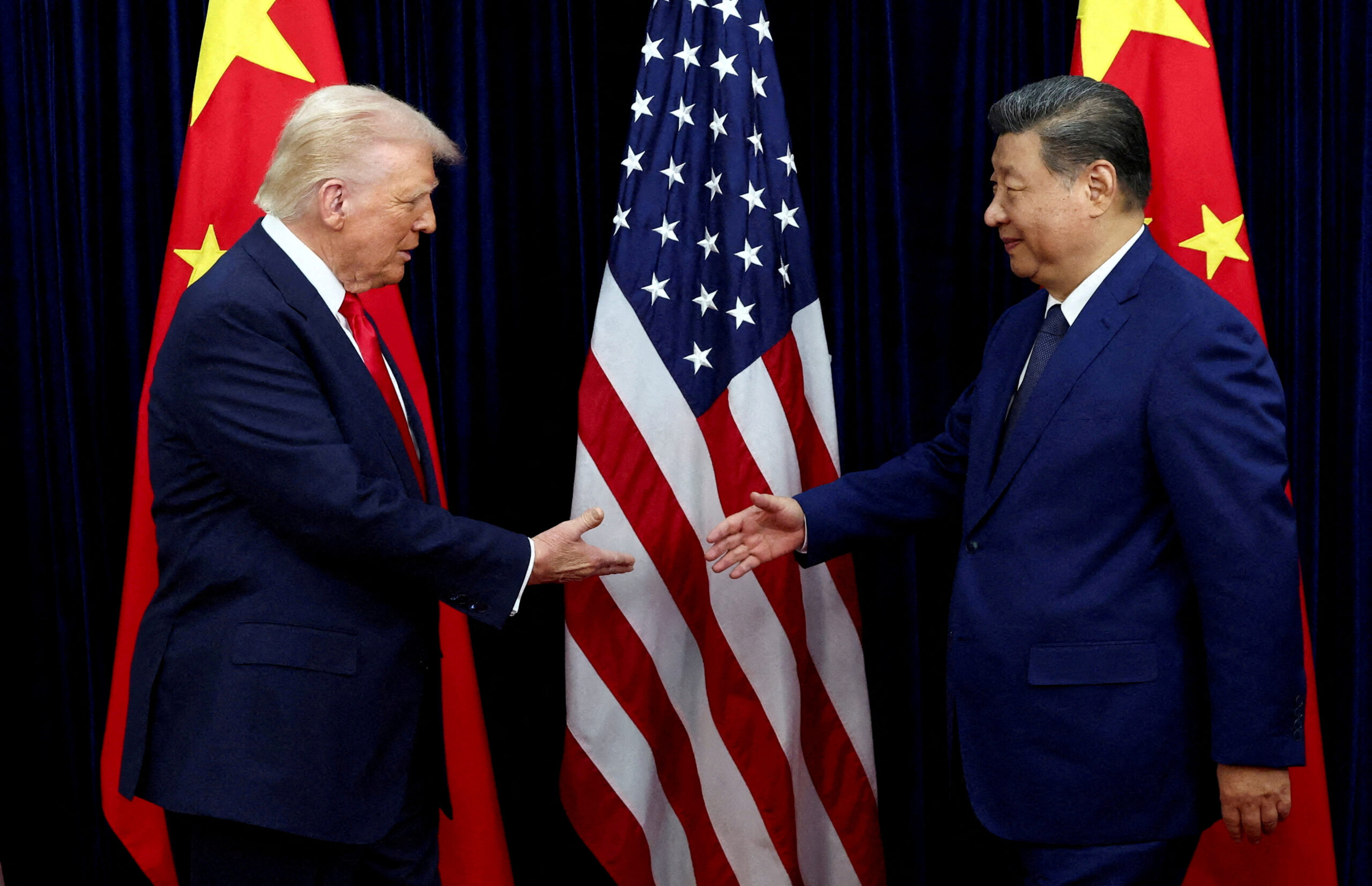
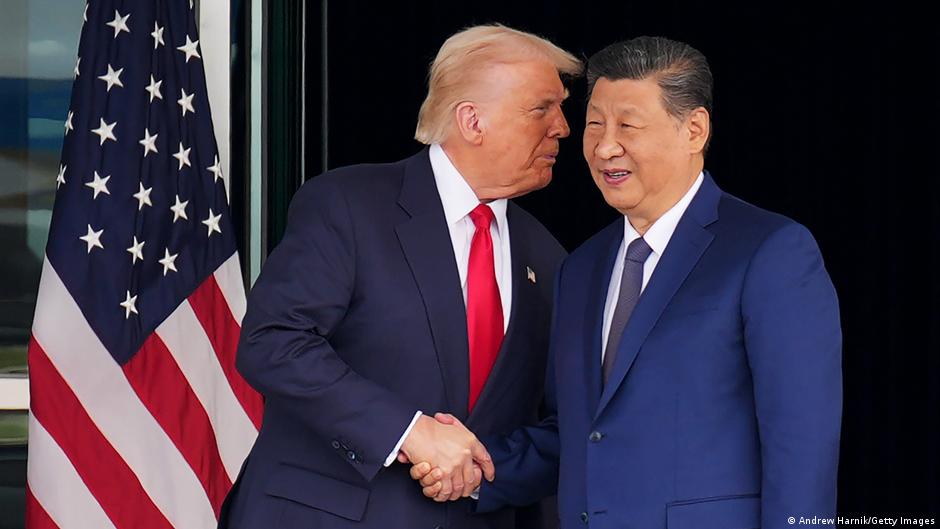
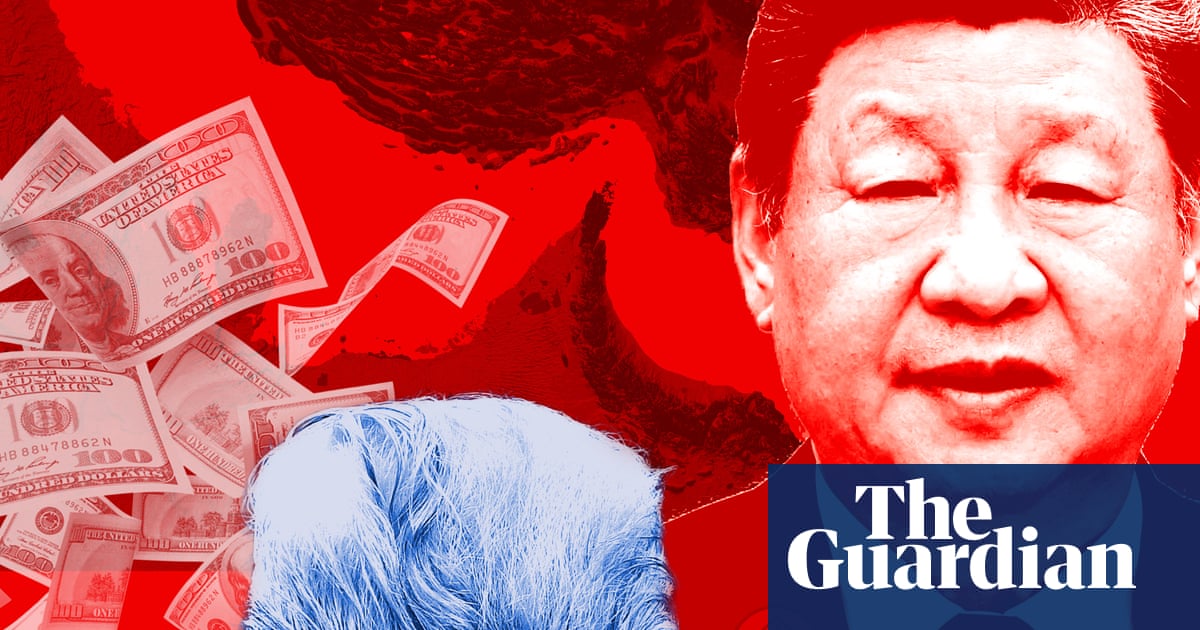
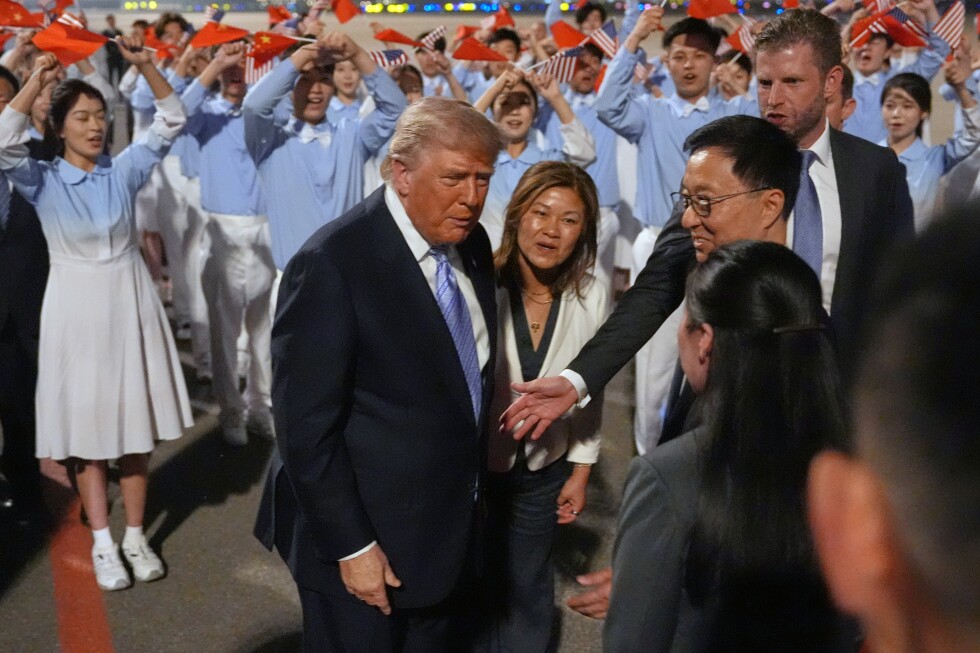
US President Donald Trump will have to set off for Beijing without the big win over Iran he was hoping for.Trump had sought to arrive at his summit with Chinese President Xi Jinping with American power projected and superiority proven. But his risky gamble didn’t pay off.Trump already postponed his summit with Xi once because of the US and Israel’s war with Iran. The rescheduled summit is coming up this week, and this time, Xi has a stronger hand.For the US to restock arsenals emptied during its costly war against Iran, it will have to rely on Chinese rare earths. The US also wants China to use its sway with Iran to end the war and open up the Strait of Hormuz, but China is hardly eager to pull the Americans’ fat out of the fire.In fact, China would like to see the strait reopened for business, but it sees that as the US’ job.When Trump returned to the White House in January 2025, he hit China hard with his tariff onslaught and restrictions on the exports of cutting-edge technology. But Trump was caught flat-footed by Xi’s elaborate controls on rare earths and forced to agree to a trade truce in their summit in Busan at the end of October last year.The summit scheduled for Thursday and Friday, which represents a continuation of that truce, will see the US and China working to build a framework for long-term competition that will secure their respective interests.Xi may pledge to buy US farm products or airplanes, which could give Trump bragging rights before the midterm elections this November. Trade, technology, investment, Taiwan and Iran — those are some of the critical issues that are up for discussion at this summit.But whatever deal may be reached during the summit, the US and China’s hegemonic rivalry is sure to continue for years to come. Xi is focusing China’s resources on advanced technology and future-oriented industries, believing that they will determine which country ends up on top.In a paper to be presented at the Korean Association for Contemporary Chinese Studies on Friday, Jee Man-soo, a senior research fellow at the Korea Institute of Finance, will argue that the goal of the “Chinese-style modernization” that the Chinese Communist Party is determined to achieve by 2035 is imitating the US’ strengths while remaining the world’s factory.Two models Xi seeks to avoid are those of Japan, which is still haunted by its failure to manage the real estate bubble, and Europe, which is weighed down by its bloated welfare programs.Xi believes China can learn from the US’ success at maintaining a high rate of growth and a high level of technological innovation. But the US also faces vulnerabilities in its economic security and social and political systems due to its weakening industrial base, an outcome China must try to prevent.Therefore, China is taking a page from the US’ technological innovation while working to support all areas of the manufacturing sector, from the traditional to the state of the art.China’s 15th five-year plan, which took effect this year, places technological innovation as a top priority while vaguely mentioning a growth target range of 4.5%-5% or higher. Jee said China has presented three measures to become “a manufacturing-strong America.” First, Beijing has clearly defined its goal of economic development while keeping manufacturing as a priority, definitively discarding the traditional perception that upgrading to an advanced industrial structure means a shift in the industrial core from manufacturing to services.The plan explicitly calls advanced manufacturing the “backbone” of a modernized industrial system and sets the goal of ensuring that “the share of manufacturing in the national economy should be kept at an appropriate level.” Second is a shift in strategy to raise China’s position to that of a pioneer in strategic industries like new energy and materials, autonomous electric vehicles (EVs), robotics, biomanufacturing and high-tech equipment, rather than have the country remain a follower. Third, under the recognition that reinforcement of manufacturing and supply chains is the basis for national security, the plan stipulated the need for a “new-style whole-of-nation” and “extraordinary policy measures” to overcome challenges in sectors like semiconductor technology.