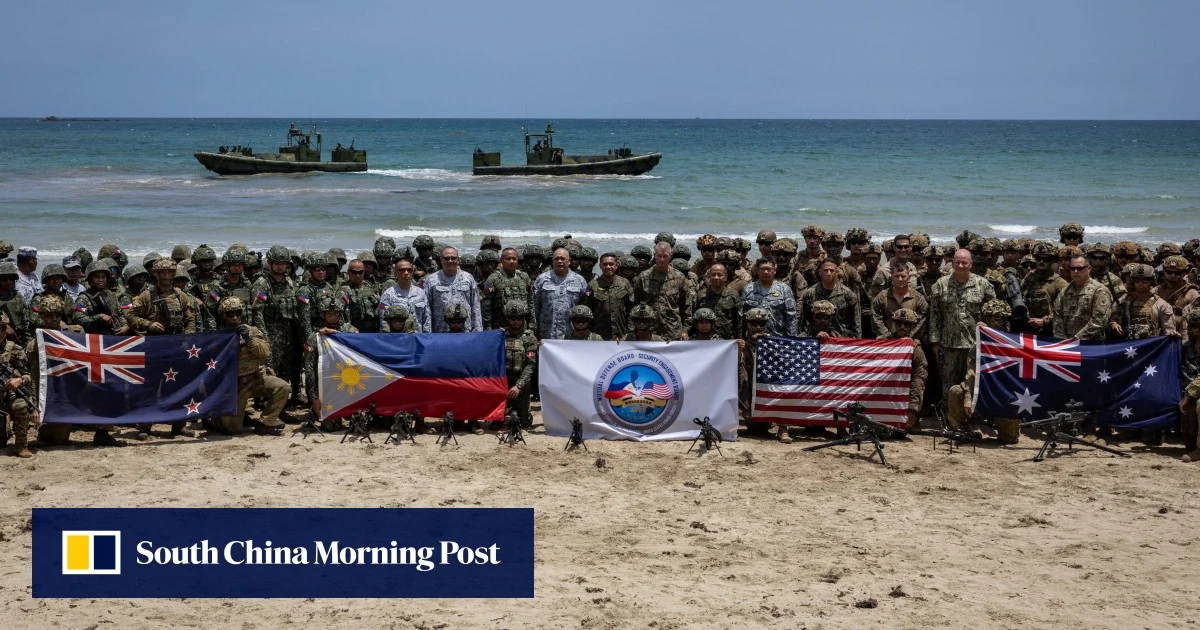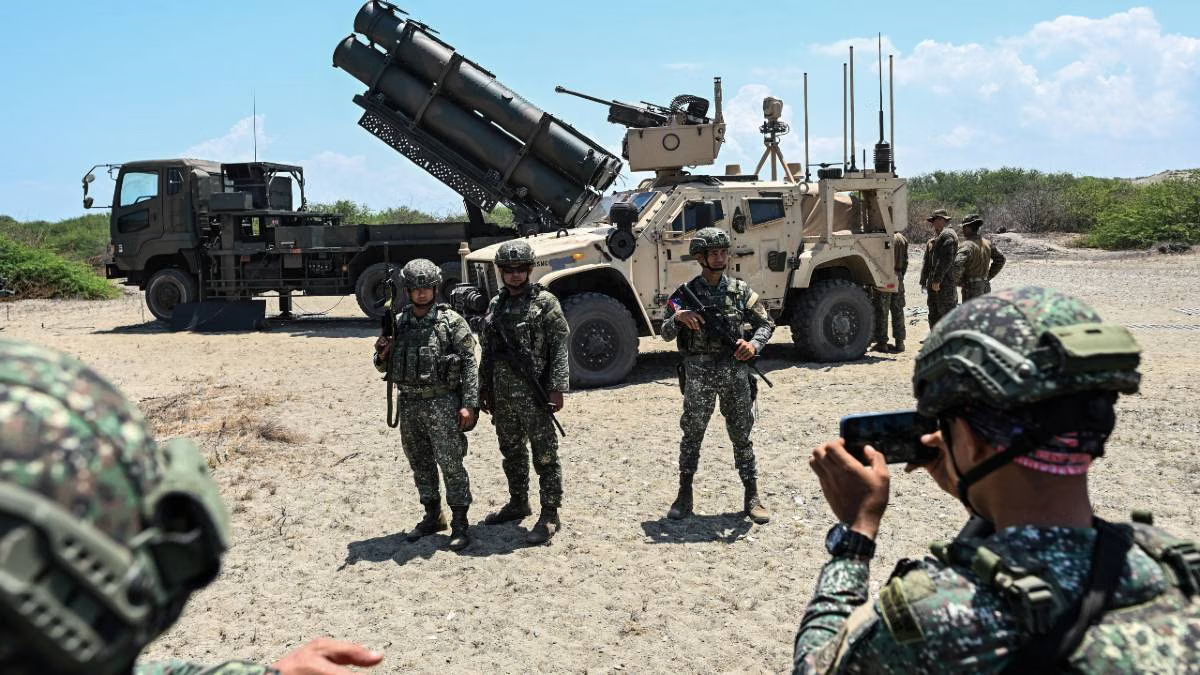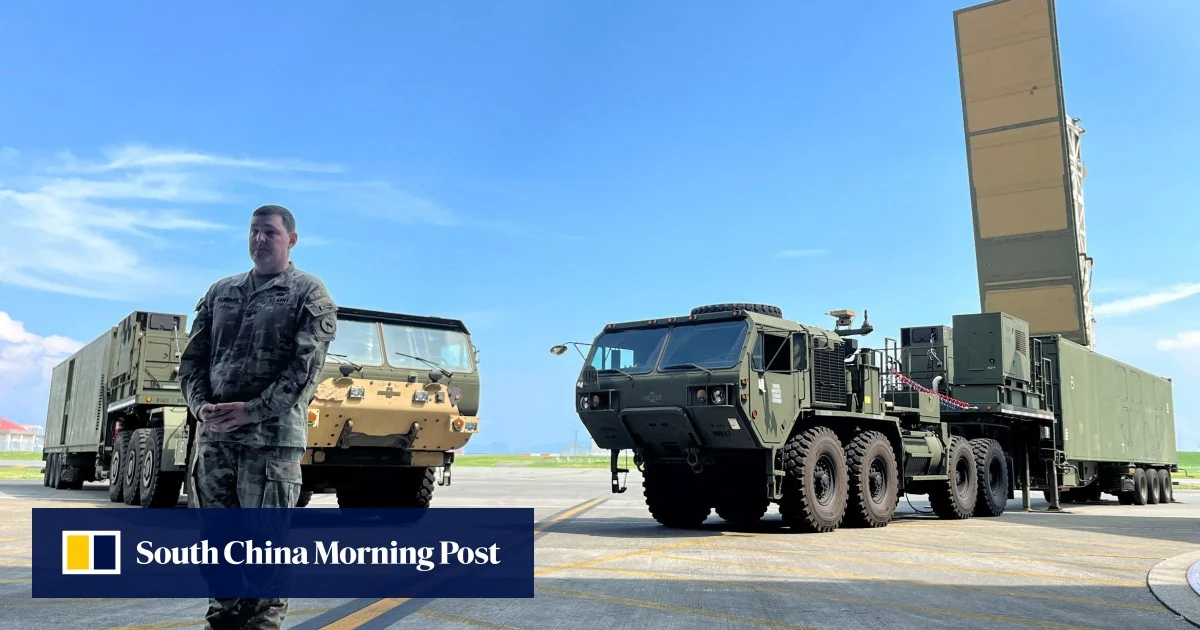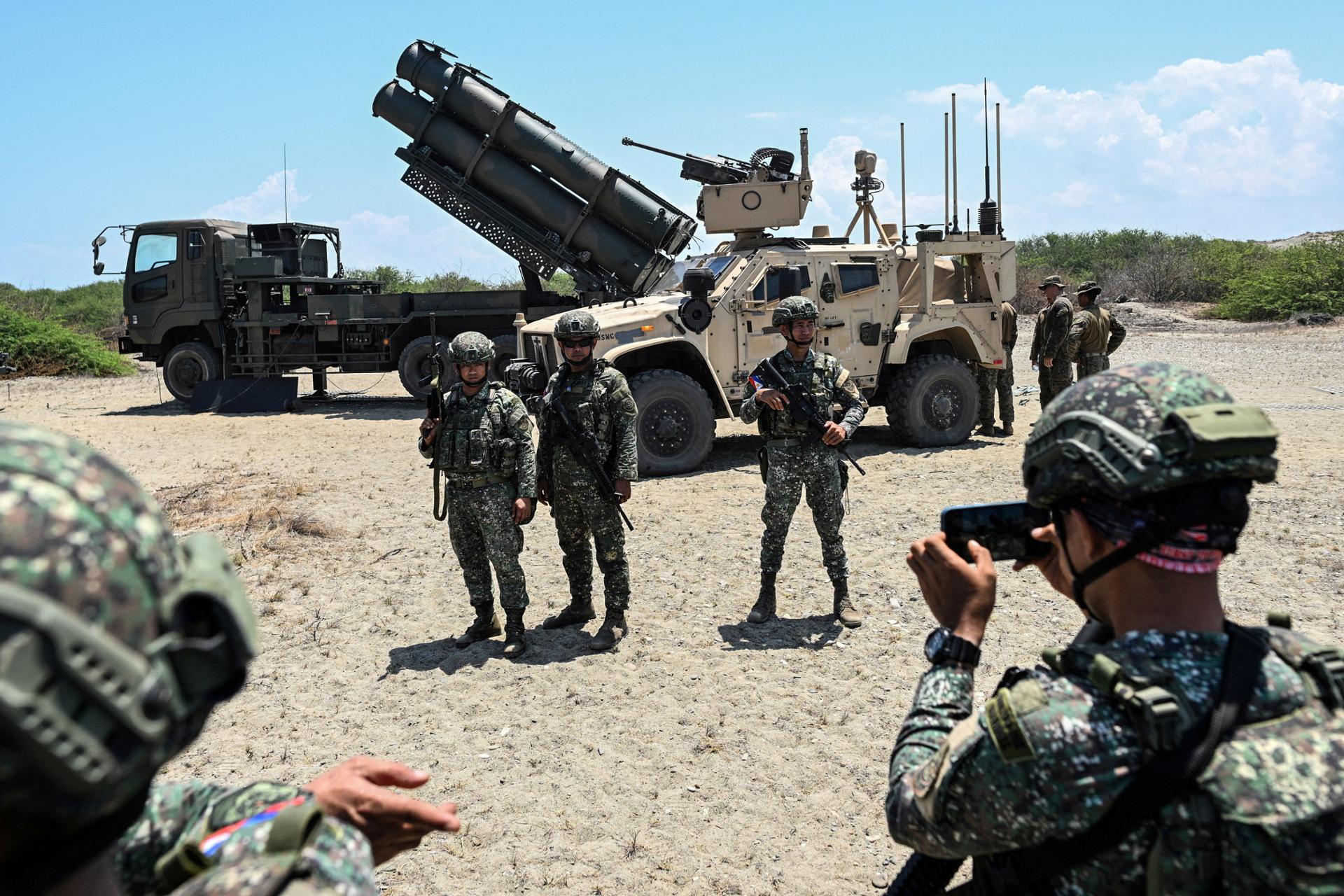
Philippine soldiers pose for a picture in front of the Japan Ground Self-Defense Force (JGSDF) Type 88 surface-to-ship missile launcher and the U.S. Marine Air Defense Integrated System (MADIS), during the Joint Task Force (JTF) Maritime Strike, part of Balikatan, the annual joint military exercises between the United States and the Philippines, at Culili Point Sand Dunes, Paoay, Ilocos Norte province, Philippines, May 6. Reuters-Yonhap
A U.S. and Philippine-led military drill seen as targeting China grew this year into the largest yet, prompting Chinese experts to warn that the annual event will exacerbate regional instability amid heightened tensions in the Indo-Pacific.
The decades-old drill called Balikatan, which means shoulder to shoulder, reached record highs in terms of scale, scope of participation and training complexity this year, according to a report published by the South China Sea Strategic Situation Probing Initiative (SCSPI) this week.
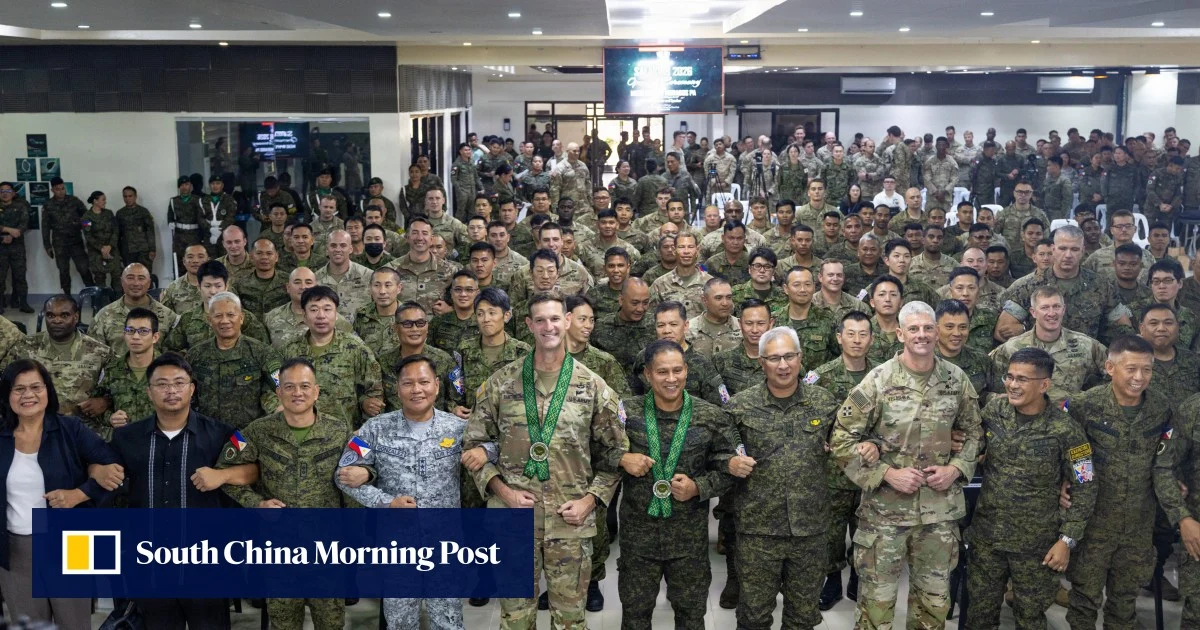
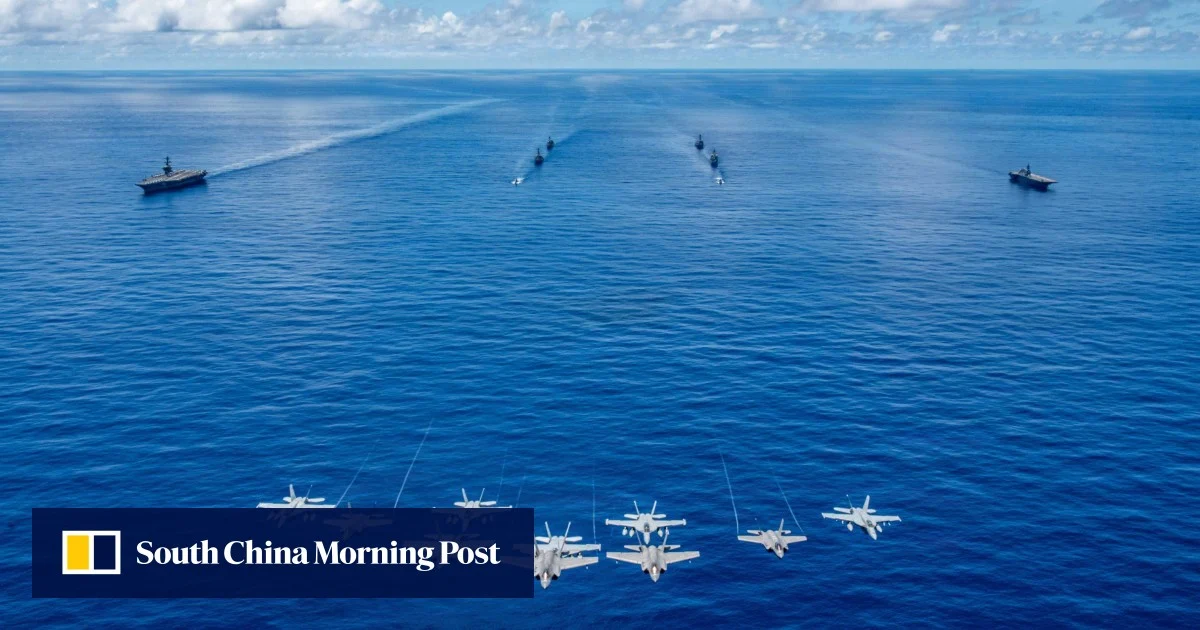
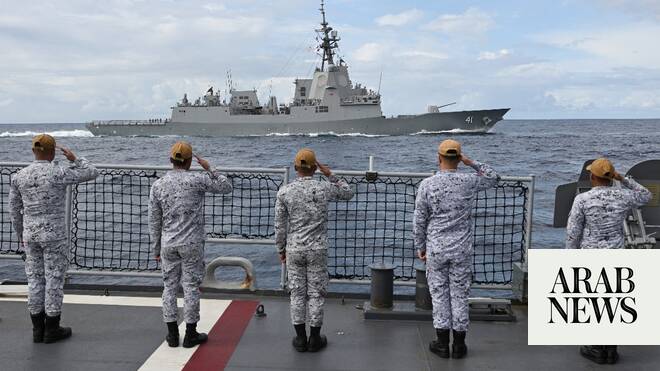
From April 20 to May 8, seven countries — the Philippines, the U.S., Canada, France, Japan, Australia and New Zealand — sent 17,000 personnel to train along the Philippines' western sealine, stretching from the South China Sea to the northern Philippine island of Itbayat, just 155km (96 miles) from Taiwan's main island.