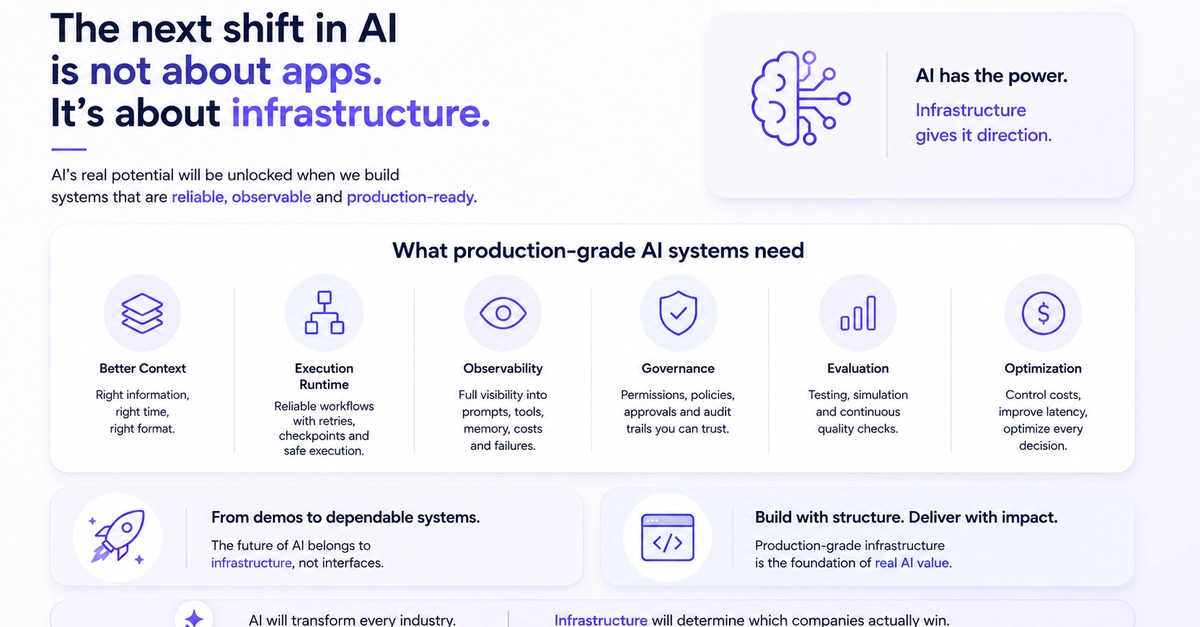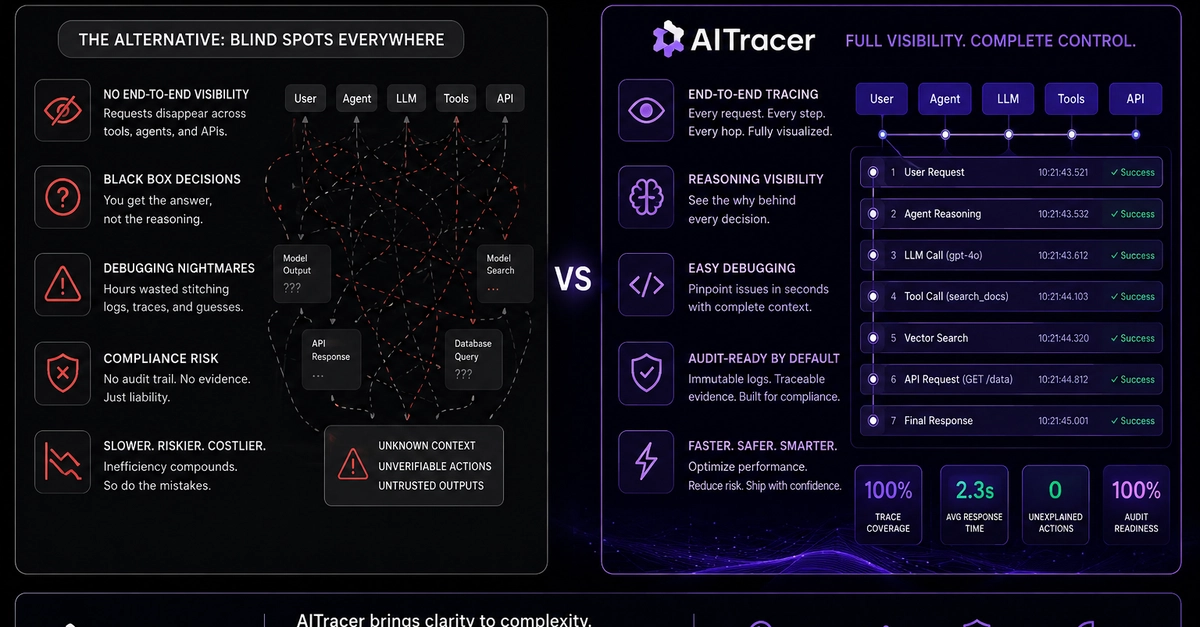
The AI industry spent the last three years building systems powerful enough to automate workflows, coordinate agents, invoke tools, access APIs, manipulate data, and generate decisions at planetary scale.
Then everyone collectively realized something horrifying:
Nobody could fully explain what the systems were doing anymore.
Not really.
The modern AI stack increasingly resembles a neon-lit casino built atop probabilistic reasoning, recursive orchestration, and “it seemed fine in staging.” Executives stand beneath LED conference lighting discussing autonomous agents while somewhere inside production infrastructure an LLM quietly rewrites records, escalates permissions, triggers downstream actions, calls external services, and leaves behind telemetry so fragmented it resembles digital crime-scene debris more than operational accountability.