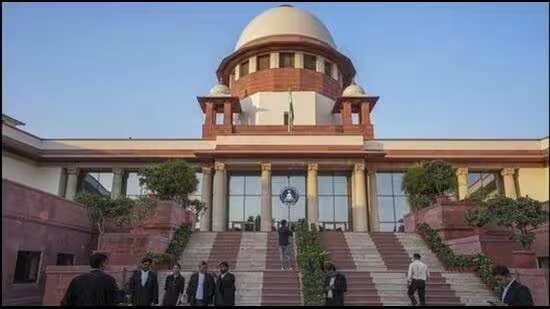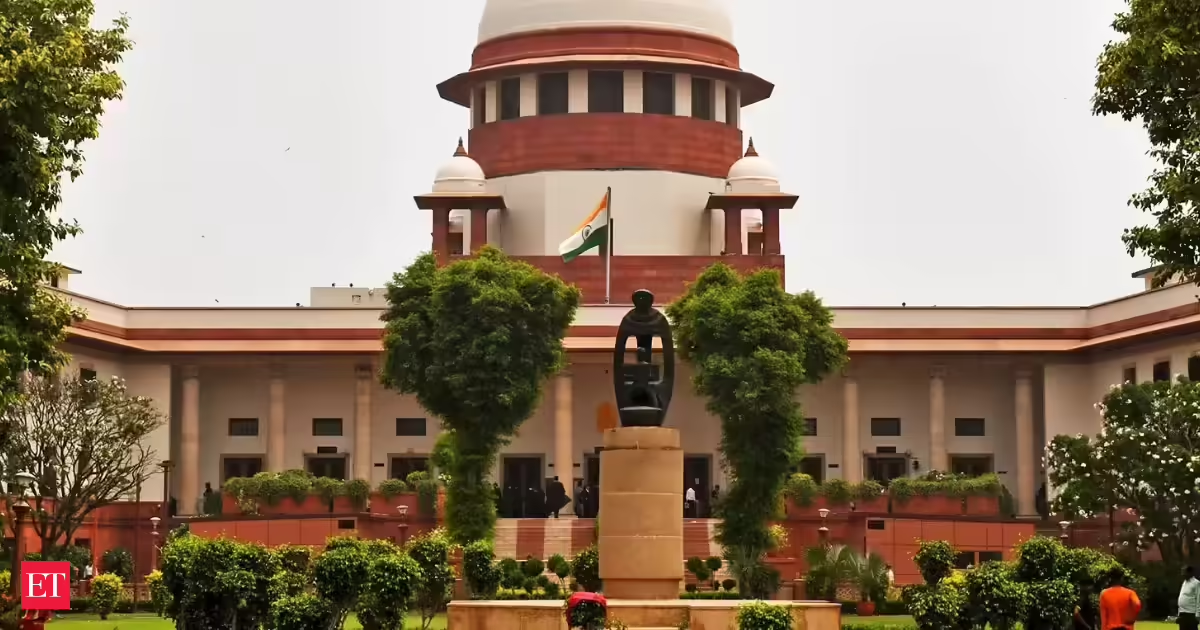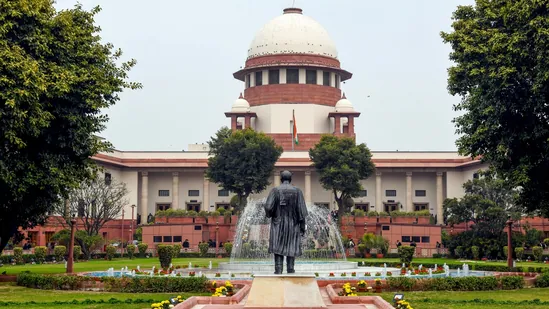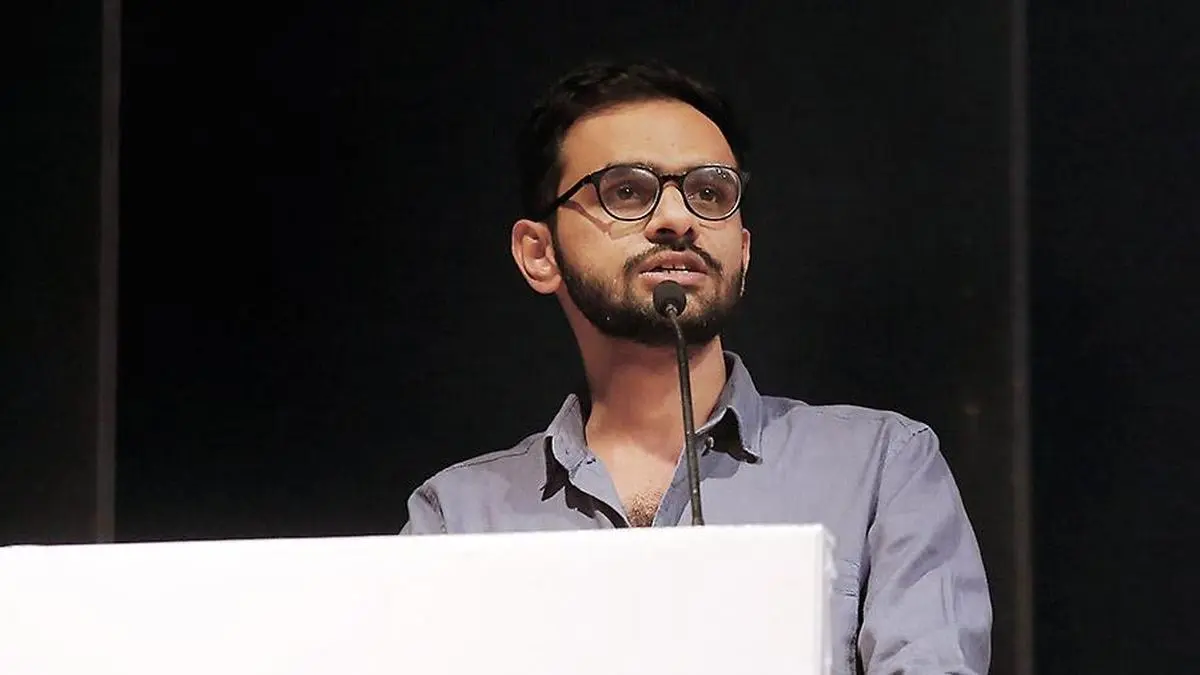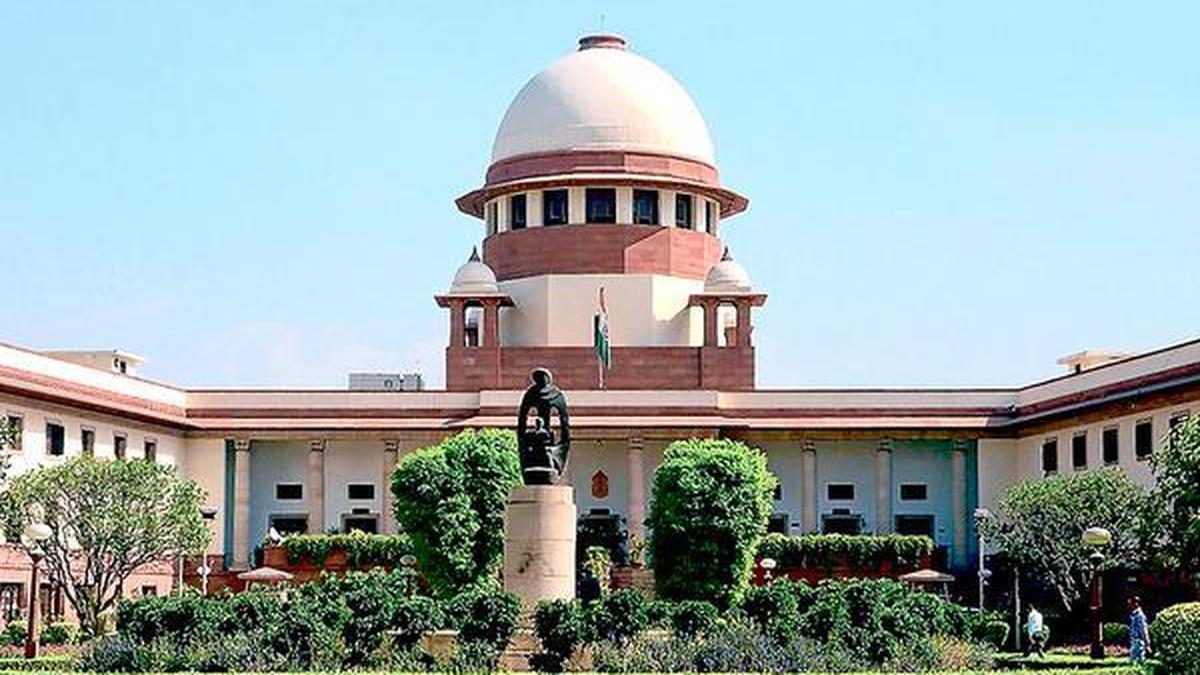
The story so far:On May 22, the Supreme Court granted six months of interim bail to two accused in the 2020 Delhi riots case — Abdul Khalid Saifi and Tasleem Ahmad. It also referred to a larger Bench the question of whether prolonged incarceration and delay in trial can override the stringent bail curbs under anti-terror laws such as the Unlawful Activities (Prevention) Act, 1967 (UAPA). This particular law empowers the Centre to designate not only organisations but also individuals as ‘terrorists’.What concerns did the Court raise about UAPA bail rulings by smaller Benches?A three-judge Bench in the 2021 judgment, Union of India v. K.A. Najeeb, had settled the principle that an undertrial cannot be made to indefinitely wait behind bars for completion of trial, however grave the offence may be.On May 18, a Bench of Justices B.V. Nagarathna and Ujjal Bhuyan in Syed Iftikhar Andrabi v. National Investigation Agency, voiced serious reservations about smaller Benches “hollowing out” the principle laid down in Najeeb — that constitutional courts must intervene and grant bail in UAPA cases in which accused persons had spent years in pre-trial incarceration.Justice Bhuyan, who authored the judgment, questioned the Supreme Court judgment of January 5, 2026 (Gulfisha Fatima v. State, Government of NCT Delhi), which denied bail to former JNU student leader Umar Khalid and his co-accused Sharjeel Imam, who were charged under the UAPA in the Delhi riots ‘larger conspiracy’ case. While granting five others bail, a Division Bench of Justices Aravind Kumar and N.V. Anjaria had denied the two of them relief, prima facie acknowledging that they were the “alleged masterminds”. Mr. Khalid had already spent over five years in jail.Justice Bhuyan’s remarks prompted the Delhi Police to raise objections before Justice Kumar, the author of the Gulfisha Fatima verdict, during the bail hearing of Mr. Saifi and Mr. Ahmed.Additional Solicitor General S.V. Raju argued the Andrabi judgment had muddied the bail waters in UAPA cases. He rhetorically asked whether Ajmal Kasab — or Hafiz Saeed, if extradited from Pakistan — would also be entitled to bail merely because they had spent five years in prison awaiting trial.Justice Kumar referred the question of law to a larger Bench, saying that a “perceived conflict” between two coordinate Benches (of equal strengths) of the Court did not need expressions of “serious reservation”, but “resolution”.Why is bail so difficult under Section 43D(5) of the UAPA?The section makes securing bail under the UAPA difficult. The proviso to it mandates that an accused person will not get bail if a court, on perusing the case diary or chargesheet, found “reasonable grounds” to believe that the accusations were prima facie true.The apex court’s 2019 judgment in National Investigation Agency v. Zahoor Ahmad Shah Watali saw a Division Bench headed by Justice A.M. Khanwilkar (now retired and currently serving as chairperson of the Lokpal) hold that an “elaborate examination” of evidence was not necessary for a court to establish prima facie guilt. The court was merely required to glance through “broad probabilities” to decide if the allegations were true, and deny bail.Section 43D(5) turned bail jurisprudence on its head. The normal presumption of ‘bail, not jail’ was reversed. While ordinary bail jurisprudence was rooted in the fundamental principle that a person was innocent until proven guilty, Section 43D(5) turned the burden onto the accused, supposing the person to be guilty until found innocent.How did the K.A. Najeeb judgment soften the bail bar?The Najeeb verdict was the Court’s response to the growing use of Section 43D(5) as a weapon in the hands of the state. For incarcerated accused persons with limited financial and legal resources, disproving terror charges becomes an uphill battle even as the prospect of trial recedes with passing years. It was in this context that the Najeeb judgment, authored by Justice Surya Kant (as he was then), clarified that constitutional courts could “melt down” the rigour of Section 43D(5) and grant bail to a UAPA accused who had already spent a “substantial period of time” in jail due to gross delay in trial.The Najeeb judgment quoted precedents to hold that constitutional courts cannot become mute spectators before the power of Section 43D(5). They had to intervene to protect the fundamental right to life and personal liberty under Article 21 of the Constitution.What did the Court clarify in the Andrabi verdict about Section 43D(5) and Article 21?In the Andrabi judgment, Justice Bhuyan said the Court must not play ball to the Centre’s argument that the gravity of offences under UAPA outweighed the human right to bail. The judge pointed out that the conviction rate under UAPA was only 2-6% across the country.Justices Nagarathna and Bhuyan observed that an undertrial cannot be punished with denial of bail for the state’s ineptitude to hold a trial on time. If the alleged offence was a serious one, it was all the more necessary for the prosecution to conclude the trial expeditiously. Bail cannot be denied solely on the ground that the charges were very serious.The Andrabi judgment said the Supreme Court in the Gulfisha Fatima judgment read the Najeeb verdict wrong when it said the three-judge Bench had created an automatic entitlement to bail on account of delay. Justice Bhuyan clarified that the Najeeb judgment had never advanced the proposition that bail should be given in every UAPA case of prolonged incarceration. Rather, the Najeeb judgment only cautioned constitutional courts against treating the statutory embargo under Section 43D(5) as the sole justification for continued detention while ignoring broader constitutional principles of personal liberty and speedy trial. It held that Section 43D(5) was subordinate to Article 21.Did the Gulfisha Fatima judgment stray from the ‘binding precedent’ of the Najeeb verdict?The May 22 order, referring the question of bail in UAPA to a larger Bench, argued that the Andrabi judgment had misunderstood the reasoning behind the Gulfisha Fatima verdict. It said the judgment, which had denied bail to Mr. Khalid and Mr. Imam, had correctly applied the Najeeb principle. It said the Najeeb judgment had appreciated the strict bail regime of Section 43D(5) while advising relaxation only in cases in which there was no likelihood of completion of trial within the reasonable time and the accused had already spent a long time behind bars.The May 22 order took pains to clarify that the Gulfisha Fatima judgment accepted the Najeeb judgment as a binding precedent. It had recognised the central place of Article 21 in the constitutional scheme and that pre-trial incarceration cannot assume the character of punishment in UAPA cases.The order said that Mr. Khalid and Mr. Imam was denied bail not because the Court found Article 21 subservient to Section 43D(5), but on an “accused-specific evaluation” based on factors such as the evidence, their roles in the alleged conspiracy, and the need to protect the integrity of the trial.
What did the Supreme Court say about bail under UAPA?
What are the disagreements between recent Supreme Court rulings on UAPA bail? Why is bail so difficult under Section 43D(5) of the UAPA? What did the Court say in K.A. Najeeb about prolonged incarceration and bail? What role does Article 21 play in UAPA bail jurisprudence?
1,135 words~5 min read