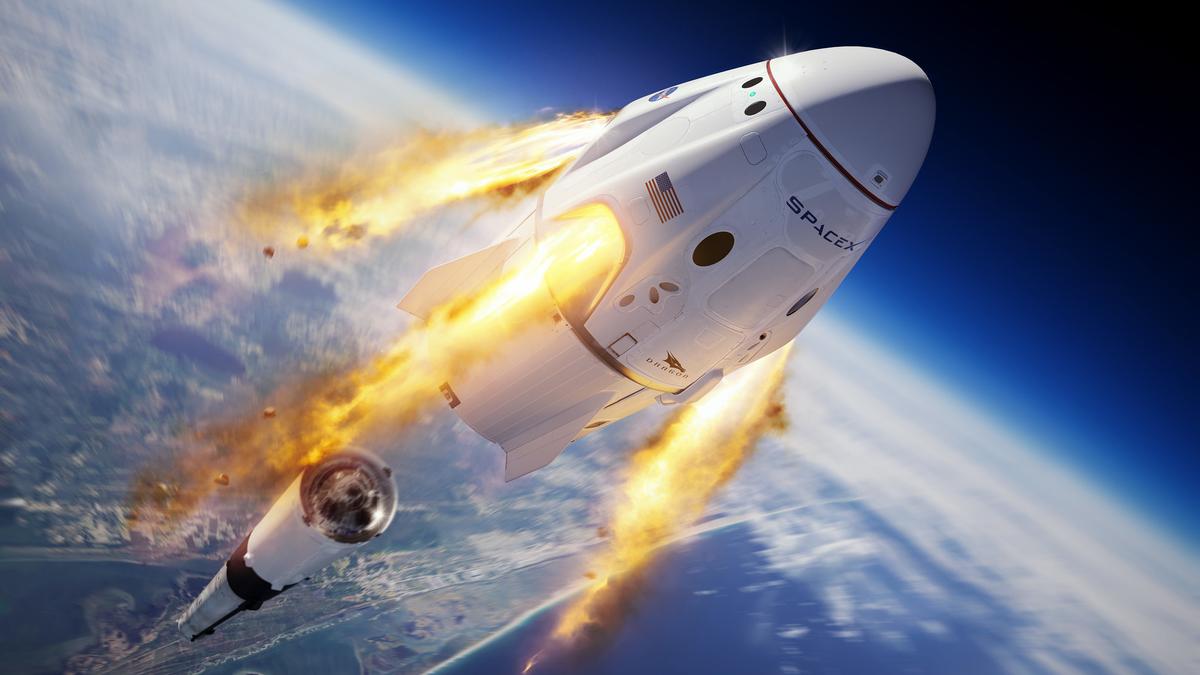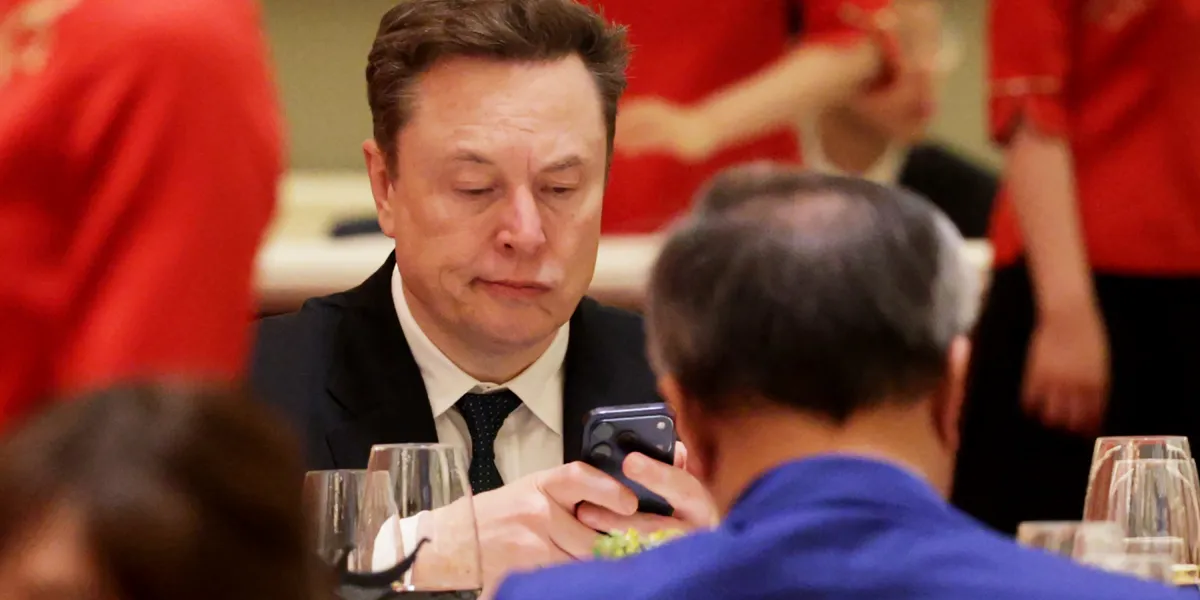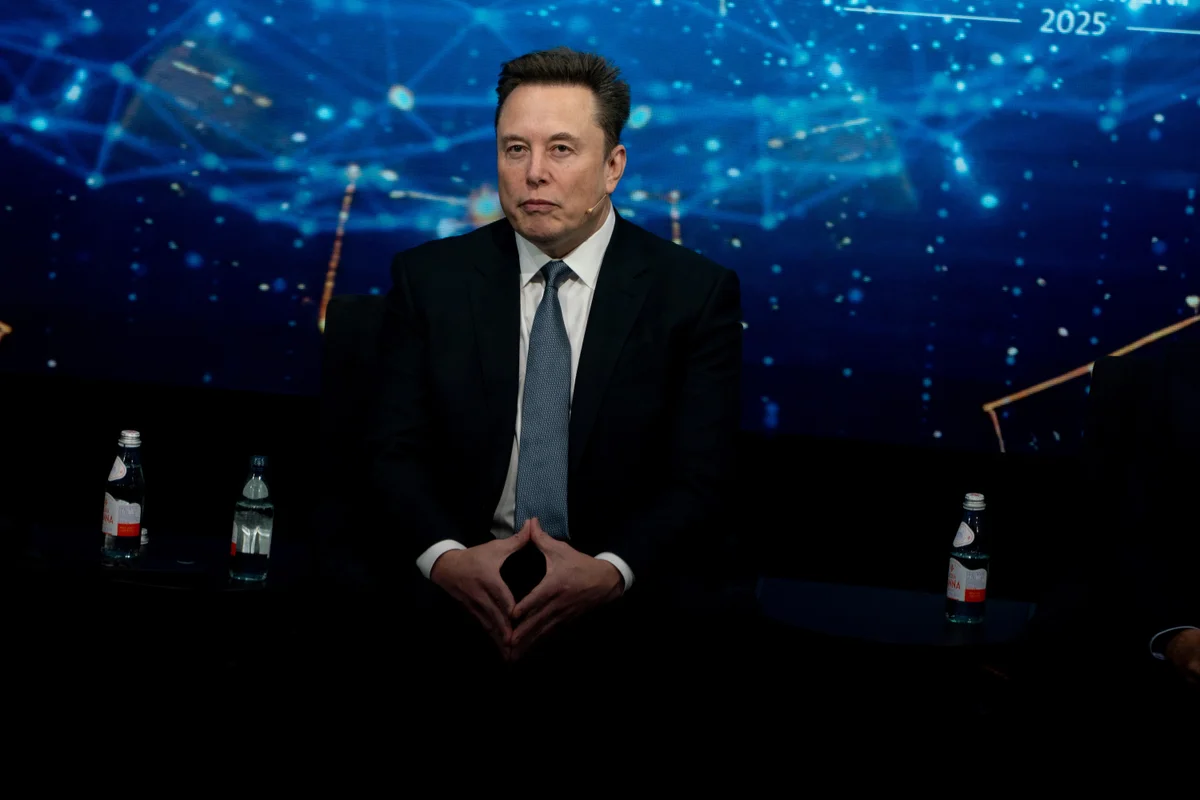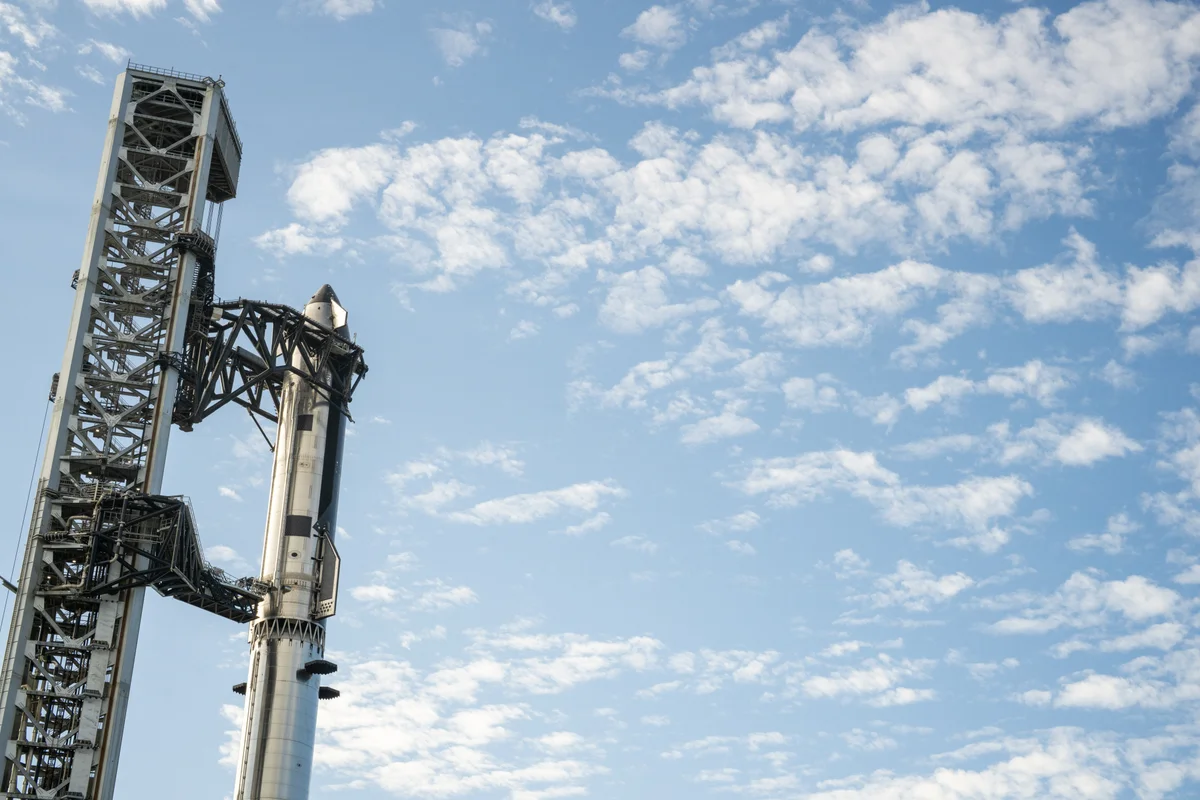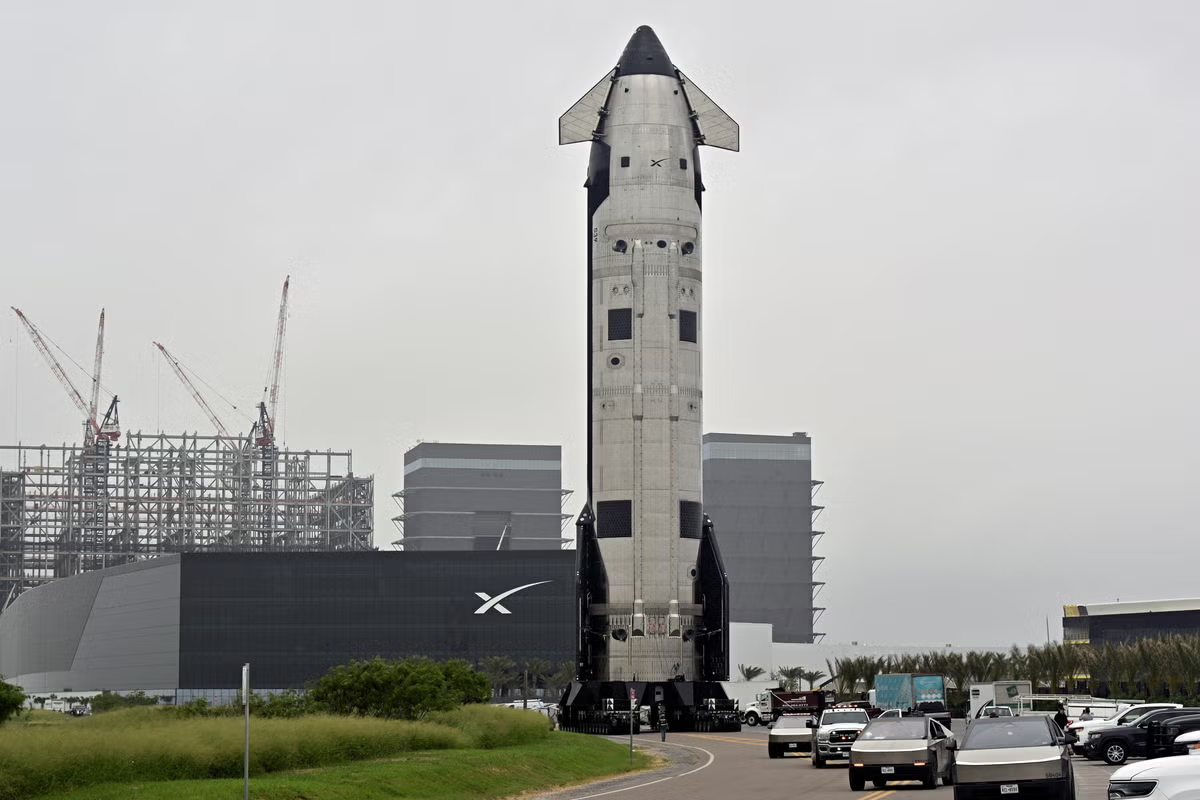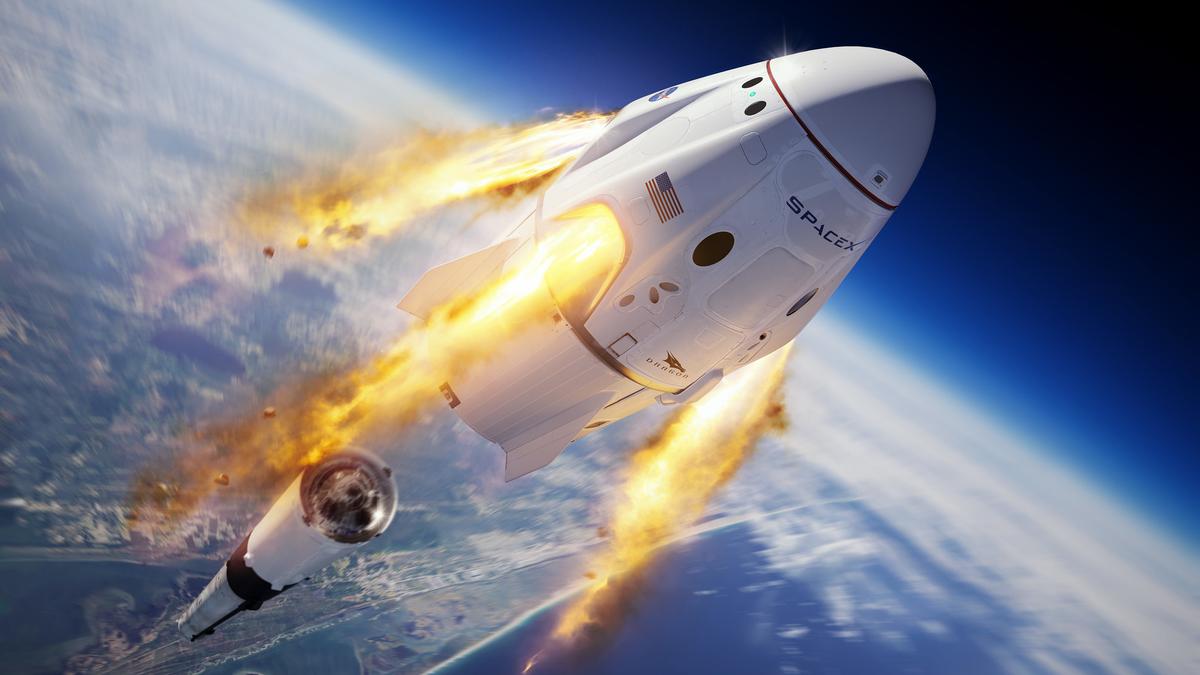
‘To build the systems and technologies necessary to make life multiplanetary, to understand the true nature of the universe, and to extend the light of consciousness to the stars’.What’s that, you ask? That’s SpaceX’s (Space Exploration Technologies) mission statement. The space-telecom-AI giant recently filed its prospectus for an IPO, likely to take place in early June. The mission statement is not all. The prospectus is flush with bizarre stuff like ‘orbital AI compute’, ‘asteroid mining’, ‘energy production on the Moon and Mars’ and other jargons that will make you feel as if reading a sci-fi script straight out of Hollywood. Dabbling in frontier technologies, the company’s ambitions are anything but modest. These are more than just flashy buzzwords — they are formally outlined as part of SpaceX’s growth strategies, though whether its current capabilities can realistically support such ambitions is a different subject.The IPO price and size are not out yet. But going by media reports, SpaceX is valued at an astronomical $1.75 trillion, going as high as $2 trillion in some cases. When xAI was merged with SpaceX in February 2026, the combined entity was valued at $1.25 trillion. The public issue is likely to fetch the company $75 billion in fresh capital, making it by far the largest IPO globally. Saudi Aramco’s $29-billion IPO in 2019 has been the largest so far.So far, so good. But when you combine the above with the asking valuation, one needs to be grounded in logic than give in to the hype. Here’s why.To begin with, SpaceX is unprofitable and will be the first unprofitable company to demand over a trillion dollars in valuation, at the time of its IPO. It makes money at EBITDA level, adjusted for share-based compensation and restructuring costs. Assuming an enterprise value (EV) of $1.75 trillion, the EV to adjusted EBITDA multiple (2025 basis) tests boundaries of the financial universe at about 266x and is plain profane. The price-to-book value multiple (based on Q1 2026 book value) works out to 51x! So, what makes the company so special? Here, we attempt a lowdown of its business and the factors that make it a hard sell, particularly at such sky-high multiples.Brass tacksFounded in 2002, SpaceX operates across three business segments: Space, Connectivity and AI.Space: Here, SpaceX designs, manufactures reusable rockets for launch – both for captive (Starlink) and third-party customers including government agencies. In 2015, it was the first company to successfully demonstrate landing of a rocket launched into space back on earth. In 2017, it further demonstrated the reuse of first-stage booster (the part of a multi-stage rocket that gives the propulsion needed to thrust the rocket through the atmosphere and separates from the payload before it reaches the desired orbit). This shaves off a key step in the launch of the next rocket: Rebuilding the first-stage booster from scratch, thus minimising the time gap between two launches. This is known as cadence in rocketry. More frequent the launches over a given period, higher the cadence.SpaceX’s line-up has three rockets currently. Falcon 9 is the oldest of the three, first launched in 2010. It is the workhorse of the three, having completed 620 of SpaceX’s 650 launches so far, with a payload (what a rocket carries; for example, a satellite) capacity to LEO (low earth orbit – 160-2,000 km above the earth’s surface) of 23 tonnes. Falcon Heavy is next in the line-up with a payload capacity to LEO of 64 tonnes. First launched in 2018, it has so far completed 11 launches. Starship is SpaceX’s flagship rocket, first launched in 2023. It has a payload capacity of 100 tonnes. Unlike Falcon 9 and Falcon Heavy, which allow only part of them to be reused, Starship is fully reusable, thus resulting in higher cadence. Starship has completed 11 test flights and is expected to commence payload delivery to orbit in the second half of 2026.According to the prospectus, if the Falcon 9 reduced launch cost by 85 per cent of historical average, the Starship is expected to take the savings further down by 99 per cent of historical average.These apart, the space business is also home to the Dragon spacecraft which can fly humans to and from the international space station, for instance.Connectivity: This segment consists of the company’s popular ‘Starlink’ satellite-based telecom business, earning revenue from subscriptions. It is the cash cow of the three segments currently. Here, the company operates a constellation of LEO satellites that offer wireless space-based broadband to consumers, enterprises (use cases like remote worksites, offshore oil rigs, cruise ships, aircraft and so on) and governments (national security applications). As of March 31, 2026, the constellation is 9,600-satellite strong. The segment also has Starlink Mobile, providing direct satellite-to-mobile connectivity.Besides, SpaceX has plans to deploy orbital AI compute or simply, satellite data centres that can support AI applications. The rationale is that running such data centres in space would mean substantial savings on energy and cooling costs. Solar panels are significantly more efficient in space than on earth. The company expects deploying such satellites as early as 2028. However, the prospectus states that large-scale orbital infrastructure would potentially require up to one million satellites, a far cry from how much the company has in space so far.AI: The final segment ‘xAI’ consists of an array of businesses and is the most cash-guzzling of the three. x.com (formerly Twitter) is the first of them, earning revenue from advertising and user subscriptions. The platform has about 550 million monthly active users (for context, Meta’s daily active users were 3.56 billion in Q1 2026). It also embeds the next business: Grok, a large language model. In the third business, it builds data centres (named COLOSSUS) capable of training AI models and leases compute power to customers. The current compute capacity stands at over 1 GW, against a global capacity of roughly about 100 GW by 2025. The fourth business is named Terafab, a chip manufacturing initiative with Intel and Tesla for captive consumption. The final business takes the form of ‘Macrohard’, an agentic AI platform developed with Tesla that leverages SpaceX’s AI models and compute infrastructure to deliver consumer and enterprise applications.To augment capabilities in this segment, SpaceX has collaborated with Cursor (Anysphere Inc.), in a deal struck in April. Under the deal, SpaceX will share compute with Cursor to improve existing AI models and jointly develop products. It also includes an option for SpaceX to buy Cursor at a valuation of $60 billion (share swap).Why it’s a hard sellHere are some factors that make the valuation seem disproportionate and hard to digest.One, the prospectus claims that SpaceX operates in a total addressable market (TAM) worth $28.5 trillion. To put this bizarre estimate into perspective, it needs to be noted that the current world GDP is about $120 trillion and that of the US is $31 trillion. Moreover, 80 per cent of this TAM is attributed to AI-powered enterprise applications. With AI tech evolving and when it is still not a given that the services sector of today will be taken over by AI in the future, such claims make it sound more like a pipe-dream. Readers can recall how Musk had forecast x.com’s subscription revenue to hit $10 billion by 2028, when he was about to acquire the platform in 2022. Today, this languishes at around $1.4 billion (2025).Two, ‘establishing a lunar economy’, ‘space tourism’, ‘in-orbit manufacturing’, and ‘asteroid mining’ do sound futuristic and exciting. Musk is even entitled to stock-based compensation (one billion Class B shares) if SpaceX manages to establish a permanent human colony on Mars with at least one million inhabitants (deadline not provided). But today, these appear more like ‘building castles in the air (or space)’ or a futuristic business plan at best, rather than viable business segments to factor into valuations. Further, if at all such expeditions are taken up, the case that regulations might never allow them to happen, demands one to be sceptical.Three, the company is still loss-making. Accumulated losses as of March 31, 2026 (Q1 2026) stand at $41 billion (book value mentioned above is after considering these losses). One cannot rule out the possibility that the company’s future revenue may not be sufficient to justify today’s heavy capex – a risk that all AI companies face. Further, xAI is relatively a small player in a space that is already crowded by the likes of Amazon, Google and Microsoft.Four, SpaceX has entered into frequent transactions with related parties. For instance, in 2025, it purchased $506 million worth of battery energy storage system (called Megapack) from Tesla – another entity in which Musk is interested. It also purchased $131-million worth of Tesla Cybertrucks. This follows multiple voluntary recalls of the product by Tesla, some due to serious safety issues such as ‘stuck accelerator pedal’. xAI has also leased AI infrastructure hardware worth roughly $4.5 billion from Valor Equity Partners, a firm in which SpaceX director Antonio Gracias is the founder and CEO. Also as mentioned earlier, X Holdings (x.com or Twitter) was folded into SpaceX — both are entities under Musk’s common control.Related-party transactions may well be compliant and executed at arm’s length price. However, when there are a material lot of such transactions, a lot in which Musk may have been the beneficiary of, raises eyebrows because of this fact. As of May 1, Musk owns 12.3 per cent of Class A shares (one vote each) and a whopping 93.6 per cent of Class B shares (10 votes each) — together controlling 85.1 per cent of total voting power. Further, Musk may be removed from his position as CEO/ Board’s Chairman only with the approval of majority of the voting power of Class B shares. Investors would do well to choose caution over excitement, given the extortionate valuation.Published on May 23, 2026
SpaceX and the Big Bang IPO bubble
Explore the hype and skepticism surrounding SpaceX's ambitious IPO, valuing the company at up to $2 trillion amidst unprofitability.
1,635 words~7 min read