AFP, BEIJING
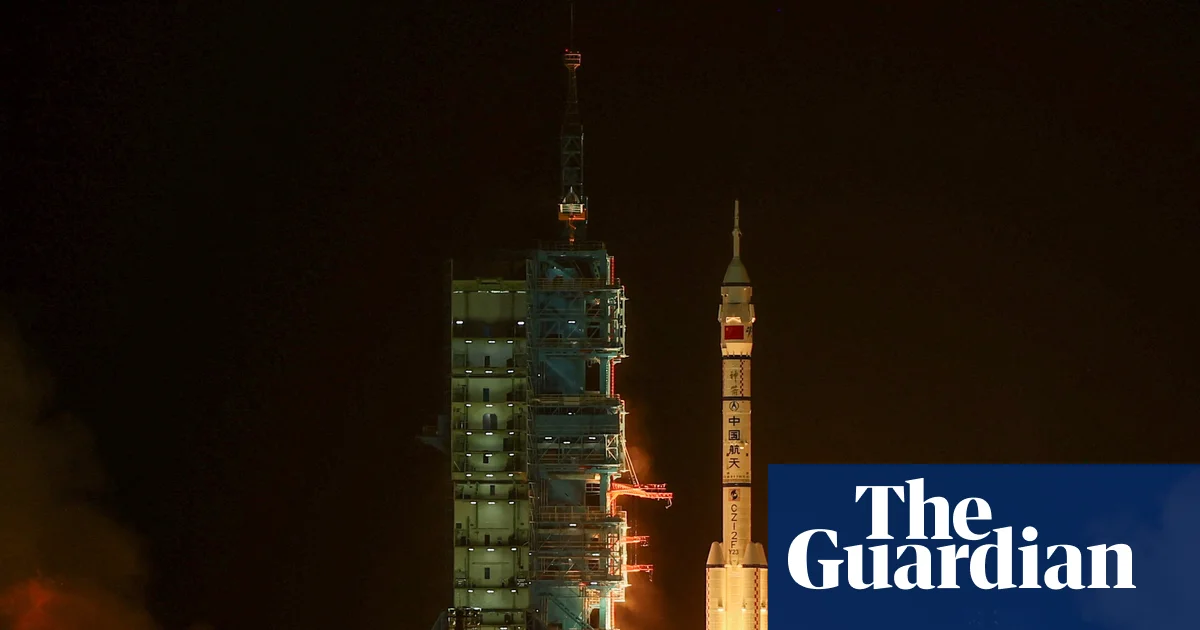
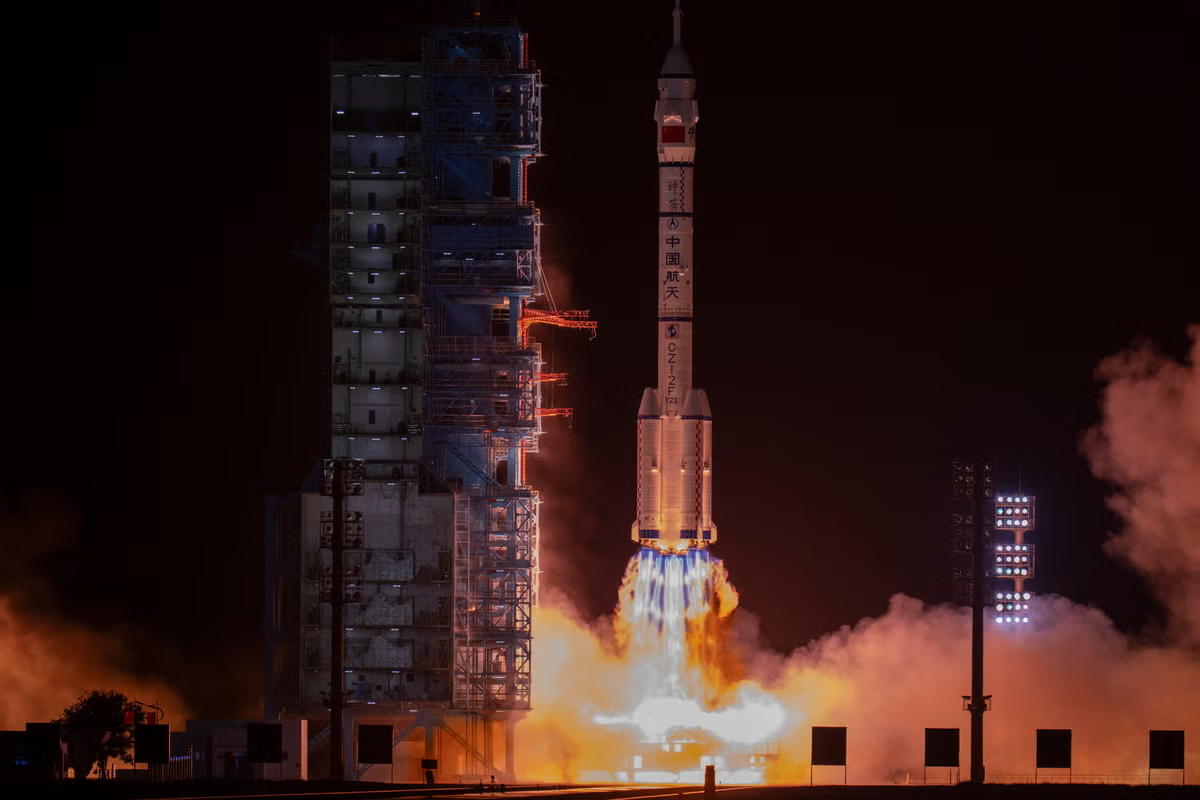
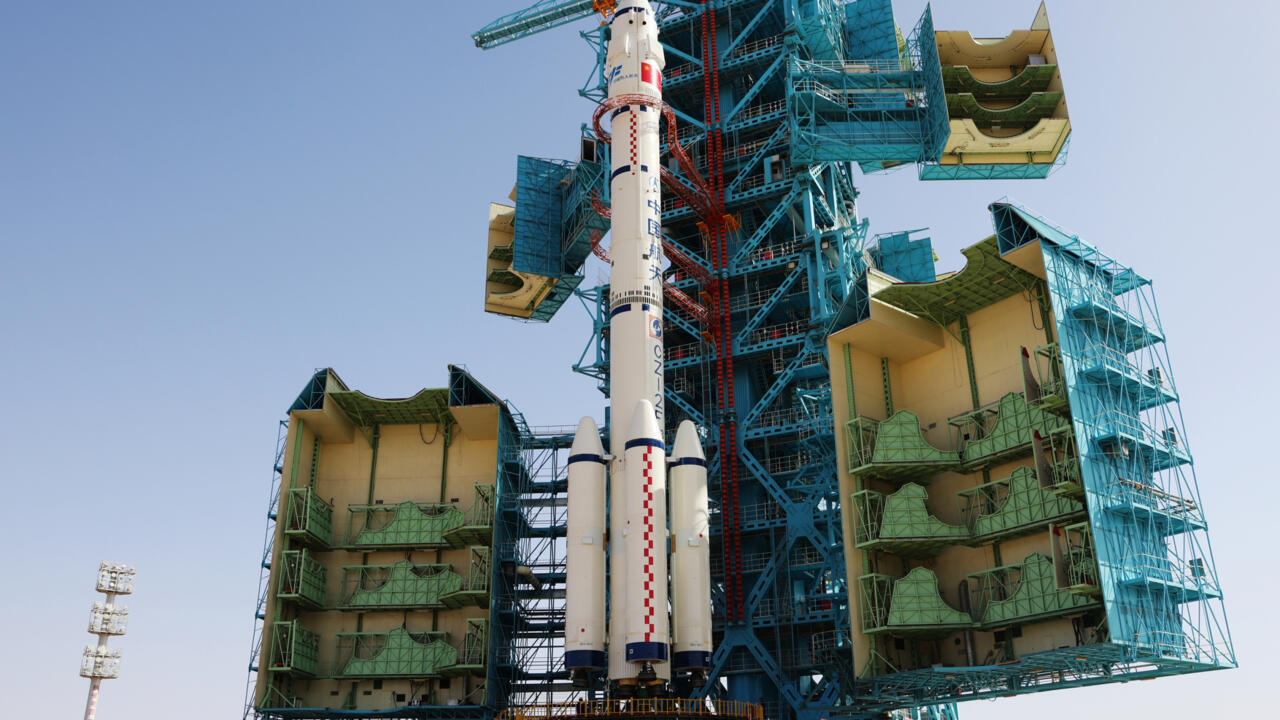
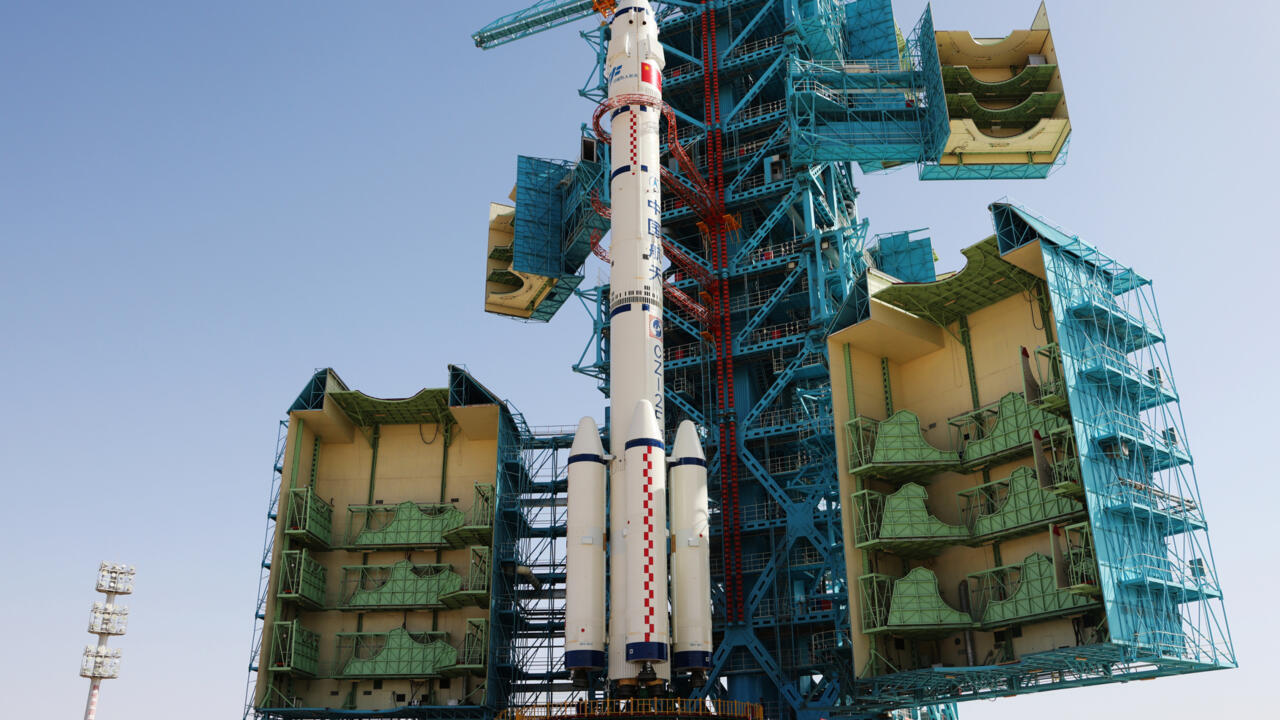
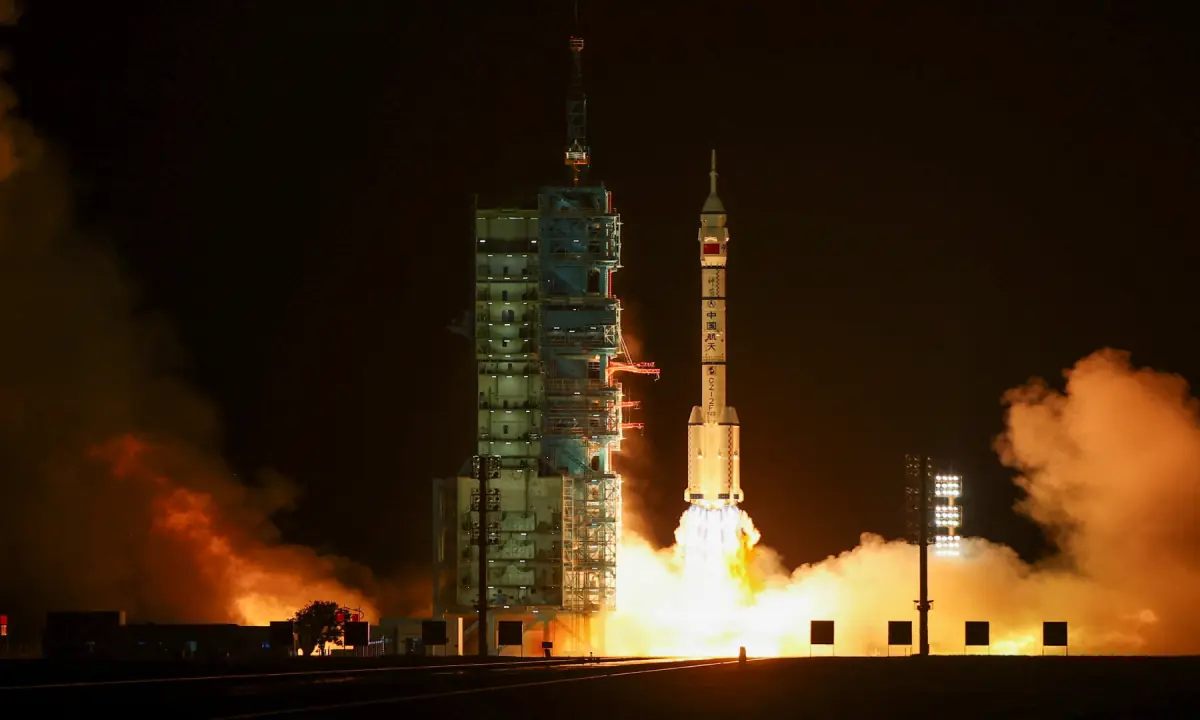
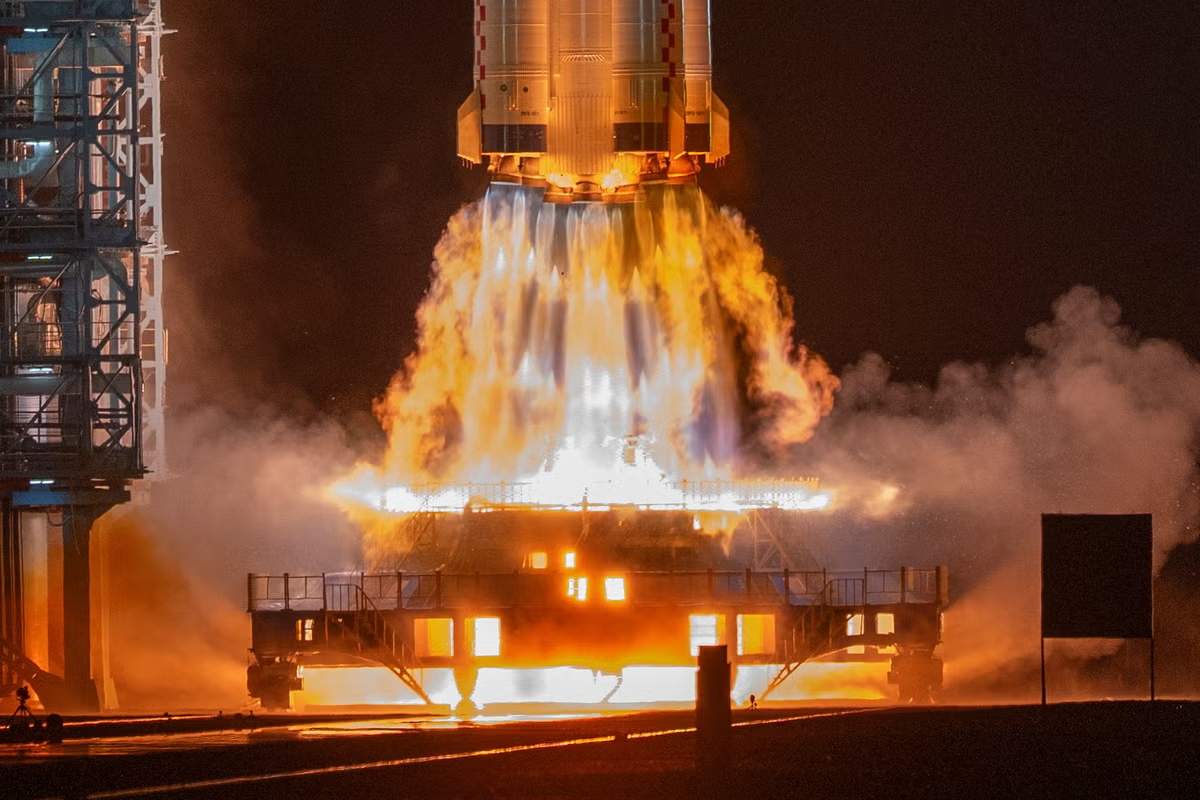
A Hong Kong astronaut is to join a Chinese space mission for the first time as part of a three-person crew launching today, as Beijing edges closer to its goal of landing people on the moon.The Tiangong space station — crewed by teams of three astronauts that are typically rotated every six months — is the crown jewel of China’s space program, boosted by billions in state investment in a bid to catch up with the US and Russia.The Shenzhou-23 mission is to blast off at 11:08pm from the Jiuquan Satellite Launch Center in northwestern China, carrying three astronauts to the space station, China Manned Space Agency (CMSA) spokesman Zhang Jingbo (張靜波) told reporters on Saturday.
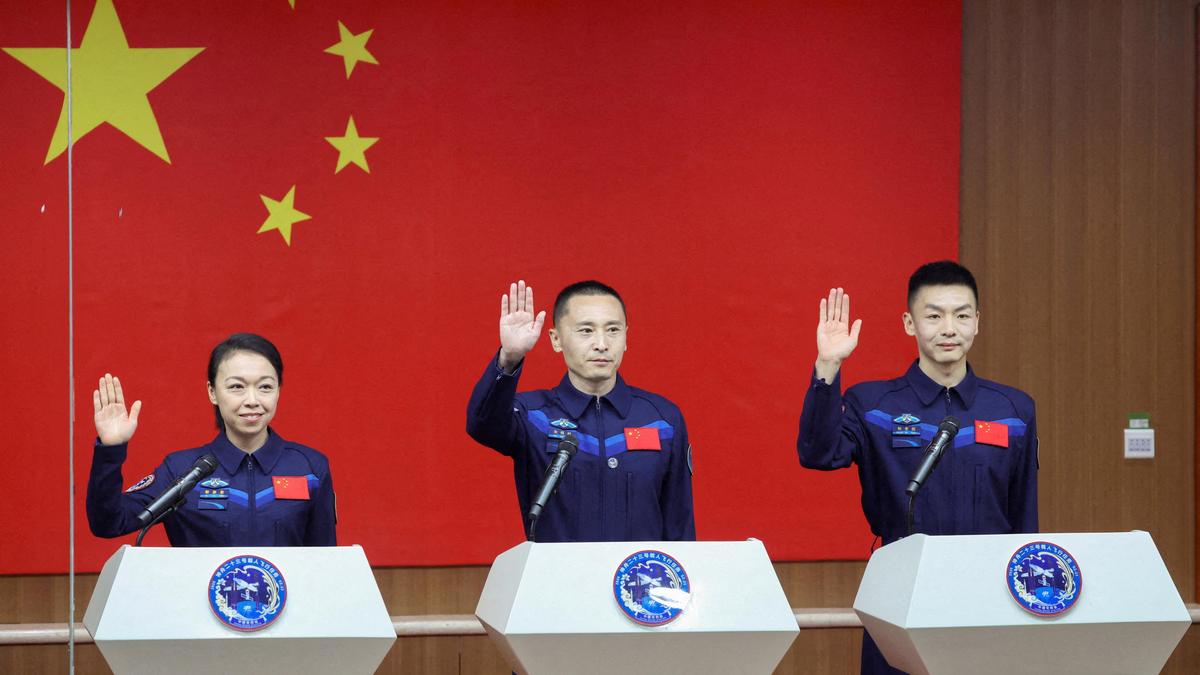
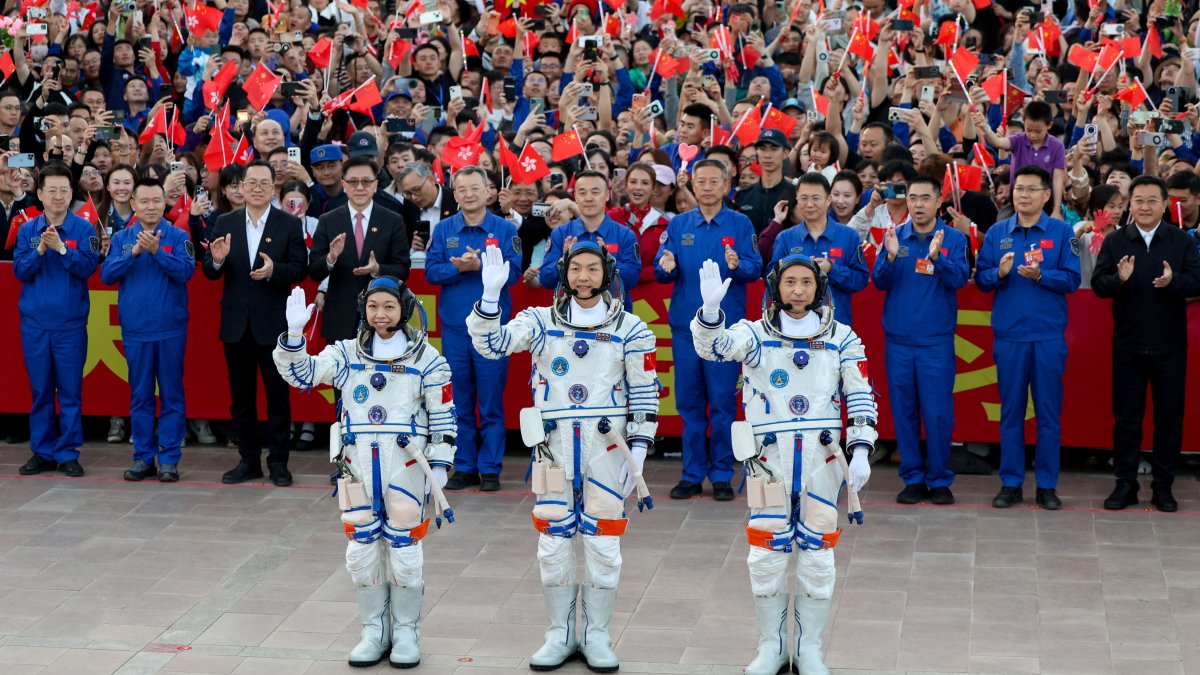
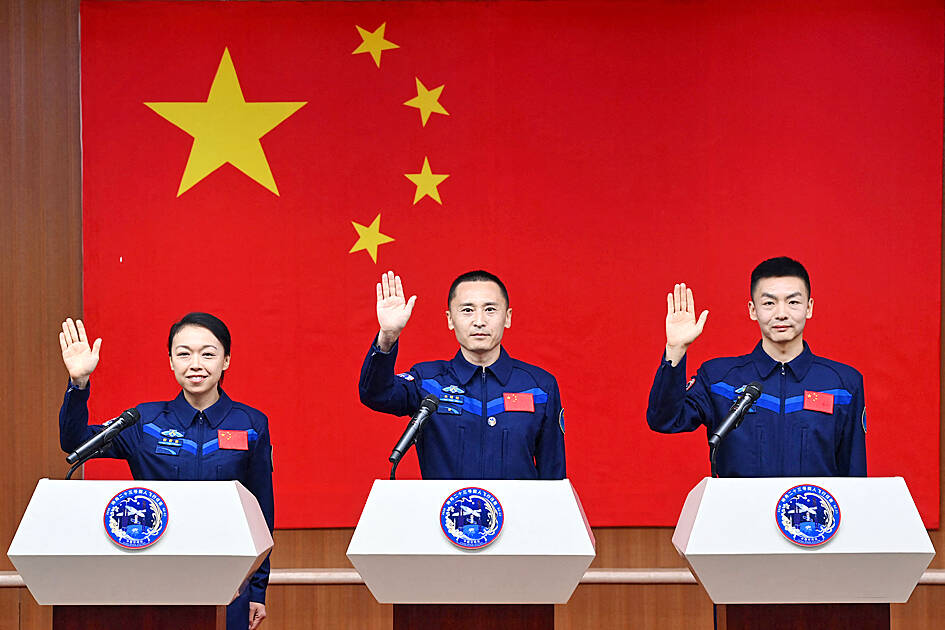
From left, astronauts Lai Ka-ying, Zhu Yangzhu and Zhang Zhiyuan wave during a news conference before the launch of the Shenzhou-23 mission at the Jiuquan Satellite Launch Center in China yesterday
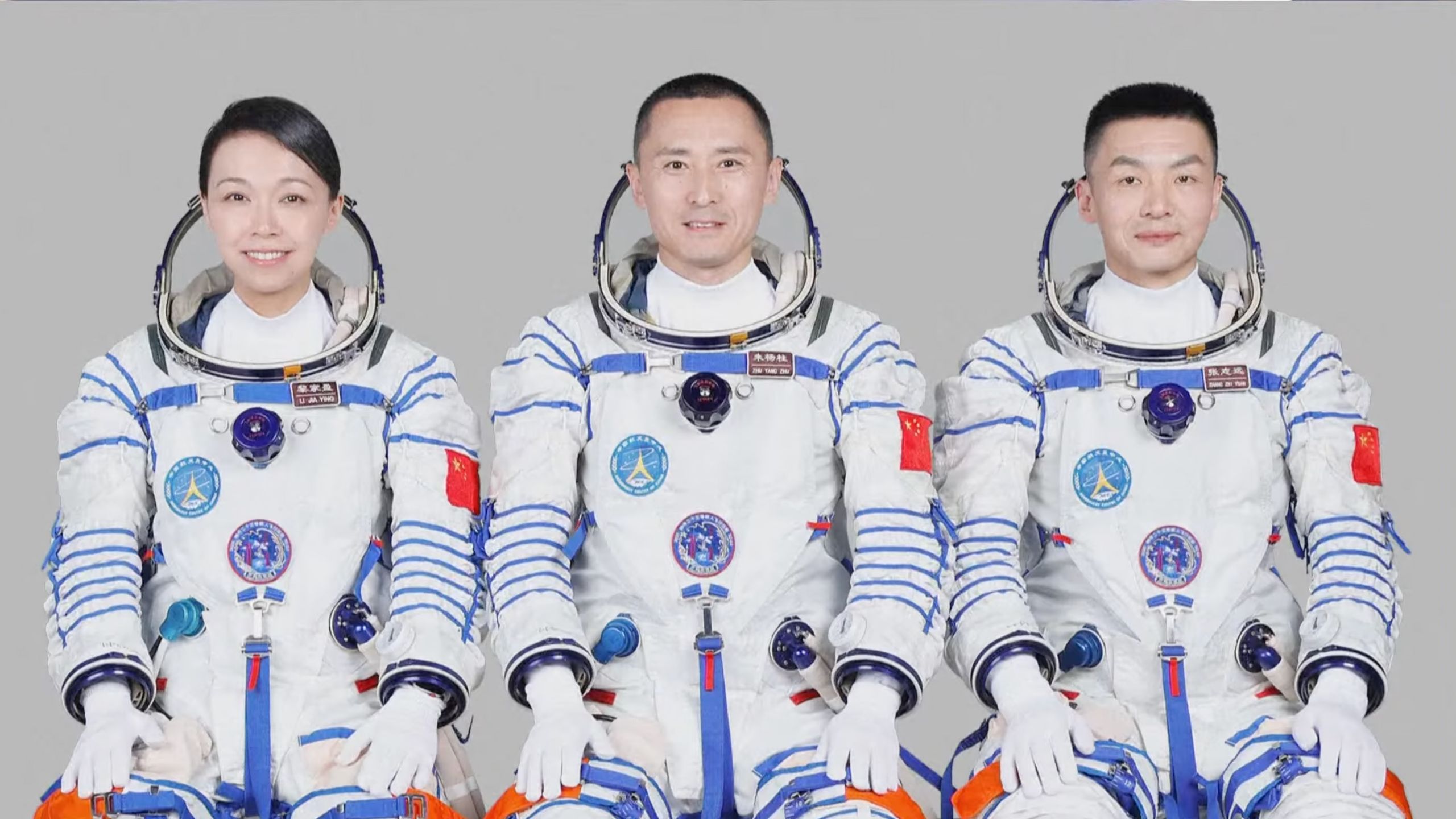
The team comprises Lai Ka-ying (黎家盈), hailed by state media as Hong Kong’s first astronaut, Zhu Yangzhu (朱楊柱) and Zhang Zhiyuan (張志遠), the spokesman said.Flight engineer Zhu, who participated in the Shenzhou-16 mission in 2023, is to be the commander.
“This is a ... test of our physical and psychological endurance, emergency response capabilities, coordination and teamwork, as well as our ability to work and live in orbit,” Zhu said. “As mission commander, what I have thought about most is how to make thorough preparations in every aspect and how to lead the team in successfully completing the flight mission with zero mistakes and zero errors.”The mission’s primary objectives are to “continue carrying out space science and application work, conduct astronauts’ extravehicular activities, and cargo transfer in and out of the cabin,” Zhang Jingbo said.One of the astronauts would remain on the station for a year, he added, without specifying who.“Arranging for an astronaut to carry out a one-year in-orbit residency experiment is by no means a simple matter of adding together two six-month missions in terms of duration,” he said.The one-year space residency would collect data on astronauts on longer-duration spaceflights and test health support capabilities, he added.China is “steadily” building operational experience for “sustained occupation” of its Tiangong space station, and year-long missions are an important step toward lunar and potentially deep-space ambitions, Macquarie University physics and astronomy professor Richard de Grijs said.“A year in orbit pushes hardware and humans into a different operational regime compared with the shorter Shenzhou missions of the program’s earlier phases,” he said.