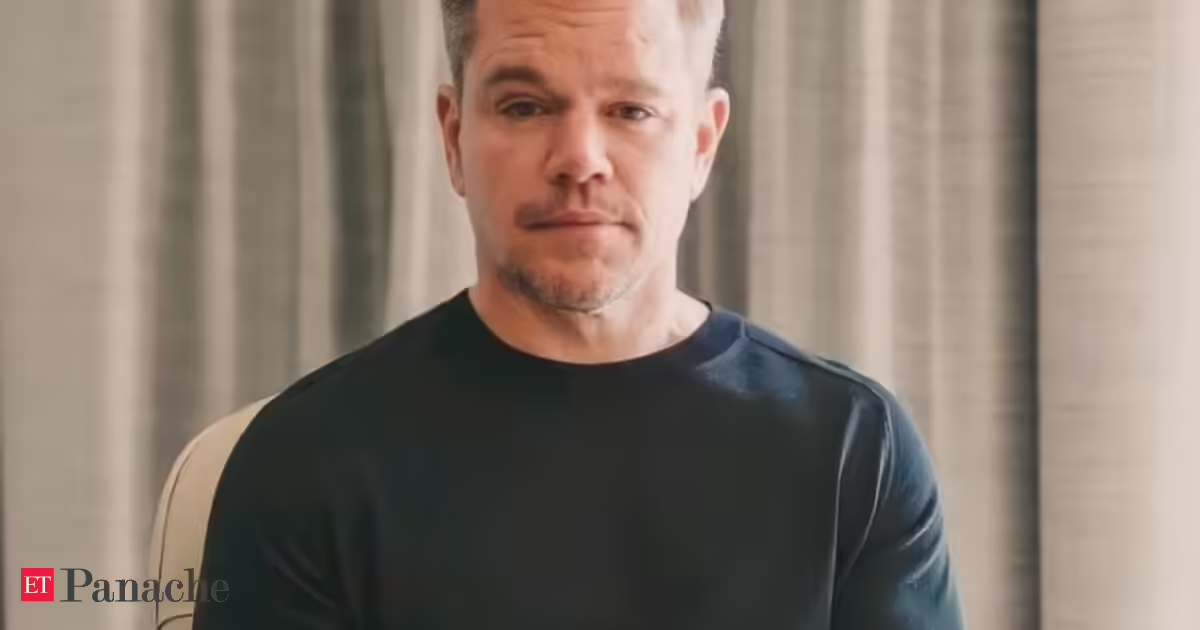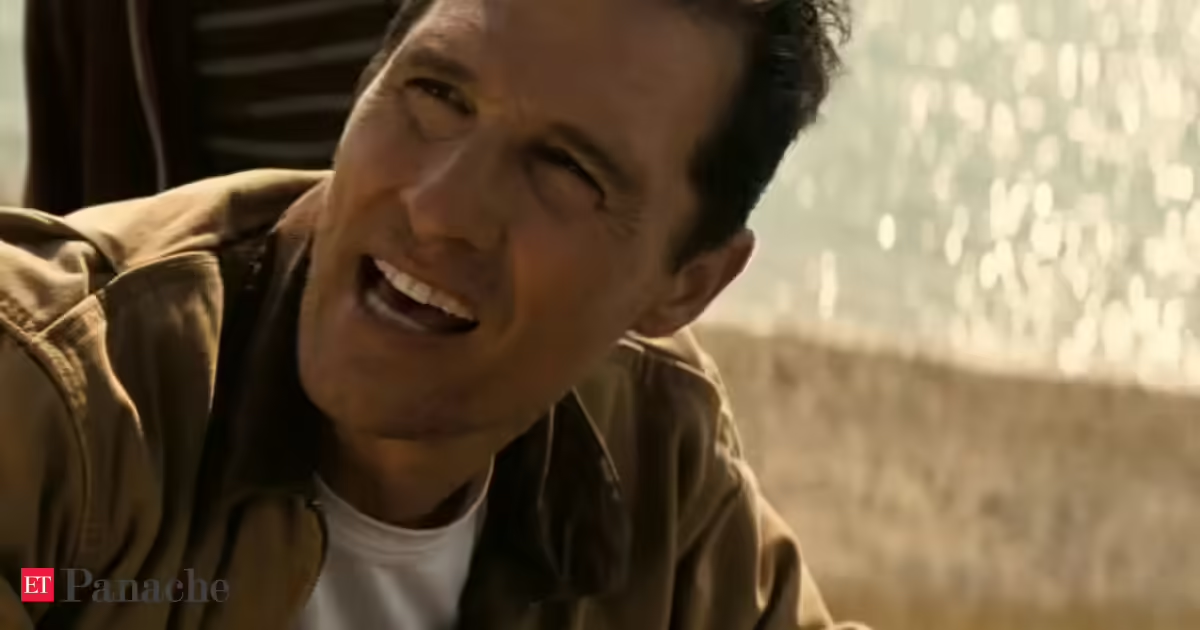
Movie dialogue of the day by Matthew McConaughey: ‘We used to look up at the sky, wonder at our place in stars. Now we look down, worry about our place in the dirt’; what the Interstellar line teaches us about the lost sense of wonderSynopsisA powerful line from the film Interstellar contrasts humanity's past curiosity about the stars with its present focus on survival. The movie, set in a dying Earth's future, shows astronauts seeking a new home. This dialogue reflects a loss of perspective, where immediate worries overshadow imagination and ambition. It reminds us that wonder is essential, even in crisis.Matthew McConaughey's dialogue of the day is from the sci-fi Christopher Nolan movie Interstellar. (IMDb)When life becomes overwhelming, people often stop looking at the bigger picture and start focusing only on daily stress, survival, and routine pressures. Few modern films capture this shift in human mindset as powerfully as Interstellar. In one of its most emotional moments, Matthew McConaughey’s character reminds us how humanity has drifted away from curiosity and wonder. The line, “We used to look up at the sky and wonder at our place in the stars. Now we just look down and worry about our place in the dirt,” continues to resonate deeply with audiences even years after the film’s release. The dialogue is delivered by Joseph Cooper, played by Matthew McConaughey in Christopher Nolan’s 2014 science fiction epic Interstellar. The film is set in a future where Earth is struggling with environmental collapse, famine, and limited resources, forcing humanity to focus entirely on survival rather than exploration.About Interstellar Directed by Christopher Nolan, Interstellar follows a group of astronauts who travel through a wormhole in search of a new habitable planet for humanity. The story blends science fiction with emotional storytelling, focusing on love, time, sacrifice, and human survival. The quote reflects a central emotional conflict in the film. Once, humanity looked at the sky with curiosity, imagination, and a sense of endless possibility. Space represented dreams, discovery, and something far greater than daily struggles. But in the world shown in Interstellar, that sense of wonder has been replaced by fear, scarcity, and survival pressure.You Might Also Like:Deeper meaning of the dialogue “When we used to look up at the sky and wonder at our place in the stars,” represents a time when humans were driven by exploration and questions about existence. It reflects curiosity, science, and emotional openness toward the unknown. In contrast, “Now we just look down and worry about our place in the dirt,” symbolises how humanity has become consumed by immediate problems. Instead of thinking about the universe, people are trapped in anxiety about survival, failure, and limitations. It shows a psychological shift from expansion of mind to contraction of thought. The line essentially decodes the loss of perspective in modern life. It suggests that when people are too focused on short-term struggles, they lose connection with imagination, ambition, and deeper meaning. Life becomes smaller, not because the world has changed, but because attention has narrowed.You Might Also Like:Context of the dialogue In the context of the movie, this emotional shift is not just philosophical but also practical. Earth is dying, crops are failing, and humanity has stopped dreaming about space exploration. Cooper’s line becomes a reminder of what humanity has lost and what it must regain in order to survive.About Interstellar The 2014 science fiction epic is irected by Christopher Nolan, who co-wrote it with Jonathan Nolan. Starring Matthew McConaughey, Anne Hathaway, Jessica Chastain, Bill Irwin, Ellen Burstyn, and Michael Caine, the film is set in a dystopian future where Earth faces blight and famine. It follows astronauts travelling through a wormhole to find a new home for humanity. The film was a major box office success, ranked among the top-grossing films of 2014, and won the Academy Award for Best Visual Effects.Read More News on...morelessRead More News on...moreless
Movie dialogue of the day by Matthew McConaughey: ‘We used to look up at the sky, wonder at our place in stars. Now we look down, worry about our place in the dirt’; what the Interstellar line teaches us about the lost sense of wonder
A powerful line from the film Interstellar contrasts humanity's past curiosity about the stars with its present focus on survival. The movie, set in a dying Earth's future, shows astronauts seeking a new home. This dialogue reflects a loss of perspective, where immediate worries overshadow imagination and ambition. It reminds us that wonder is essential, even in crisis.
648 words~3 min read