When someone searches Google, you can see exactly where you rank. When someone asks ChatGPT for a software recommendation, you have no idea whether your brand comes up at all. That gap is widening, and most rank-tracking tools were not built to close it.
A growing share of product research and buying decisions now starts with an AI assistant rather than a search engine. The brands showing up in those responses are gaining ground quietly, without leaving any trace in the dashboards marketing teams check every morning. Traditional SEO tools measure a world that is changing faster than most tool roadmaps can follow. Position one in Google still matters. But for an increasing number of queries — “what is the best project management tool for a remote team?” or “which SEO platform do agencies prefer?” — the first answer a potential customer sees comes from a large language model, not a search results page.
Moz, which has tracked search behaviour for over 20 years, has responded directly to this shift. Its AI SEO Toolkit, built into Moz Pro, adds three tools designed to close the gap between traditional SEO and LLM visibility, without requiring a separate platform or a second login.
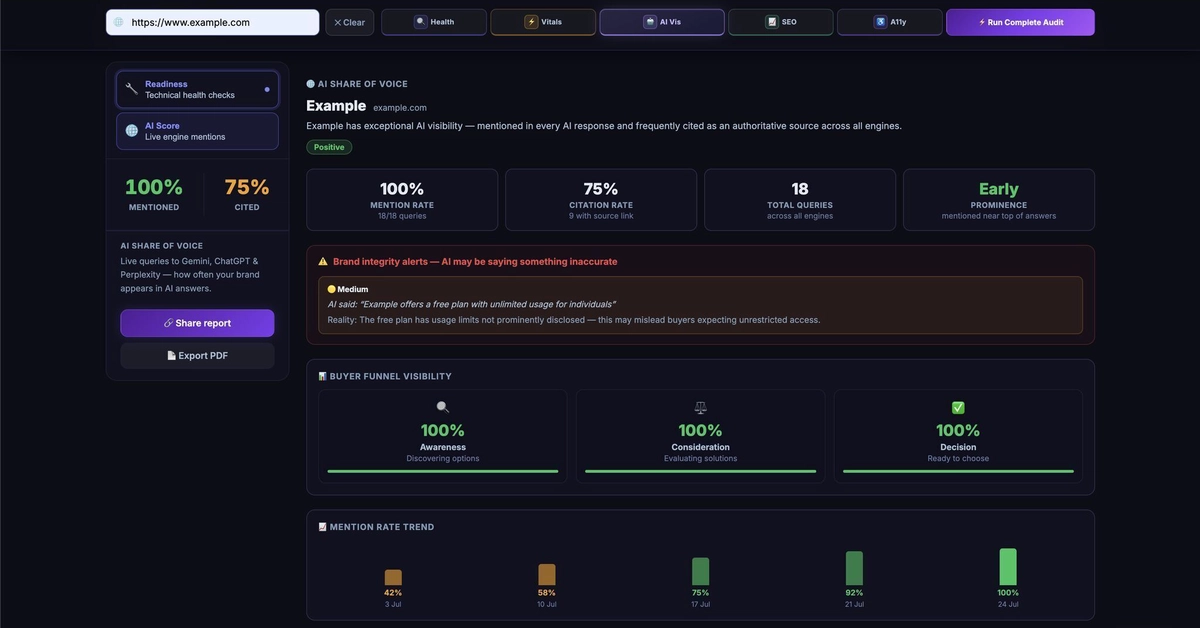
The centrepiece is the AI Visibility dashboard. You enter your brand name, specify which terms count as mentions, add up to three competitors, and the tool begins tracking how your brand appears in responses from ChatGPT and Gemini. The dashboard shows not just whether you are mentioned, but where in the response you appear. This matters because an AI answer is not a ranked list of ten links where position three is still visible. It also plots your share of mentions against competitors on the same timeline, so you can see whether a content push, a product launch, or a press mention shifted how often an AI recommends your brand rather than a rival’s.