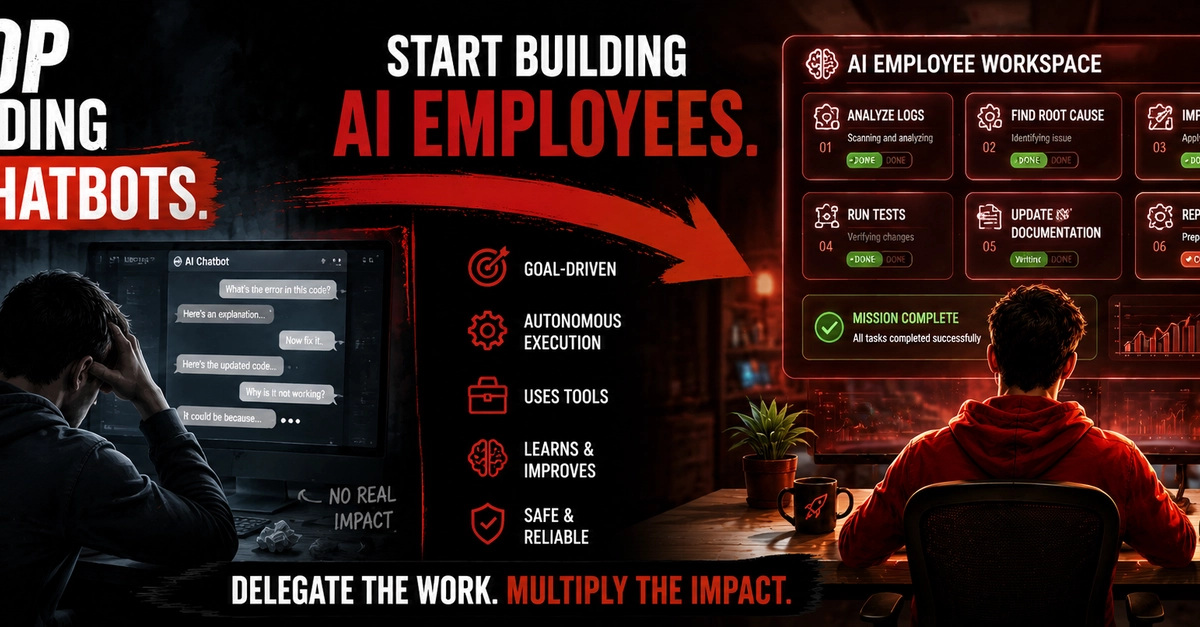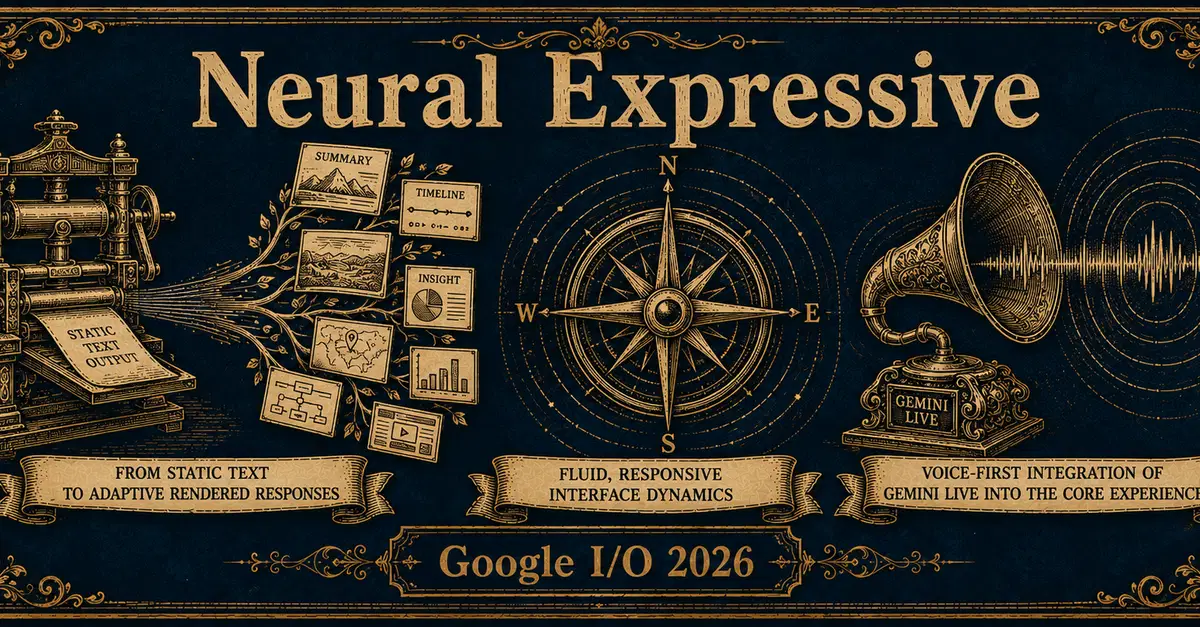
Every AI product launched in the last three years ships the same interface: a text box, a send button, a scrolling wall of markdown. Google just called that paradigm out by name - and shipped a replacement.
The Problem It's Solving
The chat-log format was never designed for AI. It was borrowed from messaging apps because it was familiar and fast to build. Type a prompt, get a response, scroll. For a demo, it works. At 900 million monthly active users, its limitations become the product's most visible failure.
Gemini's UI/UX lead Jenny Blackburn describes the output as "the giant wall of text" - and that framing is the honest diagnosis. Users type in questions and get back detailed written answers that require scanning, filtering, and manually unpacking paragraphs of monotone text to find anything actionable.
The deeper problem is that the chat-log format assumes the model's job ends at text generation. The user does the rendering - in their head, on their own. That works for simple factual lookups. It breaks down for anything that has structure: timelines, comparisons, processes, multi-step plans, visual data. These are exactly the use cases where AI assistance is most valuable, and exactly where a wall of markdown is least useful.