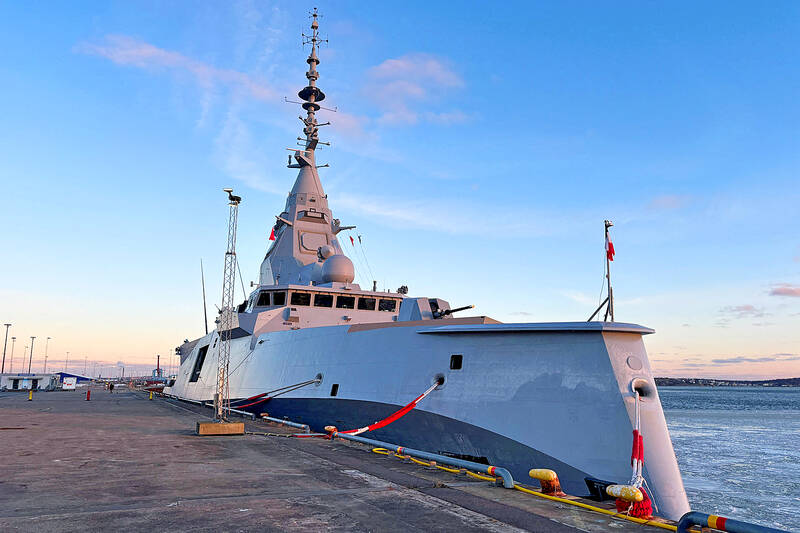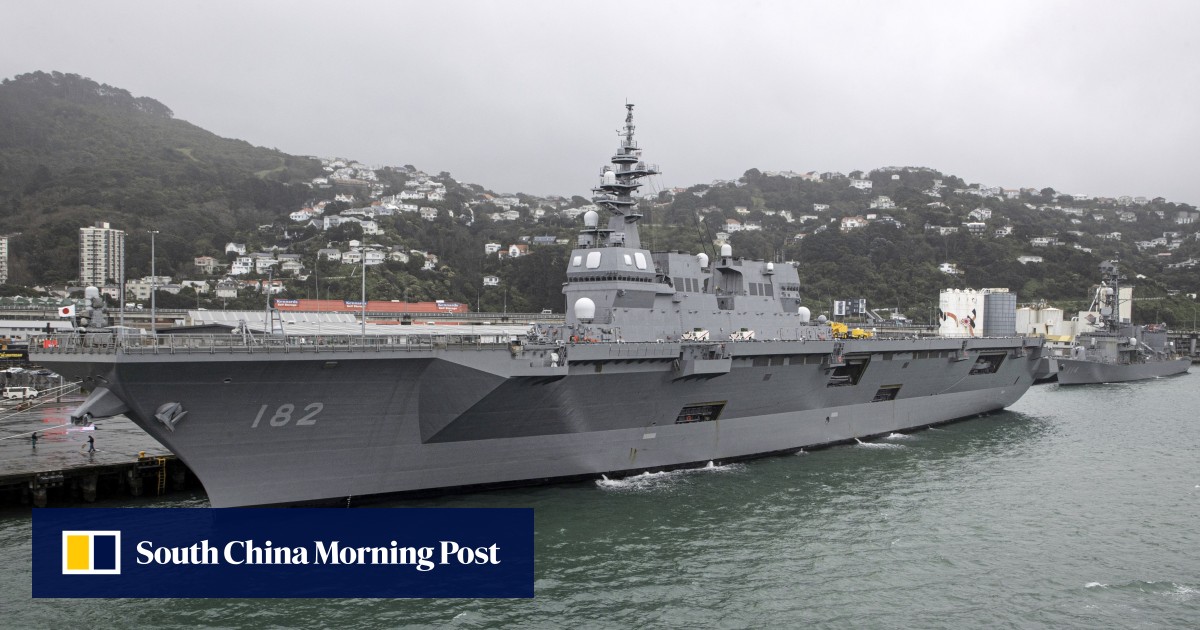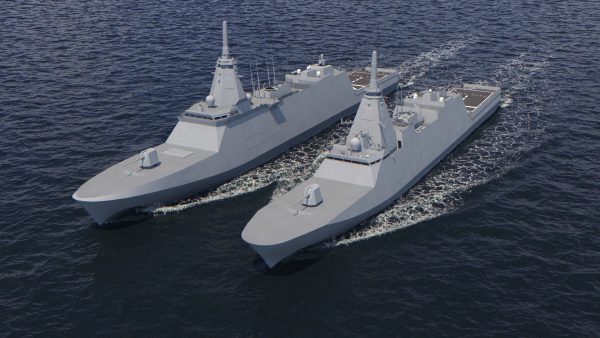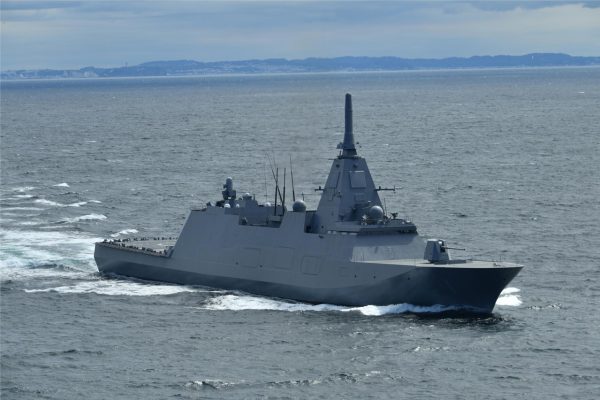
In mid-April 2026, Taiwanese media reported that the Republic of China (ROC) Navy is evaluating Japan’s upgraded Mogami-class frigate, known in the Japan Maritime Self-Defense Force as the New FFM, as a candidate for its planned 6,000-ton next-generation surface combatant. The reporting cited unnamed sources and suggested that Tokyo had quietly relaxed restrictions on transferring warship blueprints to Taipei.
Japanese officials have not confirmed any of this. Even so, the report is significant. Five years ago, the policy possibility it describes did not exist.
Taiwan’s interest in the design is easy to understand. Of roughly 25 major surface combatants in Taiwan’s navy, 15 have served more than 25 years; the Chi Yang-class frigates are now over 50 years old. Taipei is investing in indigenous corvettes, a modernized Kang Ding fleet, and a domestic submarine program (the lead boat, Hai Kun, conducted sea trials in 2025), but a single supplier base, even one supplemented by the United States, will not close every gap. The harder question is whether Japan can become a second major democratic partner without breaking its own legal and political architecture in the process.
That architecture has shifted more in the past three years than in the previous three decades. In December 2023, the Kishida Cabinet revised Japan’s 2014 Three Principles on Transfer of Defense Equipment and Technology, permitting limited exports of lethal equipment in five operational categories (rescue, transport, warning, surveillance, and minesweeping) and allowing the re-export of licensed defense products to their country of origin. In March 2024, a second Cabinet decision authorized the export of the Global Combat Air Program fighter, co-developed with Britain and Italy, to countries holding defense equipment transfer agreements with Japan. In February 2026, the Liberal Democratic Party (LDP) moved to abolish the five-category framework and replace it with a simpler weapons and non-weapons classification. The Takaichi Cabinet formally approved a broader liberalization in April.