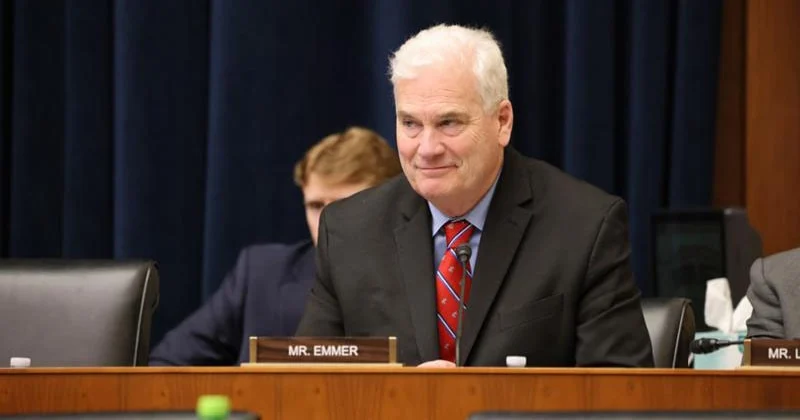
Rep. Tom Emmer wants you to know that the CLARITY Act didn’t materialize overnight. The House Majority Whip and co-chair of the Congressional Crypto Caucus described the Digital Asset Market Clarity Act of 2025 as roughly the “fifth or sixth iteration” of Congress’s attempts to build a federal regulatory framework for digital assets.
What the CLARITY Act actually does
The bill, formally known as H.R. 3633, was introduced on May 29, 2025, by House Financial Services Committee Chairman Rep. French Hill. Its core mission is deceptively simple: figure out which federal agency is in charge of what when it comes to digital assets.
Right now, the SEC and the CFTC have overlapping and sometimes contradictory claims over the crypto market. The CLARITY Act draws a line between the two agencies’ jurisdictions.
One of the more novel provisions is something called a “mature blockchain” test. This is a classification framework designed to determine when a digital asset qualifies as a commodity rather than a security. Once a network meets certain decentralization thresholds, its native token could be treated as a digital commodity rather than an investment contract subject to SEC oversight.