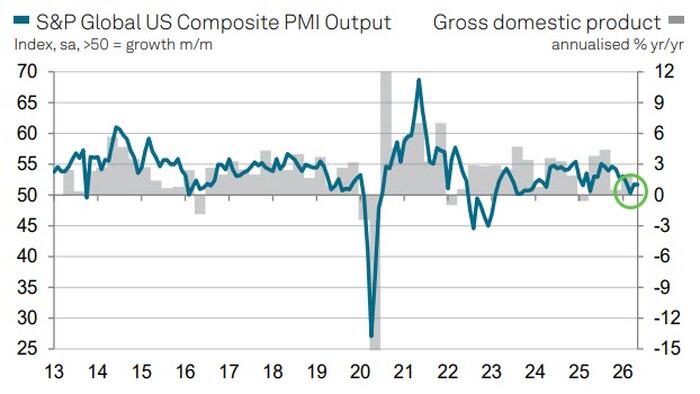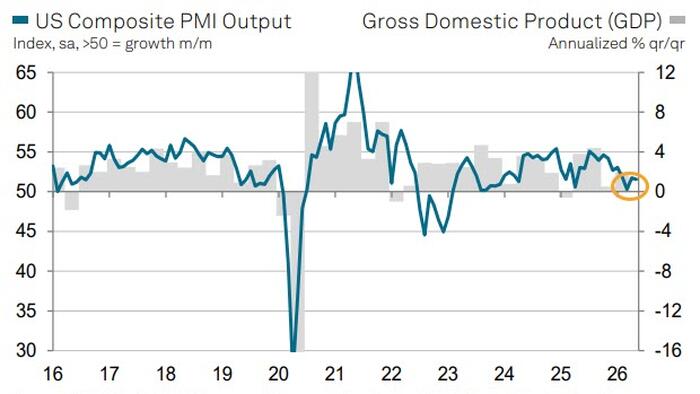
The S&P Global Flash Purchasing Managers’ Index for May was released Thursday. It’s a close-to-real-time snapshot of pretty much the whole private sector, based on a survey of the U.S. businesses that do the ordering and delivery of supplies and finished goods, and the ones that track consumer and business demand at service companies.The indices — there are two, one for manufacturing and one for services — are painting a very mixed picture. Manufacturing output is booming, along with the prices industrial producers pay for the inputs they need. Services, meanwhile, are stagnating, with growth having ground almost to a halt over the last three months, coinciding with the Iran war and climbing oil prices.“It’s a tale of two economies,” said Chris Williamson, chief business economist at S&P Global Market Intelligence. “Manufacturing doing very well, production levels and order books in the last couple of months have been growing at rates we’ve not seen for four years or so.”On the other hand: “In the services economy, you’ve got a nastier turn — a near-stalling of growth,” Williamson said.Let’s start with manufacturing. It’s booming for a couple reasons, said economist Bill Adams at Fifth Third Commercial Bank: “Investment in data centers and in the AI boom.”Strong business investment driven by tax changes in the spending and budget package often referred to as the One Big Beautiful Bill also gave the sector a boost.On the other hand, Adams said, services are slowing thanks to “headwinds to the real estate industry from high mortgage rates, and hesitant consumer sentiment, translating to softer demand for service-providing businesses.”It’s important to note, though, we’re not yet seeing a downturn in discretionary spending, said Rob Haworth at U.S. Bank Wealth Management. “Consumer data like Open Table restaurant bookings and TSA throughput at the airports — all those are telling us that consumer behavior is not faltering,” he said.One clear warning sign from the PMI report is sharply rising input costs for manufacturing businesses, said Scott Anderson at BMO Capital Markets.That’s a product of the ongoing war in the Middle East, he said. Firms are anticipating supply chain disruptions and increasing transportation costs.Those will only get worse with time, said Fifth Third’s Bill Adams.“The pickup in input prices is a big warning to the [Federal Reserve] that if the [Strait of Hormuz] stays closed, if energy supplies continue to be interrupted, we are entering into a large inflationary shock,” he said.It’s starting in the manufacturing sector, but if it lasts a few more months, he said, it’ll spread through the whole economy.
May PMI reflects manufacturing gains and a services slump
The Purchasing Managers’ Index from S&P Global this month shows a booming manufacturing sector, while service industries are stagnating.
424 words~2 min read