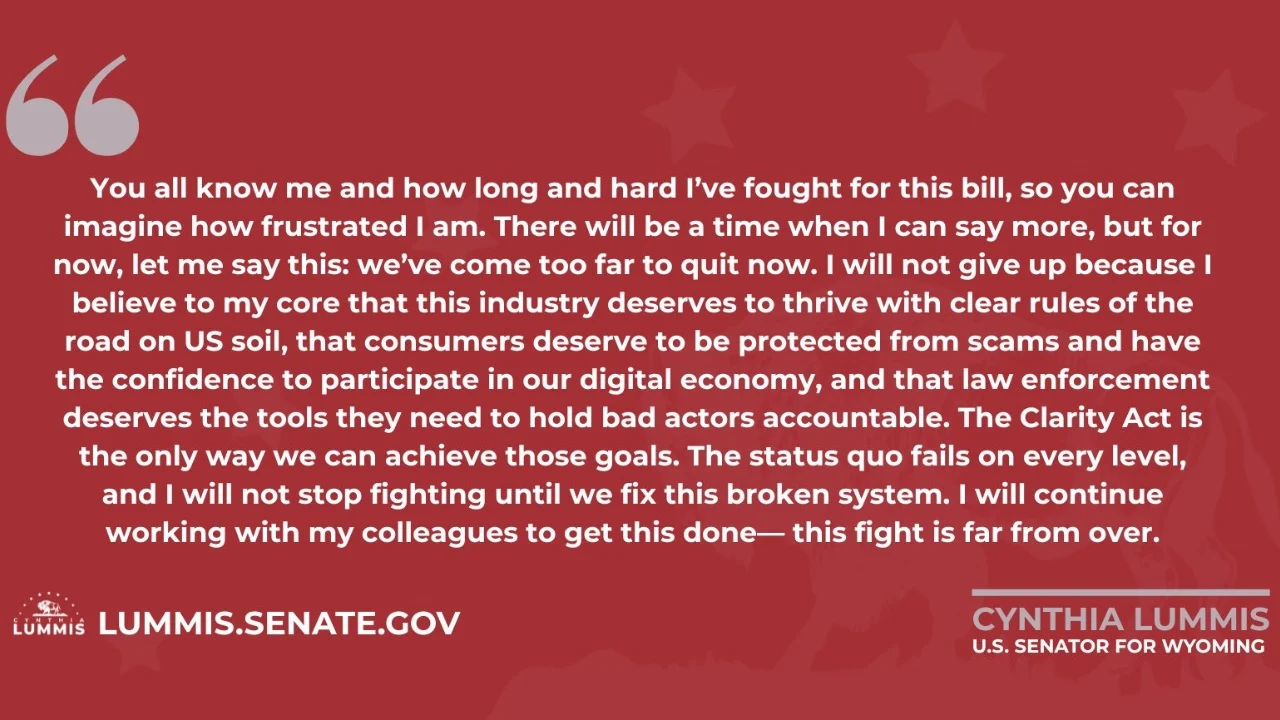
The US crypto industry has spent years in a regulatory twilight zone, unsure whether its tokens are securities, commodities, or something else entirely. Sen. Cynthia Lummis wants to turn the lights on.
Lummis, who chairs the Senate Banking Subcommittee on Digital Assets, threw her weight behind the Digital Asset Market Clarity Act of 2025, better known as the CLARITY Act. The bill cleared the Senate Banking Committee on May 14 with a 15-9 vote, with all Republicans and two Democrats voting in favor. At the Bitcoin 2026 conference, Lummis announced the next step: a markup in May, positioning the legislation for a potential summer Senate floor debate.
What the CLARITY Act actually does
The CLARITY Act attempts to resolve the SEC-CFTC jurisdictional dispute by drawing a clear line between the two agencies. Most tokens would be classified as digital commodities, placing them under CFTC oversight. Securities fall under the SEC’s domain, which brings with it a far heavier regulatory burden, including registration requirements that many crypto projects have argued are impractical for decentralized networks.
The legislation also includes provisions aimed at protecting decentralized finance developers and addressing stablecoin yields. DeFi builders have long worried that writing code could be treated the same as operating a financial institution.