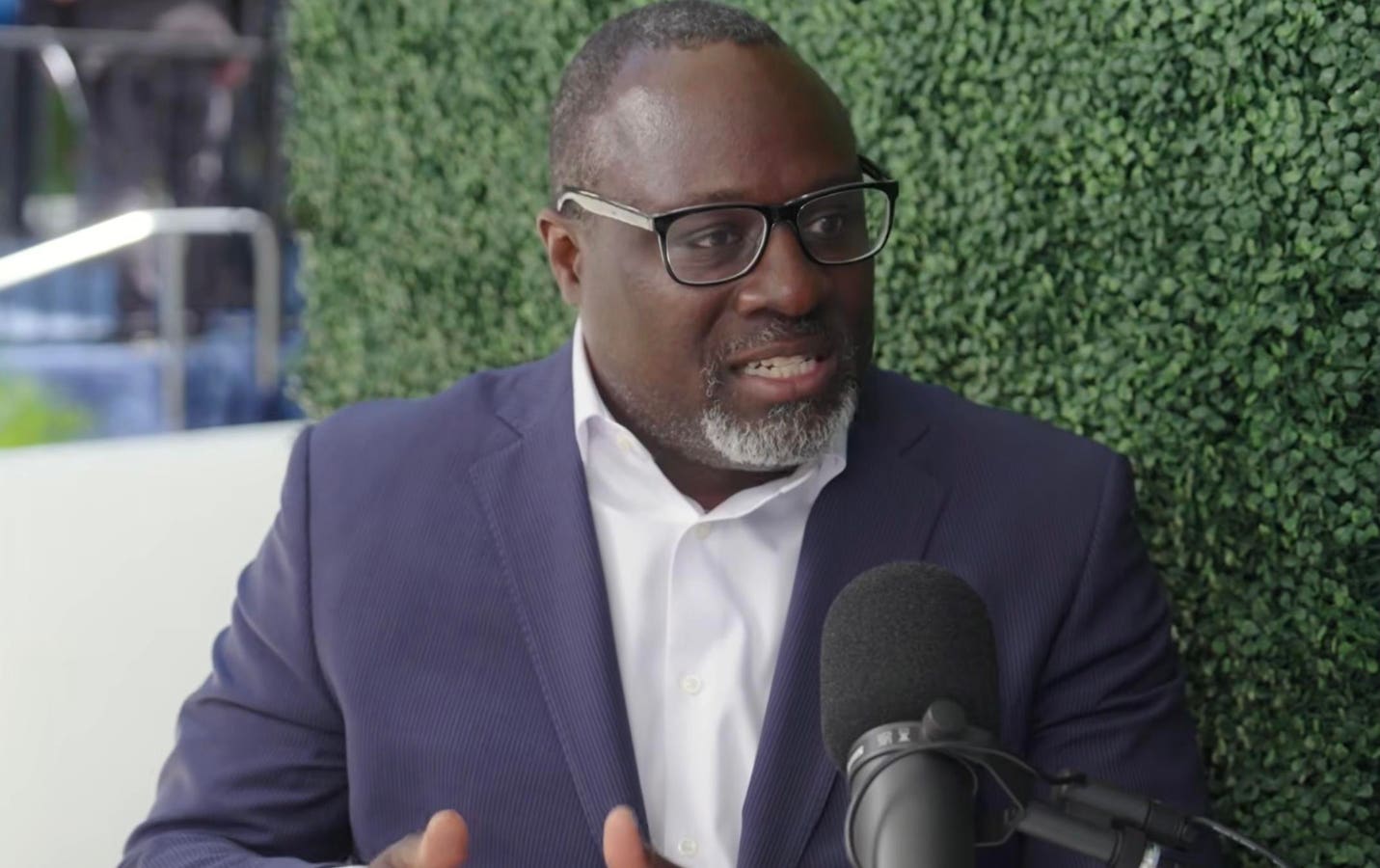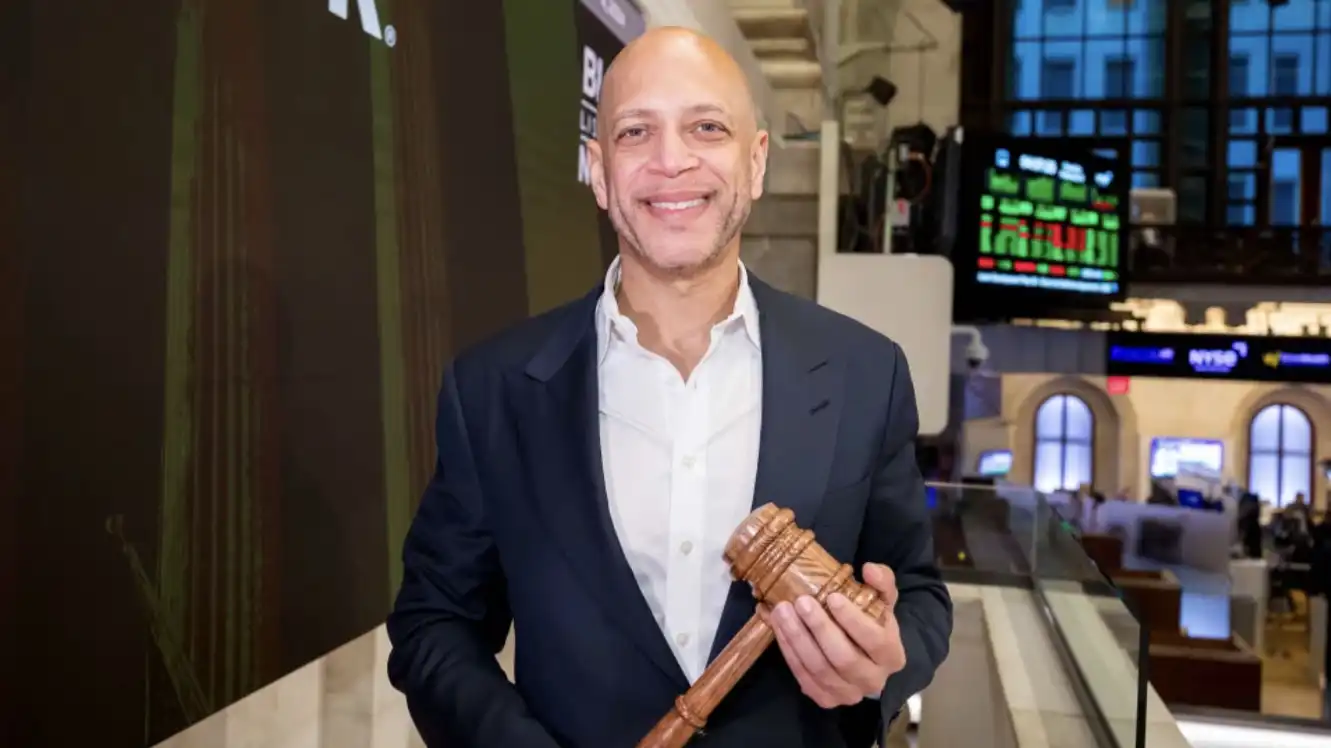
“Must Be the Money” host Lee Hawkins sat down with Jabari Magnus, the first Black managing director at BlackRock, for a conversation about academics, athletics, and building long-term wealth. Magnus reflects on growing up in Los Angeles, becoming the first Black valedictorian at Westchester High School, and how math, discipline, and sports helped shape his path from student-athlete to finance executive. The episode also explores why young athletes should view sports not just as a path to going pro, but as a gateway to education, career opportunities, and generational success.“Must be the Money” is a new podcast from Marketplace, in partnership with For the Culture by the Culture and All the Smoke Productions. You can watch the full conversation on YouTube or listen along wherever you get your podcasts. The following is an edited transcript of part of their conversation.Lee Hawkins: A lot of times, we don't think of math in the everyday solution or practice sense that you described it in, which is really great because it makes math accessible and less intimidating for a lot of people like myself. When you were young — because you grew up in Los Angeles — was that something that you right away knew that you were good at and that you could pursue a career with?Jabari Magnus: I didn't know anything about the career part. I knew that I was good at it and I enjoyed it out of all of my classes. One of the things we also talked about is that I was the first Black valedictorian at Westchester High. With that, I got straight A’s. It was one of these things where the teachers, my college counselor, the folks around me, my grandparents, my parents — they really inspired me to do well in school.So with that, I had a number of different doors I could go through, and I chose math because it was more foundational for me. I chose math because it's a core discipline. There are only a handful of core disciplines that other subjects are based on.Hawkins: OK. But you were a football player too. You took school seriously, and obviously you took your athletics seriously because you ended up playing football at Cornell for a couple of years.How did that help you being an athlete? Because sometimes people invest disproportionately in athletics and neglect school. We're trying to get more people to think about it in a holistic way and invest in academics and athletics to see how much further they can get in life — which usually ends up looking like someone like you.Magnus: I appreciate that. I talk to my kids about being a scholar-athlete. They play basketball, which I’m still getting used to after all these years because I grew up playing football. But it’s really about being a scholar-athlete and putting the scholar first.Doing sports gives you a variety of things. You walk onto campus — whether it’s high school or college — and you have an immediate friend circle. You have folks with a strong common interest, and beyond that, you spend a lot of time together getting to know people. So from a social perspective, it’s really important.But even beyond that, sports give you discipline. I love the term “sports is life” because there are many things you can draw from sports to describe what we go through in life. There’s a basis around being disciplined, a basis around being committed, a basis around understanding that you can practice as much as you want, but when you get to game time, you have to adjust.Sports is definitely a foundation for how we live on a day-to-day basis. It’s sometimes rare for us to see a scholar-athlete on the other side of the table. But when you do see that, they have higher candidacy to some degree because of what they’re doing day-to-day to do well in school while also pursuing something they’re passionate about.College athletics and money conversationsFrom August 2025: A new era of athlete pay in the U.S.From June 2025: College athletes are about to get paid. What's that mean for college sports as a whole?From May 2024: How the game has changed for Black college athletesFrom February 2024: Why some college athletes want to unionizeFrom March 2021: We revisit “Hoop Dreams” — from both sides of the cameraHawkins: A lot of times when people see athletes on TV, they’re thinking, “Well, am I going to go pro?” They think going pro and making tons of money should be the goal. But it’s not just going pro.Sports can help you get into a better college as a pathway to opportunities you might not otherwise have access to. It can also help you get a job at a place like BlackRock because of what it means when someone sees that you were an athlete.I try to get people to understand: Use sports — don’t let sports use you. Use it as a pathway to a career. If you go pro, that’s great, but even if you don’t, you’re still in a better position to make money and be successful because sports gave you access to these institutions.Magnus: Yeah, I agree with that. There are also the soft skills we talked about earlier that translate directly into a career.It goes back to having grit. You have to sit there with the work. You have to be disciplined. You have to be motivated. And again, you have to have passion.Hawkins: When you're talking to people at church and when you're talking to your sons, and you're looking into the future in terms of when they become young professionals, what are you telling them about that first paycheck and the power of compound interest and why it isn't so important to start young?Magnus: In your first paycheck, you need to be thinking about your last paycheck, right? And the only way you can do that is if you pay yourself first and putting in, start saving money, and when you get comfortable enough, you should be investing that saving, so that it compounds. Some say the eighth wonder of the world is compound interest.What that means is that the past is not a predictor of the future. If you look at what investing does, it allows your money to grow and work for you, rather than you always having to work for every dollar. So the idea is that if you make 5% on $100, that's $105. If you make 5% again on $105, that's not $110; that's close to $111. So it keeps going up. The idea is that every dollar of appreciation you get grows, as well.The one thing that we keyed upon — we're bantering, as well; we're giving each other thoughts — the one thing that, when I was doing research, there's a stat out there that says 82% of young adults have never heard of FICO. The aspect is that you want to give exposure to, not to go into the details of FICO. We just had a chart up there that showed 800 on this side, zero in the barometer, basically to kind of say that you want to stay in the green. The idea is that they at least know what FICO is.Understanding credit scores with “Marketplace Tech”Gaming your finances to get the perfect credit scoreHow one credit scoring company is thinking about financial inclusionWe all have a credit score. Or do we?The history of credit score algorithms and how they became the lender standardCredit scores and the bias behind themThe idea is that they know what credit is. When I was going to school, my grandfather, he didn't say much. He was super stern. He didn’t have to say much; he'd just look at you, and you'd be like, you know. But one thing he said to me, and he pounded me, I can probably still feel it right now, he like hit me on my shoulder like a couple times, like really hard. He said, “Do not F with the GD credit cards.”Again, we all know that you go to college campuses, there's all these credit cards. I had one card right throughout my entire, like most of my adult life. That was the American Express. The reason why, not to promote American Express, per se, it was that you had to pay it off right away.The idea is, I was still building credit. And while I was taught to fear credit, because again, his experience. What I want to do is make sure that we all understand, have a healthy relationship with credit, because you need to use credit to your advantage.Like you said, don't let sports use you, use sports. In a similar fashion, don't let credit use you, you use credit basically. The idea behind it is that if you use it in a healthy way, it opens doors. It's a multiplier, right? It's how we're able to afford homes and pay it off over 30 years. It's how we're able to afford cars and pay that off for five years at a low rate. At the lowest rate you could get, if your credit is high, you pay lower interest. If your credit is not good, you pay high interest, and those things become less affordable.
Jabari Magnus, the first Black managing director at BlackRock, on why scholar-athletes win beyond sports
Athletics give students — and future workers — a foundation of discipline, commitment, and practice, says BlackRock’s Jabari Magnus.
1,549 words~7 min read