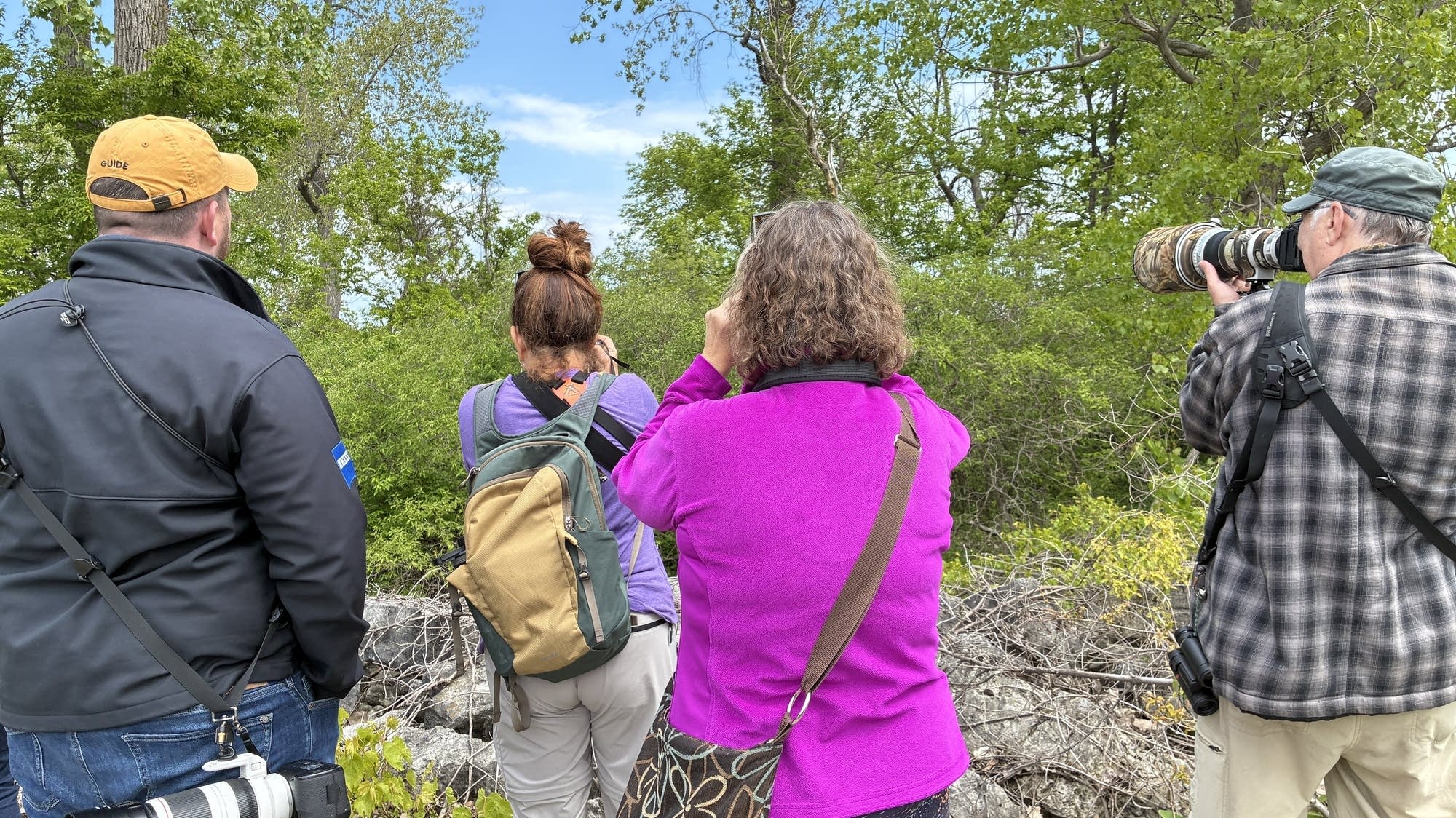
At Barnside Creamery in Oak Harbor, Ohio, Tonia Tice says she owes a lot of the seasonal ice cream stand’s success to birdwatching. And yet, it’s a hobby she doesn’t really know much about. “As their birding week festivities have come to be more known and have grown, so has our business right alongside of it,” she said.Her shop is on a rural stretch of road, about 25 miles east of Toledo. It’s under a migratory flyway, about a mile away from the Lake Erie shore, so lots of birds stop in the area before attempting to cross the lake. That’s why Northwest Ohio is home to the country’s largest annual birdwatching festival. It was chilly and cloudy at the start of this year’s festival. That’s not traditional ice cream weather, but it’s Tice’s biggest week of the season. And the local businesses that supply her ingredients know it.“When I call for my order,” she said, “They’re like, ‘Yep, it’s birding week, because Tonia just stocked up.’”Tonia Tice coincidentally started her business the same year that the Biggest Week in American Birding Festival began in Northwest Ohio. She attributes much of her success to the spike in traffic during the annual event.Caleigh Wells/MarketplaceThe aptly-named Biggest Week in American Birding festival, which concluded earlier this month, brings more than $40 million to Northwest Ohio every year. Hotels sell out months in advance. People fly in from most U.S. states, and there’s no shortage of gear to buy.Birdwatching is a $100 billion industry. Roughly one in three people in the U.S. contribute to that industrywide revenue. If you bought a bird feeder to watch the robins and chickadees, then you, too, are a birdwatcher, in the eyes of the U.S. Fish and Wildlife Service.The conference center lobby is lined with booths of birdfeeders, art, books, and tours. Then there’s the optics tent, filled with binoculars, scopes, and camera lenses worth more than my car.“The amount of volume we move. I mean, there's more and more people starting birding every day,” said Whitney Lanfranco, who’s running the Land Sea & Sky tent.Birding had a major moment thanks to COVID-19, because it’s an outdoor, socially-distanced activity, and birds kept on doing their bird thing.One popular phone app, eBird, saw engagement double going into the pandemic. Another one, Merlin, grew fivefold. And a lot of newbies go out and buy binoculars.“We might have those folks come in today and buy a $200 pair, but if they stick with it over the years, they’ll continuously buy more equipment, go to cameras, go to spying scopes, upgrade their binoculars. It just keeps going,” Lanfranco said.Seasoned birdwatchers at the festival said most people don't need more than a nice pair of binoculars to start off. The cheapest ones in the optics tent went for $100-$200.Caleigh Wells/MarketplaceThat’s what birdwatchers spend money on. But the why still eluded me. So I went on a tour.The tour consists of a few dozen people occasionally stopping when they catch a glimpse in the brush that I definitely don’t have the skill to spot.An hour later, after more tries than I want to disclose, I finally spot what looks like a yellow ping-pong ball with wings. I announce my triumph, and my fellow birdwatchers let out very patient and good-willed cheers and congratulations.Among them is Greg Miller, who’s leading the tour, and is just as invested in my success as I am.“People who haven't known about birding, and then they saw a bird that actually converted them, they call it a spark bird,” Miller said. “This could be your spark bird if you start birding now, because of this. This is Wilson's warbler.”My spark bird hasn’t inspired me to drop $1,000 on binoculars. But I did hang a bird feeder in my yard. Actually, I hung three.
Birdwatching is a $100 billion industry. And it's growing
More than a third of people in the U.S. spend money on birdwatching. If you’ve ever bought a bird feeder, you’re one of them.
634 words~3 min read