Global energy market assumptions are breaking down.Until the Iran War, global oil and gas markets were built on a dangerous illusion: that the Strait of Hormuz would always remain open, predictable, and commercially dependable. Asia’s entire energy security architecture, from LNG flows to crude imports and refined product trading, was designed around that assumption. Today, that assumption is collapsing in real time.The combined pressure of Iranian threats in the Strait of Hormuz, persistent insecurity in the Red Sea, fragmentation within OPEC+, rising maritime insurance costs, and the militarization of shipping lanes is forcing governments, traders, shipowners, and energy investors to confront a brutal reality. This is no longer a temporary geopolitical disruption. The system has entered a structural era of maritime insecurity.That shift changes everything. It changes freight economics, storage economics, and the value of geographic positioning. Most importantly, it changes which ports, hubs, and logistics corridors matter strategically in the future energy system.In this rapidly evolving landscape, Malaysia’s Maharani Freeport represents a potentially viable option for the global energy market. Located on the south-west coast of Malaysia, the project would benefit from proximity to one of the world’s largest energy arteries. It would offer offshore storage and ship-to-ship transfer capabilities. Its location could provide access to relatively stable shipping corridors compared to more volatile regions, potentially making it a supplementary node within Asia’s broader energy supply chain.Related: EU Warns Energy Prices Will Stay Elevated Through 2027The traditional oil market was built around uninterrupted flow. Energy moved from production basins through chokepoints toward refining and consumption centers in Northeast and Southeast Asia. Storage was viewed as useful but secondary infrastructure. That logic no longer applies when shipping disruptions, rerouting, sanctions risks, naval confrontations, and freight volatility increasingly dominate pricing structures.The energy system is shifting from a “flow optimization” model toward a “strategic resilience” model.Under that framework, storage becomes strategy. Floating storage becomes strategic optionality. Offshore transfer capacity becomes geopolitical leverage. Safe transshipment locations become commercially critical assets. The value chain is no longer defined solely by production volumes, but increasingly by who controls flexibility, rerouting capability, emergency storage, blending, and maritime access.This is precisely where Maharani Freeport could become highly relevant. Malaysia’s maritime position could allow the project to emerge as a strategic response to increasing maritime insecurity and geopolitical risk, while reinforcing the country’s role in Asia’s future energy security architecture.Asia’s energy system is concentrated, but under growing pressure.Singapore remains Asia’s dominant oil-trading and bunkering hub, yet it increasingly faces structural constraints. Land limitations, rising costs, environmental restrictions, congestion, and growing geopolitical scrutiny are reducing the ease with which future large-scale hydrocarbon infrastructure can continue expanding indefinitely.As a result, global oil and gas players, hydrocarbon markets, and future-fuels sectors are increasingly seeking complementary regional capacity.This will not be a replacement for Singapore. It will be an expansion of Asia’s resilience infrastructure.Maharani’s opportunity lies in becoming a specialized offshore hub for energy storage, ship-to-ship transfer, blending, and logistics resilience. Trying to replicate Singapore’s full ecosystem would require decades, immense capital, financial market depth, trading houses, legal frameworks, and industrial clustering. However, positioning Maharani as a strategically located offshore storage and transfer platform is commercially more achievable and potentially far faster to realize.That distinction matters because traders and governments increasingly prioritize redundancy and resilience over efficiency alone.The geopolitical environment strongly supports such development.The Strait of Hormuz crisis has fundamentally altered how Asian buyers think about energy security. Even without a full closure, repeated military escalations already create major pricing distortions. Every missile launch, drone attack, tanker seizure, or naval confrontation raises insurance premiums, delays cargoes, alters freight routes, and increases financing costs.The Red Sea crisis compounds the problem further.Attacks on commercial shipping near Bab El-Mandeb have already forced rerouting around the Cape of Good Hope, extending voyage times and effectively removing tanker and LNG capacity from the global market. Markets increasingly understand that these disruptions are no longer isolated incidents. They are becoming embedded in baseline calculations.For Asia, this creates a strategic dilemma. The region remains the center of global hydrocarbon demand growth. Yet, its energy imports increasingly depend on unstable maritime corridors stretching from the Persian Gulf to the Red Sea and Indian Ocean. China, India, Japan, and South Korea all recognize that diversifying logistics infrastructure and expanding regional strategic storage capacity could mitigate these vulnerabilities.Infrastructure diversification and timing are therefore becoming critical.The logical response is to expand regional strategic storage capacity and diversify logistics infrastructure.More importantly, offshore storage aligns directly with emerging market behavior. Global and regional oil traders increasingly seek flexible locations where cargoes can be stored, blended, redirected, or resold depending on freight conditions and geopolitical risk. Even Arab national oil companies are likely to assess these dynamics similarly.LNG markets are evolving in the same direction, especially as Asia competes more aggressively with Europe for flexible cargoes during crises. Floating storage and transfer systems are therefore becoming structural components of the future energy trade architecture rather than temporary crisis tools.This creates a potential market niche for projects such as Maharani Freeport.Its attractiveness would increase further if linked to broader Malaysian ambitions in bunkering, LNG services, future fuels, and regional energy trading. Fragmented fuel markets, where crude, LNG, ammonia, methanol, and biofuels increasingly coexist, favor flexible infrastructure platforms over rigid legacy systems.The old model of centralized mega-hubs may gradually give way to distributed networks of specialized strategic nodes.That trend benefits Malaysia.Malaysia has historically maintained a relatively balanced geopolitical positioning, which enhances the stability and security of investments in projects such as Maharani Freeport. In a fractured regional environment, neutrality itself becomes an economic asset.The investment logic is therefore becoming increasingly compelling.Middle Eastern national oil companies, sovereign wealth funds, commodity traders, Asian utilities, and shipping companies all face the same challenge: securing optionality in an unstable maritime energy system. To obtain that optionality, they require infrastructure.Storage infrastructure. Transfer infrastructure. Emergency rerouting infrastructure. Blending and bunkering infrastructure.These assets could become some of the most commercially valuable energy investments of the next decade.The historical comparison is revealing. Fujairah in the UAE was once viewed primarily as a secondary logistics location outside Hormuz. Today, it is one of the world’s most strategically important bunkering and storage hubs because geopolitical instability has elevated the value of bypass and resilience infrastructure.Asia may now require its own equivalent resilience architecture.A narrow window is opening for Malaysia through Maharani Freeport.The global race for strategic positioning in energy infrastructure is accelerating. Indonesia is expanding. India is aggressively developing energy corridors and storage capabilities. China continues investing in maritime logistics networks as part of broader strategic ambitions. Singapore will continue adapting aggressively to maintain dominance. Gulf states are increasingly investing directly in Asian downstream and logistics assets to secure market access.Delays, therefore, carry risks.If Malaysia hesitates too long, competing hubs could absorb the strategic momentum now building in regional energy markets. Infrastructure timing often determines whether a project becomes systemically relevant or permanently secondary.At the same time, realism remains critical.Maharani Freeport should avoid overpromising immediate transformation into a global giant. Investors increasingly distrust oversized megaproject narratives unsupported by phased development logic. The smarter strategy would involve incremental scaling tied directly to identifiable market needs.That phased approach aligns with how energy infrastructure is increasingly financed globally. Investors now prioritize resilience, flexibility, modular scalability, and geopolitical relevance over speculative gigantism.The larger geopolitical picture reinforces the urgency.The world is fragmenting into competing economic and security blocs. Energy flows are increasingly politicized. Maritime trade is militarizing. Insurance markets are repricing geopolitical risk to permanently higher levels. Western sanctions regimes continue expanding. China and Gulf states deepen energy integration. India seeks greater strategic autonomy. Europe competes aggressively for LNG security.For Asia, this means dependence on uninterrupted Gulf shipping lanes increasingly represents a strategic vulnerability. That vulnerability requires new infrastructure ecosystems capable of absorbing shocks.Maharani Freeport’s greatest strategic strength may therefore not be volume alone, but resilience value.In an unstable world, resilience becomes monetizable. Every additional safe storage location matters. Every alternative transfer hub matters. Every secure anchorage matters. Every flexible cargo management platform matters.Infrastructure capable of operating effectively during crisis conditions may increasingly be rewarded more than infrastructure optimized solely for efficiency during stable periods.That represents a profound structural change in global energy economics.The winners of the next decade may not necessarily be those with the largest hydrocarbon reserves. Increasingly, the winners look likely to be the parties controlling the logistics arteries, storage systems, maritime flexibility platforms, and emergency routing capabilities that keep energy flowing when geopolitical order breaks down.In that world, projects like Maharani Freeport are no longer optional infrastructure ambitions. They become strategic necessities.By Cyril Widdershoven for Oilprice.comMore Top Reads From Oilprice.comTotalEnergies Eyes $100M+ Stake Sales in European Solar and Wind PortfolioPakistan Looks to Host Crude Reserve Sites of Gulf Oil ProducersUkraine Hits 300,000-Bpd Gazprom Neft Refinery in Overnight Drone Strike
Asia’s Next Energy Hub May Rise in Malaysia | OilPrice.com
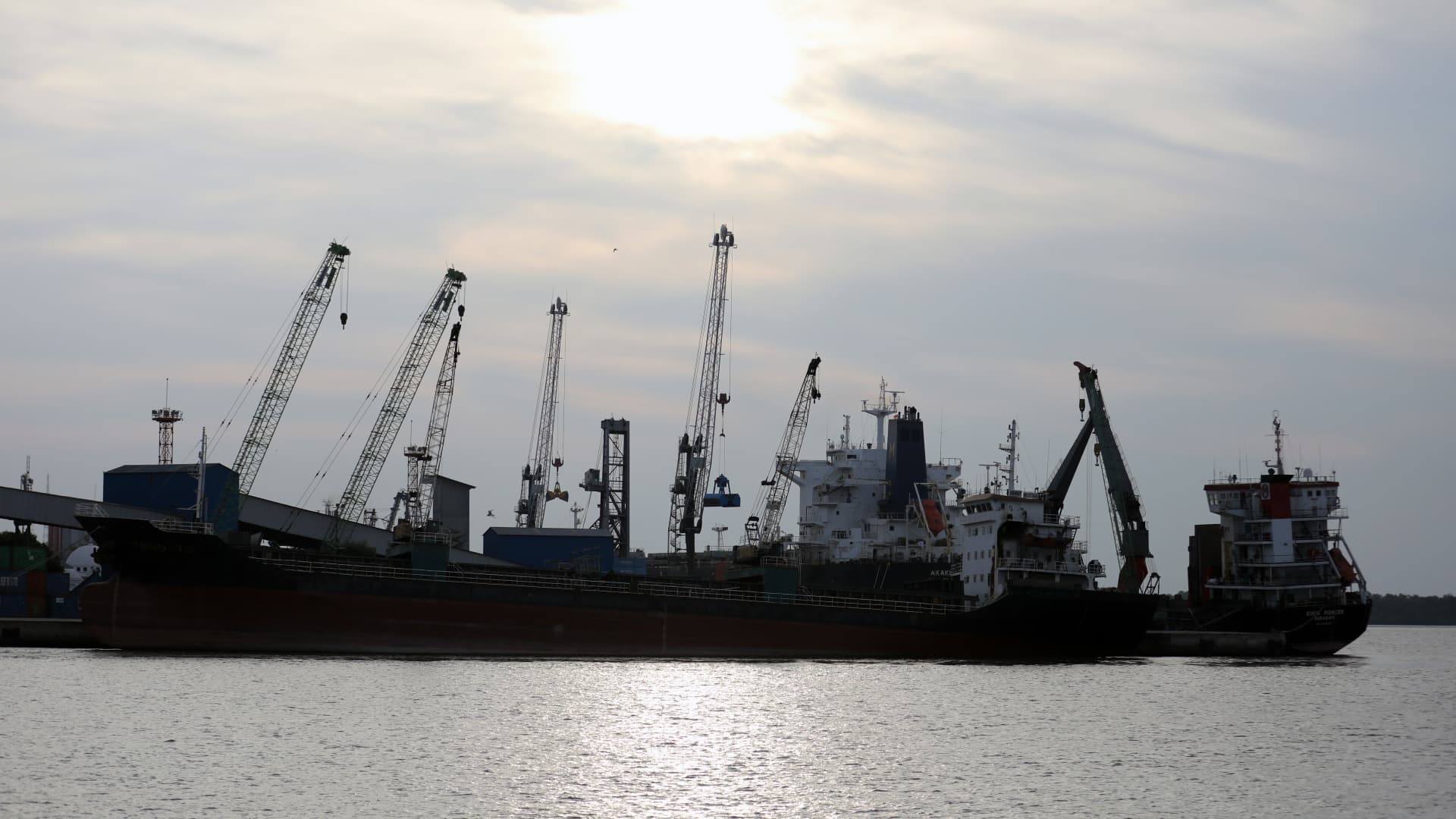
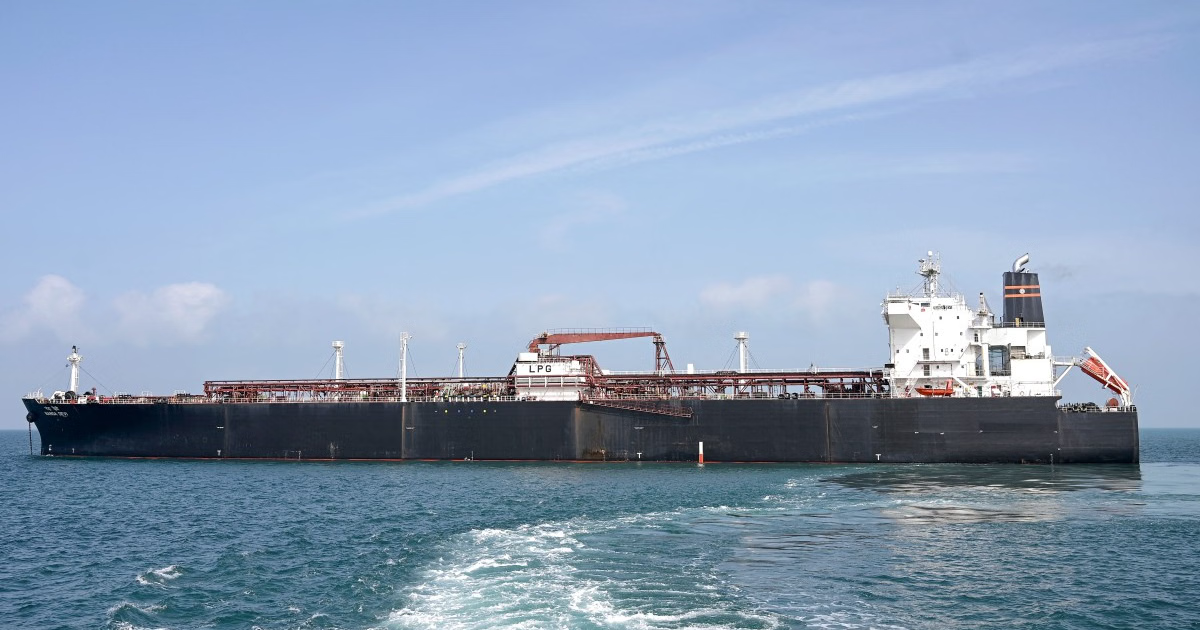
Malaysia’s Maharani Freeport could emerge as a strategic offshore storage and ship-to-ship transfer hub.
1,460 words~7 min read