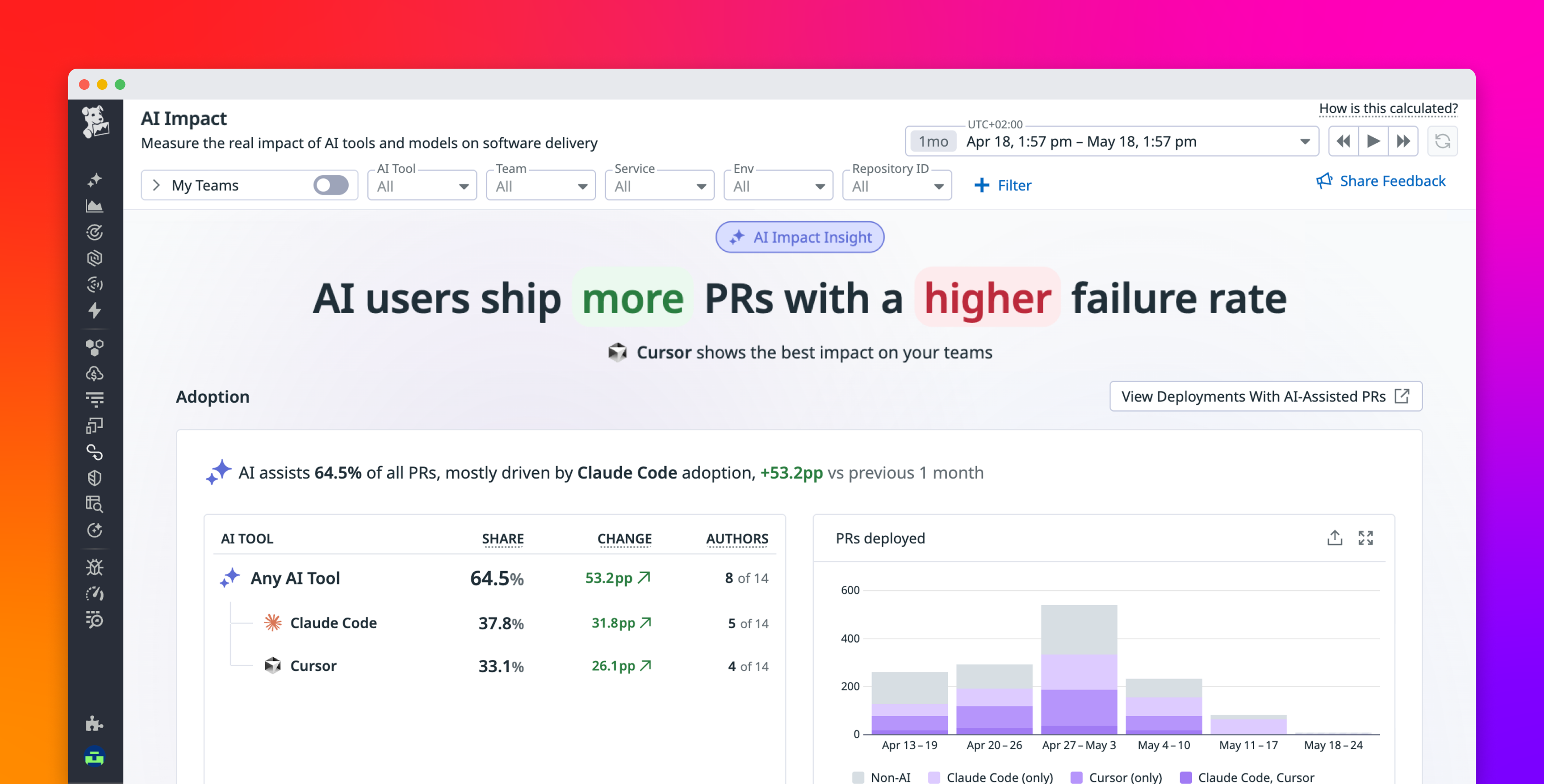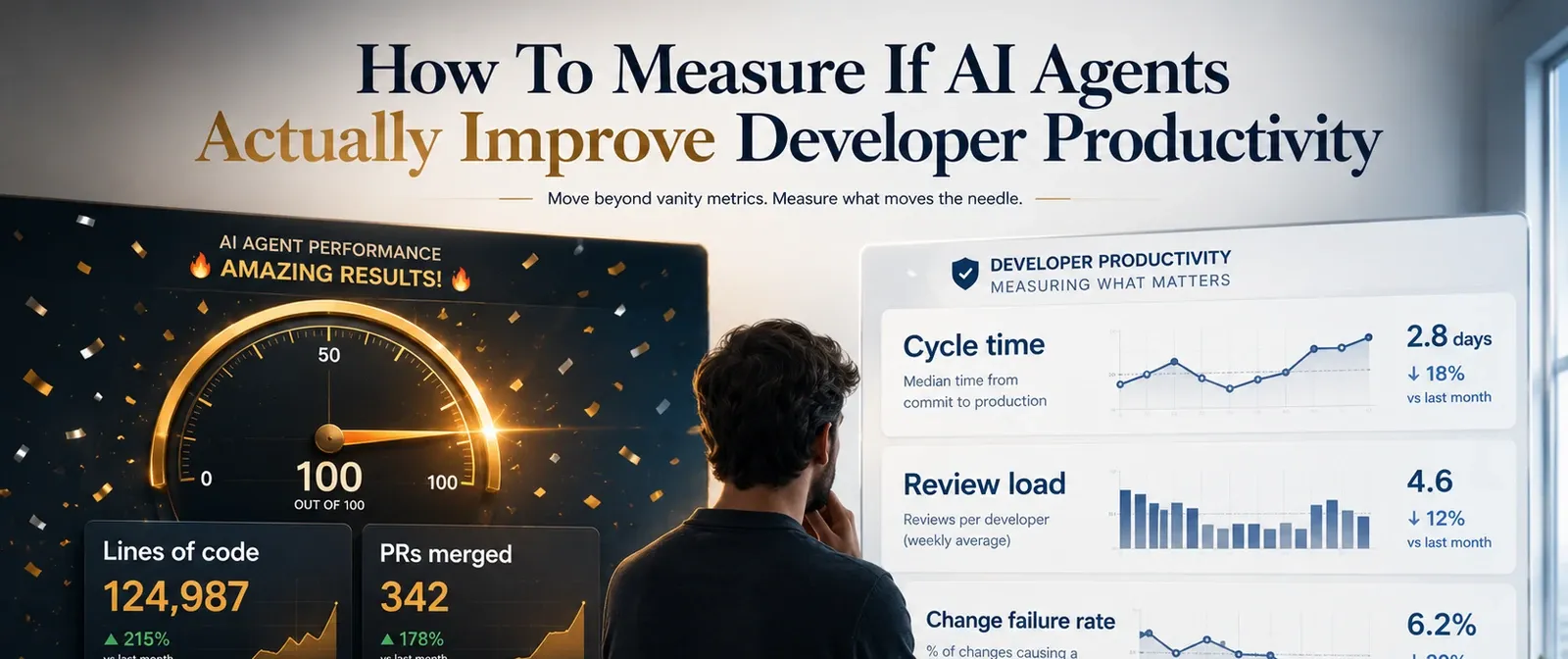
As AI coding assistants dramatically inflate PR counts, commit frequency, and lines of code, the limitations of individual output metrics have never been more apparent. A developer can now produce significantly more lines per session, but higher volume doesn’t guarantee that the code is stable, maintainable, or successfully running in production. GitClear analyzed over 200 million lines of code and found that code churn nearly doubled following widespread AI adoption. AI coding assistants have made it clear that individual output metrics don’t equate to productivity.
To accurately assess productivity, you must measure the developer experience (DevEx), which includes the systems, workflows, tools, and feedback loops that define the developer’s working environment. In this post, we’ll share the specific approaches we use at Datadog to keep more than 3,000 engineers productive in an AI-augmented SDLC. We’ll also explain the following:
What DevEx is and why it’s importantHow to measure DevExWhich metrics to track How developer sentiment data provides context that metrics alone can’t
What is DevEx?
Developer experience, commonly known as DevEx, describes how an organization’s systems, workflows, tools, and culture affect developer productivity. It reflects the lived experience of developers, including how they interact with, interpret, and feel about their work. A positive DevEx produces tangible organizational benefits, leading to faster development cycles, higher code quality, lower operational costs, reduced technical debt, and greater confidence to experiment and innovate.