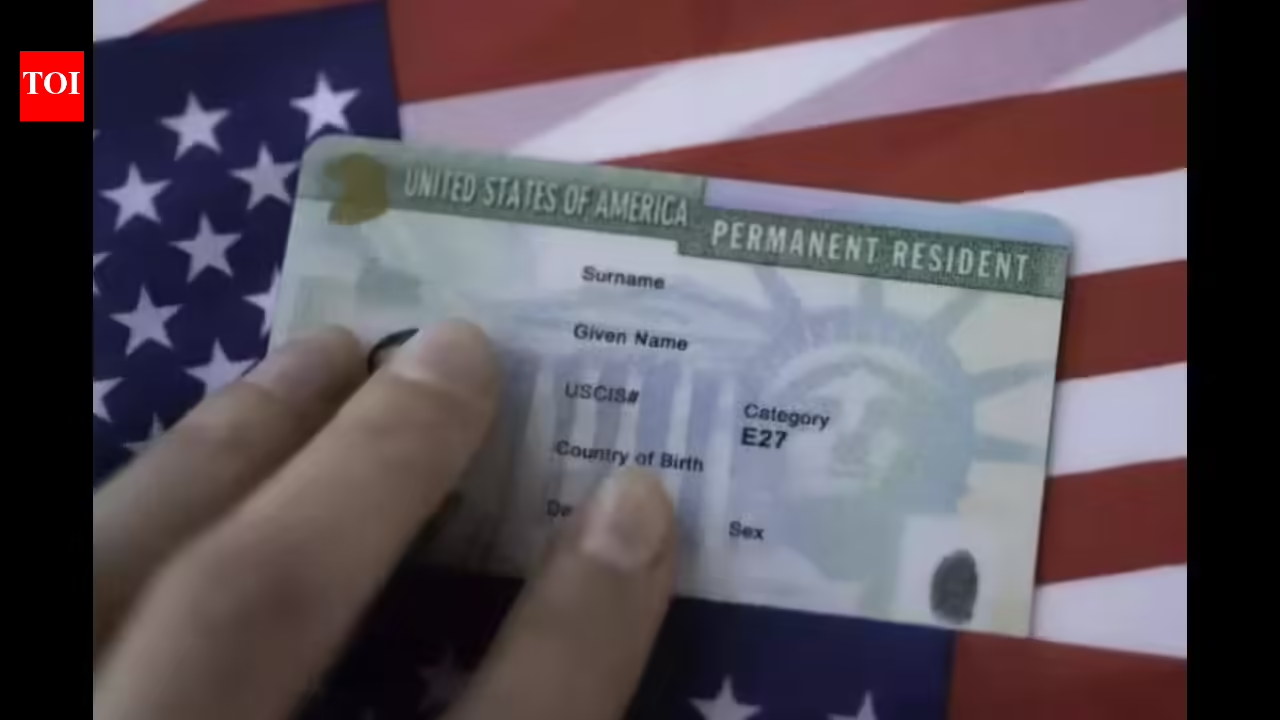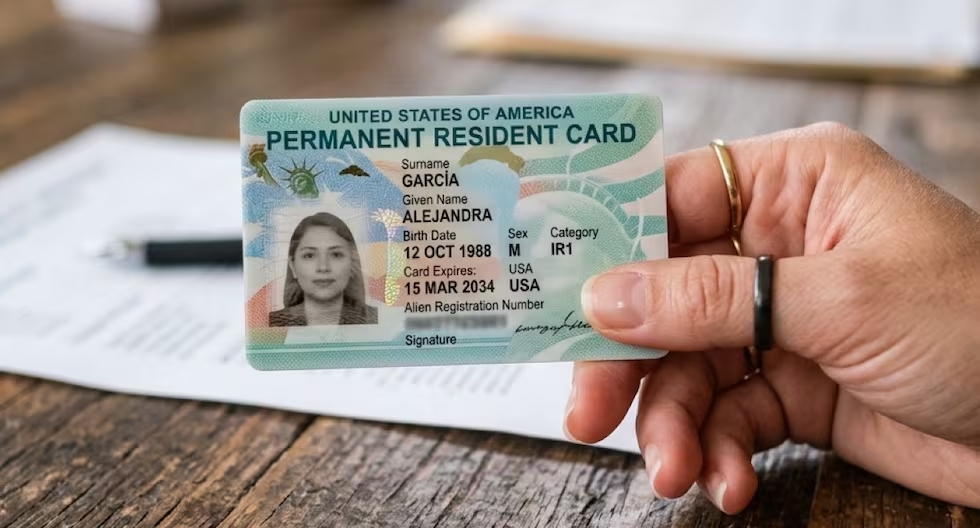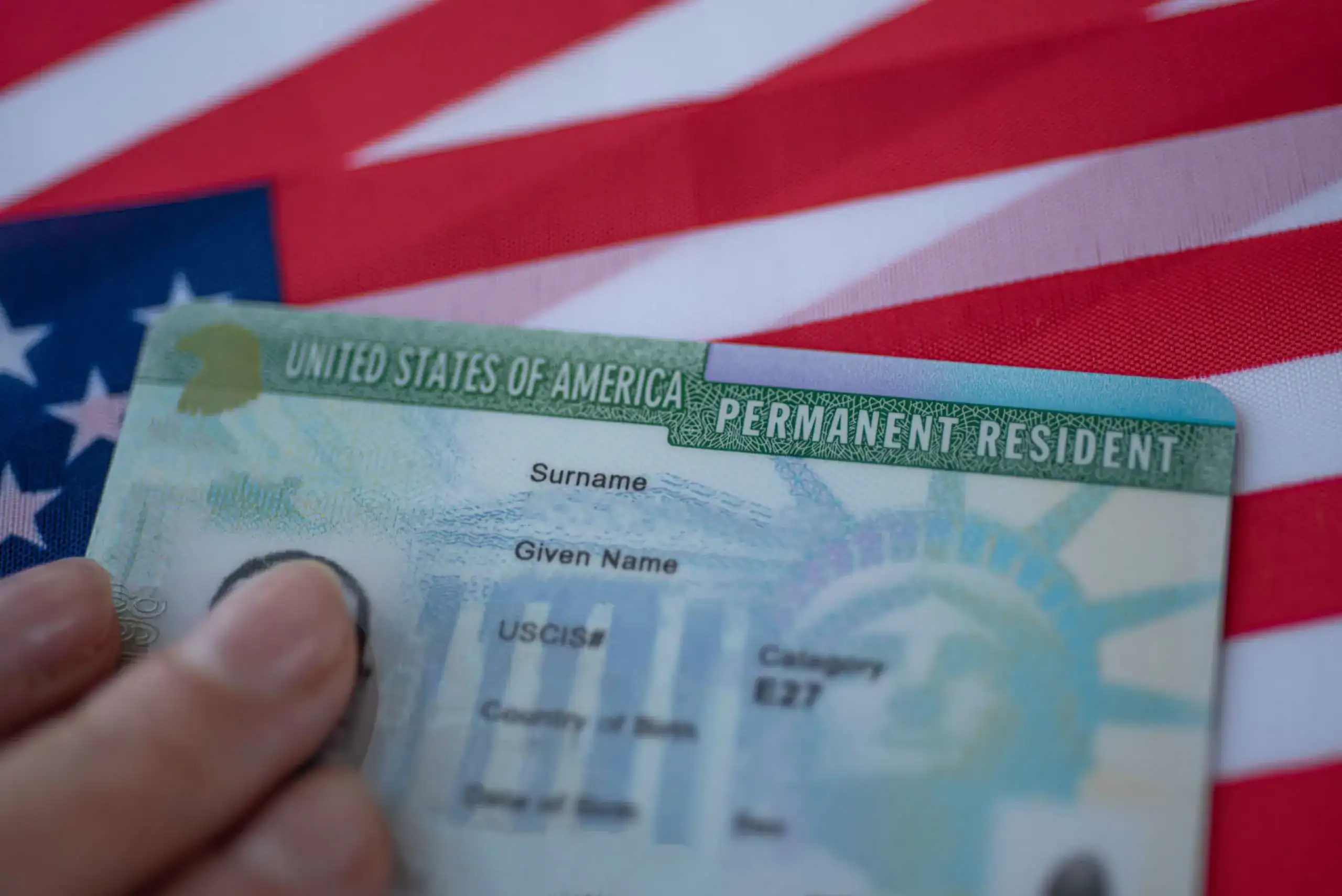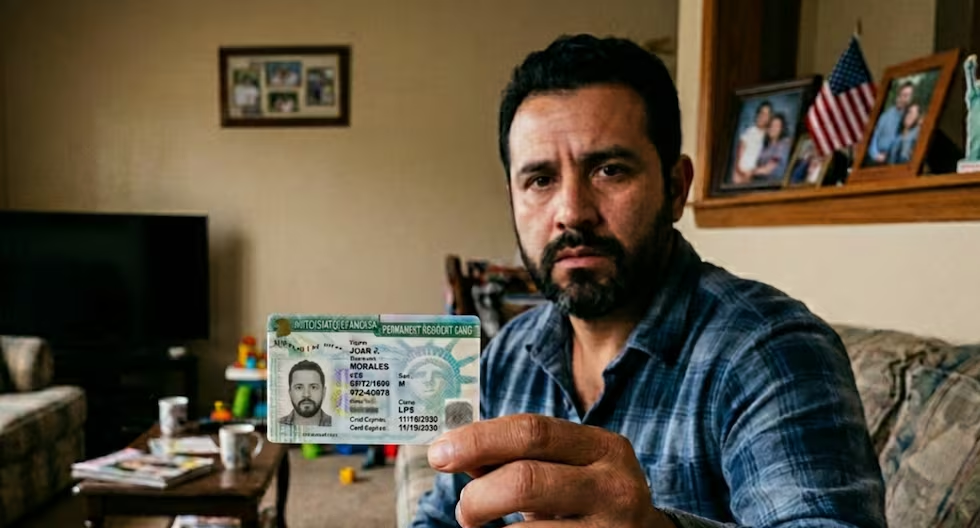
The USCIS logo and an American flag. A new U.S. Citizenship and Immigration Services memo may significantly restrict who can obtain a green card in the United States. (el Nuevo Herald)TNS via Getty ImagesA new U.S. Citizenship and Immigration Services memo may significantly restrict who can obtain a green card in the United States. A likely goal is to reduce legal immigration by forcing employers, individuals and families to endure long delays at understaffed U.S. consulates and by barring people from reentering the country. Attorneys dispute the memo’s claim that “adjustment of status” in the United States is an exception to the norm of consular processing. In FY 2024, 782,770 of 1,356,760 people (58%) gained immigrant status (permanent residence) through adjustment of status. The memo is expected to require additional guidance and may be challenged in court.Immigration Service Issues Controversial MemoOn May 22, USCIS issued a memo that implies it will significantly restrict who can obtain permanent residence, often known as a green card, by applying for adjustment of status in the United States. “This memorandum reminds officers and the public that adjustment of status under section 245 of the Immigration and Nationality Act is a matter of discretion and administrative grace not designed to supersede the regular consular processing of immigrant visas. U.S. Citizenship and Immigration Services reaffirms this consistent and longstanding approach and declares as a matter of general policy its intention to faithfully apply the statutes consistently with this understanding.”“The memo could affect everyone, including H-1B visa holders, people on Temporary Protected Status and others,” said Liz Goss of Goss & Associates in an interview. “The memo states that it is up to an officer’s discretion.”Most employment-based immigrants obtain their green cards via adjustment of status, often after working for years in H-1B temporary status. An H-1B temporary visa is dual intent, meaning an individual cannot be denied a visa by a consular officer solely because the individual might seek to remain permanently in the United States.“USCIS reminds its officers that applying for adjustment of status is not inconsistent with simultaneously maintaining nonimmigrant [temporary] status in a category with dual intent,” according to the memo. Footnote 20 of the memo states, “However, maintaining lawful status in a dual intent nonimmigrant category is not sufficient, on its own, to warrant a favorable exercise of discretion.” According to the USCIS memo, “Adjustment of status is a matter of discretion and administrative grace, and an extraordinary relief that permits applicants to dispense with the ordinary consular visa process.”MORE FOR YOUGoss says she does not intend to change her law practice yet, based on the memo,, but will monitor future adjustment-of-status interviews and any future USCIS guidance to advise employers and others.“We’re seeing a lot of concerned clients asking, ‘What does this mean?” said Jonathan Grode of Green & Spiegel in an interview. “I think we’re going to find out over the next couple of weeks what happens when people go through their adjustment interviews.”Goss and Grode question the memo's legality and believe it will be ripe for a legal challenge. Goss points to provisions in U.S. immigration law that show Congress assumed adjustment of status would be widely used. The American Competitiveness in the 21st Century Act allows individuals to change employers while continuing their adjustment of status application. Other measures in U.S. immigration law allow for the adjustment of status of the Immediate Relatives of U.S. Citizens and others.USCIS makes what legal analysts say is a dubious argument: that green cards have always been processed overseas, and that adjustment of status in the United States is an exception. “Adjustment of status became the mechanism because consular processing became so backed up,” said Grode. “I just don’t know how they think this actually flies as valid within the statute.”Goss has been practicing law since 1999 and said adjustment of status has always been a substantial part of the immigration process. She notes it goes back at least 70 years.By issuing a memo rather than engaging in the rulemaking process, USCIS increased the likelihood that the new policy will be challenged under the Administrative Procedure Act.In recent weeks, USCIS has lost cases in court after refusing to process applications for individuals from 39 countries barred from entry into the United States under an executive order. Section 212(f), the legal basis for the executive order, blocks the entry of individuals but has never been interpreted to prevent people from obtaining immigration status in the United States. The Trump administration may hope that it can force people from Iran, Cuba, Nigeria and other countries out of the United States and block their reentry.“I gather that their biggest target is spouses of U.S. citizens, especially those who are undocumented after overstaying a visa,” said Doug Rand, a former DHS official, in a statement. “Under our immigration laws, these spouses do not need to leave the country to apply for a green card. But if the Trump administration forces them to apply from abroad, they’ll likely be subject to a 10-year bar before they can re-enter.”It is not clear whether USCIS would force refugees and asylum seekers to return to their home countries to seek permanent residence, even though they obtained protection from fear of persecution in those countries.Attorneys Say State Department Unprepared To Assume A Massive Immigration Caseload“This is a very vague memo that is putting a lot of subjectivity on what has become a very regular process,” said Grode. “And then on top of all that, there is no way the State Department has the personnel to process this.”As of April, L-1 and H-1B temporary visa appointment availability for new applicants was limited to 2027, with nothing available in 2026 in India, according to companies and attorneys.Liz Goss says if the Trump administration forces large numbers of people to obtain green cards via U.S. consulates abroad, it will create unfathomable delays. Critics of the policy say that may be the point. Goss said, “People already can’t get appointments for temporary visas, never mind immigrant visas.”“I think the motivation is to get immigration numbers down,” said Jonathan Grode. “I think it is also about changing behavior, to get people to not go through the process and remove themselves because they can’t do an adjustment of status. So, fundamentally, it’s to further reduce immigration.”
Immigration Service May Significantly Restrict Green Cards In The U.S.
A new U.S. Citizenship and Immigration Services memo may significantly restrict who can obtain a green card in the United States.
1,049 words~5 min read