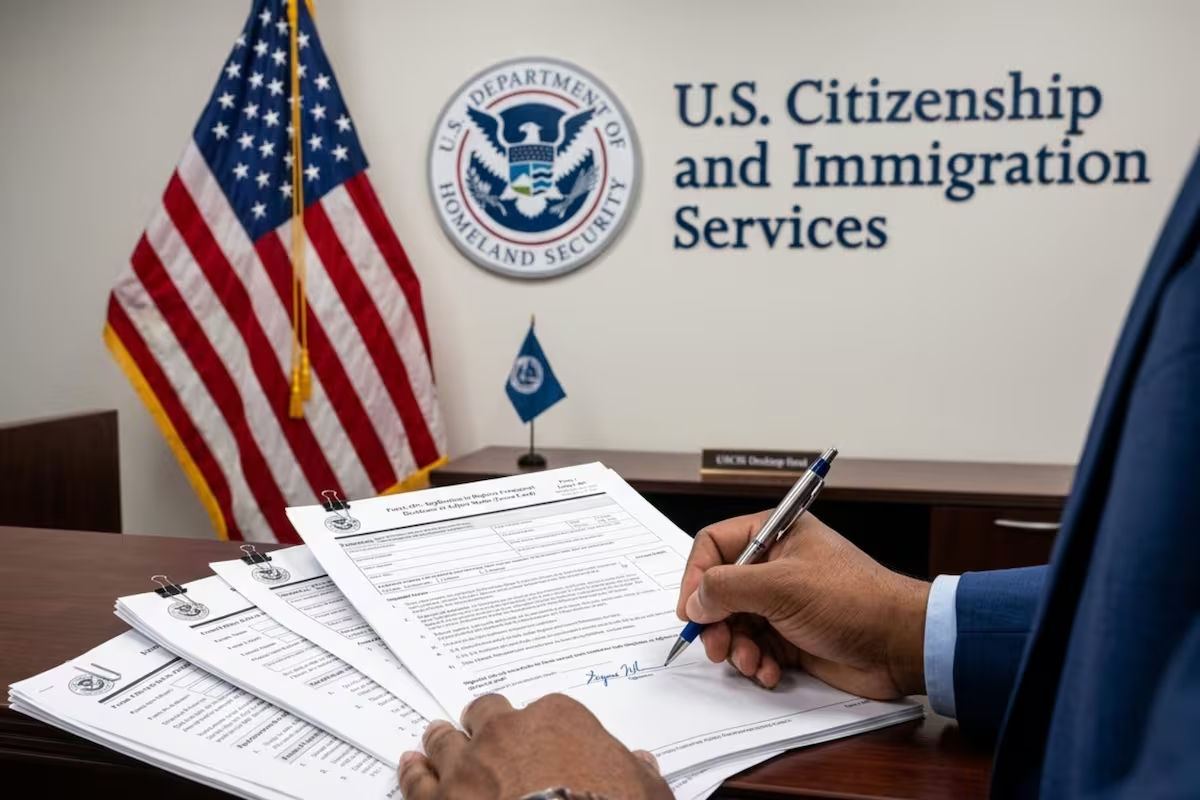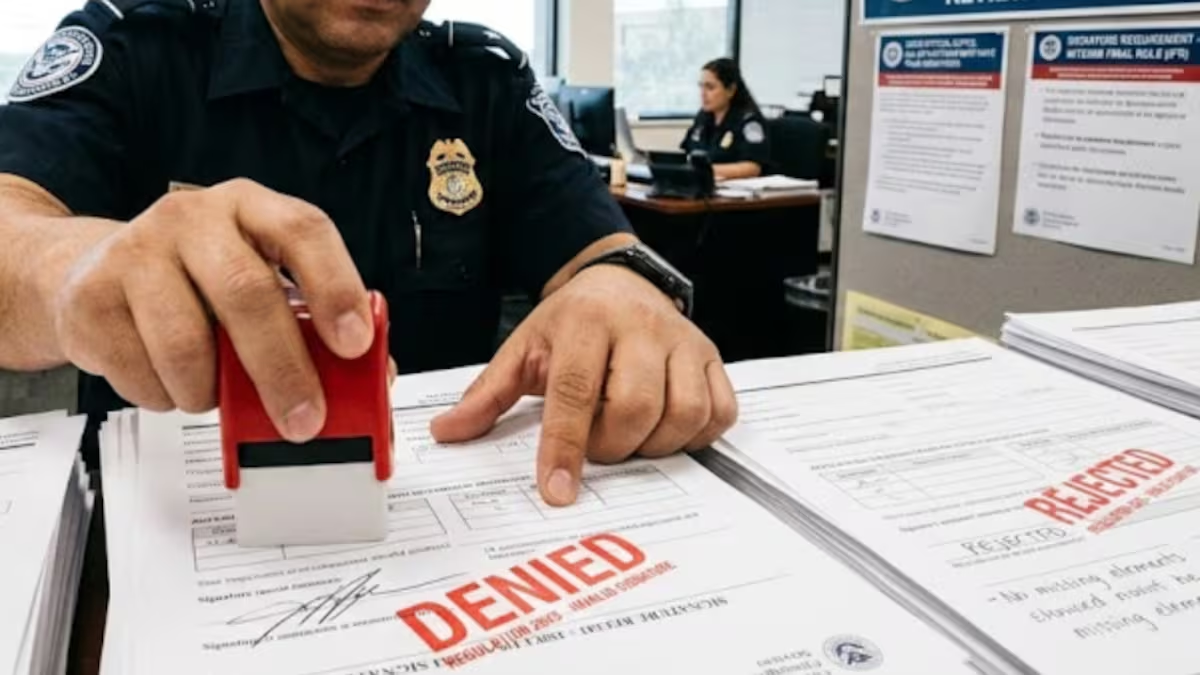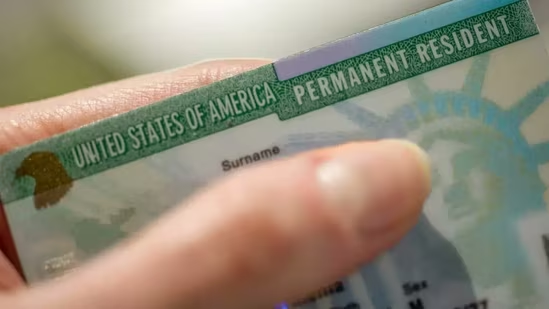
A new regulation from the US Department of Homeland Security is poised to alter the processing of immigration applications. Effective July 10, 2026, US Citizenship and Immigration Services (USCIS) will possess the power to reject or deny requests for immigration benefits, including H-1B petitions and Green Card applications, if an invalid signature is detected at any stage of processing, even after the application has been accepted.A new regulation effective July 10, 2026, allows USCIS to reject immigration applications for invalid signatures, resulting in lost filing fees. (X/@unumihaimedia)Importantly, applicants who violate this rule may forfeit their filing fees entirely and will be obligated to initiate a new application from scratch. There is no option to rectify a deficient signature once the application has been submitted.Also Read: US visa interview: Facing rejection fear? Ex-visa officer shares tips on do's and don'tsWhat the new signature regulation actually modifiesThe interim rule revises 8 CFR 103.2(a)(7)(ii) to officially establish the authority for USCIS officers to reject or deny a benefit request if an invalid signature is found post-acceptance. This distinction is significant.A rejection suggests that the application and fee are returned, allowing the applicant to refile. Conversely, a denial signifies that the application has been fully adjudicated, the fee is retained by USCIS, and the applicant is considered ineligible for the benefit. Officers have the discretion to choose between the two options based on the specific circumstances; a quick identification early in processing may justify a rejection, while a signature issue discovered after extensive adjudication may lead to a denial.The regulation is applicable to all submissions made on or after July 10, 2026, and encompasses employment-based visa applications, adjustment of status requests, and employer-sponsored Green Card petitions.What signatures USCIS will or rejectFor paper submissions, USCIS maintains that handwritten signatures are the norm. The agency will also recognize scanned versions of original wet-ink signatures, as well as faxed or photocopied copies of documents that have been originally signed, and electronic signatures within specific USCIS-approved online filing systems.Documents that will not be accepted for paper submissions include copy-and-paste signatures, digitally created signatures, signature stamps, auto-generated signatures, signatures produced by software applications, and signatures made by individuals other than the applicant or petitioner, including attorneys, in most instances.Reasons for USCIS tightening the regulationsUSCIS has consistently mandated valid signatures on immigration forms, and since 2018, a policy has been in place stating that applications with deficient signatures discovered post-acceptance will be rejected. However, DHS has recognized that this policy was not uniformly enforced, that officers were uncertain about the limits of their authority, and that applicants did not fully grasp the implications.DHS reports that this issue has escalated considerably in recent years. USCIS has experienced a notable increase in instances of copy-pasted signatures, where a signature image is taken from one document and used on multiple applications. The USCIS Administrative Appeals Office has processed 758 appeals related to requests denied specifically due to the signature being copied from another document.No remedy once submittedUSCIS has clarified that once a deficient signature is detected, there is no way to rectify it. The application cannot be modified or supplemented to resolve the issue; it must be completely refiled at the applicant's expense and, importantly, with a new filing date.Recommended actions for applicants and employersThe rule is presently available for public commentary via the Federal eRulemaking Portal at regulations.gov. Comments must be submitted in English through the portal. USCIS will not accept comments sent by mail or through digital media storage devices.For applicants and employers, every immigration form must include a legitimate handwritten signature or an authorized electronic equivalent from the actual applicant or petitioner.In most instances, attorneys, preparers, and third parties are not permitted to sign on behalf of applicants. Any firm utilizing signature software, stamps, or copy-paste techniques should consider these practices as immediately non-compliant.
H1-B, Green Card alert: USCIS to reject or deny applications of these candidates amid new signature rule
USCIS will enforce stricter signature requirements from July 10, 2026, allowing rejections of immigration applications with invalid signatures. | World News
634 words~3 min read