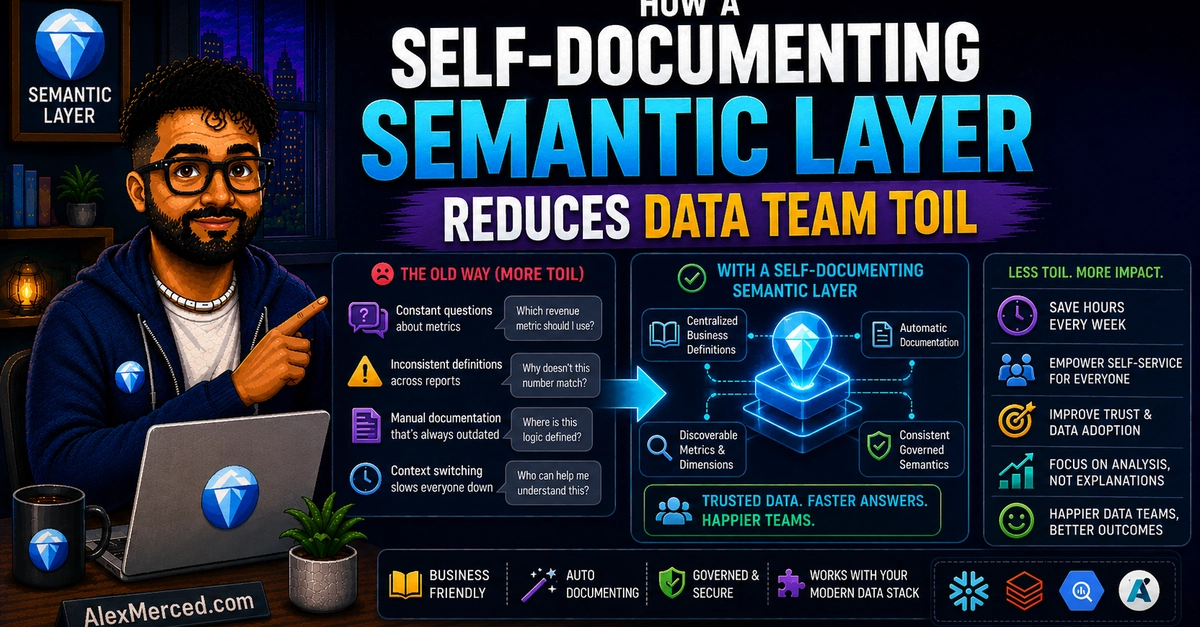
Every data team knows documentation is important. And almost every data team has a backlog of undocumented tables, unlabeled columns, and outdated descriptions that nobody has time to fix. The problem isn't motivation. It's that manual documentation doesn't scale.
A self-documenting semantic layer changes the equation. Instead of asking humans to describe every column in every table, the platform generates descriptions automatically, suggests governance labels from data patterns, and propagates context through the view chain. Documentation becomes a byproduct of building the semantic layer, not a separate project.
The Documentation Problem Nobody Solves
Industry surveys consistently find that 70% or more of enterprise data assets are undocumented or poorly documented. The result: analysts spend 30-40% of their time searching for data and trying to understand what it means before they can start analyzing it.
This isn't just a productivity problem. Undocumented data is a governance risk. A column named status with values 0, 1, 2, and 3 could mean anything. An analyst guesses. An AI agent guesses worse. Nobody verifies. The wrong assumptions get baked into dashboards that drive business decisions.