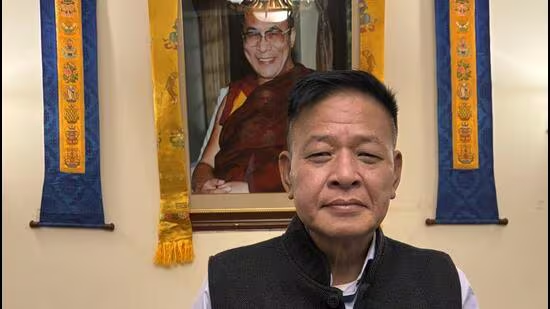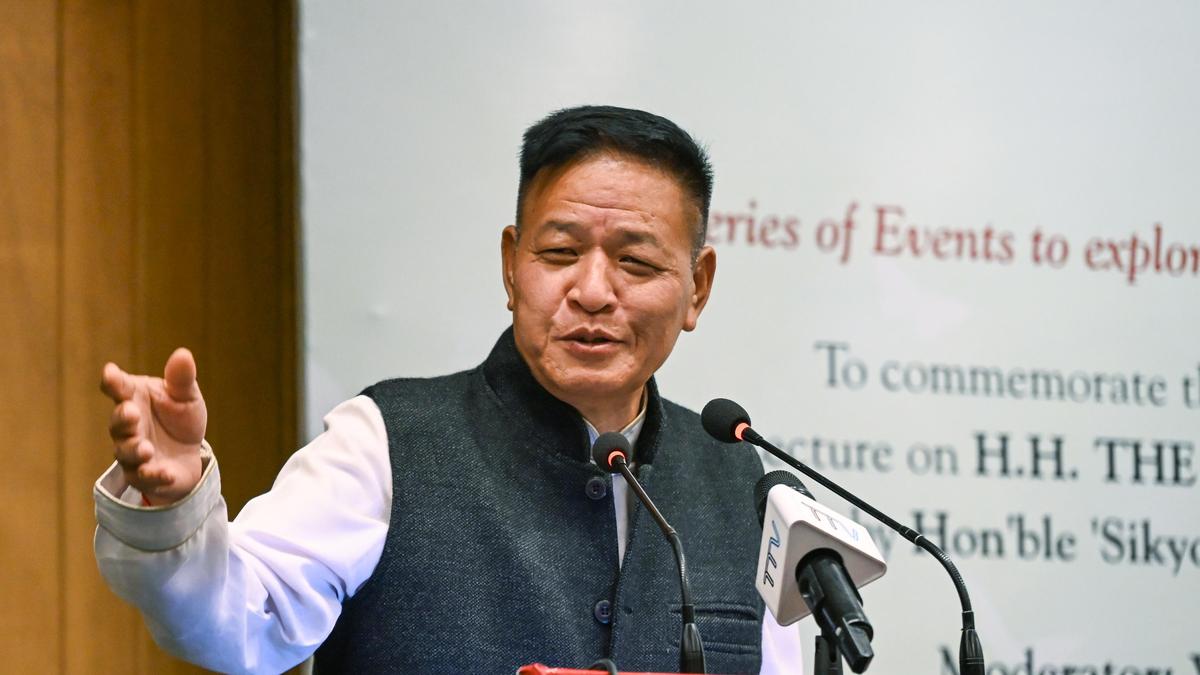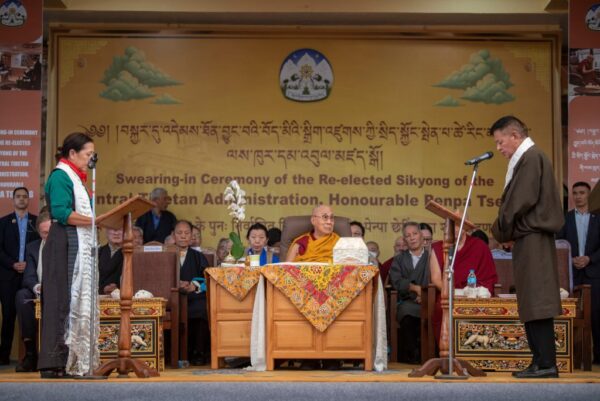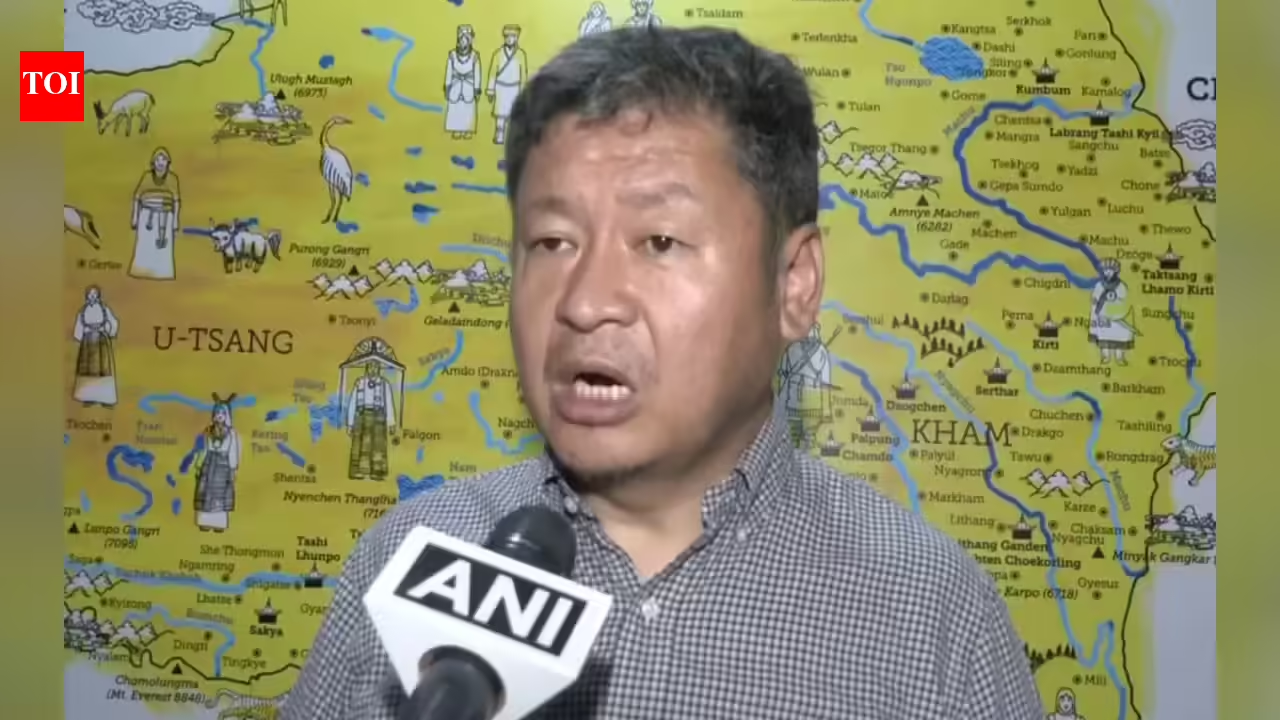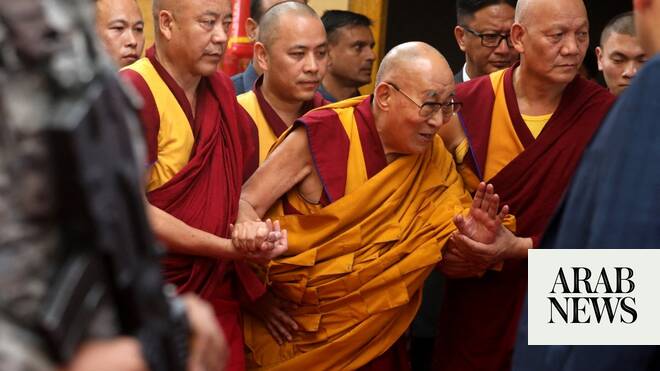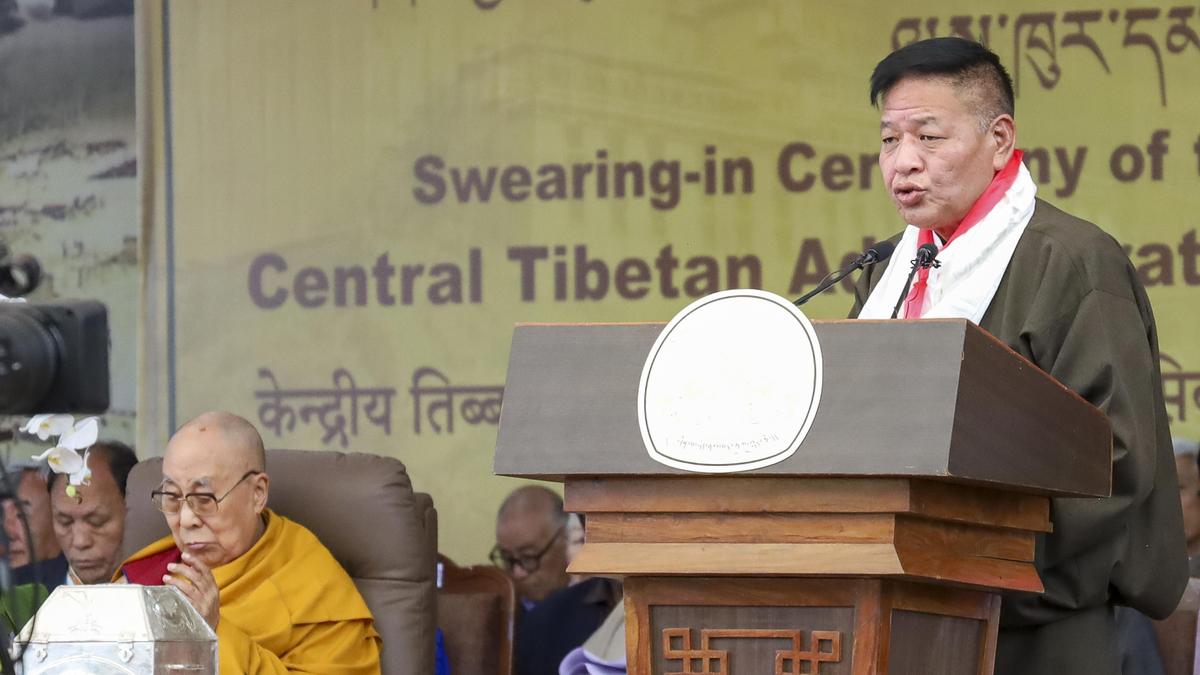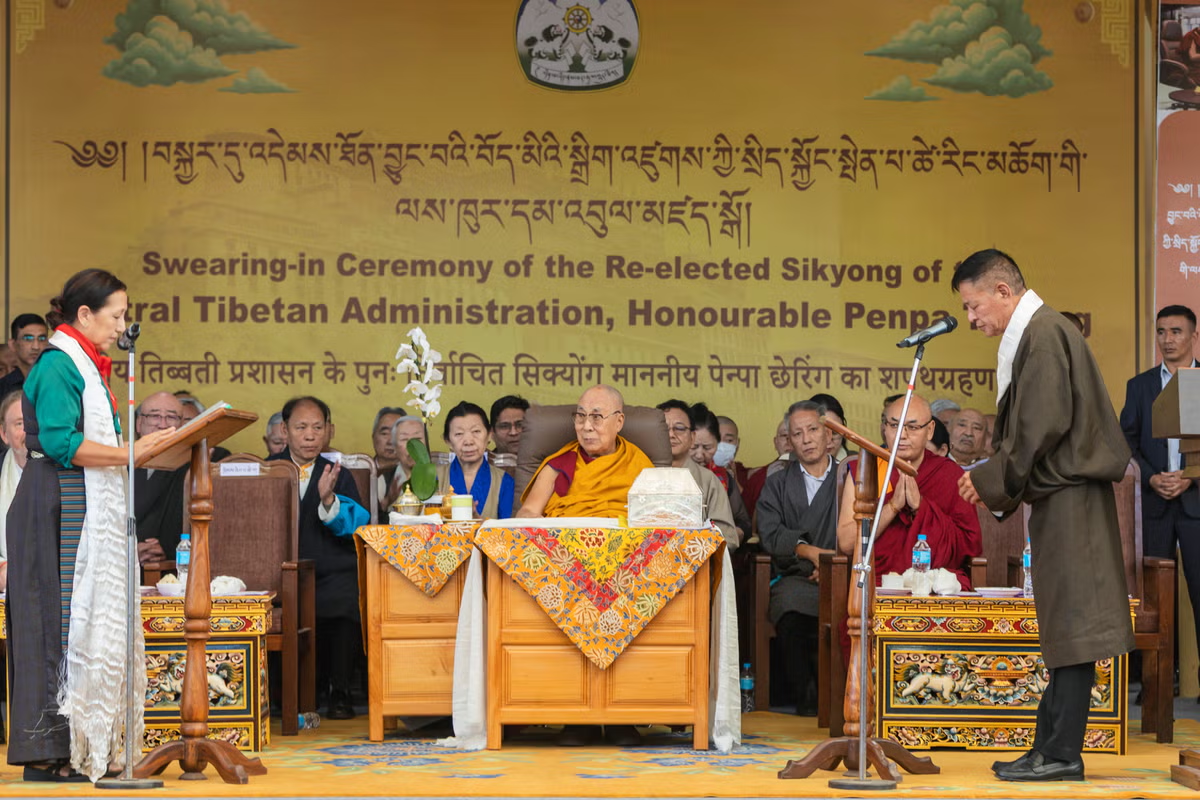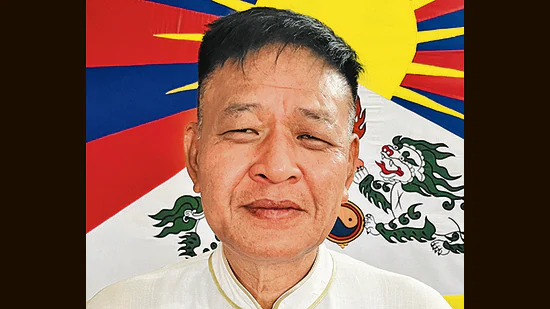
Interview| Penpa Tsering, Tibetan political leaderPenpa Tsering (HT Photo)Seventy-five years after China’s formal annexation of Tibet on May 23, 1951, the Tibetan freedom struggle stands at a critical geopolitical crossroads. Penpa Tsering, the political leader (Sikyong) of the Central Tibetan Administration (CTA), reflects on seven decades of resistance in exile. In an interaction with HT, Tsering talks about how the 14th Dalai Lama’s leadership has sustained the movement against aggressive Chinese policies, navigating a complex international landscape where economic dependencies on Beijing often stifle global solidarity. From the limits of back-channel communications with an opaque Chinese regime to India’s indispensable, “parental” role, Tsering provides a candid assessment of the challenges ahead. Edited excerpts:Seventy-five years have passed since China formally annexed Tibet. How do you look back at the freedom struggle?It is very unfortunate that when many countries were being decolonised after World War II, Tibet lost its independence. Over the past seven decades, global geopolitics has undergone tremendous change. We are fortunate to have the leadership of His Holiness the 14th Dalai Lama, because of whom we have sustained our movement despite global adversities and Beijing’s policies in Tibet aimed at eroding our unique identity. Yet, we remain confident. The day Tibetans inside Tibet are free and happy, there will no longer be a need to continue this struggle internationally.What do you expect from the international community, including the UN, on what seems to be a forgotten cause?We have to reach out to the free world; there is no other way. We cannot look to autocratic governments or countries economically dependent on China, as Beijing exerts heavy political pressure on them. We are not expecting too much from the UN at this stage—it is currently one of the most undemocratic institutions in the world. It needs to democratise, much like India is demanding, by expanding the Security Council so that even those who don’t have a voice right now get a space to speak. We are stateless right now, but we need a space to speak because we are part of this world.The Dalai Lama recently announced there will be a 15th Dalai Lama. Are Tibetans apprehensive about Chinese interference in the reincarnation process?China passed a law in 2007, Order Number 5, stating that the atheist state is the final authority for recognising Living Buddhas. They are not concerned about other Living Buddhas; they are specifically targeting His Holiness to control his succession. We know China’s intent. On our part, we have the Tibetan diaspora, which will be impacted first, and the international community—seven European countries have already backed us. We will continue to take this issue to more nations, educate people on the concept of reincarnation, and highlight Beijing’s actions. Globally, Tibet may not seem central right now, but despite all geopolitical disruptions, we are surviving. That is entirely because of the Dalai Lama.Are there active channels of communication with the Chinese government?We have some back channels, but nothing of real consequence. Beijing maintains them simply because His Holiness is ageing and they want more information on him. We tell them everything is transparent—His Holiness meets people daily, and those videos are public. He is actually much healthier now than before. Their contacts always claim that when the right time comes, these channels will be useful, but the Chinese government is never completely open.How do you view India’s role regarding the Tibet issue and the diaspora?The very fact that our entire exile structure exists is because of the Government of India. We cannot take this for granted; New Delhi has its own national interests, and we understand these dynamics. When the right time comes, I am sure India will be on the right side of history, including on the reincarnation issue. We do expect a little more financial support from the government of India for our school system, which is currently facing difficulties. Otherwise, we are profoundly grateful. On humanitarian issues, there is no parallel to what India has done. On political issues, how vocal the government wants to be is entirely its choice. In Tibetan, we say: When children have problems, they go to their parents. I consider India to be our parent.Do you expect a resolution to the Tibet issue in the near future?Any solution can only come from China; that is the reality. Much will depend on internal changes within China, which is why we must study Beijing closely. If the status quo continues, we must navigate it. If changes occur, we must be ready for both the opportunities and challenges. Nobody can predict anything with certainty today, so we must be prepared for every possible eventuality.
Interview: ‘Know China’s intent on reincarnation, ready for any eventuality’
Central Tibetan Administration leader discusses Beijing’s focus on the Dalai Lama’s succession, India’s vital support for the diaspora, and the future of the exile movement.
771 words~4 min read