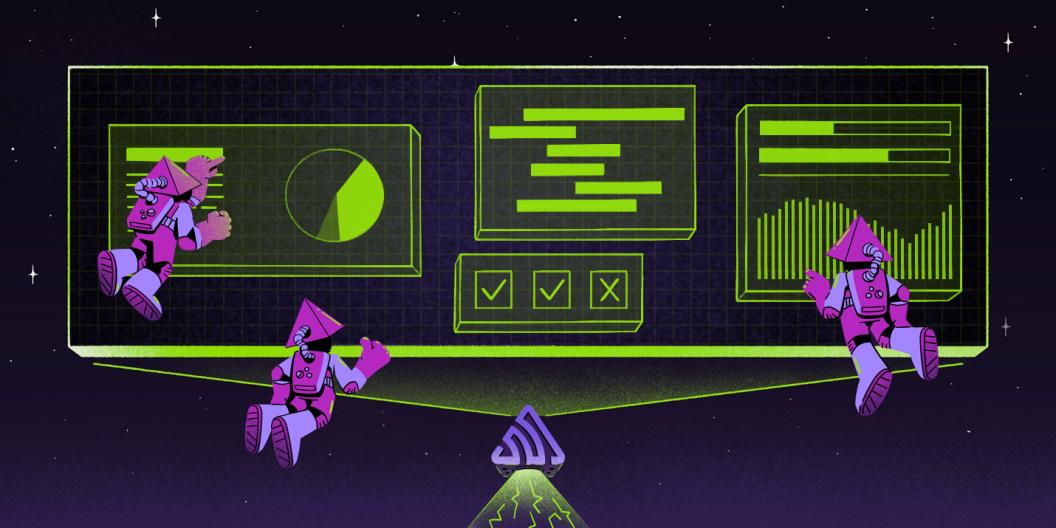
The traditional dashboard workflow, teams slowly handcrafting visualizations to track critical KPIs, is dying in a world of AI agents.
A few years ago, in a pre-agentic-everything world, we tried to make it easier for developers to monitor critical experiences. We introduced Insights pages, which were pre-configured dashboards any Sentry user could adopt instantly that surfaced common health signals, like Web and Mobile Vitals.
The idea was right, but there was a problem: while many companies share common signals, every organization is unique. Without meaningful customization, most teams still ended up having to slog through manually building dashboards themselves. So we kept iterating.
Large language models are what finally made a reality of on-demand, customizable dashboards possible. Visualizations remain one of the most information-dense ways for humans (and agents) to communicate. What changed is the cost of creating those views.
Instead of assembling dashboards widget by widget, you can now prompt an agent to create or edit dashboards directly in Sentry, or use the Sentry CLI to connect Sentry to other models, and generate a dashboard tailored to the task at hand.