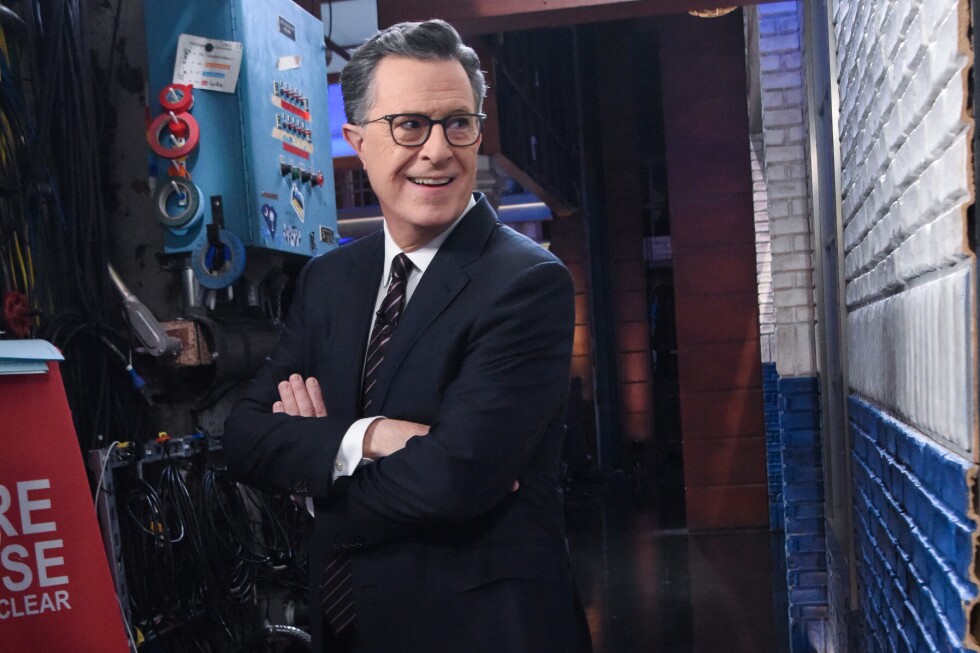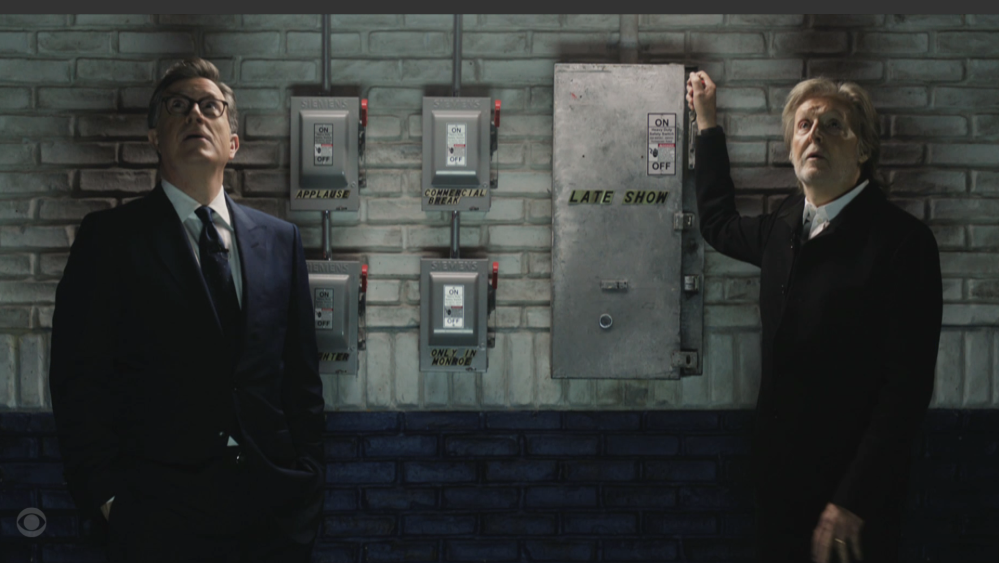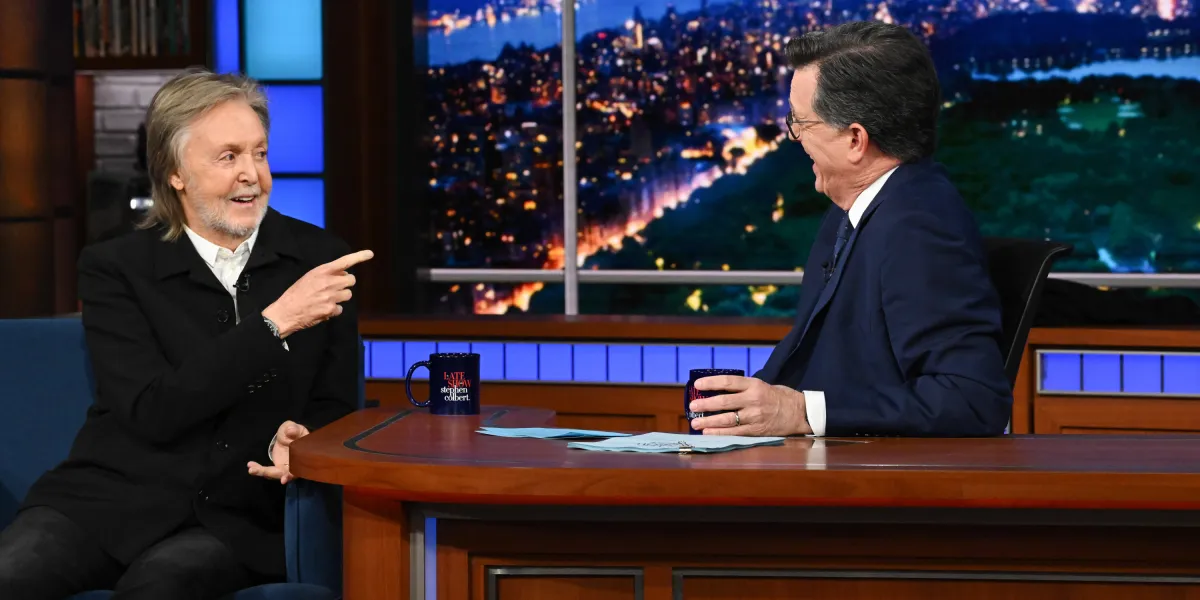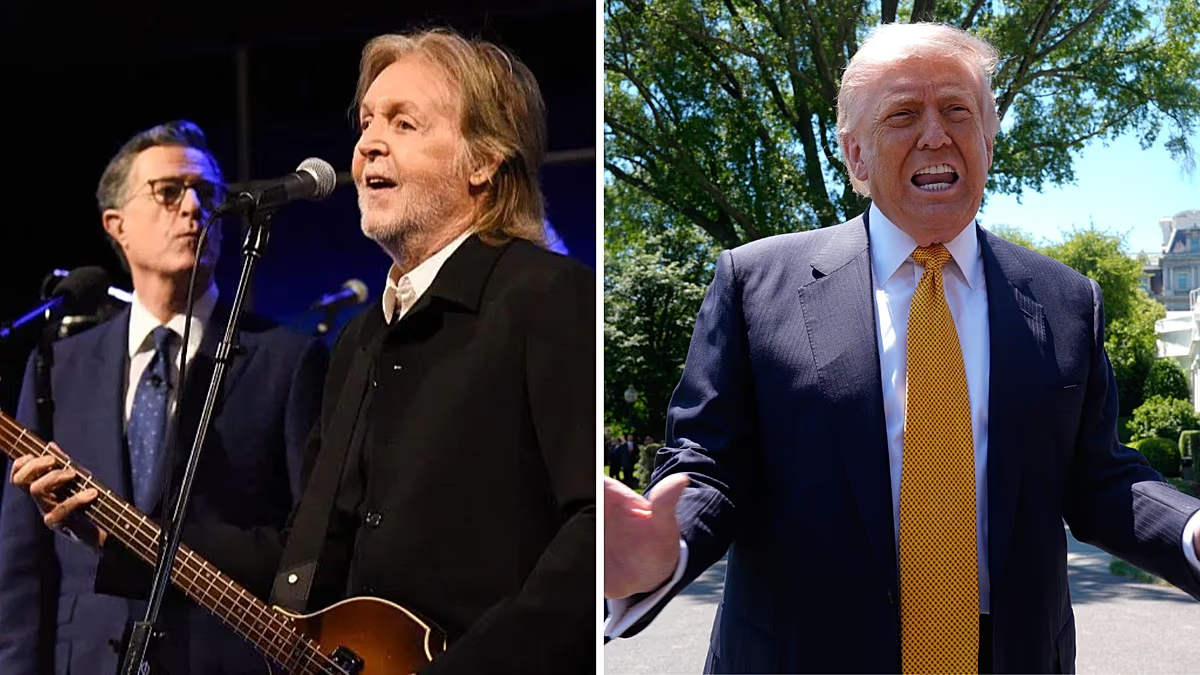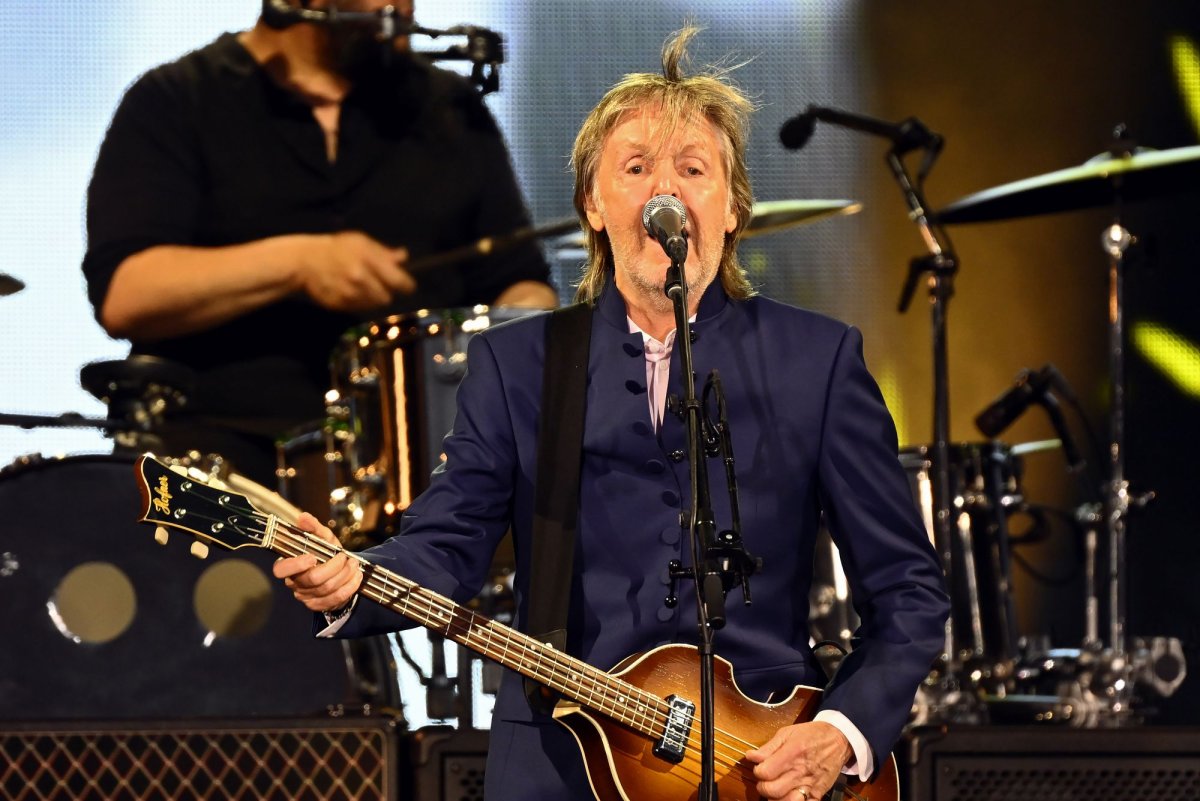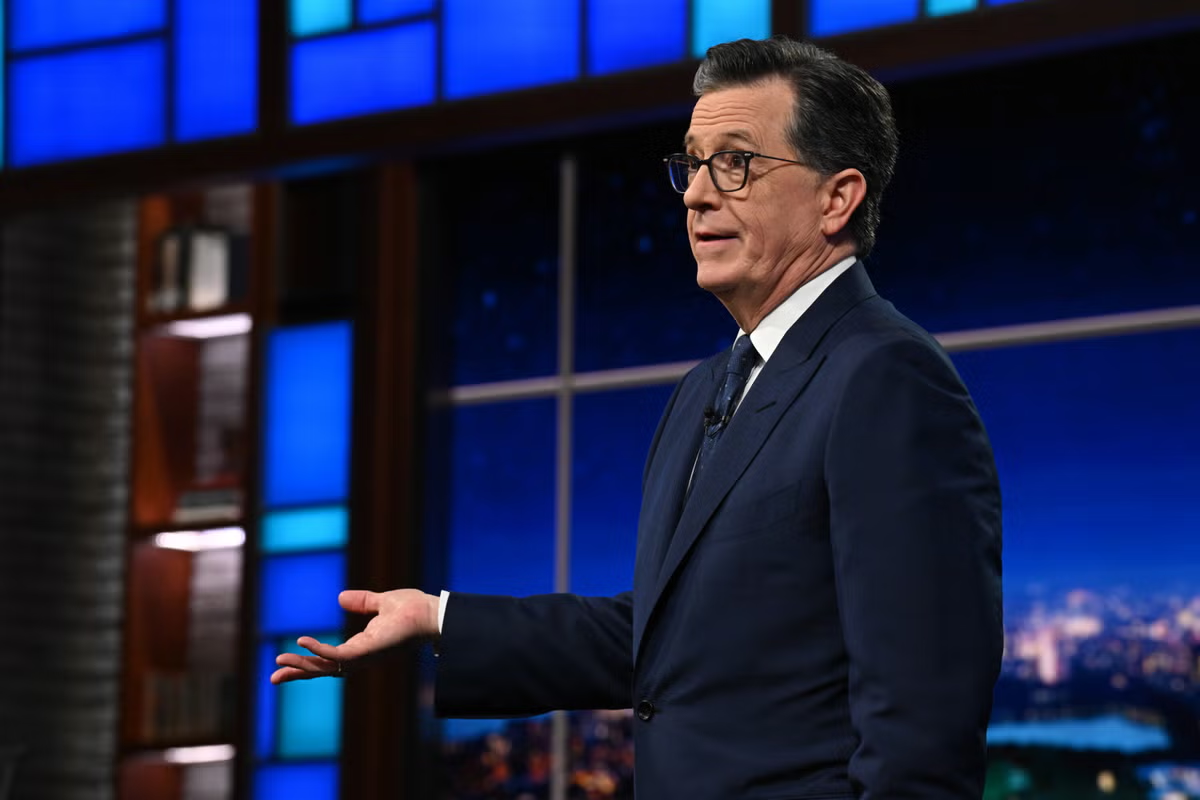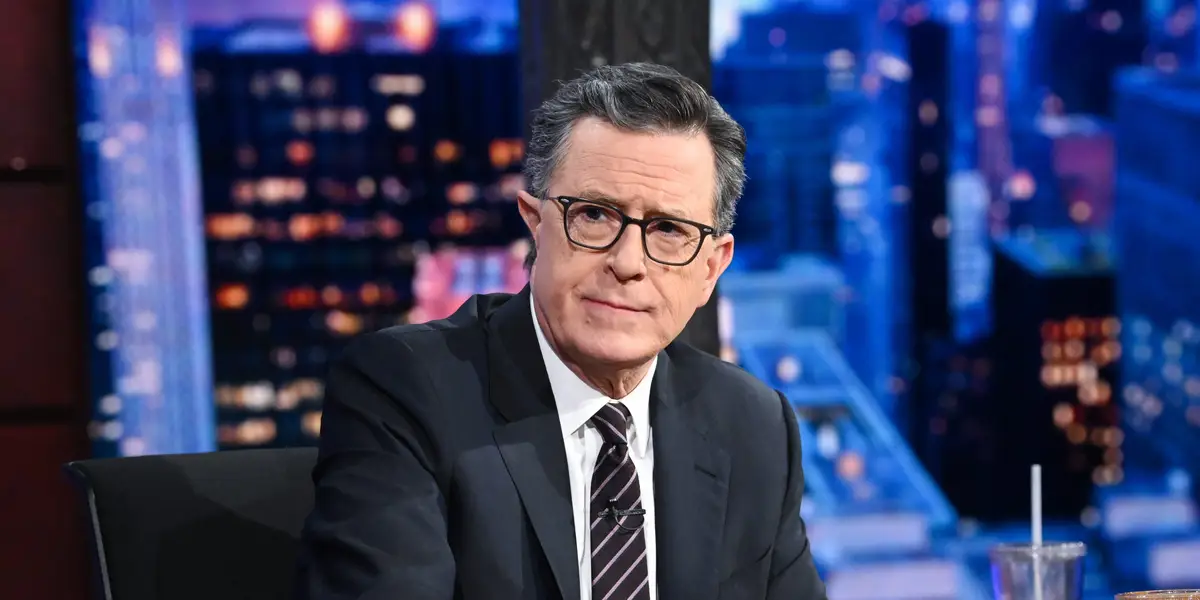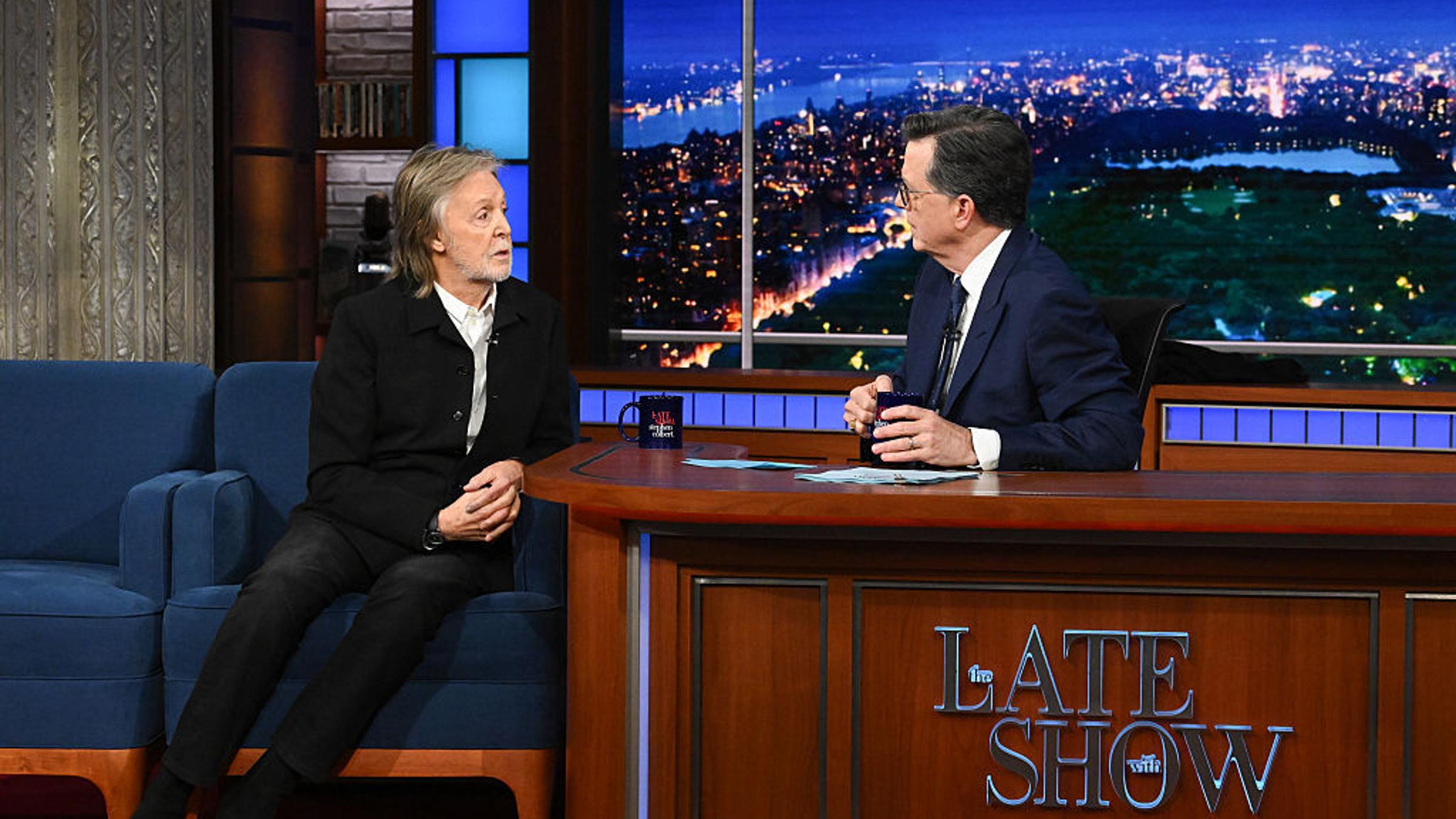
“Are you good with change?” Stephen Colbert asked Paul McCartney on Thursday. The response from the man whose performance with the Beatles, 62 years earlier, on the very stage where they were sitting, caused a tectonic shift in global pop culture: “No.” It didn’t matter. Change was coming anyway, as it always does. After 11 years and some 1800 episodes, this was the final episode of The Late Show With Stephen Colbert. McCartney was his last guest. Before settling in for a long chat with one of the most famous and beloved people on the planet, Colbert engaged in some clever misdirection. He prefaced his monologue with the claim that the finale would be a “regular episode,” then feinted toward the opposite extreme, teasing the Pope Leo appearance he’d long been campaigning for, all the while fielding cameos from celebrity pals. Finally, the wistful McCartney interview was interrupted by the opening of a throbbing, green portal in the studio. Neil deGrasse Tyson helpfully informed us it was a wormhole; Jon Stewart and Colbert’s Strike Force Five buddies Jimmy Kimmel, Jimmy Fallon, John Oliver, and Seth Meyers showed up to offer some late-night solidarity. And it looked like Colbert had vanquished the void—until it came back, bigger and scarier, and sucked up the entire set, B-movie style. On the other side of the wormhole? A stark, black room where Colbert found himself singing Elvis Costello’s “Jump Up” with Costello, former Late Show bandleader Jon Batiste, and his successor, Louis Cato. Back onstage, McCartney joined them for a rousing rendition of “Hello, Goodbye.” A comedy-nerd coda called back to one of TV’s strangest finales. As odd and epic and bittersweet as it was, the finale was only the capstone of a farewell extravaganza that had been unfolding for weeks, as A-listers including Meryl Streep, Oprah, Tom Hanks, Steven Spielberg, and Barack Obama sat for one last Late Show interview. The presence of these luminaries wasn’t just a testament to Colbert’s popularity or a pledge of allegiance to his side in the war of comedy that speaks truth to power vs. the Trump administration and its corporate allies. The end of The Late Show felt bigger than one host or franchise. Old enough to remember when Johnny Carson’s stage was the epicenter of the zeitgeist, the most distinguished guests who cycled through this spring seemed more like mourners at a grand funeral for late night and the collective culture it once represented.Given the political context, it makes sense that so much of the discussion around The Late Show’s cancellation has focused on the dire implications for free speech (especially when that speech isn’t as lucrative as it used to be). Colbert never stopped ridiculing Trump or the suits at CBS and its parent company, Paramount, whose decision to end his show coincided with a Paramount-Skydance merger that required FCC approval. In a cold open last week, he mocked the beleaguered CBS Evening News anchor Tony Dokoupil and CBS News head Bari Weiss for Dokoupil’s failure to secure a visa to cover the Trump-Xi summit. (“It’s the CBS Evening News, reporting live from the wrong China.” Cut to some guy flailing around with a pumpkin stuck on his head as a woman tries to smash it off him with a mallet.) Mainstream platforms for humor that skewers the powerful are disappearing, and with each one we lose, the likelihood that abuses of power will go unnoticed by those who don’t actively consume news grows. It’s not just satire that we’re losing, though. Late night is rooted in an older and now rarer format: the variety show, that vaudeville-derived staple of early TV that gathered the whole family at prime-time to watch Sullivan or Carol Burnett or Sid Caesar and Imogene Coca emcee a parade of comedians, musicians, magicians, animal acts, and whatever else producers figured would be entertaining to a broad audience. The hosts had sharp improvisational instincts, like many of the Strike Force Five pallbearers who joined Colbert for a more substantial sendoff earlier this month. (Kimmel: “I’m waiting for angry Stephen to come out!”) The best late-night shows share with their best variety forebears a sense that anything can happen. Titled “The Worst of The Late Show with Stephen Colbert,” Monday’s compilation of abortive experiments featured a producer’s mother interviewing former DNC chair Tom Perez about healthcare, between slasher-movie screams, in the total darkness of a haunted house. No one embodies this anarchic sensibility like David Letterman, the original Late Show host, who recently joined Colbert to hurl CBS property off the studio’s roof, in a reprisal of a vintage bit. The finale's extended wormhole bit belonged to that same lineage, albeit with a geeky, Colbertian twist. Not every variety-show booking delighted every viewer (just ask the stiffs who hyperventilated when Elvis wiggled his hips on Sullivan’s stage), but there was enough, most nights, to captivate tens of millions of them. The mix was the point in late night as well. Colbert’s final music lineup included pop stars, country titans, rock bands, Broadway greats. Among his last guests were actors, filmmakers, politicians, chefs, journalists, comedians, songwriters, scientists. If you watched an episode from beginning to end, you might’ve seen someone you adored, someone you despised, and someone you’d never heard of before. You might’ve discovered a new favorite show or movie or book, or heard a great band your Spotify algorithm never would’ve surfaced. You might’ve listened in on an interview that expanded your worldview..It’s possible to mourn The Late Show and late night while acknowledging the flaws that might have hastened their demise. As soothing as it was most nights, Colbert’s avuncular charm could occasionally lapse into smarm, in an accidental echo of his smug Colbert Report character. The genre at large, especially in its broadcast form, failed pretty spectacularly to make its three-ring circus of topical comedy, celebrity kibitzing, and live music thrive under ringmasters who weren’t white, male, middle-aged avatars of our societal default. The Late Show’s long goodbye reflected that limitation, too. Boomer and Gen X icons predominated. Replete with Jimmys and Jo(h)ns, it made no time for other funny people whose mostly brief late-night tenures say more about the prejudices that plagued the format than about their talent: Arsenio Hall, Wanda Sykes, Larry Wilmore, Lilly Singh, Colbert’s Daily Show cohort Samantha Bee. (Many of these faces did, at least, appear in a montage, at the top of the finale, of late-night hosts new and old, spliced together to seem as though they were roasting Colbert.) When there is only room for one kind of person at the host’s desk—however appealing that archetype may be—those who want to hear different voices might stop listening.And so, here we are, a once-united American audience, splintered and squeezed into ever-tighter niches of people just like us. A generation ago, it was Fox News (whose Gutfeld! is now old-school conservatives’ late-night show of choice) vs. MSNBC and The Daily Show, with its pivotal role in the rise of political-confirmation-bias-as-entertainment. Now, fans who devour the narrowly targeted podcast episodes, live streams, and newsletters of Joe Rogan or Heather Cox Richardson or Candace Owens or Hasan Piker or Ben Shapiro or Pod Save America don’t want to be challenged with a diversity of perspectives; they’re there to be comforted by someone (at best a history professor, at worst a bigoted loudmouth) who will reflect their own beliefs back to them. This hyperspecificity isn’t just a political phenomenon. It has penetrated across demographics and tastes. Young women can choose between tradwives’ performances of domesticity and big-sister advice from self-appointed sexperts. Twitch is vast enough to enable a gamer to devote all their free time to consuming content related not to video games in general, but to one title in particular. There are entire, enormous platforms whose contours are unknown to the average person under 40, just as there are millions of teens and 20-somethings who watch more video on YouTube, TikTok, and Instagram than on linear or even streaming TV. The latter crowd may not realize The Late Show ended this week—and they certainly weren't watching on Thursday, though finale clips might filter through their feeds. There’s a lot of blame to go around for the near-extinction of the traditional late-night show, from the devices that give every member of every household their own parasocial mirror, to the addictive nature of algorithmic entertainment, to a government hostile to criticism and business leaders willing to curtail free speech for monetary gain. (Before performing his anti-ICE anthem “Streets of Minneapolis” on Wednesday, Bruce Springsteen called Colbert “the first guy in America who’s lost his show because we got a president who can’t take a joke. And because Larry and David Ellison feel they need to kiss his ass to get what they want.”) But if those of us who will miss big-tent late night are being honest with ourselves, we should also consider that the audiences for these shows might never have become as attenuated as they are now if more people, and crucially younger people, could find in them a better version of what they’re seeking elsewhere. Still, The Late Show’s finale made a strong case that, as late night peters out, we’re losing some of the most valuable things that we could once find in abundance on television: collectivity, spontaneity, irreverence, ritual, the art of conversation, variety as an ethos as well as a genre. The greatest loss, as microdemographics turn away from and against one another and a grim pall descends over public life, might be that of late night as a venue to forget our differences (or at least laugh about them) long enough to have fun together, like a functional society. That’s bad for our democracy, even if it’s far from the most urgent threat out there. Colbert never could have saved us, but he did remind us, daily, of the stakes and offer an entertaining reprieve. So, what now? As Letterman told his former bosses in his last Late Show appearance, paraphrasing CBS’s giant of journalism Edward R. Murrow: “Goodnight and good luck, motherf-ckers.”
Colbert's Long Farewell Was a Funeral for the Collective Culture of Late Night
Odd and epic and bittersweet, Thursday's 'Late Show' finale was the capstone of a farewell extravaganza that had been unfolding for weeks
1,683 words~8 min read