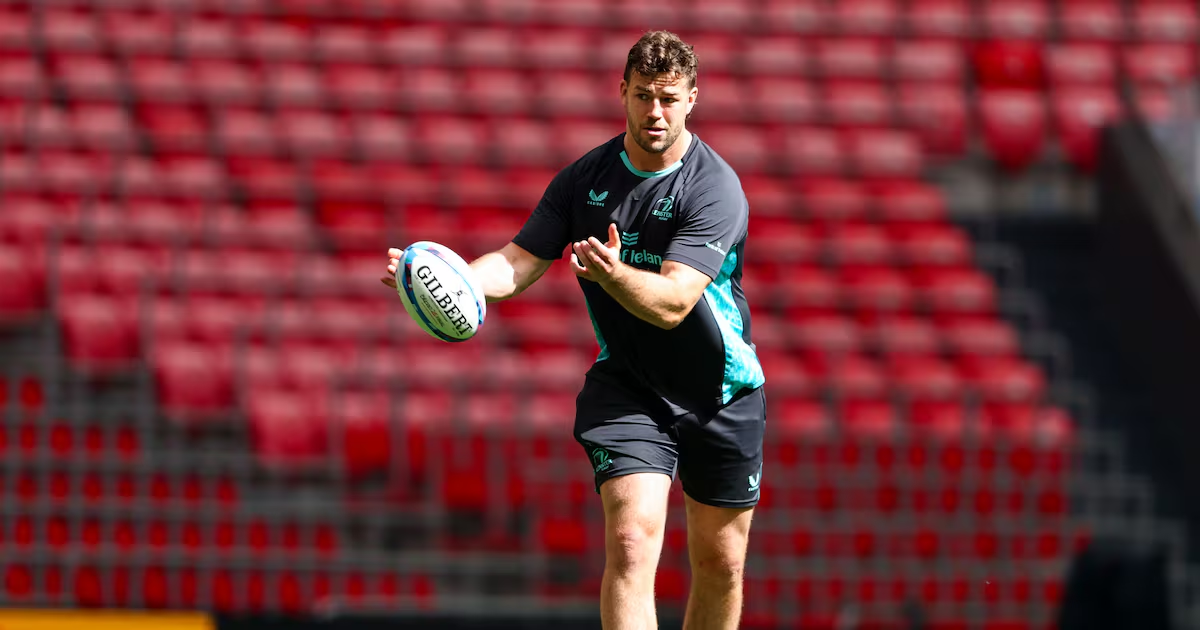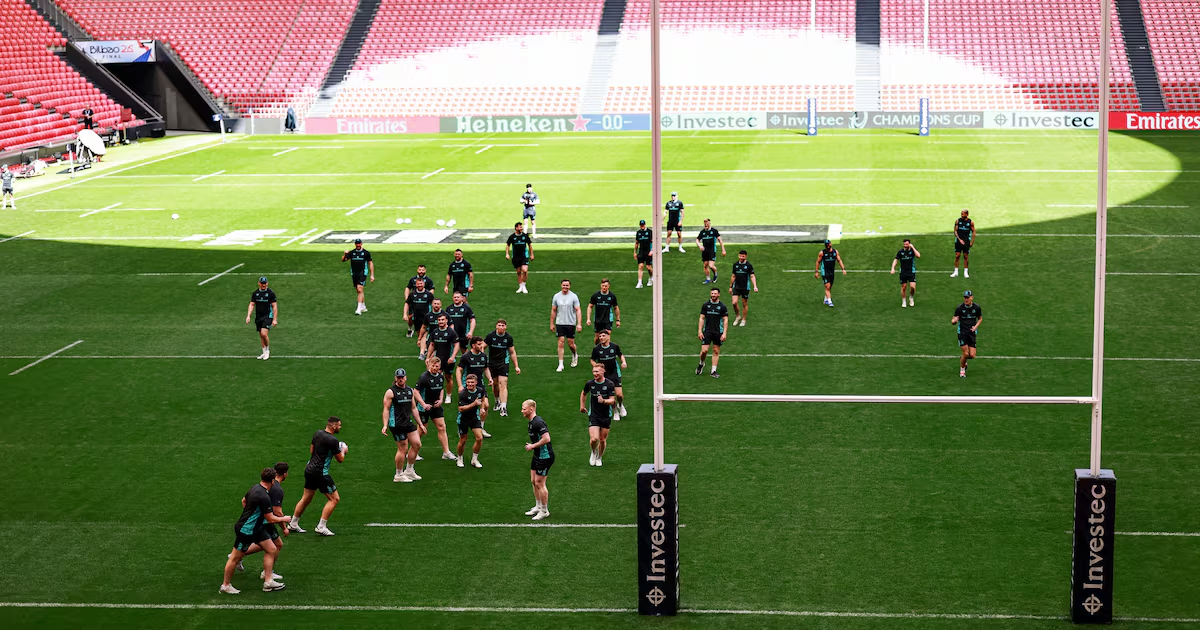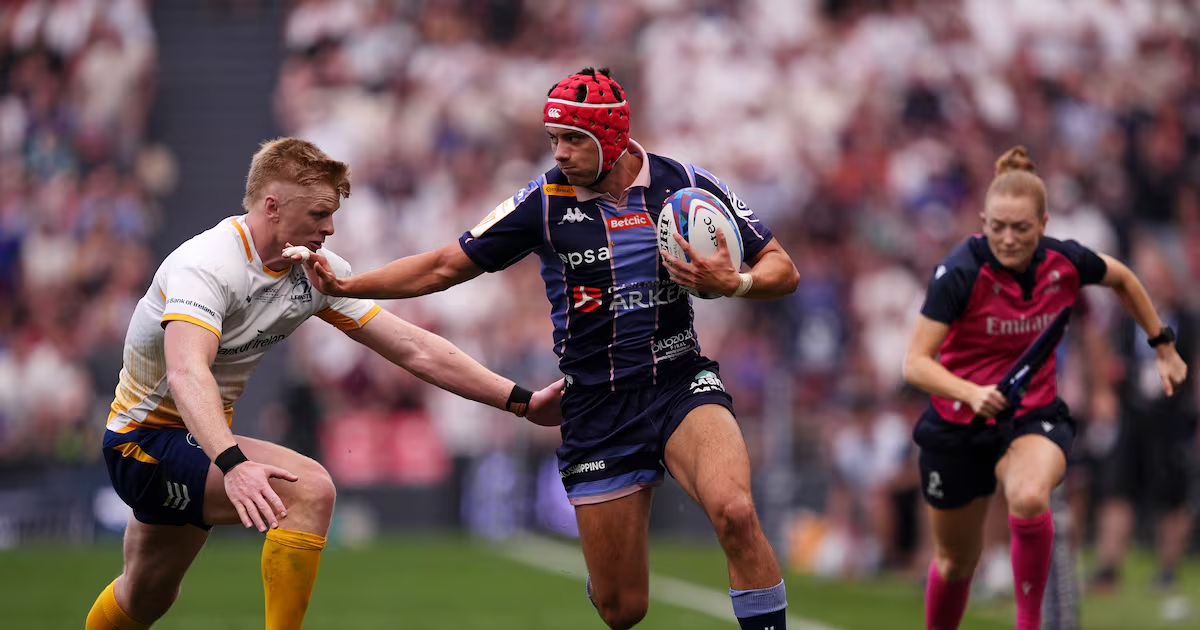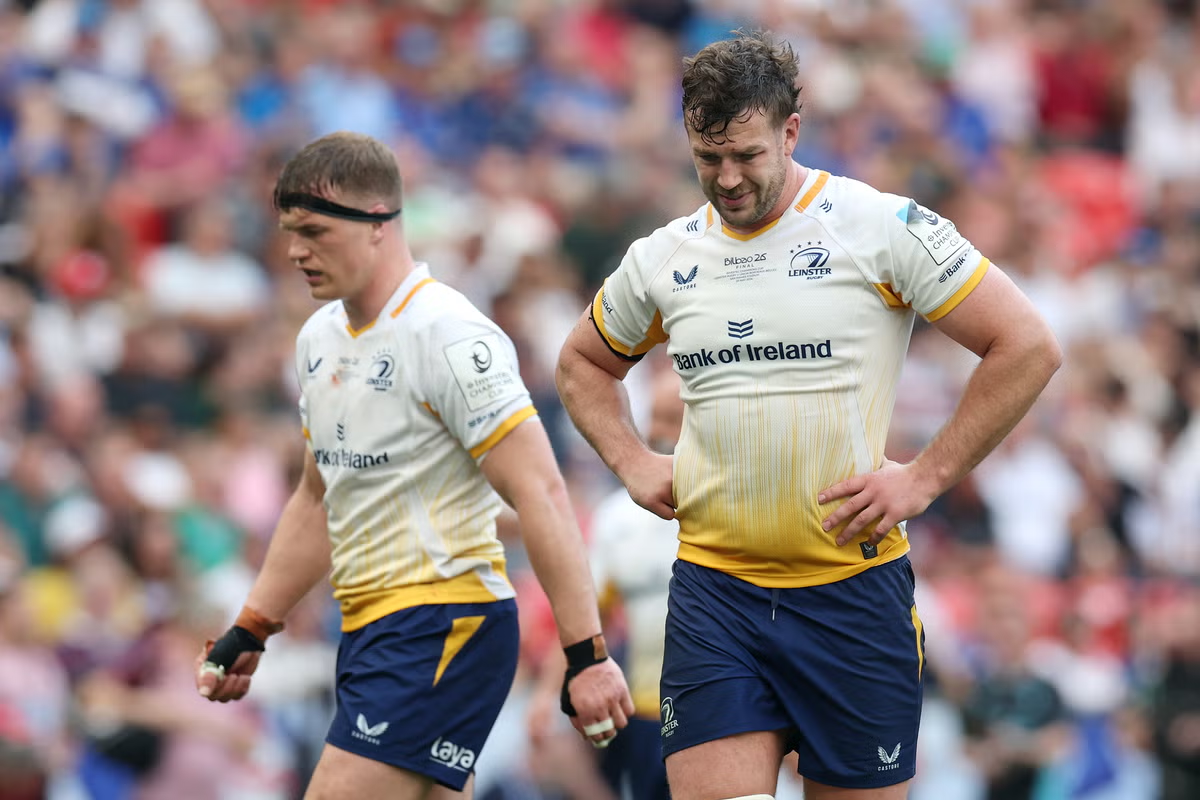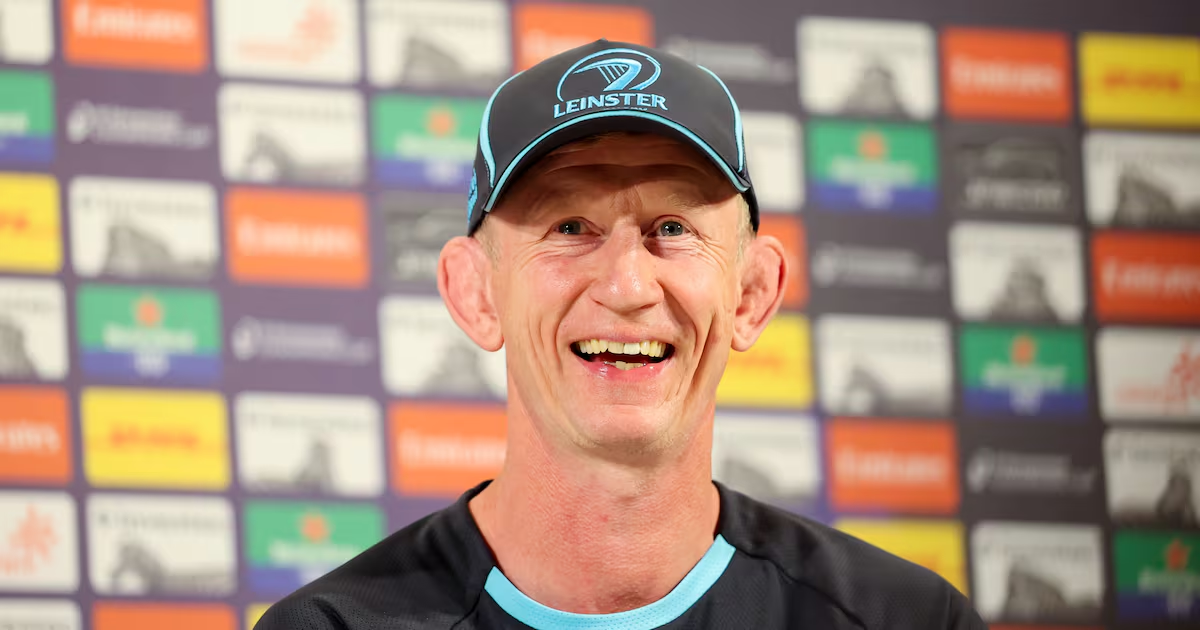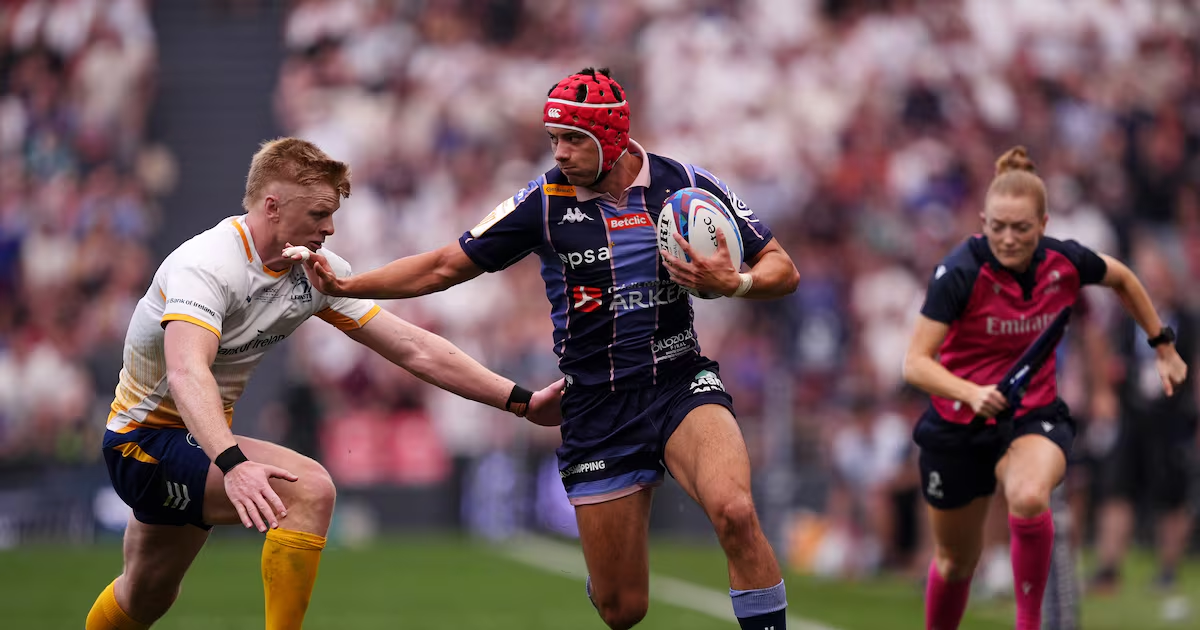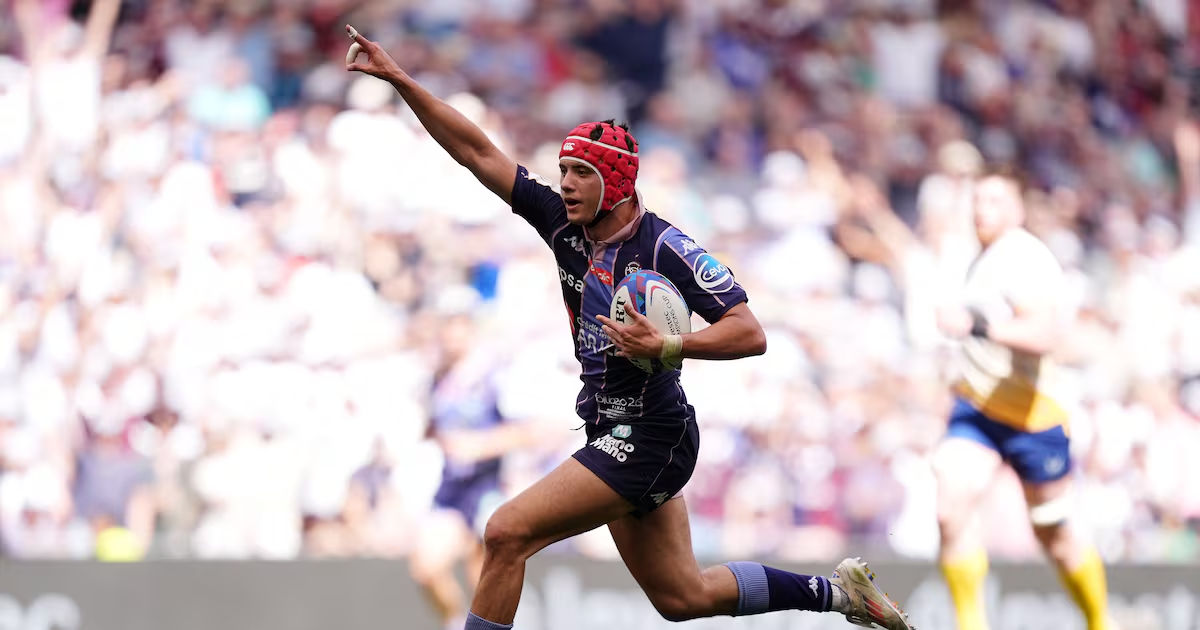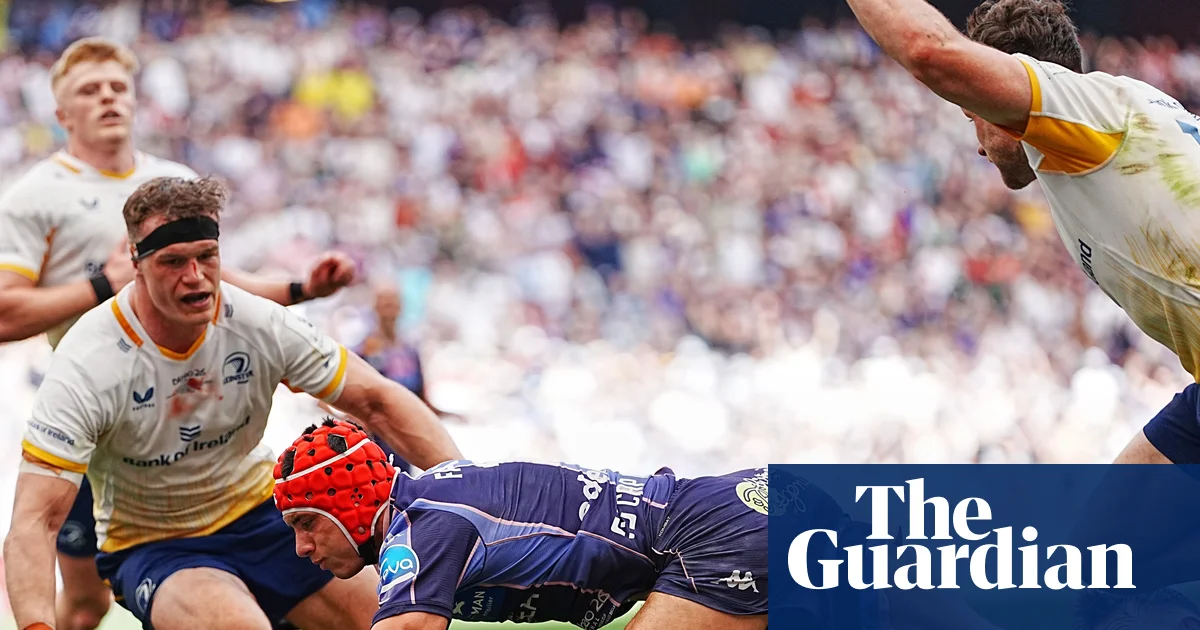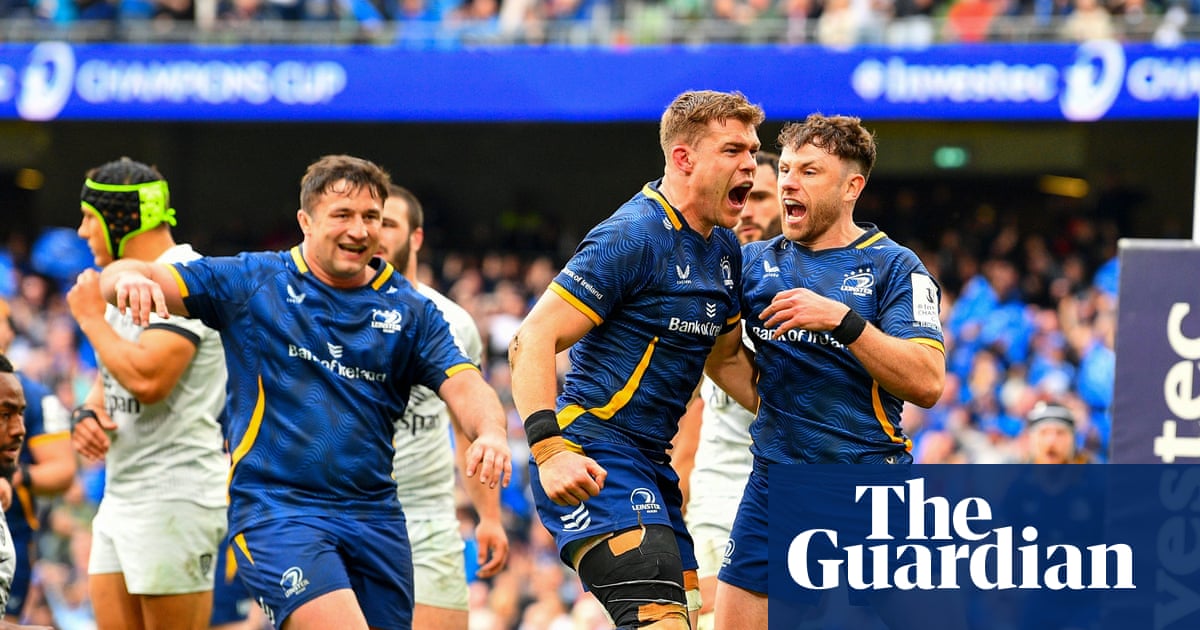
There was a very different feel when Leinster last came to Bilbao for a Champions Cup final. In 2018 it was wet, grey and could have passed for Ballsbridge in March. Not so this time with temperatures in the mid-30s and another baking afternoon in store for their rendezvous with the warm – in every sense – favourites Bordeaux-Bègles.When Leinster’s fair-skinned head coach, Leo Cullen, walked out for the eve-of-match captain’s run it was reminiscent of a David Attenborough film featuring a lone polar bear on a fast-melting iceberg. There will be no hiding place for heavy tight forwards, a factor exacerbated by the game kicking off in mid-afternoon. Apparently an evening slot was impossible for French TV because of a clash with – wait for it – the Cannes film festival closing ceremony.Which leaves both sides facing an energy-sapping challenge on a playing surface where the dimensions are tighter than normal. Rugby fields are usually 100m long and at least 70m wide but the San Mamés pitch is shorter and narrower. If Leinster are to claim an elusive fifth Champions Cup, eight years after their fourth, they will have to do it the hard way.Nor does it help that French sides have won the last five editions. Since their narrow 2018 win over Racing 92, Leinster have lost four finals in this tournament, the last three to French opposition in 2022, 2023 and 2024. Admittedly the margins have been tiny, with the two games against La Rochelle settled by four points combined, and the 2024 final against Toulouse at Tottenham Hotspur Stadium going to extra-time, but the trend is hard to ignore.The Bordeaux attack coach, Noel McNamara, also knows Leinster’s leading players inside-out, having coached Caelan Doris at age-group level and taught Dan Sheehan maths at Clongowes Wood College. For good measure the opposition ranks include the world’s deadliest finisher in Louis Bielle-Biarrey, who has scored 32 tries in 30 games for club and country this season.It sets up a potentially absorbing clash of styles: Leinster’s organisation and work-rate against Bordeaux’s lightning-quick attacking game and ability to strike from distance. As Bath found in the semi-final it is one thing applying pressure on Bordeaux, quite another to keep them at arm’s length when they have the ball. UBB also possess Europe’s most fleet-footed No 10 in Matthieu Jalibert and the combined brain and boot of Maxime Lucu, a proud Basque who makes everything tick. “He is the king of the Basque region,” said his coach, Yannick Bru, after the Bath semi-final. “I know it means a lot for him to play in the final in Bilbao near his home.”If the success of a trio of Basque football managers – Mikel Arteta, Unai Emery and Andoni Iraola – in recent days is any guide it could well require something out of the ordinary to deny the shaven-headed Lucu his heart’s desire. His opposite number Jamison Gibson-Park, the fulcrum of Leinster’s tactical game, will have to be at his sharpest.The proud Basque scrum-half Maxime Lucu (right) helped to orchestrate Bordeaux’s semi-final success against Bath. Photograph: Icon Sport/AlamyArguably the key tactical influencer, though, is Jacques Nienaber, hired by Leinster to make them a more suffocating defensive unit in big games like this. Having previously been involved in guiding the Springboks to World Cup glory, this would be a good weekend to silence those who feel Leinster’s all-round game has stagnated during his time in Dublin.Shutting down the best attacking unit in Europe would help to alter perceptions and erase the strangely bitter aftertaste of the semi-final win against Toulon, when Cullen criticised the media for what he saw as their overly negative coverage of Leinster. It was an interesting way to celebrate reaching a final, and almost certainly pre-meditated, but if it helps to foster a siege mentality among his players so much the better.This, though, has been a season in which France’s top players have generally found the answers to even the most searching questions. No-one seems to mention Damian Penaud since he was dropped from France’s Six Nations squad but he remains an irresistible force. Nor do they dwell overly long on Bordeaux’s forwards, other than the gargantuan Ben Tameifuna, which overlooks the sizeable talents of Cameron Woki, Marko Gazzotti and the hugely effective impact sub Temo Matiu.The 22-year-old Bielle-Bierrey, for good measure, scored twice in France’s win over Ireland in Paris back in February which helped propel Les Bleus to the Six Nations title. While Leinster have shoe-horned as much experience into their backline as possible, with Rieko Ioane on the left wing, Lucu’s remarkable goal-kicking looms as another sizeable threat. “It’s going to be a serious challenge but it’s what we want, isn’t it?” said Cullen. “It’s about trying to deliver our best performance, because that’s what it’ll take.”Win or lose he also hopes this showpiece will prove a timely advertisement for the tournament at a time of increased muttering about its structure and the ongoing participation of South African teams. “Hopefully the organisers protect it, because it’s an incredibly special tournament,” said Cullen.“If it’s just the URC or just the Top 14 or just the Premiership … I don’t think that’s good for rugby in general. The South African teams have added hugely to our domestic competition. They’re still trying to figure out how they manage the Champions Cup with the travel and all the rest but they’ll get better at it. They’re quality teams.”As for the weather, it could yet be that the temperature ends up dropping a couple of degrees by kick-off but, regardless, Doris firmly believes the most energetic side in the last 20 minutes will be champions. “Taking it to another level in the last quarter is going to be important,” stressed Ireland’s captain. Certain elements of the modern game never change, come rain or shine.
Leinster desperate to tear up Bordeaux’s script in Champions Cup final cauldron
With temperatures in the mid-30s expected, Leo Cullen’s side will need to be at their best to avoid another sad denouement to a French drama
973 words~4 min read