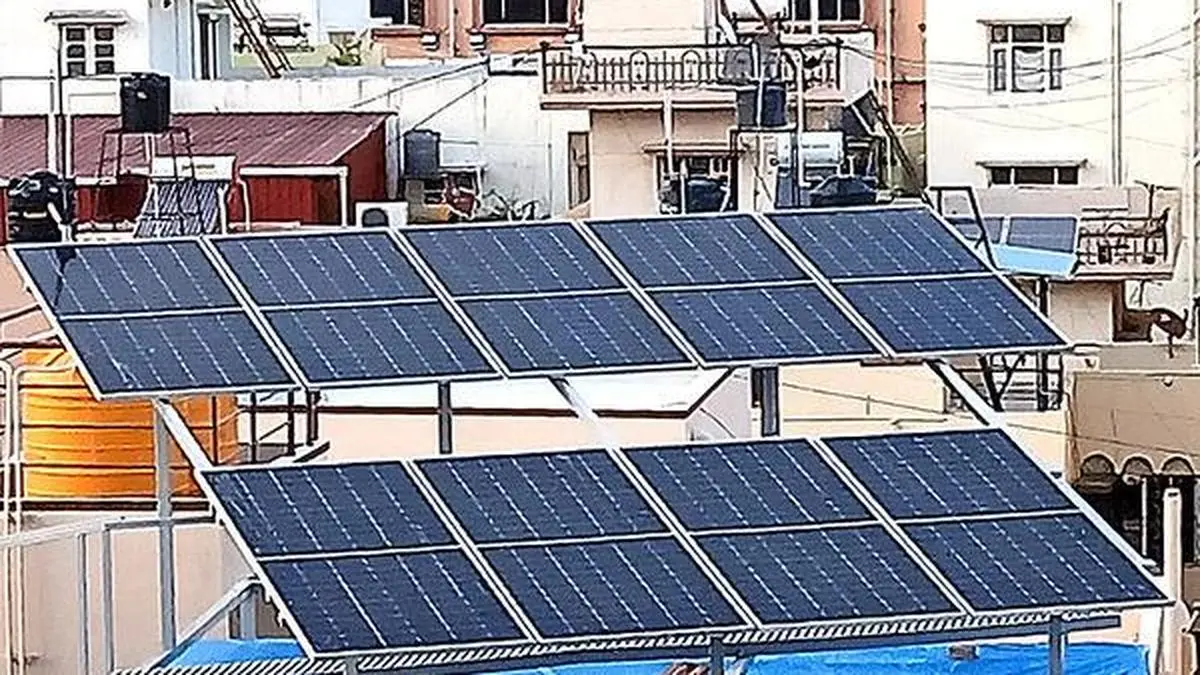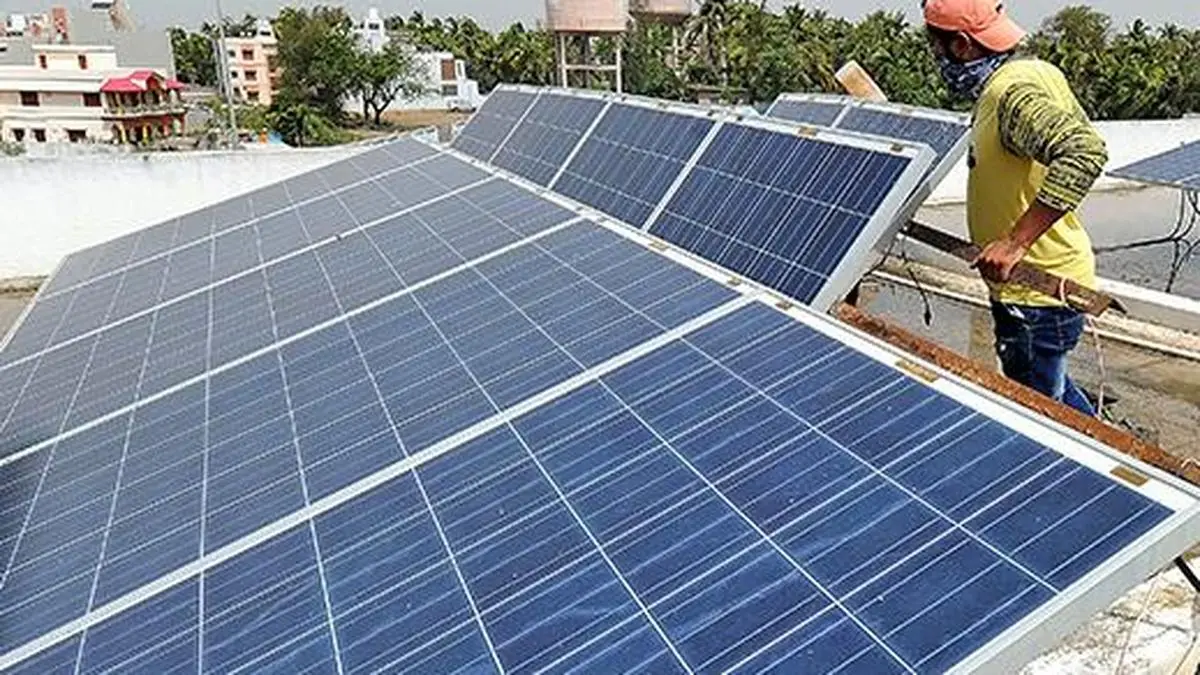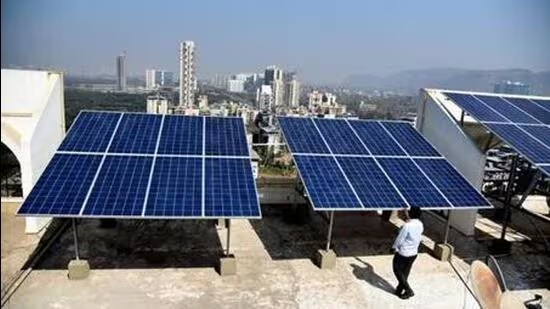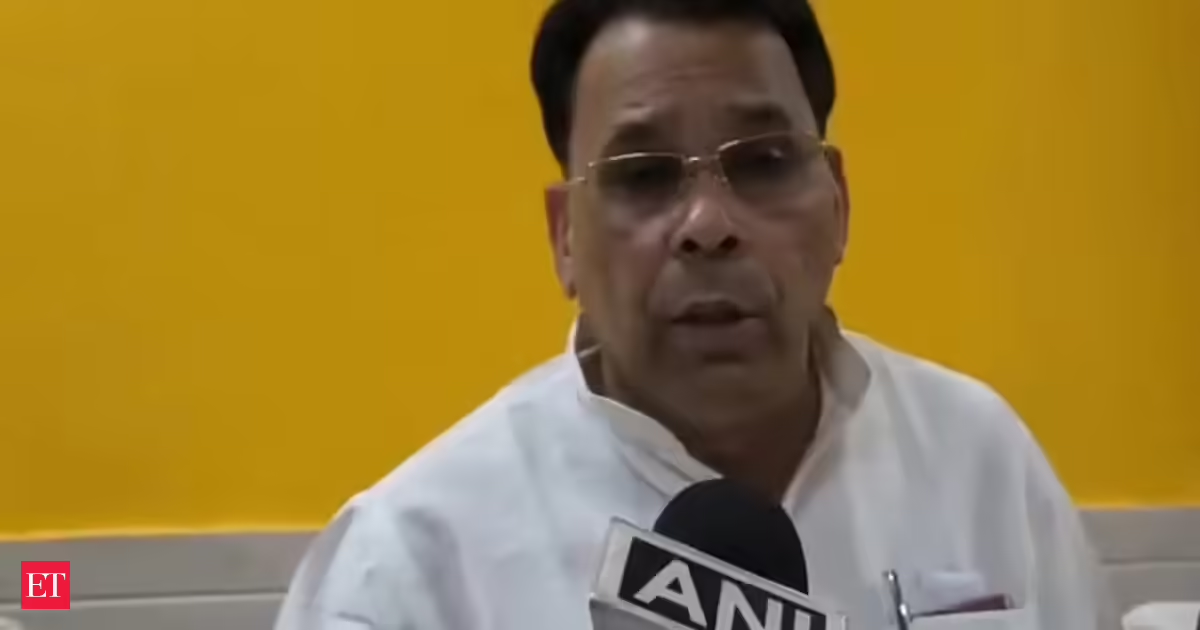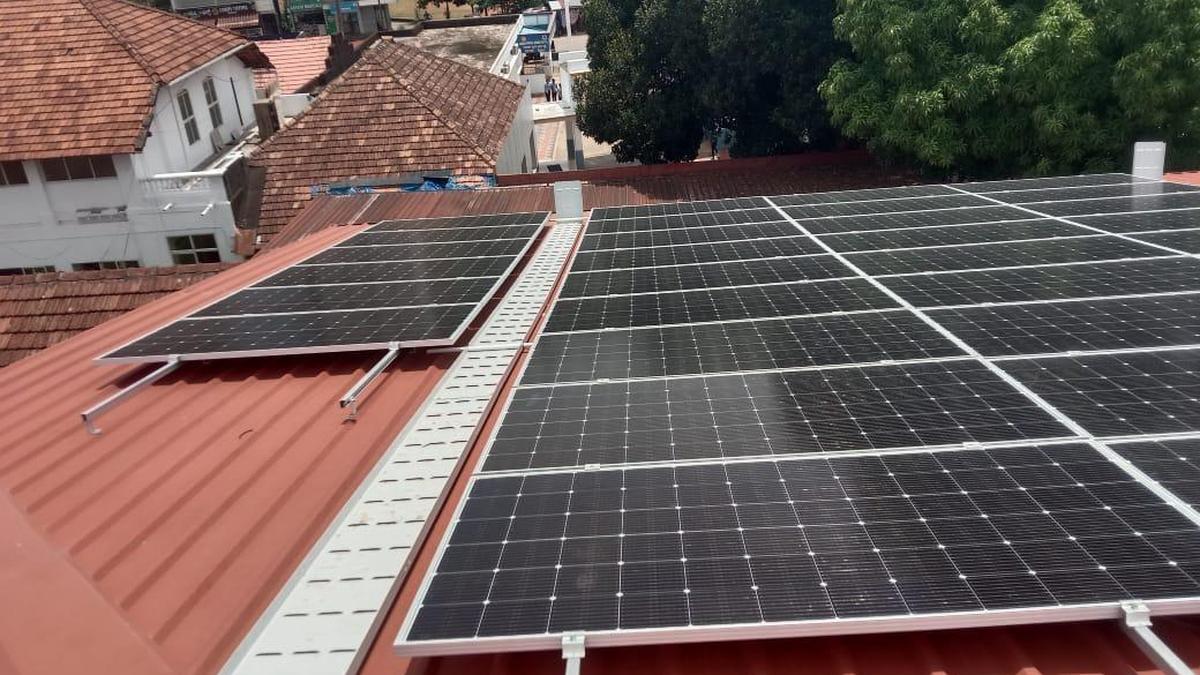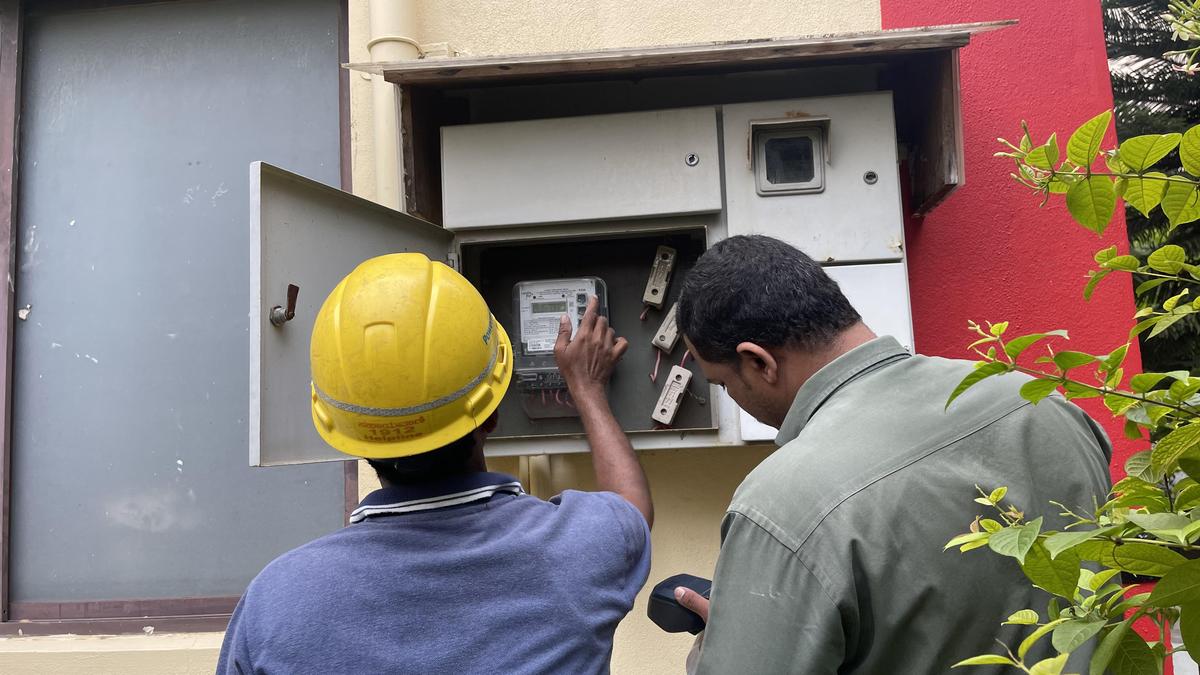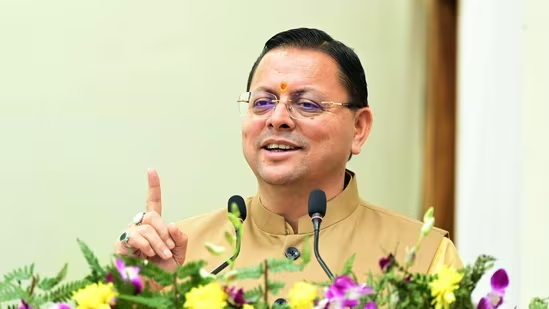
A 70-kilowatt rooftop solar power plant installed at the Uttarakhand Information and Public Relations Department headquarters in Dehradun has sharply reduced the department’s electricity bill, officials said on Thursday.The rooftop solar power plant installed at the Uttarakhand Information and Public Relations Department headquarters in Dehradun. (@pushkardhami)According to the state government, the department’s electricity bill for April 2026 came down to around ₹1,700 from nearly ₹1.2 lakh per month earlier under the commercial tariff system.The rooftop solar plant has been installed at the department’s Ring Road headquarters near 6 Number Pulia in Raipur as part of the Uttarakhand government’s push towards renewable energy and green development.Solar push under Chief Minister’s directionsOfficials said the initiative was implemented following directions from Chief Minister Pushkar Singh Dhami to promote green energy and increase the use of solar power across government departments.The solar project was installed free of cost by the Uttarakhand Renewable Energy Development Agency (UREDA) under a special arrangement. The electricity generated through the plant has been integrated with Uttarakhand Power Corporation Limited to ensure uninterrupted energy supply.The government described the initiative as a major step towards energy conservation, environmental protection and sustainable development.Solar generation crosses 1,000 MWDirector General of Information and Public Relations Banshidhar Tiwari said the Chief Minister had directed departments to maximise solar energy usage across the state.He added that schemes such as the Chief Minister Solar Self-Employment Scheme and the Prime Minister Solar Self-Employment Scheme were proving significant for Uttarakhand’s renewable energy sector.“Over the last four years, solar power generation in Uttarakhand has crossed the 1,000 MW mark,” Tiwari said.He said the 70-kilowatt rooftop plant at the Information Department was part of broader efforts to expand solar infrastructure across government facilities.More government offices adopting solar energyOfficials said the Mussoorie Dehradun Development Authority (MDDA) has also installed a 100-kilowatt solar plant at the ISBT complex in Dehradun, while work is underway in several other government offices.Solar energy is also being used to operate pumps and streetlights at the City Forest Park, according to officials.Tiwari appealed to residents to install rooftop solar panels at their homes and contribute to clean energy generation. ₹29.10 crore approved for development projectsSeparately, Chief Minister Pushkar Singh Dhami approved financial sanctions worth ₹29.10 crore for infrastructure development, drinking water projects and public utility works in different districts of the state.Among the key approvals, the Chief Minister granted administrative and financial sanction of ₹48.82 crore for construction of a multi-storey parking facility at Neelkanth in Pauri Garhwal district. An amount of ₹19.53 crore has been released as the first instalment.The government also approved ₹1.36 crore for installation of 38 India Mark-II hand pumps in villages and gram sabhas under Someshwar Assembly constituency in Almora district to improve drinking water supply. A first instalment of ₹50 lakh has been sanctioned.In Tehri Garhwal district, the Chief Minister approved ₹9.73 crore for procurement of energy-efficient pumps under the Hindolakhal pumping drinking water scheme, with ₹3.89 crore released in the first phase.The government also sanctioned ₹9.81 crore for construction of Devbhoomi Rajat Jayanti Park in Ward Neda Baste under Pithoragarh Municipal Corporation area. A first instalment of ₹1.97 crore has been approved.Additionally, approval has been granted for 10 temporary repair works proposed by the Drinking Water Resources Development and Construction Corporation for Kumbh Mela 2027 at a cost of ₹3.21 crore.Chief Minister Dhami said the government was continuously working to strengthen infrastructure and public facilities across the state and added that timely execution of projects would accelerate regional development and directly benefit people.
Uttarakhand Information Department cuts power bill to ₹1,700 with rooftop solar plant
Uttarakhand’s Information and Public Relations Department has reduced its monthly electricity bill from around ₹1.2 lakh to ₹1,700.
582 words~3 min read