Near Protocol just solved one of blockchain’s most annoying scaling problems: the part where humans have to manually intervene every time the network needs more room. The project announced dynamic resharding, an upgrade arriving in June 2026 that lets the network automatically spin up new shards whenever existing ones get too full.
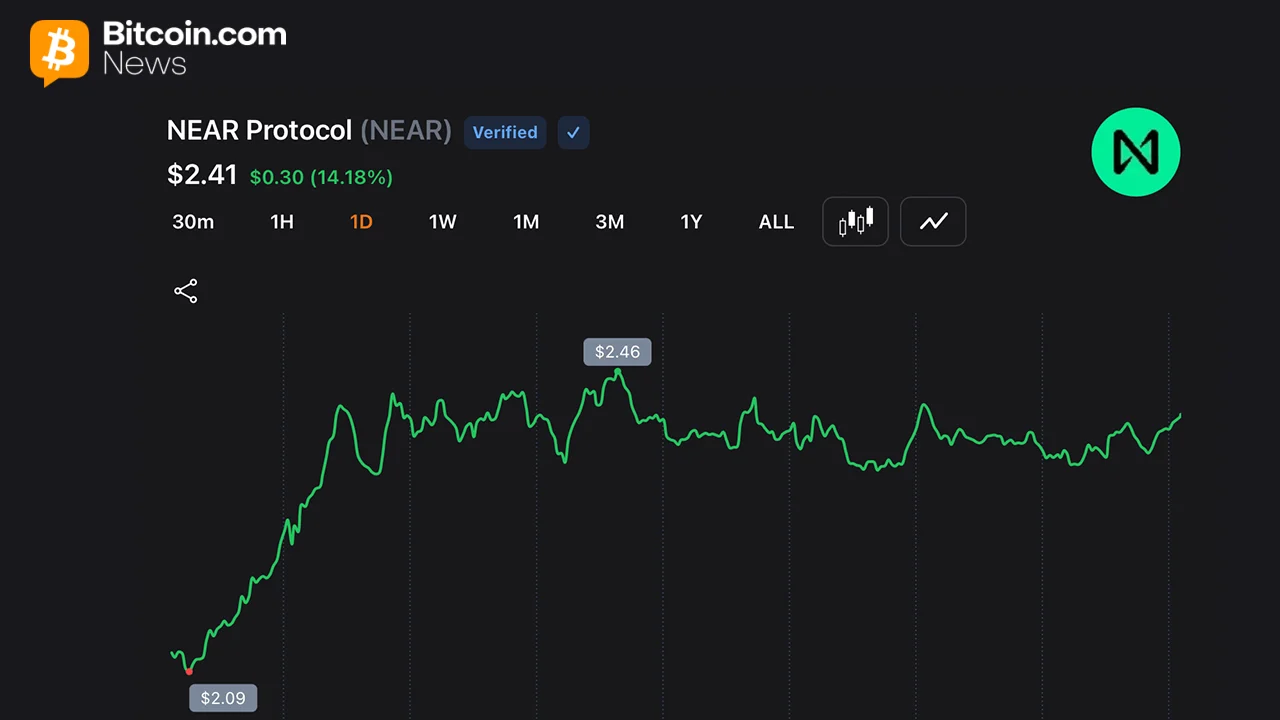
The market’s reaction was immediate. NEAR’s native token surged roughly 27% to 30% within 24 hours, trading around $2.24 to $2.27 and making it one of the best-performing large-cap tokens in the period.
What dynamic resharding actually does
Think of shards like lanes on a highway. When traffic backs up, you need more lanes. Until now, adding lanes on Near required validators to coordinate manually, hold votes, and wait through governance processes. It worked, but it was slow. Dynamic resharding is the equivalent of lanes appearing automatically the moment congestion hits a threshold.
In technical terms, the upgrade, arriving as part of network upgrade 2.13, monitors the state size of each shard. When a shard crosses a predetermined capacity limit, the protocol splits it without requiring any human coordination or prolonged voting periods.