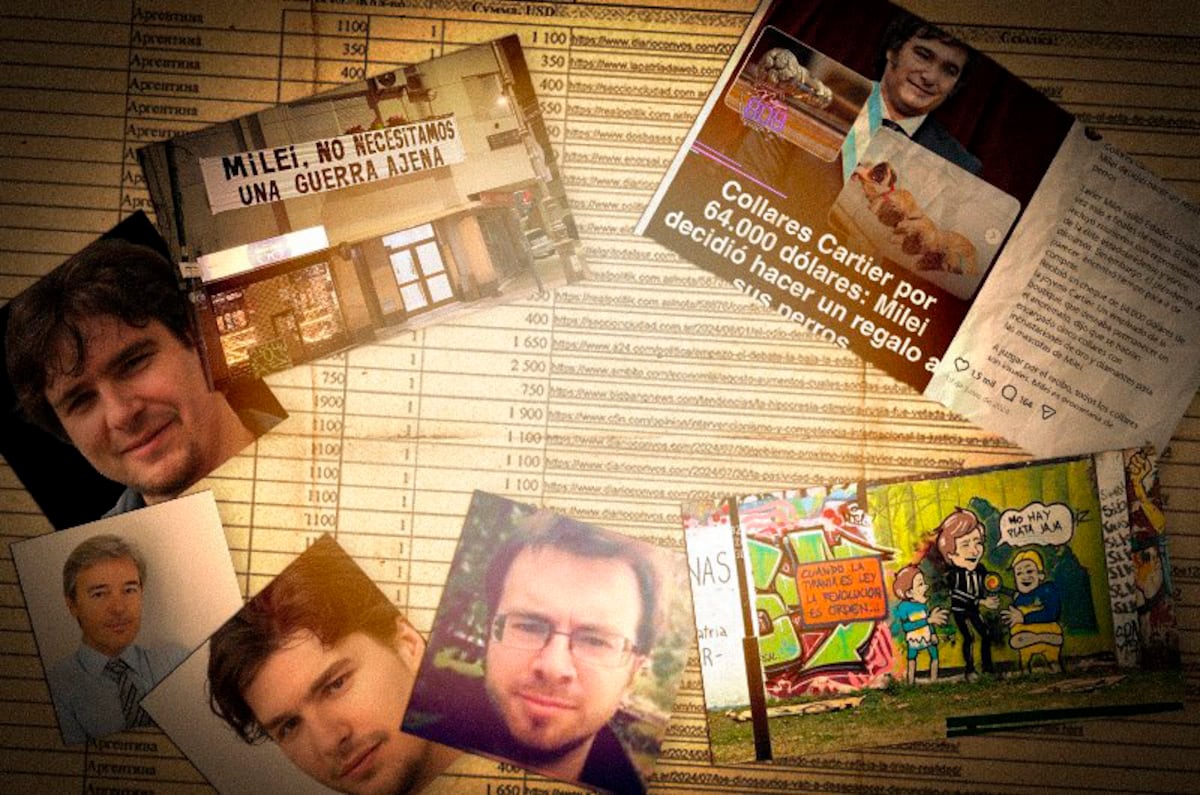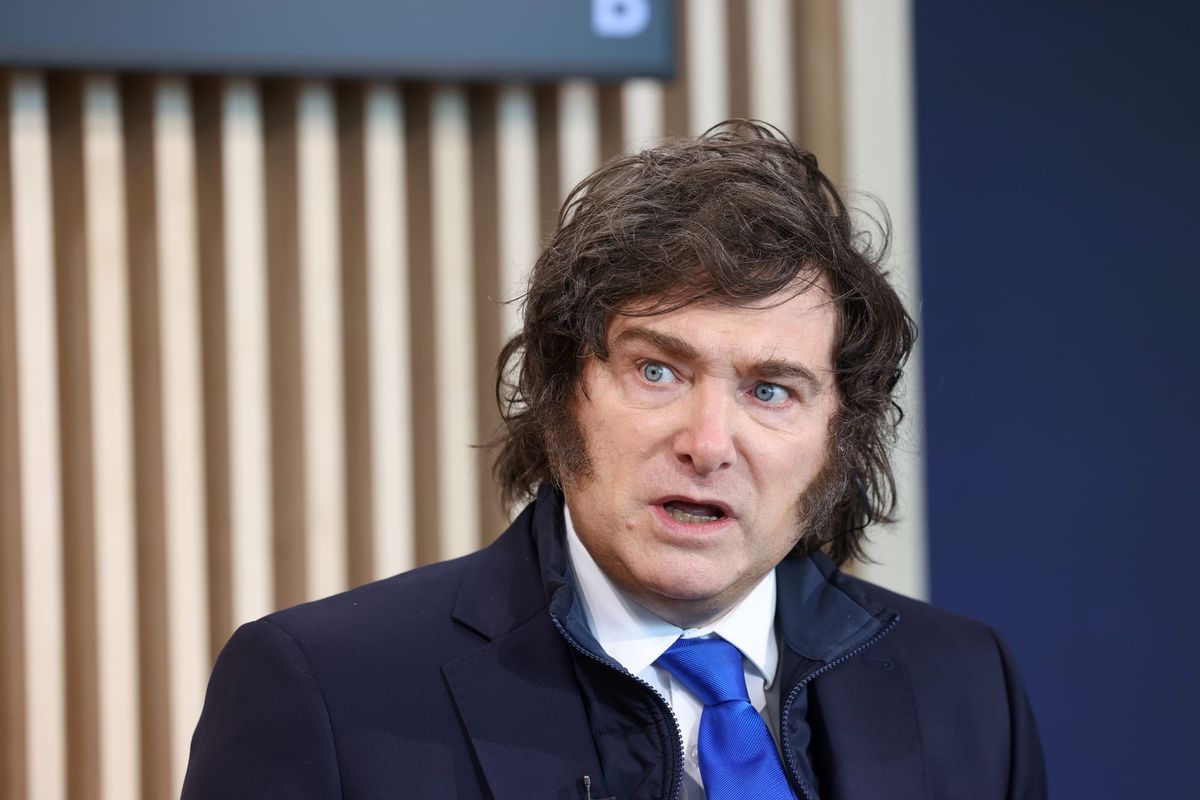
In early April, openDemocracy revealed how a network linked to the Kremlin placed hundreds of articles in Argentina’s media to discredit far-right president Javier Milei’s government due to its alignment with the United States and support for Ukraine. Later that same day, Argentina’s State Intelligence Secretariat, which had not answered our questions throughout our investigation, issued a statement claiming it had already reported the network behind the disinformation attacks to the country’s courts and the public prosecutor’s office in October 2025. There is no trace of any such report ever having been made.In fact, the first report was filed independently by a lawyer the day after our investigation was published. Only then did Judge Sebastián Ramos open proceedings, about which nothing is known yet.Then, at the start of this month, Argentina’s minister of security and State Intelligence Secretariat claimed they had arrested Russian citizen Dmitri Novikov, who had previously been expelled from the Dominican Republic for alleged disinformation activities, and linked him to the network whose work we uncovered. Describing Novikov as a “Russian leader of fake news”, the minister announced he would be deported. Within five days, Novikov was put on a flight to Istanbul. He didn’t even appear before Ramos’s court for questioning. The public will receive no direct answers about a Kremlin-led initiative to undermine Argentina’s democracy.If our investigation exposed how the Kremlin’s disinformation network operates, the aftermath revealed something equally troubling: how unprepared democratic institutions remain to confront such operations.Our investigation began back in October 2025, when an anonymous source shared 76 documents written in Russian with the editor-in-chief of the African outlet The Continent. The documents, most of which are dated between January and November 2024, reveal how a network calling itself the Company worked from an office in St Petersburg to interfere in the politics and public opinion of 30 countries, mostly in Africa, as well as Bolivia and Argentina. The network is a remnant of one branch of Wagner, a paramilitary firm that has operated across several continents in defence of the Kremlin since 2014. After the death of its founder, Yevgeny Prigozhin, in 2023, Wagner was officially disbanded, with its work placed under the direct control of the Russian state.openDemocracy spent months examining these documents along with a cross-border consortium of journalists from The Continent, Forbidden Stories, independent Russian media outlets Dossier Center, All Eyes On Wagner and iStories and several Russian-speaking reporters. Through open source information, interviews with academics and security experts, and financial records, we were able to establish the documents’ authenticity. They included the Company’s work plans, accounting, budgets, expense receipts, invoices, employee biographies and reports on political influence and disinformation campaigns. In total, our journalistic consortium has published more than 20 articles since February that reveal the Company’s ambitious strategies – such as to “reformat the African space with the creation of a belt of regimes friendly to the Russian Federation” – and far-fetched tactics, which range from organising a pro-Trump motorcycle convoy in the capital of the Central African Republic to spreading fake news about Ukrainian drones flying over Mali or Argentine terrorists attempting to sabotage a gas pipeline in Chile.Since our investigations went live, some critics have questioned why we published only a few fragments of the 1,431 pages of leaked documents. The answer is that we sought to avoid any reproduction that could put at risk the source or the dozens of people identified in the files as targets for profiling, surveillance, attacks or recruitment strategies. Publishing names without verifying the facts is not journalism.Work plan (left) and results (right) for the Company’s operations in Latin America and Africa in September 2024We found that many of the Company’s plans involved stoking pre-existing tensions, conflicts, or discontent, either by encouraging legitimate anti-colonial and anti-imperialist sentiments against France, the United Kingdom, or the United States, or by interfering in domestic politics, as in South Africa, Bolivia, or Argentina. This tactic made it easy for the Russian agents to claim victory in their reports to their superiors, although perhaps they could have aimed higher; even when their efforts failed, no one was held to account, at least not in the documents we examined.The fact that countless factors determine the course of a society or a country was beyond the analysis of the Russian “political scientists”, as they like to call themselves.Diagram of the communication structure of the Bolivian presidency, as proposed by the RussiansTake Bolivia. In 2024, the Company launched an on-the-ground mission to support the re-election of Kremlin ally Luis Arce, even though this meant targeting another ally, Bolivia’s former president Evo Morales. In the end, neither man made it onto the ballot; a court ruled that Morales had already breached the maximum two-term limit, while Arce stood aside when it became clear that he had no path to victory. Their party, the Movement for Socialism, which had been in power since 2006, lost to the right. By any measure, the Russian mission was a failure. But that didn’t stop its three leaders from asking the Kremlin to award them medals.Although our investigation was published by various media outlets, no source from Bolivia’s previous or current government was willing to comment on the revelations, not even to deny them. More than a month later, a member of parliament announced that he would call for a parliamentary inquiry into the events.How the Kremlin tried to pick a winner in Bolivia’s fractured leftExclusive: New dossier exposes how Russian operatives sought to ensure their ally won Bolivia’s presidential electionopenDemocracyDiana CariboniIn Argentina, the impact of our investigation was immediate. Milei’s government exploited it to renew its attacks on journalists, threatening them with criminal proceedings and the withdrawal of their parliamentary press credentials, rather than seriously investigating the facts. Some media outlets used our findings to sack journalists. Others republished them; the investigation was picked up some 70 times, both within and outside Argentina. But much like the government’s attacks, the version that went viral – “Journalists paid by Moscow to write fake news about Milei” – entirely missed the point. While we cannot rule out that some journalists or media outlets were paid to publish the content, at the heart of our investigation was a far more disturbing finding: the mechanism Russian actors used to place the content.It is the elephant in the room. In Argentina, as in most of the world, journalists operate amid falling audiences and revenues, the dismantling of newsrooms and the slashing of salaries. At the same time, media corporations want more content than ever, hoping to briefly catch the attention of doomscrollers or provide pages on which to run adverts to bring in badly needed funding. Against this backdrop, increasingly desperate media outlets are willing to publish free or sponsored articles from various sources. This content may come in the form of simple press releases or ‘advertorials’ promoting a product, a brand or a business project. It could be opinion pieces or analyses defending or attacking a legal reform, a government measure, a court ruling, a popular demand, a trade union dispute, or support for a war.Much of the content is offered for free: the person promoting the piece gets a wide platform to push their agenda, the publication gets a free story. Often, it arrives via intermediaries and is published by resource-strapped outlets that don’t have the staff power to edit or even fact-check. As we detailed, the Kremlin spotted and capitalised on this vulnerability in 2024. Two years on, it remains wide open for further exploitation by malicious actors.How Russia exploited Argentina’s media to run influence operationsExclusive: Agents linked to the Kremlin ‘paid’ for fake news by fake authors to be published by Argentine pressopenDemocracyDiana CariboniOur investigation revealed how the Company commissioned opinion polls, reports on the military-industrial complex, oil resources, political parties and trade unions, and drew up profiles of public figures and plans to support opposition candidates in the 2025 parliamentary elections. It also set up elaborate hoaxes and commissioned billboards and graffiti. Next, it produced ‘news’ about all of its own efforts; a mix of real information and AI-generated content by ghost journalists. This is visible, for example, in the fact that the Russian-produced articles almost always introduce the president with his first and middle names, Javier Gerardo Milei, something no Argentine journalist or media outlet would do. The outcome is a Frankenstein-esque blend of fake news and real facts. “Milei appointed a US protégé to succeed [Bolivian president] Luis Arce”, read one Russian-authored piece. “The true purpose of the military coup in Bolivia was to assassinate President Arce”, said another. “Milei’s withdrawal from the Ukraine summit is a reaction to Biden’s ‘peace formula’ for Israel.”The Company’s agents then hired intermediaries to place their articles. We spoke with sources at the outlets that published the content; none had any idea that their origin was a Russian campaign or that the writers were fictitious.Notably, one thing the Company did not manage to do with its content was sway the Argentine political landscape in the Kremlin’s favour. But disinformation networks cause harm, even when the damage is not apparent. As media expert Martín Becerra said, the aim is sometimes “chaos, disorder”, the seeds of discrediting institutions that were previously seen as legitimate, such as the media and journalists.Russia, like China, is a real geopolitical counterweight to the US, the dominant imperialist global power. But it is a common misconception that the Putin administration is democratic or has links to the progressive left.The regime in the Kremlin is authoritarian, ultra-conservative, abhors LGBTQ people, defends the traditional family and tolerates violence against women. It has much in common with the current Christian far-right administration in the White House, and has shared forums, strategies and resources with its far-right counterparts in both the US and Europe, the latter of which it has also funded, as openDemocracy has documented. For this reason alone, it should be a cause for concern that the Kremlin’s networks of political interference have reached South America. All the more so, given Wagner’s track record. The group has been accused of murdering Russian journalists who were investigating the presence of its mercenaries in the Central African Republic and being involved in the massacre of more than 500 civilians in two towns in Mali, Hombori and Moura.Another cause for concern is the disinformation campaigns run by the Internet Research Agency, a front organisation funded by Prigozhin, which sought to shape the electoral climate in the US presidential elections won by Donald Trump in 2016, and the Brexit vote in the UK that year. In both cases, Russian disinformation joined more substantial campaigns, such as the operation by Cambridge Analytica and Facebook, which involved the sale of private data from millions of social media users for the purpose of electoral manipulation.It is tempting to think that lies and disinformation made the difference in the Trump and Brexit votes in 2016 and for that reason they deserved to hit the news, while in Argentina, as the Company didn’t reach their stated goals, they were irrelevant.But in reality, disinformation’s damage is not confined to the ballot box, nor does it disappear when the immediate impact appears negligible. Its purpose is often broader: to corrode trust, weaken institutions and normalise confusion. Our duty to expose disinformation does not end when its visible effects seem to be small. As we have seen, they rarely remain small for long.
Russia targeted Milei, but undermined Argentine media
Disinformation is never harmless. The fictions spread by Russian operatives across dozens of Argentine media outlets exposed a vulnerability that remains unaddressed
1,899 words~9 min read