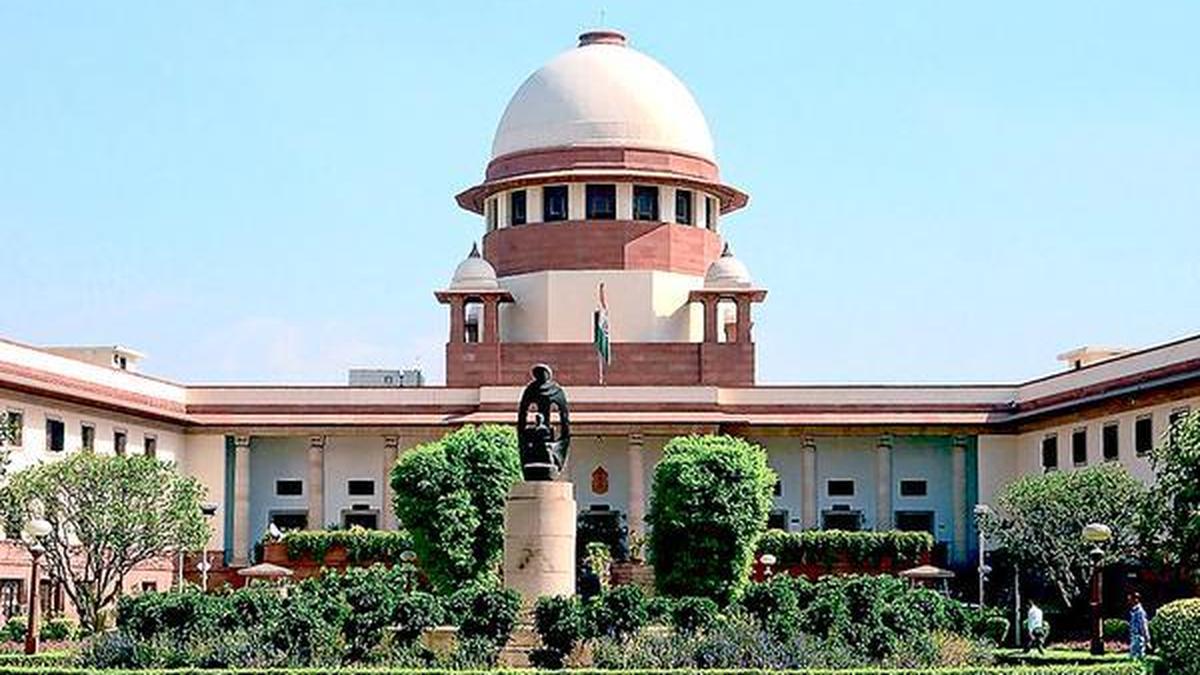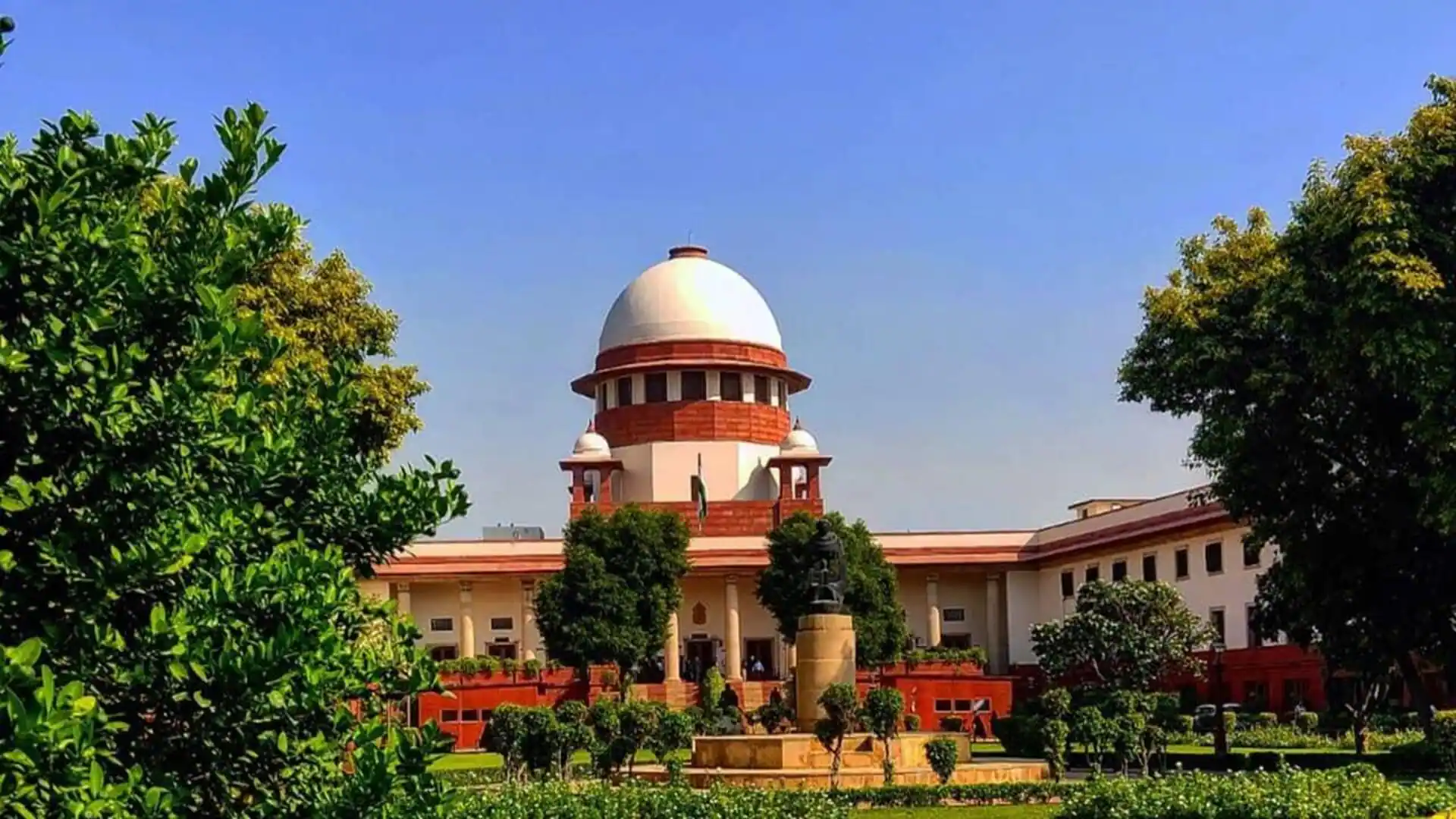
The Supreme Court on Friday modified its March 11 order that had directed the Centre, states, union territories and other universities and institutions to disassociate from three academics, in connection with a row over an NCERT Class 8 textbook chapter containing “offending” remarks on corruption in the judiciary, and dropped all adverse observations against them.A bench headed by Chief Justice of India (CJI) Surya Kant accepted the explanation by the three experts — Michel Danino, Suparna Diwakar and Alok Prasanna KumarA bench headed by Chief Justice of India (CJI) Surya Kant accepted the explanation by the three experts — Michel Danino, Suparna Diwakar and Alok Prasanna Kumar — that they had no intention to show the judiciary in a bad light and that the preparation of the textbook was a collective effort.The court left it to the states and the Centre to take an independent decision without being influenced by the court’s earlier direction.“We deem it appropriate to modify paragraph 8 of our March 11, 2026 order and recall the direction to Union, states, UTs or other universities/institutions to disassociate the three applicants from academic activities. In this regard, we leave it to the Union, states and UTs or other authorities to take an independent decision without being influenced by paragraph 8 of our order,” the order by the bench said.The controversy centres around the Social Science textbook for Class 8 by NCERT, which included a section on “corruption in the judiciary” as part of a chapter titled “The role of the judiciary in our society”.The order of March 11 made damning remarks against the three experts who were involved in preparing the content of the textbook, later withdrawn by the Centre. The government subsequently formed a committee of experts headed by former Supreme Court judge, Justice (retd) Indu Malhotra, to revise the textbook and recommend suitable changes.The bench, also comprising Justices Joymalya Bagchi and Vipul M. Pancholi, also deleted other adverse remarks contained in the March 11 order which alleged that the experts acted “deliberately” and “knowingly” and had misrepresented facts about the judiciary.“Similarly, the remarks that the three applicants acted deliberately and knowingly and misrepresented the facts is recalled in view of their explanation. Consequently, it is clarified that it was a collective decision,” the order passed on Friday said.Solicitor General Tushar Mehta, representing the Centre, stated that the Centre has taken a decision to disassociate the three members. He even objected to the statement that the textbook was prepared as a “collective effort”, pointing out that the draft textbook curriculum was not shared with all members of the National Syllabus and Teaching Learning Material Committee (NSTC).Senior advocates Shyam Divan, Gopal Sankaranarayanan and J. Sai Deepak appeared for Danino, Kumar and Diwakar respectively and said that the comments of the court have had “massive” consequences on the reputation, career and future activities of the three persons.Divan said that Danino is a celebrated academician and explained how at each step of the process for preparing the textbook, various persons were involved. However, the order passed without hearing him has seriously injured his right to work, as the order directs institutions and governments to disassociate with him.Sankaranarayanan pointed out that the court had held in its order that the experts did not have “knowledge” about the Indian judiciary. He said that in the field of academics, issues need to be debated and the chapter in question contained positive elements about the judiciary as well.“We feel that a balanced view has not been given about the role of the judiciary. While certain aspects have been highlighted, the role of judiciary in preserving constitutional supremacy was completely missed. Rather, focus was on highlighting corruption in judiciary,” the bench said. It further stated that aspects with regard to access to legal services and the role played by the judiciary in strengthening legal aid to the poor and marginalised had been ignored by the textbook curriculum.The March 11 order said, “we have no reason to doubt that Prof. Michel Danino and his associates, Ms. Suparna Diwakar and Mr. Alok Prasanna Kumar, do not have reasonable informed knowledge about the Indian Judiciary and/or they deliberately and knowingly have misrepresented the facts in order to project a negative image of the Indian Judiciary to students of Class 8, who are at an impressionable age.”Even prior to this, on February 26, the court said, “On a prima facie examination of the book’s contents…reveals a discernible underlying agenda to undermine the institutional authority and demean the dignity of the judiciary. This would, if allowed, go unchecked, erode the sanctity of the judicial office in the estimate of the public at large and, more importantly, within the impressionable minds of the youth.”The lawyers urged the court to consider deleting portions from the February order too. The bench said, “The conclusive opinion by us has been deleted. That takes care of the fact that the conclusion drawn by us is no longer part of the final order.”Deepak argued that despite the court’s clarification, reports in the media have been very damning against the experts. He stated that the Karnataka government has issued an order disassociating the applicant from 31 institutions.The court said, “Our observations will be in context of the content and not the individual. Let sensationalism be part of reporting but let the dialogue between the senior counsels and court not be based on such reports.”On March 16, the Ministry of Education constituted the Oversight Committee headed by Justice Malhotra, having two other members — former Attorney General K.K. Venugopal and Prakash Singh, who is vice-chancellor of Hemvati Nandan Bahuguna Garhwal University in Uttarakhand. In addition, the Centre also associated the head of National Judicial Academy at Bhopal for the revision and finalisation of curriculum for Class 8 and higher classes.Even the 20-member NSTC was reconstituted under the chairmanship of former vice chancellor MC Pant and co-chaired by mathematician Manjul Bhargava, who is a professor at Princeton University.
Supreme Court drops adverse remarks against 3 NCERT book experts
The Supreme Court on Friday modified its March 11 order that directed the Centre, states, union territories and other universities or institutions to disassociate from three academics | India News
989 words~4 min read