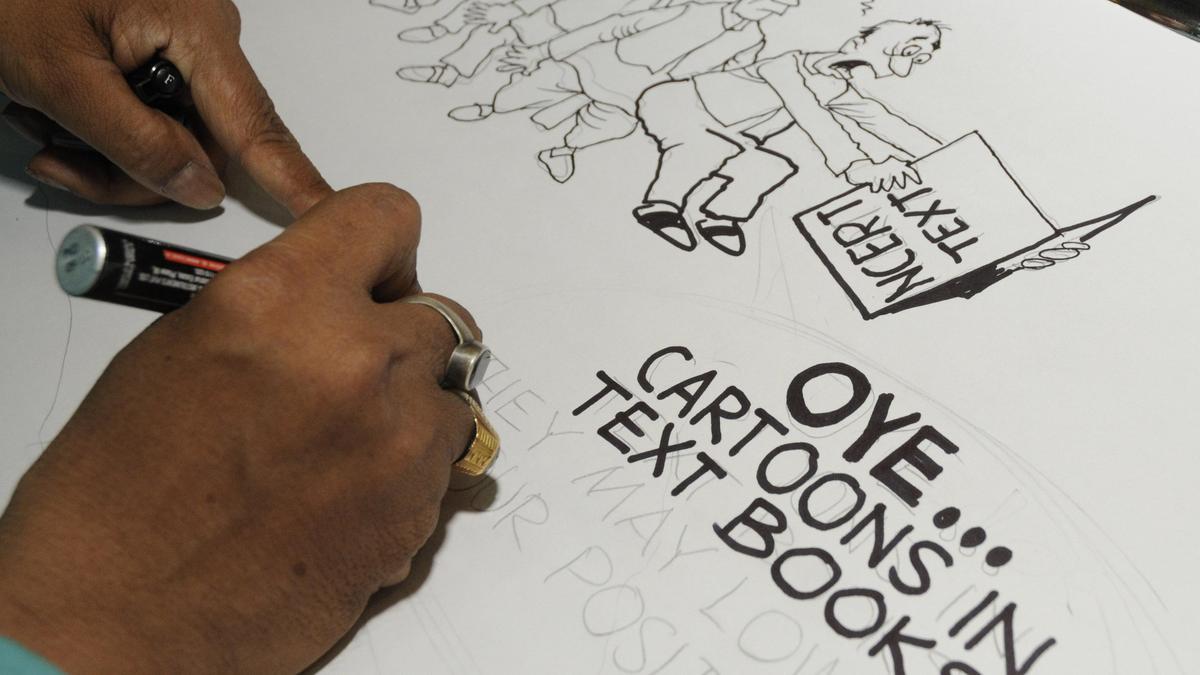
Image used for representational purposes. File
| Photo Credit: The Hindu
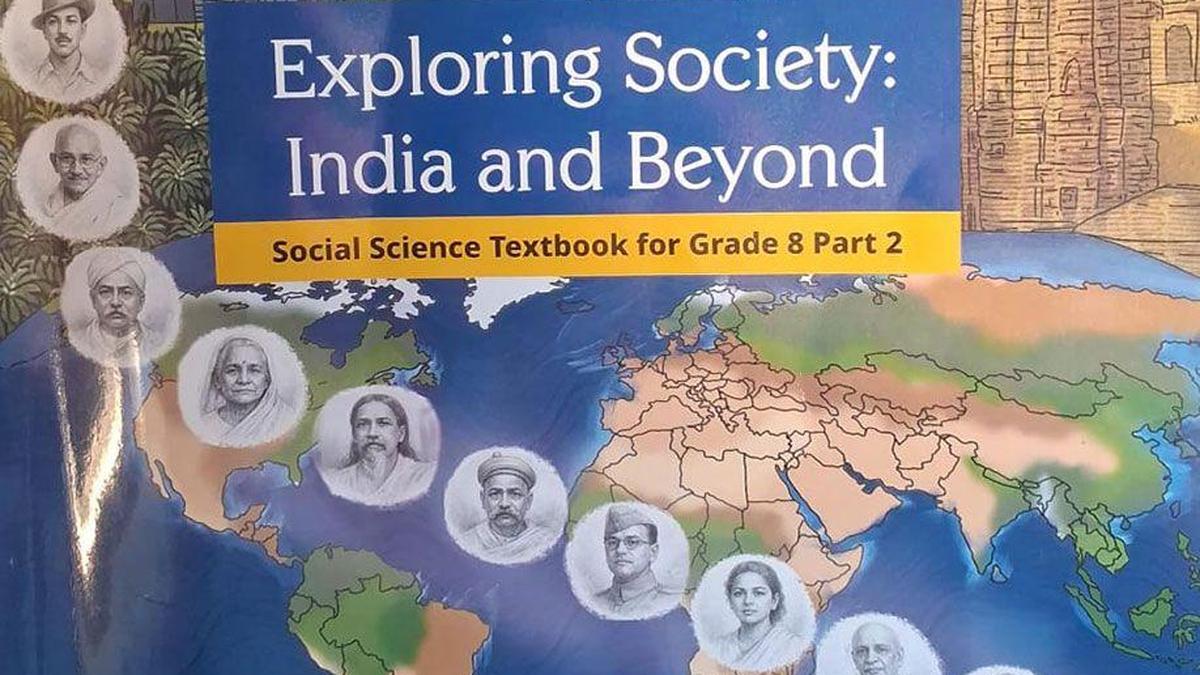
The Supreme Court on Friday (May 22, 2026) asked a former apex court judge-led committee to review cartoons published in National Council for Educational Research and Training (NCERT) textbooks after Solicitor General Tushar Mehta pointed out that “textbook is not a place where you use cartoons”.Editorial | Measure for measure: On India’s courts and criticismAppearing before a three-judge Bench headed by Chief Justice of India Surya Kant, Mr. Mehta, representing the Union Government, raised an objection about cartoons he happened to come across in “some" NCERT textbooks.Mr. Mehta’s objection raised the point whether children should be exposed to satire or lampoon through their study books.The Solicitor General said “per se” there were no objections to cartoons, but the ones printed in the school textbooks would be seen by children of an “impressionable age”.“It may not be proper to have these cartoons. A textbook is not a place where you use cartoons,” Mr. Mehta objected.The top law officer brought up the issue of cartoons displayed in NCERT textbooks during a suo motu hearing concerning a recent controversy about the contents in a Class 8 Social Science textbook about the judiciary. In February, the Court had prima facie concluded that the content was intended towards “maligning the Indian judiciary”. It had initiated contempt proceedings and ordered a “blanket and complete” ban on the textbook.On Friday (May 22, 2026), the Bench agreed with Mr. Mehta that the propriety of the cartoons published in the textbook should go to the government-appointed committee headed by former Supreme Court judge, Justice Indu Malhotra. The committee, which included senior advocate K.K. Venugopal and Prof. Prakash Singh, Vice-Chancellor, Hemwati Nandan Bahuguna Garhwal University, is collaborating with the National Judicial Academy at Bhopal to shape the Legal Studies curricula for Class 8 and other grades. At the time, the NCERT had also reconstituted the National Syllabus and Teaching Learning Material Committee.In the past, the Court had emphasised that the “art of satire” should not be left to be evaluated by a “touchy and hyper-sensitive individual”, but a reasonable person who could see the lighter side.The Court’s 2020 judgment in Indibily Creative (P) Ltd. v. State of West Bengal had flagged satire’s “unique ability to quickly and clearly make a point and facilitate understanding in ways that other forms of communication and expression often do not”. The Court had argued that choking freedom of expression stifled debate and endangered the stability of the community. Published - May 22, 2026 03:58 pm IST